
Sizing a Greenhouse for Your Irish Garden
A greenhouse works best when its footprint reflects both the garden and the way you intend to grow. Careful sizing gives plants suitable room while keeping routine jobs practical and enjoyable. Bloomcabin supplies greenhouses for varied plots and ambitions. The sections below explain how to weigh the site, the crops you hope to raise, future equipment and spending limits before settling on dimensions.
Examine the proposed greenhouse site
Walk the proposed site and take accurate measurements before deciding on a model. Note how sunlight moves across it, how close a water point is and whether doors and paths will be accessible. Aim for a position that receives direct sunlight for no fewer than six hours daily. In Ireland’s changeable weather, free-draining ground also matters because standing water can gather beside the foundation.
Keep clear ground outside the structure so glazing and frames can be cleaned or repaired. You may also want room for a path, raised beds or compost storage. Mapping these uses beforehand keeps access simple and helps the greenhouse sit comfortably within the wider garden.
Define your growing goals
Let the way you expect to use the structure guide its footprint. Before comparing models, consider these practical questions:
- What would you like to grow? For herbs and young seedlings, a compact structure can provide sufficient growing room. Tall or spreading crops demand more space; fruit trees, cucumbers and tomatoes also need sensible clearance for tending and training.
- Do you plan to grow year-round? All-season growing generally requires space beyond the beds. Allow room for planned insulation, heating and lighting, then check that people can still move and work comfortably after the equipment is installed for winter.
- Will you need extra features? Shelving, cupboards and even seating are popular greenhouse additions. If you picture it as a multi-purpose garden room, allow enough space for those features.
- Are you growing privately or commercially? For a domestic hobby, a compact or mid-sized structure often works well. A commercial grower may instead need separate zones for cultivation, tool storage and preparing harvested produce.
Typical greenhouse sizes
Available footprints are commonly grouped into small, medium and large formats. The examples below provide a useful starting point for comparison:
- Small greenhouses (6x4 ft to 6x8 ft): This scale suits a restricted plot and offers a manageable introduction to covered growing. Capacity is modest, but there is room to propagate seedlings and raise several herbs or vegetables without giving a large part of the garden to the structure.
- Medium greenhouses (8x10 ft to 8x12 ft): Gardeners ready to broaden their planting can use this footprint for several crop types. There is scope to arrange benches or shelves, suspend baskets and keep compact tools inside, while preserving a workable route through the growing area.
- Large greenhouses (10x12 ft and above): This scale suits dedicated home growers, households planning substantial crops or a modest commercial operation. Its floor area can hold several growing sections, irrigation equipment and benches, together with a separate place for routine work.
Bloomcabin greenhouse options
Across its collection, Bloomcabin provides several well-made greenhouse styles for different spaces and ways of growing:
- Aluminium – Classic greenhouse: Available from 40.6 m² to 202.8 m², these durable, efficient greenhouses have weather-resistant construction and can be customised.
- Aluminium – Modern greenhouse: These contemporary models combine a clean design with the quality of the classic range and are offered in the same sizes.
- Aluminium – Victorian greenhouse: Combining elegant traditional styling with modern function, these models are ideal for discerning gardeners.
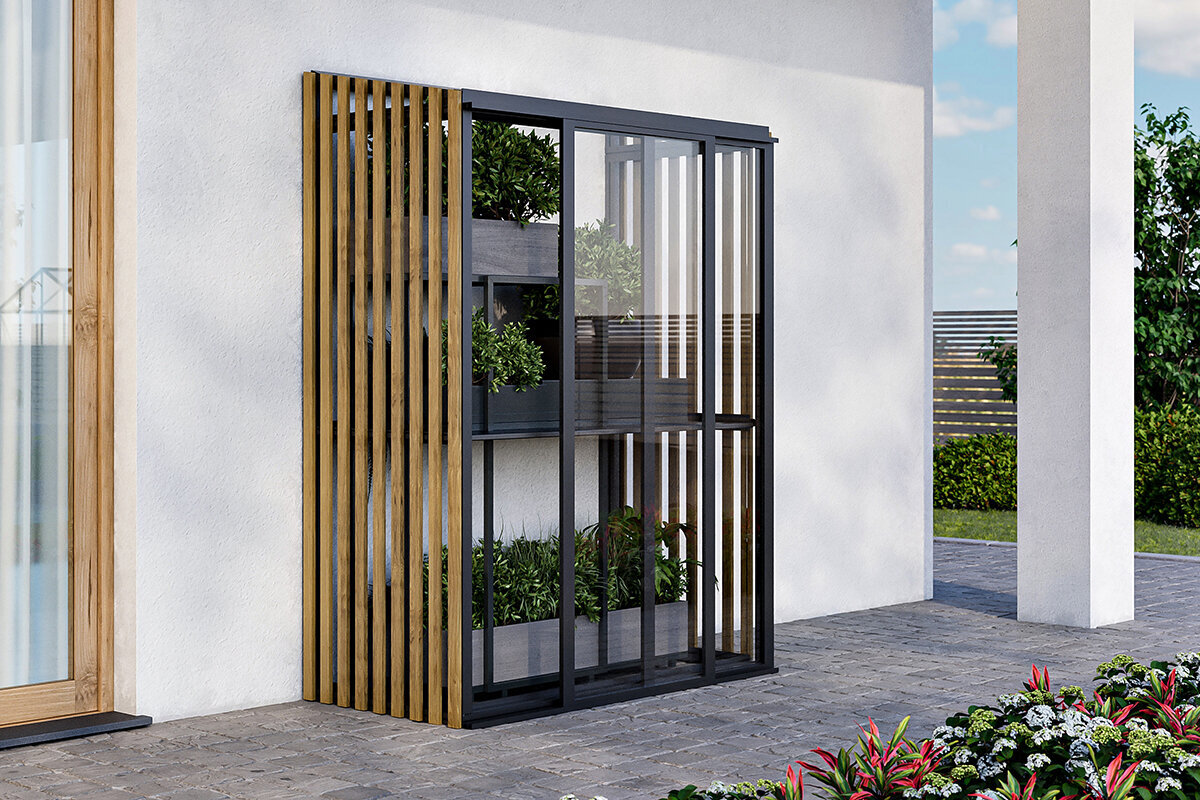
- Mini aluminium wall greenhouse: Compact and practical for balconies or smaller gardens, with sizes from 8 m² to 15 m².
- Aluminium – Lean-to greenhouse: Designed to stand against an existing wall, these models conserve space while offering a stylish, durable structure.
- High tunnel greenhouse: For extensive growing or commercial projects, sizes run from 129.17 m² to 387.50 m²; the tunnels are weather-resistant and straightforward to install.
Consider budget and maintenance
Set a budget that covers more than the purchase price. A larger structure generally costs more at the outset and can use additional energy and effort for warming, ventilation and upkeep. Look at expenses over time; durable materials, including Bloomcabin’s aluminium construction, may reduce the frequency and cost of repairs and maintenance.
Plan for future expansion
Enthusiasm often brings a growing plant collection. It can therefore be worth selecting an extendable structure or investigating a modular layout that allows the greenhouse to evolve when your priorities alter.
Get expert advice
When the options are difficult to compare, ask for informed guidance rather than guessing. Bloomcabin can discuss the space, crops and spending level you have in mind, then help you identify a suitably sized greenhouse.
