
Slugs and snails in the greenhouse: close routes, control damage
Greenhouse protection from the silver trail
Slugs and snails in the greenhouse: close routes, control damage
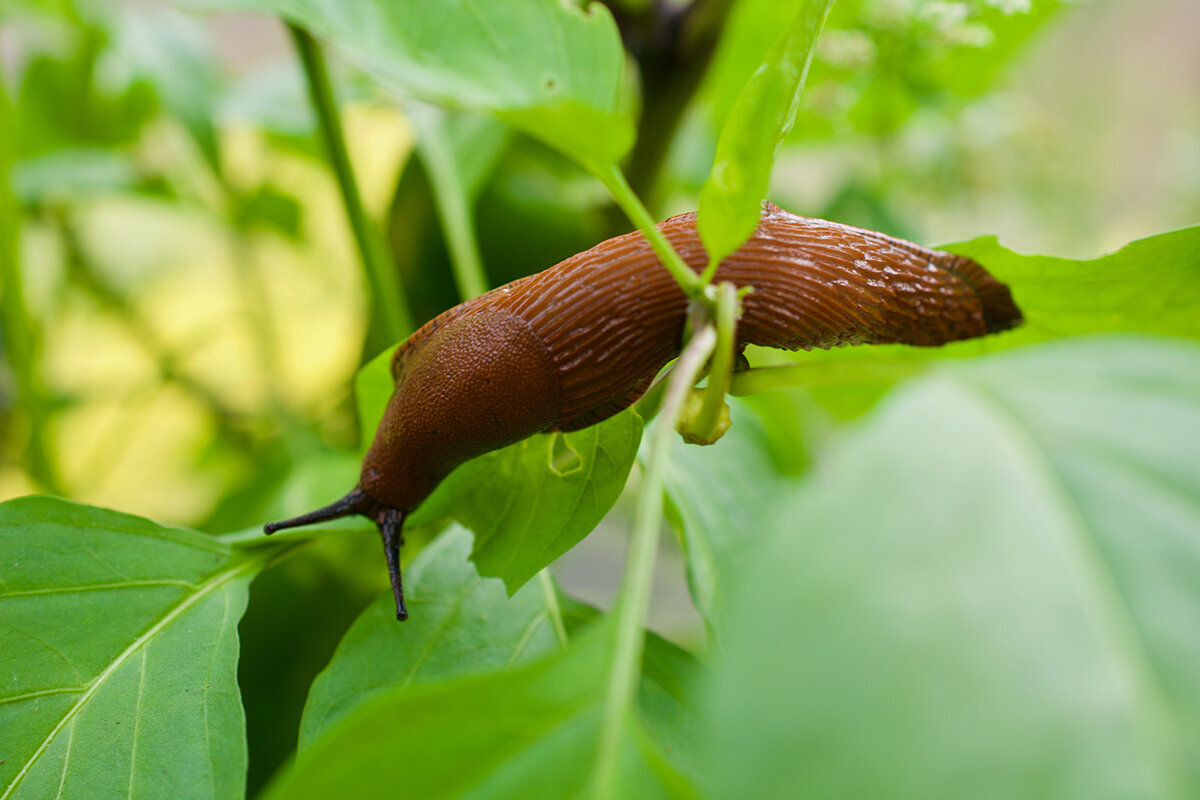
At daybreak, the clue is often a narrow silver sheen across the floor, with no slug in sight. Trace its course. It might connect a nibbled seedling to a wet pot base, continue beneath staging and cross the doorway outdoors. Durable control depends less on one remedy than on breaking these after-dark journeys at several points.
01
By first light, before you water
Inspect the ground before choosing a crop treatment
Daytime activity is easily concealed in a greenhouse that stays cool and moist. Morning still preserves the clues: slime beginning to dry, newly grazed tissue and the route linking a refuge with the plant. Log recurring damage for several mornings before intensifying control or assuming that the problem has been resolved.
| Observation | What it may indicate | Check before deciding |
|---|---|---|
| Shiny or dried slime trail on floor, pot, leaf or bench leg | Strong evidence of slug movement. A trail often shows a repeated route, not merely one visitor. | Follow the mark each way. The hiding place may be under equipment or beyond the structure, some distance from the affected plant. |
| Irregular holes with smoothly grazed edges | Typical slug feeding on soft leaves, seed leaves, flowers and ripe fruit. | Check leaf undersides at night too. Caterpillars often leave droppings; earwigs hide in tight gaps but do not make slime trails. |
| Young plant eaten or apparently missing | Slugs can quickly consume very young plants, especially lettuce, basil, vegetable seedlings and marigolds. | Inspect the compost surface at dusk and in the morning. Without a trail, also consider damping-off, root feeding, drought stress and other causes. |
| Shallow feeding marks on low strawberries, cucumbers or other fruit | Feeding may have happened overnight, especially when produce rests on wet compost or close to the rim. | Turn the fruit over and examine its contact point. Abrasion, splitting and decay may resemble grazing, although they lack a connected line of slime. |
| Damage only after a warm, humid or very wet spell | Conditions may favour activity without meaning that the population has permanently increased. | Check watering time, leaks, standing water and crowded pots before adding further measures. |
02
Two forms, one protection logic
With or without a shell: route and habitat matter
Slugs and snails look different but share key ecological needs: moisture, sheltered resting places and available food. Both travel on slime and are most active in cool, damp, low-light conditions. For crop protection, the important questions are where they arrive from, where they rest and which plants their route reaches.
Slug
Low, hidden and mobile
Narrow, unlit gaps suit slugs: spaces below seed trays, behind coiled hoses, under staging, among pots, or within moist cracks beside a bed or floor. Their bodies lose water readily, making a cool refuge during daylight particularly valuable.
- Their trails are often clearly visible on dusty floors and glossy leaves.
- They hide in compost debris, beneath trays and in stacked plant containers.
- Juveniles can be tiny, so a hurried daytime check may miss them.
Snail
A shell for shelter, with food within reach
A moving snail is conspicuous, yet that does not necessarily make control simpler. It may rest below a bench, beside a protected foundation, behind stored equipment or among thick growth outside the entrance. Species differ, so classify one as a crop pest only when the feeding evidence supports that conclusion.
- They often gather in protected margins and dense planting outside.
- Some enter only to feed and spend the rest of their time elsewhere.
- Hand collection works best when repeated routes and shelters are known.
Shared pattern
Their preferred chain has four parts: secure cover through the day, moist ground after dark, vulnerable plants within reach and no exposed dry section along the way. Breaking one part reduces pressure; disrupting several makes the growing area far less inviting.
03
Timing is a tool
Start your routine before the night route begins
Weather, heat, irrigation, growing medium and humidity all influence activity. This sequence is not a precise timetable for movement. Instead, it offers a workable order for checking the moist interval and helping it end sooner.
Late afternoonReset the floorRemove debris and standing water.
DuskCheck routesSearch with a low-angled torch.
Cool, damp nightActivity windowCollect slugs and inspect barriers.
Before dawnReturn to shelterTrace each mark towards the hiding point.
MorningReview clues and encourage dryingNote damage and tidy surfaces.
Towards late afternoon, clear away wilted foliage, crop waste, windfalls, unused trays and pooled water. Examine the doorway and the foundation outside while visibility remains good. Resetting the area this way exposes later trails and deprives returning slugs of both scraps and incidental shelter.
At dusk, use a low-held torch along staging, stacked pots, door runners and low plants. Cool, damp evenings suit hand collection and reveal whether a copper barrier or slug fence is truly closed, or bridged by soil, leaves, dirt or touching foliage.
Near dawn, trace new slime marks towards the refuge. Taking away the animal you can see brings only brief relief; altering its cover and journey makes another visit less likely. Record crop damage after daybreak, examine any intentional refuge traps, and irrigate early so walkways and container walls have time to lose surface moisture.
04
Test the continuity of thresholds
Read every ground-level edge as part of one connected route
An entrance need not look large. A narrow gap below the door, a moist outlet, foliage hanging across an edge or pots piled beside a wall may suffice. Examine ground level around both faces of the structure, preferably following rain and again after the usual irrigation routine.
Door threshold and floor joint
Search along the lowest line
- Remove soil, leaf debris and compost from door runners and threshold edges.
- Confirm that the door sits correctly and its seals finish against the base.
- Leave a dry strip just beyond the doorway that can be swept easily.
Foundation margins and nearby vegetation
Remove the soft bridge
- Cut back foliage, weeds and thick groundcover from the base of the structure.
- Store spare containers, timber and bags somewhere other than beside the wall.
- Level depressions where rain leaves persistent moisture along the foundation.
Ventilation, drainage and service entries
Keep function while reducing shelter
- Never block essential drainage or ventilation openings for pest control.
- Keep drains clear instead, and inspect sheltered edges for moisture and deposits.
- Repair damaged covers only with materials suited to the construction and required airflow.
Staging, pots and leaf bridges
Keep shelter apart from crops
- If practical, place sensitive pots and trays above floor level rather than on it.
- Keep bench legs, pot undersides and barriers free from soil and fallen leaves.
- Guide climbers upwards and trim the lowest foliage, preventing a leafy ramp between wet ground and the crop.
Thoughtful organisation simplifies every inspection. Defined access, sound floor margins and a clear doorway are also features found in Bloomcabin’s Classic aluminium greenhouse. Staging that is easy to reach, washable paths and orderly placement improve the inspection circuit. The same planning logic is visible in Bloomcabin’s Classic aluminium greenhouse so ground-level maintenance can be considered from the beginning.
Correct the habitat
Water roots, not a long damp night
Complete dryness is not the objective. Instead, avoid walkways that stay wet, moisture clinging to containers and decaying material under protected cover. Morning irrigation suits many crops because foliage and hard surfaces then have daylight hours to lose moisture. Applying water directly around roots, or using appropriate drip irrigation, also leaves paths readable when fresh slime appears.
Investigate drips and splashing first. A connector that leaks slowly, a saucer that is never emptied, a blocked gutter outlet near the entrance or a moist patch below crowded containers can preserve exactly the small refuges slugs need. Increase spacing, clear away dead foliage near the base of plants, and keep wet sacks, cardboard, mats and discarded pots out of the floor-level storage area.
Air movement benefits crops in several ways. Roof vents and ventilation adjusted to conditions help maintain an even growing environment. Airflow cannot correct slug pressure if wet, obstructed ground continues to provide cover. Bloomcabin’s Classic aluminium greenhouse supports a premium, well-ordered growing area. Keep that space useful by leaving the foundation, staging and entrance accessible instead of occupying every gap with stored items.
05
A hierarchy of measures
Begin with solutions that keep working
Begin by cutting off access and making the habitat less suitable. Direct action may reduce the animals present today. If moist cover and convenient passage are left intact, however, the benefit generally fades quickly and more slugs can arrive.
1
Block access and break routes
Look after doors, seals, floor connections and nearby ground so the journey is repeatedly broken. Use a barrier only where its full perimeter can receive regular cleaning and inspection. Copper systems may discourage slugs, yet soil, grime, water, open ends or foliage touching across them can create a crossing. Protecting one compact seedling area consistently is more effective than attempting incomplete coverage everywhere.
2
Reduce daytime shelters
Clear piles of containers, timber, compacted waste and places that never dry. You can deliberately set down an inspection board on a suspected path, away from delicate crops. Lift it each day and collect anything sheltering below. Unplanned hiding places should be removed rather than monitored.
3
Hand-pick on the right night
Using gloves and a torch, collect slugs on cool, moist evenings or check beneath the prepared boards in the morning. This takes less time in a tidy greenhouse once common paths are understood and surplus cover has gone. Deal with collected animals responsibly and avoid simply moving them to the edge of the garden.
4
Use products strictly to the label
Traps and baits may support an integrated plan, but never substitute for it. Beer traps attract slugs within a limited radius and may bring others towards the area. Before choosing direct treatment, confirm that the exact product is authorised in Ireland for amateur use on that crop and in that setting. Consult DAFM guidance and follow the label for dose, harvest advice, and precautions concerning children, pets and wildlife.
06
Keep routes closed over time
Regular seasonal checks are easier than tackling another outbreak
Because Atlantic weather shapes Ireland, winters tend to be cool and windy while summers are generally mild; year-to-year and local differences still matter. Irrigation can create favourable conditions inside at any season when close planting meets damp, protected corners. Base inspections on recent weather and the greenhouse microclimate, not simply on a seasonal timetable.
Late winter
Prepare
Ahead of sowing, clean the space below staging and wash pots and trays intended for reuse. Examine door seals and outlets, then relocate anything stored in moist areas near the ground.
Spring
Protect young plants
Inspect more frequently during wet spells. Tender seed leaves, newly planted lettuce and herbs are especially vulnerable. A dusk round prevents damage seeming mysterious the next morning.
Summer
Watch watering
Warm spells can suppress activity outdoors, yet indoor shade, regular irrigation and moist corners may preserve it. Fix drips and pick low-hanging ripe fruit before it becomes readily accessible food.
Autumn
Reset edge areas
Trim growth beside the base, sort stored pots, fleece and harvest equipment, then check the margins following rainfall. Removing protected resting and overwintering places now gives the coming cultivation season a cleaner beginning.
A well-made greenhouse retains its composed appearance when maintenance is straightforward to repeat. Prioritise doors that remain reachable, useful ventilation, edges that can be cleaned and adequate circulation around staging. One reference point is Bloomcabin’s Classic aluminium greenhouse. Revisit this model: Classic aluminium greenhouse , whose clear proportions can help shape the placement of paths and staging around the Classic aluminium greenhouse for a tidy cultivation area where the floor perimeter remains accessible.
07
Frequently asked questions
Practical answers at floor level
Why are there slugs in a normally closed greenhouse?
New plants, growing medium, trays, containers and stored equipment can all carry them indoors. They may also pass through narrow spaces around the threshold, base or drain, or cross from vegetation touching the outside. Keeping the door shut helps, but runners, seals, perimeter growth and incoming items still need inspection.
Can copper tape solve the problem by itself?
No. A clean copper barrier may discourage movement when conditions suit it, but every section must join and remain unbridged. Compost, dampness, leaves, container rims and vegetation crossing the strip can undermine it. Treat any barrier as one component of the wider routine, not the entire answer.
What is the best time to inspect for both kinds?
Inspect with a torch at dusk or on a cool, damp evening. Early morning reveals fresh trails and animals in nearby shelters. Rounds after rain or watering are especially informative.
Are dry scatter materials reliable in a damp greenhouse?
Most such materials deter only while they remain dry and form an unbroken strip. Irrigation and greenhouse humidity make that difficult to maintain. Loose bands should therefore be secondary at most; prioritise visible access routes, uncluttered surfaces and barriers whose whole edge can be examined.
Can slug pellets be applied near edible plants?
Use a pellet only after confirming that the named product is presently authorised in Ireland for that edible crop and greenhouse situation. The DAFM information and the pack label determine dose, application, safeguards and any harvest interval. Treat bait as a supporting measure, and prevent access by children, pets and wildlife.
When is specialist advice useful for identification?
Ask an experienced horticultural adviser for help when losses are serious, the cause cannot be identified, a substantial crop is involved, or you need dependable advice about a pesticide. They can compare the signs with disease, damage to roots, caterpillar feeding or rodents, then guide you towards measures permitted for the situation.
08
Sources and further guidance
Background reading and Irish product guidance
Permitted uses, conditions and labels may change. The background references below are identified by country. For any pesticide considered in Ireland, rely on its current Irish authorisation and the product label before deciding whether or how to use it.
German Environment Agency: deterring slugs responsibly
German background on prevention, physical barriers and lower-impact measures for home and allotment gardens.
German Environment Agency: options besides slug pellets
A German discussion of preventive methods and direct control without making bait routine.
DAFM PRCD: amateur users and home gardens
Irish official guidance on amateur-use authorisation, product labels and protecting water.
North Rhine-Westphalia Chamber of Agriculture: garden slugs
German horticultural notes on damage signs, slug behaviour, prevention and targeted control.
Met Éireann: Ireland’s climate
Irish context for maritime weather, regional variation and changing conditions in gardens.
NABU Saxony: native molluscs
German ecological background on mollusc diversity and their role in nature-friendly habitats.
More from Bloomcabin: Buy a greenhouse built for years · Bloomcabin aluminium greenhouse guide · Greenhouses and conservatories
A five-minute check you can repeat
Inspect the greenhouse as evening light begins to fade
Set out while enough light remains to reveal the details. This brief, unhurried circuit converts what you notice into practical prevention. A silver line becomes less revealing once paths lose their moisture, hiding places can be examined and the journey is broken at the entrance instead of beside an injured plant.
1Threshold Clear the door runner, edge and outer joint of debris.
2Pots Lift possible shelters and remove leaf debris and standing water.
3Staging Check undersides, legs and possible material bridges with a torch.
4Young plants Inspect tender shoots, seed leaves and low-growing fruit carefully.
5Storage area Dispose of plant debris and leave the floor clear for morning.
To create a cultivation area that remains simple to check, consider Bloomcabin’s Classic aluminium greenhouse , or compare the linked details for Bloomcabin’s Classic aluminium greenhouse to plan a daily inspection routine that feels as carefully organised as the garden.
