
Tilt-and-turn or side-hinged windows?
Planning window openings
In window planning, attention often settles first on frame colours, glass or glazing bars. Daily practicality depends equally on movement: how promptly can the room be aired, where will the sash travel, what furniture occupies that zone, and can the exterior face be reached afterwards? A tilt-and-turn unit offers both side opening and inward tilting, whereas a side-hinged unit pivots at one edge. Neither design wins in every setting. Base the decision on the room, elevation, window dimensions, furnishings, maintenance route and ventilation plan for the house as a whole. The guide sets out those differences so your order can describe each required function clearly.
Pre-purchase checks 1
First, distinguish the systems correctly
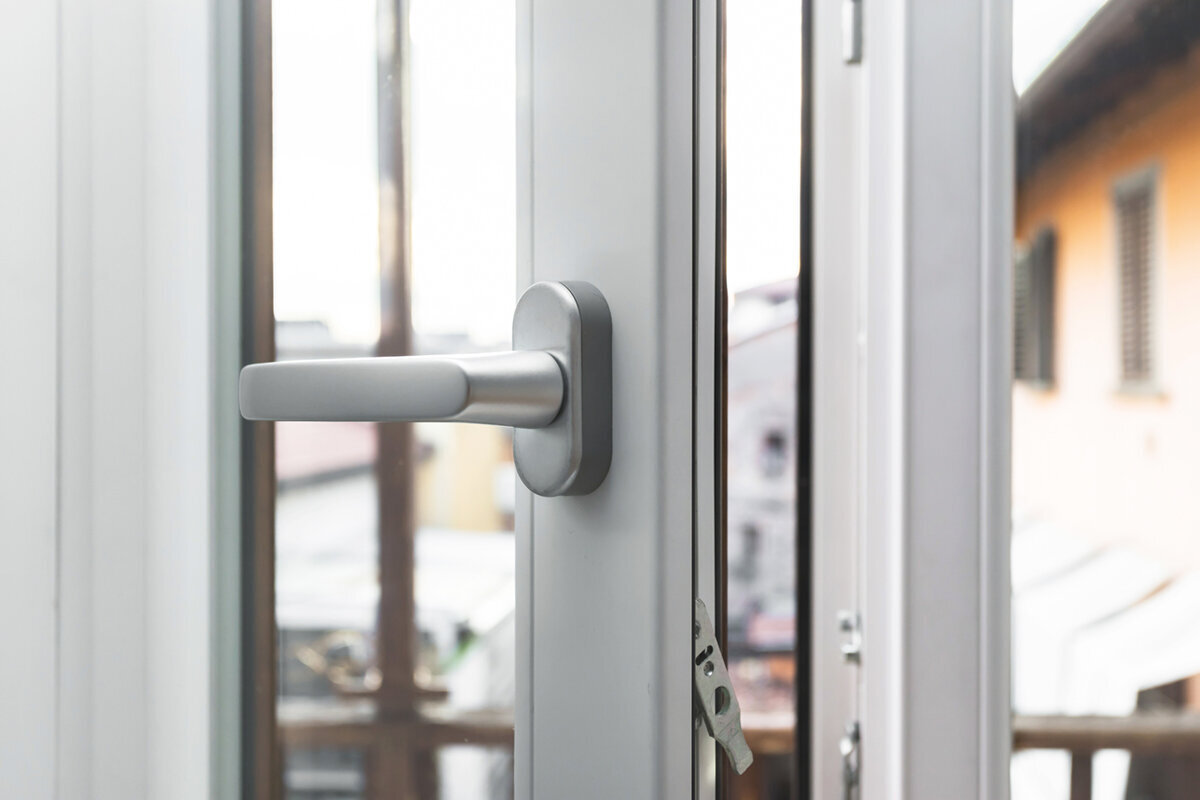
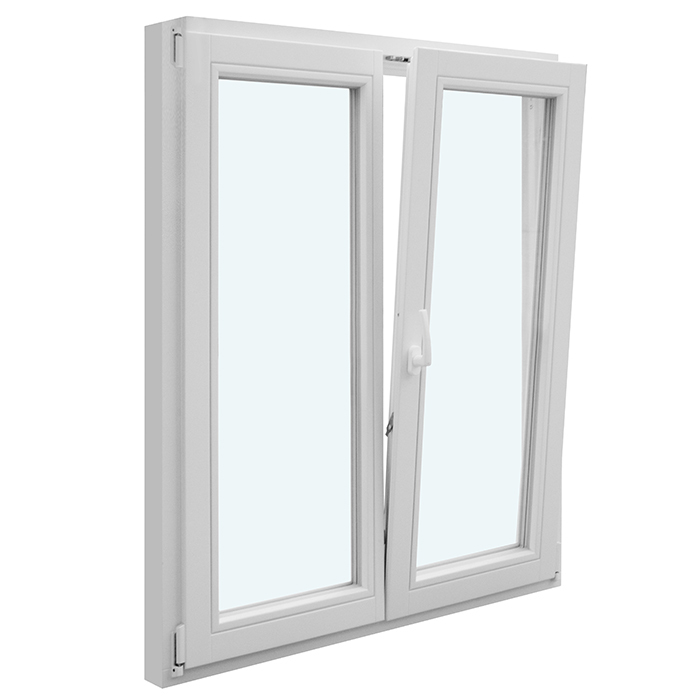
Two everyday movements are available on a tilt-and-turn unit. Turning the handle to the turn setting lets the sash pivot into the room from one side; the tilt setting draws the top edge inwards. You can therefore choose a wide aperture or a restrained one. A plain side-hinged unit only pivots and cannot tilt. Quotations can make this less obvious by adding labels such as single leaf, twin leaf, opening in or opening out. Those labels cover different choices. Specify leaf count, hinges and travel direction separately from the operating mechanism. Matching sightline measurements also give no assurance about handle quantity or the sequence in which the leaves work.
A fair comparison starts with a sketch of every position you expect, not merely the product name. Must the sash move completely aside so you can reach the sill? Would you tilt it regularly at either end of the day? Might outward travel solve a design or space constraint? For example, an inward-opening single-leaf window states the leaf count and travel direction, yet says nothing definite about tilting. Request the exact hardware operation in writing. Otherwise, a plan that depicts a sash moving indoors could be mistaken for evidence that both turn and tilt modes are included. Ask for the handle side to be identified as viewed from inside as well; drawings read from the opposite face can easily lead to errors.
Compare ventilation routines, not buzzwords
Tilting is useful when you want an opening without bringing the entire sash across the interior. It may fit a household’s airing pattern, particularly for occasional fresh air while circulation near the window stays unobstructed. Full turning still has an essential purpose on this system: the larger aperture supports brisk ventilation and often makes access or cleaning easier. Judge the two movements as part of real daily use rather than thinking of the product chiefly as a tilting window. Try keeping a brief note over a few representative days, recording each time you open a window fully and each occasion when the restricted position would have been more practical.
A basic side-hinged sash asks for no elaborate routine; it simply has to be swung open. This suits rooms aired at planned intervals where the projecting leaf causes no inconvenience. Kitchens, bathrooms and bedrooms need broader assessment than a choice of mechanism. Window quantity, room volume, occupancy, solar shading and installed ventilation all affect the solution. A tilted sash should never be expected to do the work of a properly coordinated ventilation plan. Give the designer or supplier a picture of airing times, spaces left temporarily empty and openings intended to clear stale air quickly. If mechanical ventilation is present, agree how opening windows will supplement it instead of assigning them a customary role without analysis.
Pre-purchase checks 2
The swing area is part of room planning
An inward-swinging sash occupies part of the room whenever it is turned open. Measure the clear aperture, then add its full path to your plan. Bedheads, tall desks, taps, curtains and low-hanging lights may interfere even if the window appears correctly positioned in a wall drawing. The practical test is whether normal users can open it far enough and bring it shut comfortably, not whether movement is theoretically possible. Apply that test to both tilt-and-turn and simple side-hinged units that travel indoors. Deep reveals and handles projecting from the frame also deserve allowance, as either can reduce the angle available in practice.
A pair of sashes creates two travel zones, and you must decide which leaf will handle routine use. For example, a double-leaf inward-opening window may expose much of the aperture when both leaves move, though everyday operation may rely chiefly on one. Set the handle locations, hinge arrangement and intended sequence before purchase. Test whether furniture such as a dining table or sofa would permit tilting but prevent a broad turn. There, daily tilting could be useful while full movement remains available for washing and periodic brisk airing. Recreate the proposed furniture footprint with masking tape; the marked layout will reveal whether the person operating the window and its moving leaf can share the available space.
Inward or outward opening: assess direction separately
Residential tilt-and-turn units commonly travel inwards, allowing occupants to control both settings from the room. A plain side-hinged sash may instead be specified to swing outside, removing its path from a tight interior. That benefit shifts the clearance check outdoors. Garden paths, terrace furniture, planting, external blinds, guardrails and adjoining construction all need to stay beyond its travel. Cleaning arrangements must be workable for the chosen direction as well. From indoors, make sure you can still reach the sash when open and draw it closed without losing control; gaining floor area inside is only one part of the decision.
An outward-opening single-leaf side-hinged window suits projects that specifically need this direction of travel. The name alone gives no assurance of a tilting mode, so have the mechanism identified separately. Beside a frequently used outdoor route or over a balcony, the projecting leaf must not create an unforeseen obstruction. In a home office, by contrast, moving the sash outside may release valuable furnishing space. Review both sides of the wall rather than relying on the elevation. A measured diagram of the leaf at maximum travel can uncover clashes sooner than a subsequent visit. Show external blinds and items brought out seasonally too, as an uncluttered drawing may omit them.
Pre-purchase checks 3
Choose window size, sash count and operation together
Greater window widths change both the feel and handling of moving leaves. A single large leaf yields plenty of aperture but demands comparable clearance for its path. Dividing the width between two leaves allows several operating combinations, while introducing a mullion and another sequence of actions. On tilt-and-turn units, occupants also need unambiguous control of the tilt mode for the relevant leaf. An exterior view is not enough for selection. Establish the leaf intended for daily use, whether its partner will operate as often, and whether the fitted handle can be reached comfortably. Dimensions, mass and hardware need to form a technically suitable combination, so request a check for the actual project rather than extrapolating from a visually similar display unit.
For wide façade openings, an outward-opening double-leaf side-hinged window can work if nothing occupies either exterior travel zone. Wide apertures do not invariably call for this layout; a smaller opening leaf paired with fixed glazing could support another room better. Relate each division to the sill, heaters, window dressings and outward view. Before ordering large units, arrange technical review of their dimensions, fitting method and usability. Generic names cannot serve as approval for a particular project. Place quotation drawings side by side at a common scale: divisions that seem alike in small images may produce markedly different sightlines, handle locations and clear apertures.
Plan cleaning access from the outset
Cleaning practicality often becomes apparent only once the unit is fitted. When a sash turns indoors, opening it widely will frequently bring its exterior face within indoor reach. That advantage exists whether tilting is available or not. Tilting, however, is not a safe cleaning method in itself and offers no replacement for properly planned access. Account for mounting height, positions over stairs, deep reveals, permanent fittings and obstacles outdoors. A task that is straightforward at ground-floor level may demand another approach upstairs. Test reach across the whole component rather than stopping at the central pane: outer corners, frame surfaces and hardware all need to remain accessible for routine care.
Some sections of glazing can remain permanently closed. A fixed-glazed window contains no operable sash. It can be appropriate when daylight, outlook or an uncluttered elevation matters more than ventilation at that point. Plan a method for washing its exterior before installation. Rather than pairing fixed glazing with any convenient opener, determine which section must provide fresh air, passage or cleaning reach. Where fixed and tilt-and-turn sections sit together, map the pane that can be reached during normal use and the cleaning route for the immovable pane. Assess that route at the intended fitting height and with the actual surroundings shown; an eye-level catalogue photograph cannot establish safe access.
Pre-purchase checks 4
Check furniture, privacy screening and sills realistically
Technical suitability does not guarantee that a window will be convenient if the nearby room has been ignored. Curtains and pleated blinds require clearance from the handle and moving leaf. Sill plants should have a practical place without being shifted for every airing. A kitchen sash moving inwards could meet a tap or wall unit, while a child’s desk might block full turning in a bedroom. The restricted tilt mode offers another way to admit air in these circumstances. Even so, verify that complete opening remains possible whenever the window’s purpose requires it. Consider future layouts too: today’s spare room may later house a deep work desk and extra blinds.
Use true furniture depths in the plan, rather than relying on schematic symbols. Draw the sash at its open limit and set that against curtains, blinds, objects on the sill and furniture that can move. Clearance is crucial for a side-hinged unit, since it offers no tilted position for routine airing. Make the order explicit about handle side, indoor or outdoor travel, proposed shading and spacing from built-in items. Window supply, fit-out and electrical drawings should agree on these details. Relocating a switch later or setting a cupboard too close can compromise use permanently. For a kitchen, review the worktop, tap and cabinet doors fully open in one coordinated drawing.
Not every opening needs a moving sash
Plan the window arrangement by allocating jobs to individual fields instead of repeating one mechanism throughout. Several apertures in one room might use a centrally placed tilt-and-turn leaf for airing, with fixed panes beside it providing an orderly outlook and a broader daylight area. Elsewhere, one accessible side-hinged leaf may perform the ventilation role adequately. Define what each field contributes: outlook, daylight, cross-flow, passage, maintenance or appearance. This exercise helps remove superfluous moving parts and exposes conflicts before use. A schedule listing primary purpose, frequency of operation and cleaning route will show where tilt adds practical value and where it has merely been specified by convention.
Special shapes should not force an opening function. Fixed triangular and sloping windows use permanent glazing for geometric forms, demonstrating that usefulness does not depend on movement. Where ventilation is still needed, provide a separate reachable opener nearby. Position it according to the interior layout and exterior composition. For mixed arrangements, study mullion lines, cleaning routes and the view from each side. The operating hardware can then remain only where it serves a real purpose. Coordinate the visible sizes of adjoining frames and leaves so the functional split reads as an intentional part of the elevation rather than an arbitrary break.
Pre-purchase checks 5
Special locations need their own opening decision
This article’s choice concerns upright windows set into an elevation. Roof units, overhead lights and apertures beyond easy reach use other movement patterns and require a separate decision process. For a high-level unit, consider operating height, handle reach, cleaning route and whether anyone will use it for regular airing. Locations over a worktop or within a stairwell also need their own review. A solution that performs well in a bedroom should not be copied throughout the house without checking each location. For every difficult position, identify the intended operator and a secure place from which they can act; the ability to open in theory says little about everyday practicality.
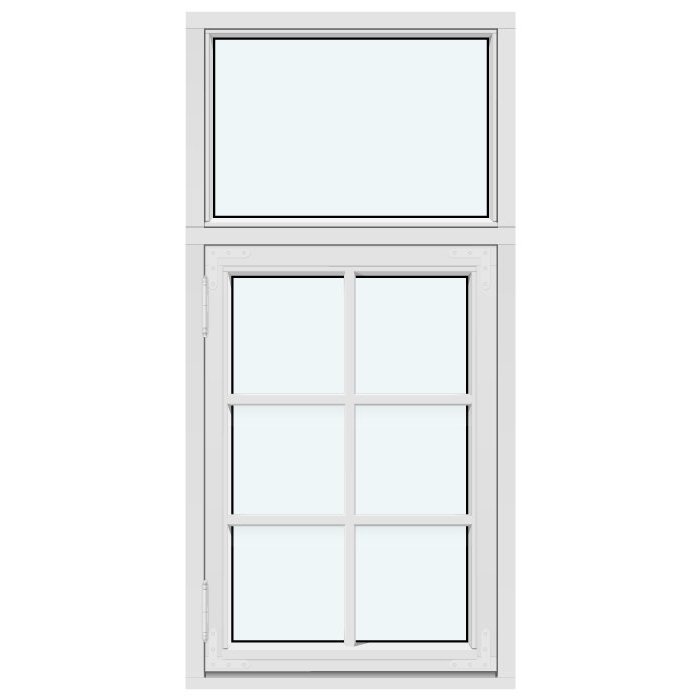
A centre-pivot roof window uses a pivoting action and belongs to a different product type, rather than being a roof-mounted version of the façade system. Its suitability depends on the proposed installation. For an elevated wall opening, an top-hung window that opens outwards may be another option when that specific hinged movement is required. Either alternative changes how the window is operated and washed. For each unusual position, record the movement wanted, who will use it and how they will reach it safely during operation. With those details, a specialist can judge the appropriate solution for the structure and project. Review more than the appearance when open: include handle reach, travel clearance and the steps needed to bring the sash shut under control.
Secure the order with an opening schedule
Incomplete specifications can undermine an otherwise sound choice. Give every window its own schedule line containing room reference, position, width, height, leaf count, direction of travel, hinge side, hardware operation and purpose. Note whether the main job is brisk airing, regular tilting, cleaning access or passage. Write “tilt-and-turn” explicitly wherever both movements are required. For a simple side-hinged unit, state whether travel is indoors or outdoors and identify the swing side. Photographs of furnishings and the relevant floor-plan area can expose ambiguities before approval. Finally, match the schedule to each quotation line; one general note on the opening page cannot describe differing units throughout a project.
Bring all openings into one coordinated schedule rather than purchasing each room independently. Deliberately aligned leaf divisions, handles and outward appearance make an elevation more coherent; including furniture and blinds allows the interior to work properly. Before committing, ask which choices are offered for the intended configuration, what site measurements are required and whether the proposed fitting context is suitable. Bloomcabin gives windows and doors a 5-year guarantee, with an indicated lead time of 4–6 weeks subject to confirmation of the order. Those terms still require verification against the particular order, especially when multiple units form one scheme. Sign off only after dimensions, views from both sides, handle locations, movement diagrams and quotation references agree throughout.
Frequently asked questions
Are tilt-and-turn windows invariably the best option?
No. Their two operating modes add flexibility, but turning an inward-moving leaf still demands unobstructed space. A simple side-hinged design may be preferable when swinging it fully is enough or when the project calls for another travel direction. Decide from the room’s use, access, furnishing plan and the task assigned to that window.
Can an inward-opening window automatically tilt?
No. “Inward-opening” identifies where a turning leaf travels; it does not define the hardware fitted. Such a window might only swing, or it might also have a tilt setting. For each unit, require the quotation and confirmation to specify tilt-and-turn operation, the hinges and the handle location.
What should remain clear in front of an inward-opening window?
Keep more than the sill unobstructed: the leaf’s complete travel zone must remain usable. Review furniture, curtains, radiator casings, lights and taps. Confirm it moves far enough for exterior cleaning access. A plan drawn with the sash fully open communicates this better than a closed wall view.
May fixed glazing sit beside an operable sash?
Yes, when only part of the overall glass area must provide ventilation. Identify the operable section and establish a cleaning method for the fixed pane. Then ask the project professional to verify the divisions, sightlines, usability and construction details.
What details should a tilt-and-turn enquiry include?
Provide the fitting location, aperture dimensions, leaf count, travel direction, hinge side and a clear requirement for tilt-and-turn operation. Describe its purpose—regular airing or cleaning reach, for example—and flag furniture, blinds or an elevated position. This lets the suggested arrangement be checked against your project.
Next step
Choose tilt-and-turn where routine airing will genuinely use the restricted position and the wide turn opening is also necessary. A side-hinged window is a considered alternative, not simply a cheaper one; its direct movement can suit either side of the wall. Avoid selecting from one display sample. For every room, review travel clearance, washing access, furnishings, window divisions and its place in the house-wide ventilation plan. A detailed opening schedule exposes the distinction between mechanism and travel direction before purchase, giving the technical discussion a clear starting point.
