
Using a Garden Shed in Winter: A Preparation Checklist
Garden sheds
Using a garden shed in winter is easier when the building, its contents and the route to it are checked before the wetter, darker months. A preparation checklist cannot make an unheated garden house comfortable or guarantee that it will stay dry; it can help you catch maintenance issues, limit avoidable moisture and decide when expert help is needed. Start by defining what you will do inside, then inspect the outside, openings and interior, and make a repeatable plan for visits. If you are buying or replacing a building, use the same checklist to test what the product information actually confirms.

01
Define what you need the garden shed to do
Write down who will use the shed, how often and for how long. A space visited briefly to fetch tools has different demands from one used to sort plants, store furniture or spend an hour reading or working. Note what must stay inside, whether anything will be brought in wet, and whether you need to open the door with full hands. Include whether you will leave items there between visits and how often you can check them; a plan that depends on daily attention may not be realistic. This does not assign a rating to the building; it helps avoid expecting a basic store to provide the comfort of a room intended for regular occupation. Treat dryness, warmth and ventilation as separate questions rather than assuming one follows from another.
Make a short list under three headings: essential, useful and optional. Include the items that need to remain dry, clear floor space, access requirements and any powered equipment; leave seasonal extras in the lower-priority column. If a replacement is under consideration, use the Verdana 1 garden house listing as one candidate to examine, not as proof that it suits winter use. Record only details stated in the listing or its accompanying documents, and mark gaps to ask the seller or installer about. This makes comparisons more reliable than choosing from a product photograph or name alone.
Check the site for standing water and runoff
Start with the ground around the building, because water that pools beside it can affect how often the space stays damp. Look after rain, from safe ground level: note where runoff travels, whether puddles remain by the base, whether soil or paving slopes towards the walls, and where water from nearby roofs or paths lands. Look beyond the immediate wall line too: a leaking drain or another downpipe can send water towards the building, even when its own fittings look clear. Check that leaves, cuttings and stored items are not blocking existing channels. These observations do not diagnose a fault, but they help you distinguish a drainage issue from moisture caused inside the shed.
Inspect any roof-edge channels, downpipes or other rainwater fittings only if they are part of your building, and keep to tasks that can be done safely without climbing. Do not assume such fittings are included just because a product image shows a roof, and do not change how water is directed near the base without checking the building guidance. If you are comparing options, the Verdana 2 garden house page is one listing to review for details that are actually stated; note what is missing rather than inferring it. Ask the supplier or installer how the specified base and drainage should be managed.
02
Inspect the exterior without climbing
Give the outside a visual check before winter and after particularly rough weather. From the ground, look for displaced or missing roof covering, visible gaps at joints, cracked or loose boards, damaged glazing, changes around the base, and water marks beneath the roof edge. Use the same route each time so you are comparing like with like, and take dated photographs of any change. Pay close attention to differences since the last check, rather than judging every mark in isolation; dated records make gradual movement easier to discuss. Avoid climbing onto the roof or leaning a ladder against a part that has not been assessed. A photograph can help describe a concern but does not establish whether a component is safe.
Use the manufacturer’s care and assembly information for maintenance, including whether a finish or treatment is required and how it should be applied. Do not cover a leak or soft area with a quick patch before finding where water is entering; trapped moisture can make the original problem harder to judge. If you notice movement, persistent leaks, soft or crumbly sections, a sagging roofline or a section that has pulled away, stop before attempting repairs and ask the supplier or a suitably qualified building professional. The Durano spacious garden shed listing can be assessed in the same way if you are considering a new building: seek written maintenance and construction details rather than guessing from its name.
Check doors, windows and ventilation
Check the door, windows and any vents that are fitted: they should open and close in the way the manufacturer’s instructions describe, without catching or needing force. Look for obvious gaps, damaged seals or water marks around frames, and check that a latch can be reached and used. A gap is not automatically solved by sealing every opening. Some buildings rely on designed ventilation, while sealing a leak or draught is a separate repair; blocking a vent can worsen moisture conditions. If you cannot tell whether an opening is meant for ventilation, ask the supplier before altering it. Close each fitting fully before leaving, so you can spot a fault rather than finding an opening left ajar after rain.
Moisture can come in on wet coats, tools, footwear, plant pots or stored materials, as well as from rain entering through a defect. Condensation on a cold surface is a clue to investigate the source and air movement, not a reason to hide it with a lining. Ventilate when conditions and the building instructions allow, and avoid leaving a door or window open in weather that can drive rain inside. When comparing a replacement, read what the Veltor 1 listing explicitly says about openings and ventilation; do not treat a product image or any glazing description as evidence of airflow or winter comfort.

03
Prepare the interior and stored items
Empty enough of the interior to see the floor, corners and lower wall edges. Remove damp leaves and soil, dry items that have come in wet, and separate them from belongings that must stay dry. Keep the way to the door open and avoid piling boxes against walls, where they can hide marks or restrict airflow. Keep frequently used items near the entrance and heavier objects low and stable, but do not install shelving or concentrate loads without following the building’s supplied guidance. Leave room to inspect the floor rather than filling every available space.
Store important papers, fabrics, electronics and other moisture-sensitive possessions elsewhere unless the building’s documented conditions are suitable for them. Do not put damp items into sealed plastic boxes and assume they will dry; dry them first and check them again after storage. Keep batteries, garden chemicals and other products according to their own labels and instructions, especially where temperature or moisture limits are specified. If buying a new building, check whether flooring and internal dimensions are stated for the Orello 1 garden house and compare those facts with what you plan to store. A model name alone says nothing about floor capacity or usable layout.
Make the route and entrance safe to use
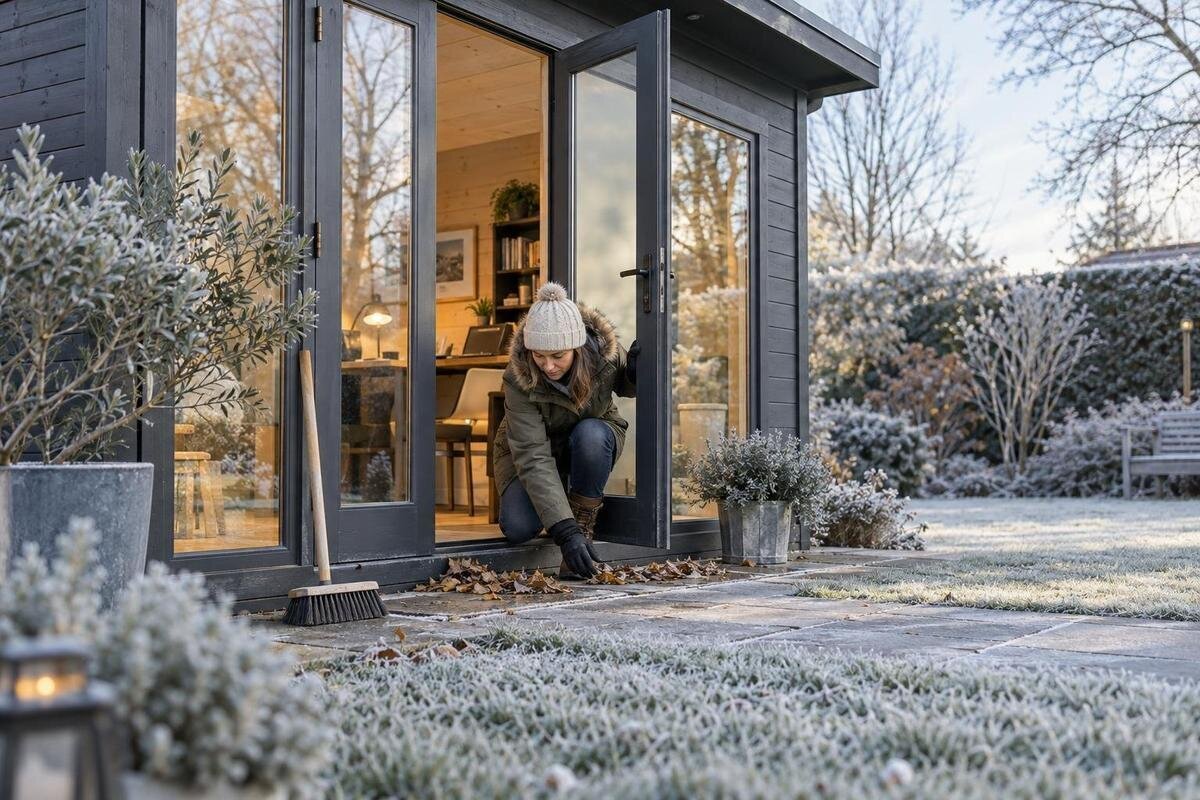
Make the walk from the house to the shed part of the preparation. Clear fallen leaves, branches, loose pots and other obstructions, and check whether rainwater is washing across the path or collecting at the threshold. If frost leaves a slippery patch, do not hurry across it; clear it using a method suitable for the surface. Keep the entrance area clear enough to open the door fully and carry items without stepping around clutter. In darker weather, make sure you can see the route. If you need fixed lighting, ask a qualified electrician to assess it. A torch can help when daylight has gone, but it is not a substitute for a reliably lit approach if you need regular evening access.
Check the route for regular access as well as for delivery of a replacement: consider gates, corners, changes in level and the space needed to manoeuvre the largest item. Check the planned door position and opening direction against the supplied drawings, not a perspective image. For a candidate such as Modano 1, write down the access dimensions and details the product documents actually provide, then ask about anything unclear before placing an order. Delivery and assembly arrangements can affect access, so confirm these points with the seller rather than assuming the building will pass through a narrow side entrance.
04
Assess power, heating and regular occupancy separately
Decide whether the shed is for storage only or whether you expect to use electrical equipment, lighting or heat while inside. These are different requirements from keeping hand tools dry, and a building should not be treated as a powered workroom simply because it has space for equipment. List the appliances and how they will be used, then ask the supplier what the building is designed to accommodate and have any electrical work assessed by a qualified electrician. Follow the instructions for every appliance and do not improvise wiring or use equipment in conditions outside its stated limits. Consider whether equipment will run unattended or while you are away; check its instructions before treating the shed as a suitable place for it. Keep a clear way out at all times.
Heating will not fix water entry, a damp base or a door that will not close, so address the building’s condition first. If warmth is essential for the planned use, check the documented insulation and suitability of the whole building, not just one component, and ask an appropriate professional what work is needed. Do not assume that a product title describes insulation, electrical provision or safe heater use. For example, the Wooden Garden Tool Shed M listing should be judged only by the information supplied with it; seek written answers to anything important that is not specified. This keeps the decision about use separate from the name on the listing.
Check the specification before ordering
Before ordering a garden house intended for winter use, compare the written specification with your checklist. Confirm the overall dimensions and footprint, openings, roof and wall materials, floor details, supplied components, stated maintenance and the type of base required; check whether items you expect to need are included or must be arranged separately. Ask what level of assembly is expected, whether specialist help is advised, and what site access and delivery arrangements apply. Product photographs can help you understand appearance, but they do not establish what is included, how it is built or how it performs in wet or cold weather.
Request the relevant installation, care and product information before purchase, and keep it with your winter notes once the building is in place. Ask specific questions: what must be prepared at the site, how should stated materials be maintained, what are the limits for storage or regular occupancy, and which parts require attention after assembly? Compare the written order scope too, including any work or accessories that are not part of the building; do not infer these from photographs. The Wooden Garden Shed S product page is one listing to test against those questions, not a substitute for answers or technical documents. Record replies alongside the exact model and version so instructions for a different building are not applied by mistake. If a point affects safety or structural suitability, consult a qualified professional.

05
Use a simple winter inspection routine
Make a short routine that fits how often you visit, rather than relying on one big clean before winter. At each visit, notice whether the door works normally, whether water is standing near the base, whether anything inside is damp, and whether the route remains clear. After a storm or a period of heavy rain, carry out an extra visual check from the ground and compare it with your earlier photographs. A reminder can be tied to the first visit after a spell of wet weather, rather than to an arbitrary date, so it reflects how the site is behaving. Clear leaves from safe, accessible areas and do not climb, remove heavy parts or work in unsafe weather to complete a checklist. Follow the maintenance interval in the manufacturer’s guidance where one is given.
Use a dated note with four simple entries: what you saw outside, what you saw inside, any maintenance done, and what needs follow-up. That record can reveal whether a mark is new or recurring and gives a supplier or tradesperson more precise information than saying the shed gets damp in winter. Keep a list of items to remove if a leak appears, and make sure important belongings are easy to reach without moving heavy stacks. At the end of the season, review what actually caused inconvenience—poor access, moisture, lack of space or discomfort—so any changes address the real issue rather than adding equipment at random.
Know when to stop using the shed
Set clear reasons to stop using the shed until it has been checked. These include a visibly changed roofline, movement at the base, a door or wall that has suddenly shifted, water entering near electrical equipment, a soft or unstable floor, or damage that leaves an opening exposed. Do not go inside to investigate if the structure appears unstable, and do not climb up to inspect the roof. Keep other people away from the area, protect belongings only if you can do so safely, and contact the supplier or a qualified building professional. If electrical equipment or wiring is wet or damaged, leave it alone and seek qualified help. Do not resume use solely because the weather has improved; the underlying cause, not the forecast, determines whether the damage is safe.
For less urgent signs, such as a recurring musty smell, a damp patch, condensation or a small leak, note the location, timing and recent weather, then check the care instructions and arrange proper advice if the cause is not clear. Avoid painting over a stain, sealing every joint or using a dehumidifier as a substitute for fixing water entry. Once the source is addressed, dry stored items and recheck the affected area before returning it to normal use. A checklist works best when it includes both routine jobs and a point at which you pause; noticing a problem early is more useful than forcing a garden shed to stay open through the season.
Frequently asked questions
Can I use an unheated garden shed in winter?
That depends on what you mean by use. Fetching tools or storing items is different from spending long periods inside. Check the building’s documentation for its intended use and conditions, and do not assume an unheated shed will feel dry or comfortable. If regular occupation is essential, get advice before relying on it.
How can I reduce damp in a garden shed?
Begin outside: look for standing water, blocked channels and signs of rain getting in. Keep wet tools and coats from drying among stored belongings, and maintain openings as instructed. Check again after rain. If damp returns or the source is unclear, seek advice rather than sealing or covering the affected area.
Should I leave vents open during winter?
Not as a default. Follow the maker’s guidance for any vents and windows, and ventilate when conditions allow without letting rain blow in. Keep designed vents clear, but do not alter seals or leave an opening unattended without considering the weather and security.
What should I check after a storm?
From safe ground, look for changes to the roofline, walls, base and openings, as well as water inside or around the building. Do not climb to inspect damage. If anything appears unstable, or water is near electrical equipment, keep clear and contact a suitable professional.
Does a new garden shed need treating before winter?
There is no single answer for every building. Check the product’s care instructions for whether treatment is needed, what to use and when to apply it. Do not add a coating based on a general rule; ask the seller or manufacturer if the documents are unclear.
Before the first regular winter visit, complete a walk-round, organise the contents, check the usual openings and clear the approach. Then revisit the checklist after rough weather and whenever the way you use the shed changes. Winter readiness is not a one-off coating or device; it comes from noticing water, keeping access clear, following the building’s care instructions and being realistic about what the structure is meant to do. If you see signs of movement, persistent water entry or unsafe services, pause use and get suitable advice before returning.
