
What Makes a Well-Built Outdoor Hot Tub?
Outdoor hot tub buying guide
An attractive shell, neat cladding or polished product photograph can make an outdoor hot tub look carefully made, but those details do not reveal every joint, support or service panel. A better assessment follows the construction from the surfaces you can see to the parts you cannot: identify what each component is made of, how it is held together, what supports it and how it can be inspected or repaired. This guide explains what to ask the seller or manufacturer to document, and how to compare the answer without mistaking missing information for proof of a fault.
Build quality means more than a polished exterior
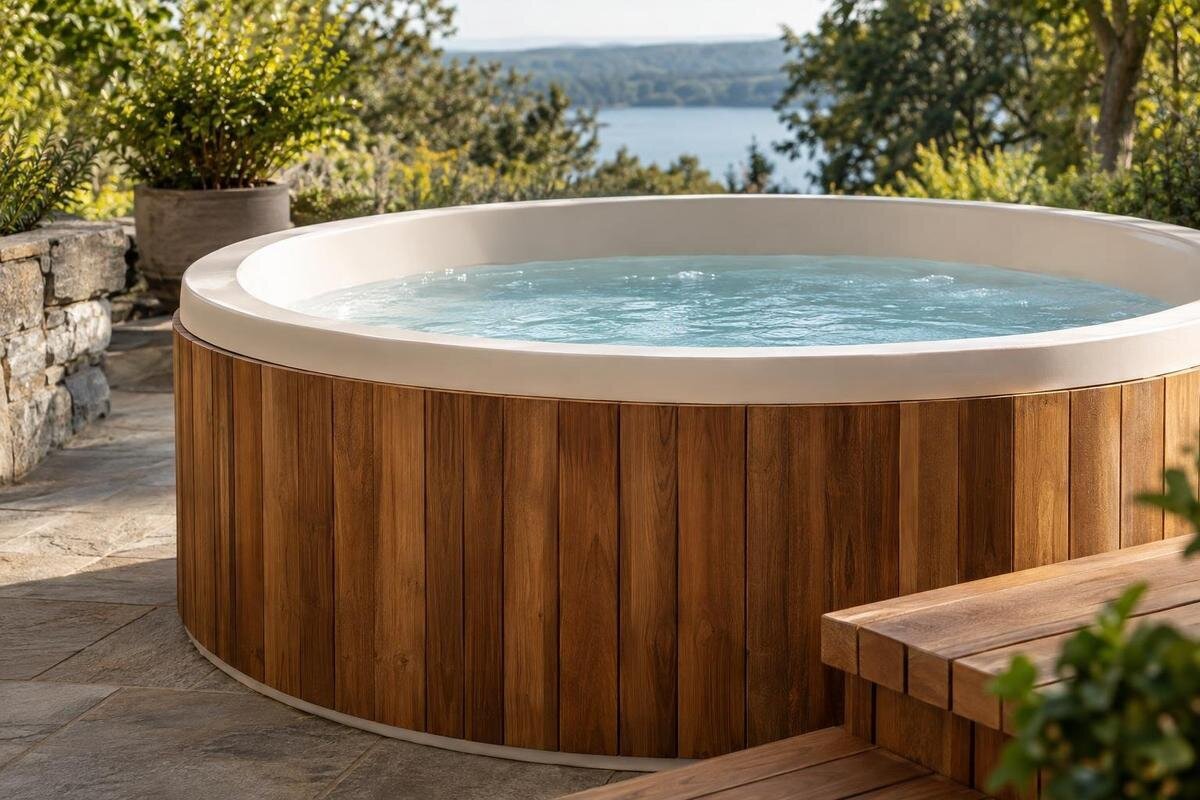
An outdoor hot tub can look carefully finished while leaving key construction questions unanswered. A smooth surface, aligned panels and clean edges are evidence of visible workmanship, but they do not show the materials beneath a finish, the design of hidden joints, the support for the tub body or how service components are reached. Product photographs can help you see the exterior; by themselves, they cannot confirm how a particular unit was assembled. If you view a display model, note which parts are visible and which are enclosed. Treat appearance as one observation in a wider assessment, not a substitute for model-specific construction information.
Build quality is easier to assess when the parts and their relationships are described clearly. Ask what each major component does, what it is made of, how it joins to adjoining parts, what protects its surface and how a technician can inspect or repair relevant components. Look for answers in product specifications, diagrams and written responses that identify the model, rather than relying on broad phrases such as “premium construction”. Also check whether the information applies to the exact model or only to a general range. This does not make one material or building method automatically superior; it makes evidence easier to compare and uncertainty easier to identify. A clear description is a basis for judgement, not a promise of trouble-free use.
Identify the material used for each part
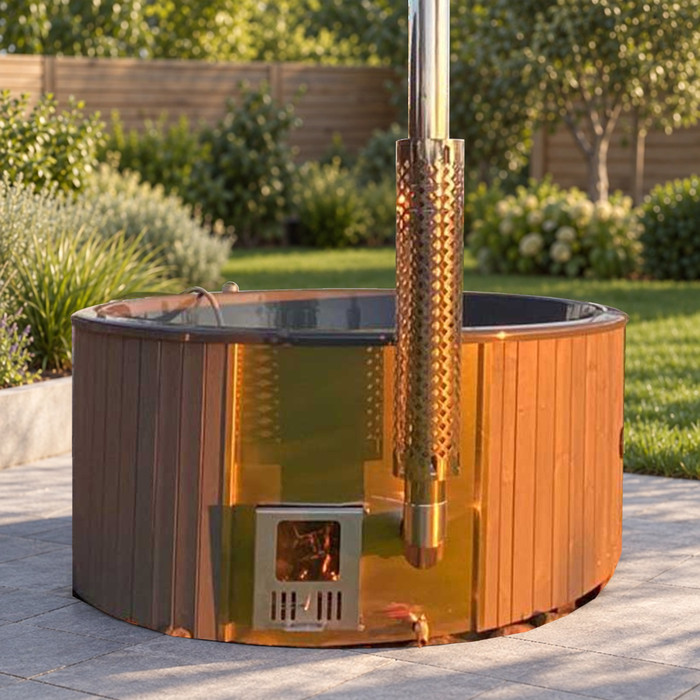
Begin by separating the materials list by component. Ask what forms the water-contact surface, what makes up the tub body, whether a separate supporting frame or base is used, what the outer panels are made from, and what materials are used for seals, trim and fasteners where relevant. Designs differ, so ask the seller to use the manufacturer’s own component names rather than forcing every model into a generic diagram. The key is to learn whether a material description applies to the whole tub or just one visible part. For example, a timber exterior alone does not identify the material of the water-holding surface or internal support. Ask the seller to point out parts on a diagram if the labels are unclear.
For each named material, ask which part it belongs to and whether the specification gives a species, grade, type, finish or treatment where that detail is relevant. A material name without context is hard to compare: the same word might describe a decorative panel on one listing and a different component on another. When you review Bloomcabin Hot Tub Cove 2, record only material details the listing explicitly assigns to a component; do not infer them from the model name or photographs. If a detail is absent, mark it as not stated and ask for the matching technical sheet or written clarification. That makes it easier to compare complete descriptions rather than one appealing material label.
Ask how the tub is supported
Ask how the tub body is supported and how its base, frame or other structural parts connect, where those elements are used. A useful answer names the components and explains their role, rather than describing the whole unit with a term such as “reinforced” or “heavy-duty”. Request a model-specific diagram or construction description that shows which parts support the body and how they meet. You do not need to calculate loads or judge a design from a sketch; the purpose is to see whether the manufacturer has explained the support system in a way a buyer can verify. If the drawing leaves out a part, ask whether it is omitted for simplicity or is not part of that model; do not guess.
When considering Bloomcabin Hot Tub Haven 6, ask the seller to relate the written support description to the parts labelled in any supplied diagram. Do not assume that the visible exterior reveals what sits behind it. If the information uses a term such as “support” without naming the part, ask which component it describes and how it connects to the others. Where the drawing and specification appear to differ, ask the seller to explain the difference. An omitted detail is not proof of poor construction, but it limits what you can assess until clarified.
Check how components and joints are assembled
Assembly details help explain how separately made parts become one unit. Ask how panels and structural components are joined, whether fasteners, interlocking sections or other methods are used, and where seals or joint coverings are present if relevant to that design. A specification may give material names but omit these connections, so request an assembly description or drawing that labels the joints. The question is not to demand a particular technique: different designs can use different methods. It is to find out whether the method is identified and whether the manufacturer explains how it fits the component. Where materials or finished surfaces meet, ask how that transition is described.
When you assess Bloomcabin Hot Tub Fjord 8, ask which joints are specified for that model and where they are shown in a diagram or close-up. If you inspect a display unit, note visible gaps, uneven joins, loose-looking trim or exposed edges, then ask the seller to explain what you see. A seam may be part of the design, so a photograph alone is not enough to label it a defect. A useful explanation links the joint to the named parts and finish, rather than simply repeating a general quality claim.
Inspect the finish and the edges
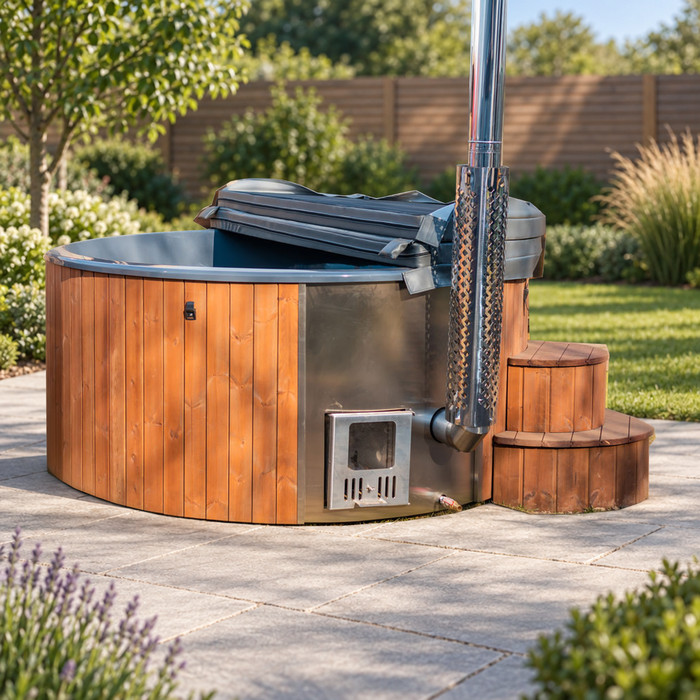
Finish is a separate check from the material underneath. Examine accessible surfaces, edges, corners and transitions between panels for consistent coverage and a tidy fit. Depending on the finish, useful observations might include roughness, splintering, chips, peeling, uneven colour or an edge left exposed. Record what you can see, but distinguish a surface mark on a showroom sample from evidence about every unit or the underlying structure. Ask what finish is specified for each exterior surface, whether it is applied to relevant edges, and which product description covers it. Avoid assuming that a polished sheen means a particular coating or protective performance.
If you cannot inspect a model in person, request clear photographs from more than one angle, including close views of joins and edges where practical. Confirm that the images illustrate the same finish and version as the listing; styled product photography is not a construction record. If you can view a sample, inspect it in ordinary light and ask the seller to distinguish natural material variation from an unfinished or damaged area. For any claim about resistance to outdoor exposure, request the written finish specification or supporting document rather than inferring suitability from colour, gloss or a neat-looking surface. A finish description should say what it covers, not just how it looks.
Find out how components can be inspected or repaired
To assess serviceability, ask how a technician reaches any components enclosed within the tub body or panels. Request the location of service panels or access points, which parts they are intended to expose, and whether inspection or repair can be carried out without damaging finished sections. A labelled diagram or service document for the exact model is more useful than a general assurance that it can be serviced. Do not open electrical or mechanical equipment yourself; the practical question is whether the supplier can explain the intended access route and who should carry out work requiring specialist knowledge. Ask whether access requires moving or removing finished panels, and who is expected to do that work.
For Bloomcabin hot tub Aurora 10, ask what the current documentation says about service access, replacement components and the route for arranging a repair. Check whether parts are identified by name or number, and whether the seller can explain how a technician would locate them; do not treat a closed panel in a photograph as proof either of good access or poor access. Ask which parts are regarded as replaceable and what documentation supports that answer. If the information is not published, note that and request a written response rather than assuming access or parts support. A clear service description is useful even when you do not need a repair at the time of purchase.
Ask for evidence behind durability claims
Broad claims such as “weather-resistant”, “heavy-duty” or “built to last” are not a construction specification. Ask which component the claim covers, what material or design feature it refers to, and whether the seller can provide a model-specific document, test description or manufacturer statement to support it. If testing is cited, ask what was tested, under what stated conditions, who produced the evidence and whether it applies to the model and version you are considering. Do not convert a claim into a predicted lifespan or a guarantee of performance. Without a defined scope and supporting information, it remains a statement to clarify.
If a durability claim appears on the Cove 2 product page, ask the seller to identify the document supporting that wording. A useful reply names the relevant component, gives the source and explains the claim’s limits. Keep the response with the specification so that you can compare it later. Distinguish evidence about a particular material or finish from a claim about the complete tub. If the answer is only another adjective or a general brand assurance, record the claim as unsubstantiated in your comparison rather than treating it as confirmed.
Read written warranty terms alongside construction details
Read any warranty or guarantee document as a record of stated coverage, not as a shortcut for judging how well the tub is made. Ask whether the terms deal separately with the tub body, supporting structure, finish and components, and look for the stated period, exclusions, required records, reporting route and remedy for each. The wording may differ by part, so a headline such as “warranty included” tells you little by itself. Check that the document identifies the model or product family, is current, and explains whether repair, replacement or another response is offered. Note any conditions that the document says apply to a claim.
For the Haven 6 listing, read the applicable written warranty terms alongside the construction information. If the document uses broad words such as “structure” or “finish”, ask which parts those terms include and how a workmanship issue is handled. Ask who assesses a reported problem and whether a service provider is specified. A clearly stated warranty can make the support arrangement easier to understand, but it does not independently prove the quality of hidden materials or joints. Record any differences in coverage between components, rather than relying on a single headline warranty period.
Compare models using the same construction checks
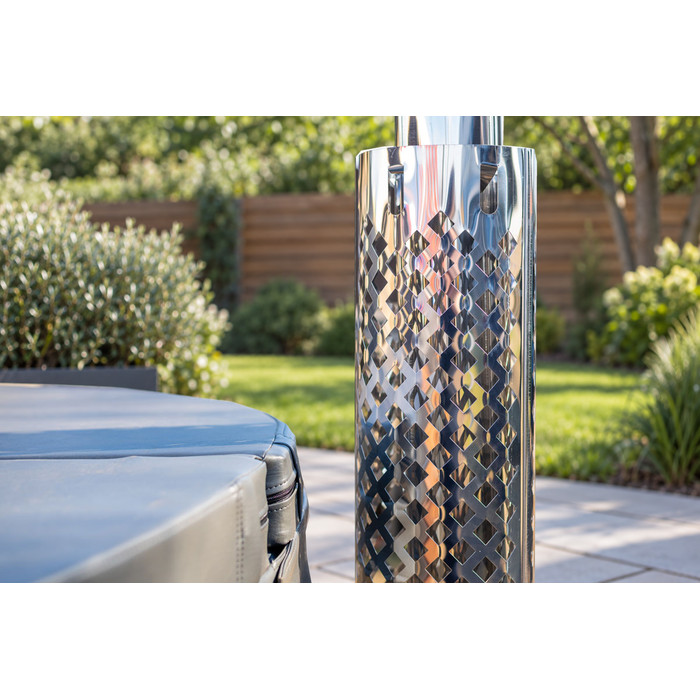
Make a side-by-side record using the same headings for every model: named materials by part; frame, base and support description; assembly and joint details; finish specification; access to components; documents that substantiate claims; and written warranty scope. In each row, distinguish published specifications from a seller’s written reply, an observation on a display sample and an unanswered question. This prevents a persuasive photograph or confident verbal statement from being given the same weight as a model-specific document. Avoid scoring a material as better simply because it has a longer name or sounds more technical. A consistent record also shows where two models cannot yet be compared fairly.
For the Fjord 8 page, enter only what its own published information states, then use the same evidence standard for competing models. If two descriptions differ, ask the seller to explain whether this reflects a real construction difference or simply a different level of detail; do not fill gaps by assuming that products in one catalogue share the same build. A model with fewer published claims may still be worth considering if its construction can be documented on request. Your comparison should show where evidence is strong, where it is incomplete and which answers matter to your intended use.
Decide whether the construction information is sufficient
Before choosing, identify which unanswered construction questions would affect your decision. For the parts that matter most to you, aim to have the materials and their functions identified, a clear explanation of how the tub is supported and assembled, a finish description, and a documented route for inspection or repair. Separate a missing descriptive detail from an uncertainty about an important component or repair route. This helps you focus follow-up questions on information that could change your choice, rather than collecting more paperwork without a clear purpose.
If the Aurora 10 listing or another shortlisted page provides useful evidence, place it beside the seller’s written answers and check that each item addresses a specific part rather than relying on general marketing language. Choose the model for which the construction and service route are sufficiently understandable for your intended ownership, not simply the one with the most persuasive finish or the largest number of adjectives. You cannot infer hidden workmanship from a name or image, but you can compare the information that is actually available and decide which unanswered questions you are willing to accept.
Frequently asked questions
Does a timber exterior mean the whole hot tub is made from timber?
No. A material description may refer only to an outer panel or another component. Ask for a component-by-component list showing what forms the tub body, support structure, exterior and any relevant seals or trim.
Can I assess hidden support from product photographs?
Photographs may show visible surfaces and joins, but they cannot establish what sits behind an enclosed panel. Ask for a model-specific diagram or written description of the support structure and how its parts connect.
Are visible gaps or seams always a sign of poor workmanship?
Not necessarily. Some joins may be part of the design, while an uneven or damaged area may need explanation. Ask the seller to identify the join and compare the answer with the model’s assembly or finish information.
Does a longer warranty prove better construction?
No. Warranty terms describe stated coverage, exclusions and the process for dealing with a problem. They do not, by themselves, show the quality of hidden materials or joints. Read them alongside the construction information.
What documents should I request?
Ask for a model-specific materials list, a diagram or description of the support and joints, finish information, service-access details and any written warranty terms. For durability claims, request the supporting document and what it applies to.
A sound construction assessment ties each important part to a named material, a described assembly method, a finish and a route for inspection or repair. Written specifications and warranty terms make those details easier to compare, though they are not a promise of trouble-free ownership. Where an answer is still missing, treat it as an open question—not as proof of a fault or a reason to assume everything is in order.
