
What Size Hot Tub Do You Need?
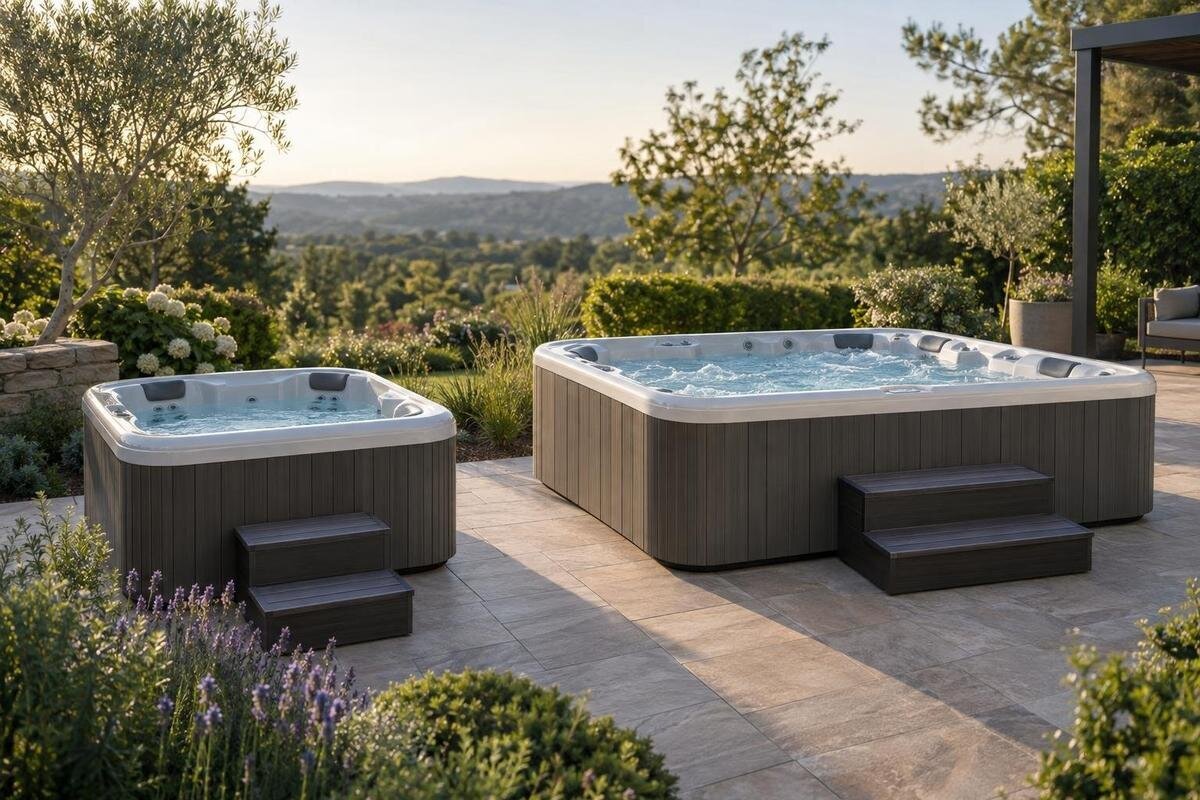
Hot tub sizing
Choosing a hot tub size is less about matching a number in a model name to the number of people in your household than about checking whether the tub suits the way it will be used. Start with the number of people who are usually in the water together, then compare that with the capacity wording and seating layout in the product information. Finally, check the tub’s external dimensions against the footprint set aside for it. These are separate questions: a capacity figure does not describe the arrangement of the seats, and a model name does not tell you the outside measurements.
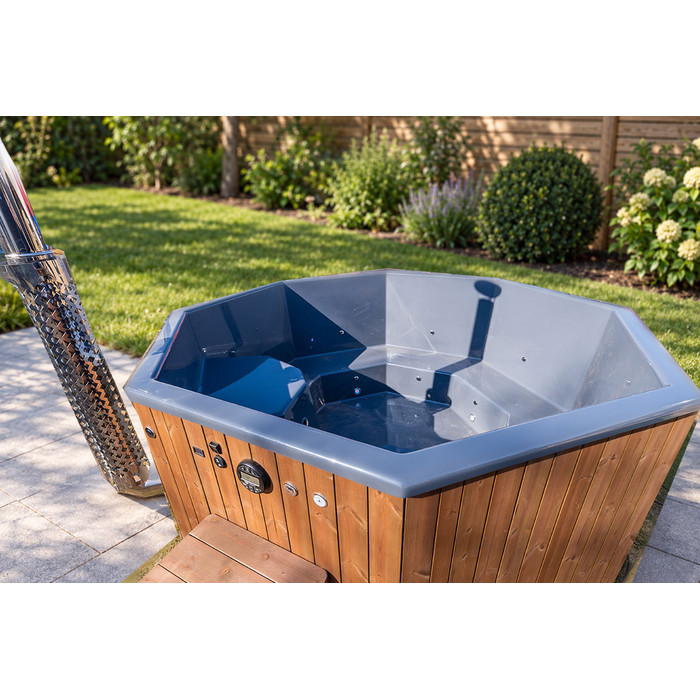
Count the people who will use it together
Start with the number of people likely to be in the tub at the same time during a normal, repeating pattern of use. The total number of people who might use it over a week or month is different: some may take turns, and people who use it at separate times do not need places in the same session. Write down the number of simultaneous users you genuinely expect on a typical occasion. That figure is a more useful first comparison than the size of a household or group, because the capacity question is about sharing the tub together, not everyone who may use it at some point.
If the number changes, distinguish the usual group from a larger group that shares the tub less often. Record how frequently each group is likely to use it together, rather than blending them into one inflated estimate. For example, if two people would normally share the tub and four would use it together occasionally, keep both figures in your notes. That is a description of your expected use, not a recommendation for a particular capacity. You can then decide how much weight to give each group when assessing the options. Be clear about whether everyone will actually be in the water at once or will use the tub at different times. Keep these expectations consistent across your shortlist: comparing one model for ordinary use and another for the largest possible gathering would make it difficult to judge which better suits your needs.
Read the stated capacity carefully
Product information may state how many people a tub accommodates, give a number of seats or use another capacity label. Do not treat those terms as interchangeable. A stated number of people and a count of physical seating positions describe different details, and neither tells you on its own how the positions are arranged. Read the exact wording and any qualification attached to it. If a figure is described as an upper limit, for example, keep that wording with the number rather than recording the figure alone. A capacity note is useful only when you know what the product page says it represents.
When reading a page such as the Cove 2 product page, look for an explicit figure and any explanation of what it means. A numeral in a model name is not a substitute for a specification. If a listing gives a number without saying whether it refers to people, seats or another measure, leave its meaning unconfirmed rather than guessing. Your comparison is reliable only when you can interpret each figure on the same basis. A larger-looking headline number cannot, by itself, establish that one tub accommodates more people than another.
Compare capacity with the seating layout
Once you know what a listing means by capacity, check the seating layout separately. Count the positions that the product information identifies as seats, and note how a written description or diagram shows them arranged. Then consider the layout with your usual group in mind: can you identify where each person would sit, or does the information give only an overall occupancy figure? This is a way to assess how clearly the layout is described, not a way to establish comfort from a drawing. A total capacity does not show the arrangement of individual places, so keep the layout as a separate comparison point. If a diagram is supplied, check that it is labelled for the model and version you are considering. Where two options have the same stated capacity, the layout gives you another useful basis for comparing them without assuming they offer identical seating.
Use the published details for each model, including the Haven 6 listing, to distinguish a stated people capacity from a seat count. If the listing gives both, record both and check whether the layout or description explains how they relate. Do not infer positions from the way a photograph is framed or from visible outlines alone; an image helps identify a product but is not a substitute for a written specification. If the layout is not described, leave that point open or seek clarification. This avoids treating an impression from a picture as a confirmed seating arrangement.
Check the hot tub’s external dimensions
For the footprint comparison, look for the tub’s external measurements, not an internal measurement or an estimate from a photograph. Check that the figures describe the outside of the product and apply to the exact model or configuration under consideration. Record the units as well as the numbers. If a listing provides more than one measurement, note what each one refers to instead of choosing the figure that seems most relevant. Where the outline is not obvious from a length and width alone, look for a labelled drawing that clarifies the shape.
When recording measurements from the Fjord 8 product page, keep each figure beside its label and unit rather than copying a bare sequence of numbers. Separate measurements of the seating space inside the tub from measurements of its outside footprint: the former may help explain the layout, while the latter are what you compare with the space reserved for the product. If another model presents its dimensions in a different order, rearrange your notes so that corresponding measurements sit alongside one another. Do not assume that the first number on every page describes the same dimension. This makes differences easier to read and reduces the chance of comparing a width with a length.
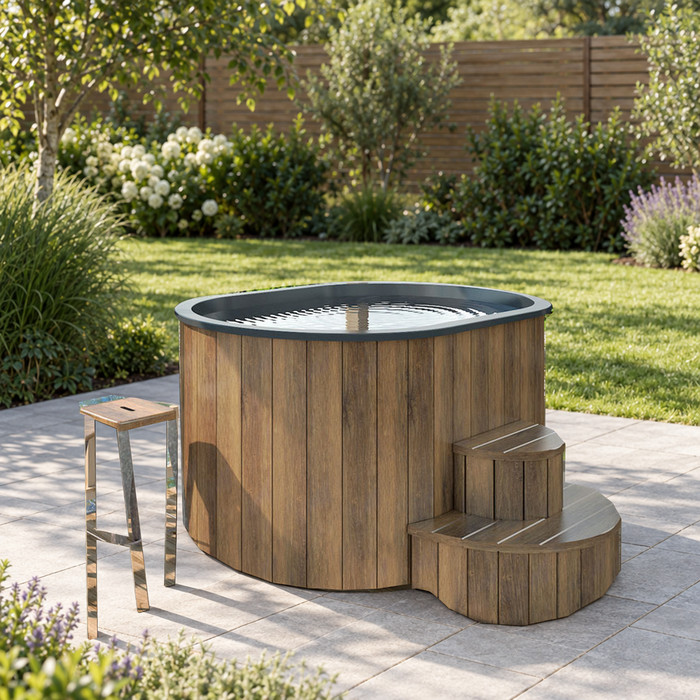
Match the dimensions to the footprint available
Compare the tub’s external length and width with the footprint set aside for it, using the same units for both. Check each dimension rather than relying on a general impression that there is enough room overall. A space that appears generous in one direction may still be too narrow in another. For a rectangular outline, keep the two comparisons separate: the proposed length against the available length, and the proposed width against the available width. Do not replace those checks with a comparison of total areas, which would lose the distinction between the two dimensions. If you consider turning the outline around, compare both dimensions again in that orientation. When the space or tub is not a simple rectangle, use a dimensioned outline to understand the shape. The aim here is to compare the tub itself with the footprint reserved for it; that comparison does not settle separate installation requirements.
Confirm what the published dimensions describe before making that comparison. If the product information offers different options or drawings, make sure you are using the outline for the version you are assessing. The Aurora 10 listing is one entry to check in the same way: its name cannot tell you whether its external measurements fit the footprint available. Do not estimate those measurements from a product image or assume that an unlabelled drawing is to scale. Use stated dimensions or a clearly identified outline so that the comparison rests on product information rather than visual guesswork.
Give regular use more weight than a rare maximum
Occasional visitors are worth considering, but they should not automatically set the size of a tub used mostly by a smaller group. Begin with the people who are regularly in it together, then note how often a larger group is likely to share it at once. If that happens rarely, decide whether the occasional gathering is important enough to influence your choice. More people using a tub at different times is not the same as more people using it simultaneously, so consider the overlap rather than counting everyone who might use it across a day.
There is no universal rule to choose for either the smallest group or the largest possible crowd. Compare the ordinary number with the occasional peak, then check whether a model’s stated capacity and seating layout address the use that matters most to you. The Cove 2 model details should be assessed by those same facts, not by assumptions attached to the model name. Also compare its confirmed external dimensions with the footprint available. A choice that covers a rare maximum may involve a different footprint, but you should judge that trade-off from the figures for the specific model rather than assuming how capacity and size relate.
Compare the four models on equal terms
For a neutral comparison, put Cove 2, Haven 6, Fjord 8 and Aurora 10 into the same set of notes. Give each model the same fields: the exact wording of its stated capacity, any identified seat count, information about its seating layout, and its external dimensions. The names identify the models, but their numerals do not verify a person count or show that one tub is larger than another. A useful comparison depends on the details stated for each model, not on how its name sounds or how its product photograph appears.
Record the Haven 6 model page in the same format as the other three, rather than placing it in a separate category based on its name. Once the fields are filled in, compare each model with your own requirements before comparing the models with one another. For each option, note whether its stated capacity addresses your usual group, whether the seating layout is clear enough to assess, and whether its external dimensions fit the reserved footprint. Keep an unanswered question separate from a definite mismatch: missing dimensions do not establish that a model is too large, just as an unexplained capacity figure does not establish that it meets your needs. This gives the shortlist a useful structure without forcing a ranking. You may find that one option can be assessed fully while another still needs clarification. Neither the model name nor the amount of detail on the page should decide which is the better fit.
Keep each set of specifications tied to the right version
If a product page presents more than one configuration, make sure the capacity, seating information and external dimensions in your notes all refer to the same version. A capacity statement for one option and dimensions for another do not make a reliable comparison. Check that the model name and any selected configuration match the figures you are using. Do not assume that details shown in a general product gallery apply to every version; use information that is explicitly connected to the option you are considering.
Look for a clear description of the selected version. If the page does not make that connection, record the ambiguity and seek clarification before comparing it with models whose details are explicit. Assess the Fjord 8 listing in the same way as the other entries: do not combine a capacity from one part of a page with a seating diagram or external measurement that may describe another version. You are looking for a matched set of specifications, not simply a page with the most figures. This check prevents a comparison from appearing complete when its details may refer to different configurations.
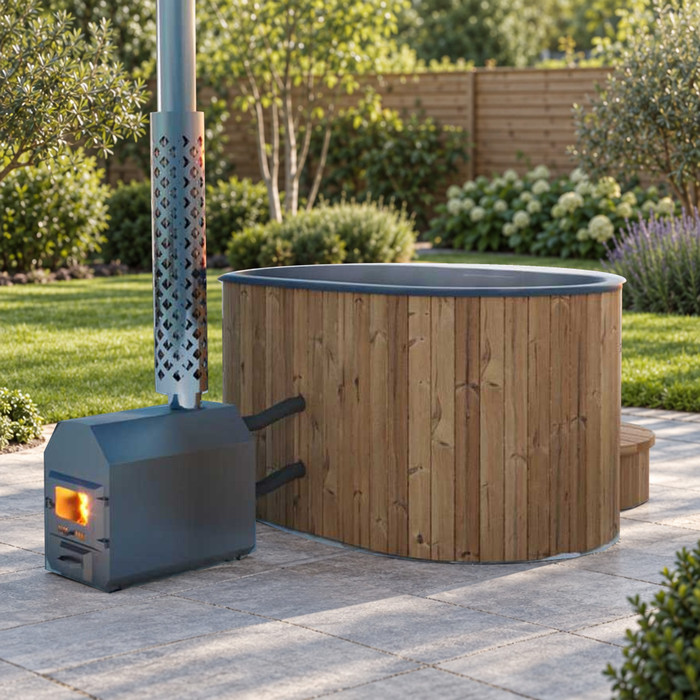
Leave missing or unclear figures unconfirmed
When a capacity or dimension is missing, conflicting or unclear, identify the precise question that remains. You might need to know whether a quoted figure means people or seats, whether a measurement is internal or external, or which configuration a drawing represents. A focused question is more useful than asking generally whether a tub is the right size. Keep the conflicting wording or figures in your notes so that the answer can address the actual uncertainty. If two measurements differ, do not choose the smaller one because it fits your available footprint, or the larger capacity because it suits your intended group. Establish what each figure describes first. Once the meaning is clear, update the relevant comparison field rather than carrying both figures forward as though they were interchangeable.
Use the relevant product information to resolve a gap rather than relying on a search snippet, an old note or an inference from another version. If the Aurora 10 model details leave a field unclear, mark it as unconfirmed and ask for the exact figure or a dimensioned outline. Apply the same standard to all four models. If a point cannot be confirmed, compare only the facts that are clear and do not rank the models on the missing detail. It is better to pause a size comparison than to base a purchase decision on an assumption.
Check capacity and footprint before choosing
Make the final size decision using two separate checks. First, does the stated capacity and documented seating arrangement cover the number of people who regularly use the tub together? Second, do the confirmed external dimensions and outline fit the footprint set aside for it? Answer both questions using details for the same model and configuration. If either answer depends on a model-name numeral, a guess from an image or a capacity term you cannot interpret, the comparison is not complete.
Do not let one figure stand in for the other. A capacity that appears to suit the usual group does not establish that the footprint will fit, and a footprint that fits does not confirm that the seating layout matches your regular use. Give regular simultaneous use priority, then consider occasional extra capacity as a deliberate trade-off. If a model clears one test but not the other, it is not yet a confirmed fit. When the product information is insufficient, obtain the missing detail or continue comparing rather than treating the size question as settled.
Frequently asked questions
Does a hot tub model number tell me how many people it seats?
No. Treat the number as part of the model name unless the product information separately states how many people it accommodates or how many seats it has. Compare the stated capacity and layout; do not infer occupancy or relative size from the name.
Is the stated capacity the same as the number of seats?
Not necessarily. Check whether the listing states the number of people the tub accommodates, the number of seats, or both, and read any explanation of those terms. Do not assume the figures are equivalent if the product information does not make that connection.
Which hot tub dimensions should I compare?
Use the confirmed external dimensions for the exact model or configuration, in the same units as the footprint set aside for the tub. If the shape is not clear from the figures, look for a dimensioned outline rather than estimating from a photograph.
Should I choose a hot tub for occasional guests?
Give regular simultaneous use more weight than a rare maximum. Note how often a larger group is likely to use the tub together, then decide whether accommodating that group should influence your choice. Compare the stated capacity, seating layout and external dimensions of the options rather than assuming that more capacity always means a particular increase in footprint.
What if the product page does not show a seating layout or external dimensions?
Leave the missing detail unconfirmed rather than estimating from the model name or image. Ask for the exact figure or a dimensioned outline before comparing that model with options whose product information is clear.
Hot tub size is easier to judge when you keep regular simultaneous use, the documented seating and capacity, and the external dimensions as separate checks. Compare those details on the same basis, and treat model names as names rather than specifications. That gives you a sounder basis for choosing without sizing around a rare maximum.
