
Cleaning and caring for an aluminium pergola: annual plan


Pergola guide
The short answer
Clean your aluminium pergola seasonally and after unusually heavy dirt build-up. Use plenty of water, a soft cloth or soft brush, and a mild cleaner suitable for the material. Take extra care when checking gutters, outlets, post connections, seals, and areas affected by leaves or pollen.
A regular routine is more practical than one major annual task. Spring is for a deep clean, while summer calls for brief checks. Autumn leaves require more frequent drainage tests, and a thorough visual inspection makes sense before winter. Do not attempt work yourself on components that are stiff to operate, damaged or electrical.
01
Surfaces
Rinse off loose particles first or remove them gently. Then clean section by section with soft equipment and rinse away all residue thoroughly.
02
Drainage
Remove leaves, flower debris and sediment from accessible gutters. Then use water to check that the intended outlet runs freely.
03
Inspection
Look for scratches, loose covers, seals that appear unusual and unexpected noises. Recorded observations make a focused enquiry easier later.
Cleaning and caring for an aluminium pergola: annual plan
Rain, pollen, dust and leaves leave visible marks throughout the year. Dirt often gathers unnoticed on horizontal edges, in gutters and around joints. Regularly cleaning an aluminium pergola preserves its tidy appearance and helps water drain away in a controlled manner.
The key is not using lots of cleaner, but following the right order: remove coarse dirt first, clean mildly, then rinse carefully with clear water. Hard tools, aggressive chemicals and close-range pressure washing are rarely wise. They can place unnecessary strain on surfaces, seals and delicate components.
This guide takes you through care from spring to winter. It distinguishes between free-standing, classic structures and versions with adjustable louvres, outlines useful visual checks and helps you assess what you notice. For questions about assembly, electrics or components, always consult the product-specific documentation.
01 · Basic routine
Clean gently, do not scour
Choose a dry day with safe access. Clear furniture, textiles and decorations from the work area so dirt is not spread around. First rinse the aluminium with clean water. This removes dust and sand that could act like fine abrasive particles while wiping. Work from top to bottom in manageable sections.
For normal cleaning, lukewarm water and a mildly dosed, pH-neutral household cleaner are usually enough. A soft sponge, microfibre cloth or soft brush reaches edges without needless pressure. Rinse each area afterwards and dry visible pools of water where necessary. Test unfamiliar cleaners in an inconspicuous place first and follow the manufacturer’s care instructions. If dirt has dried on, soak the area with water and allow it to work briefly. Then wipe without pressure. This avoids unnecessary rubbing, especially on powder-coated surfaces, edges and connection points.
Avoid scouring cream, steel wool, hard brushes and solvent-based products; they can attack coatings, plastic parts and seals.
Do not direct a pressure-washer jet at close range towards joints, seals, electrical connections or moving roof sections.
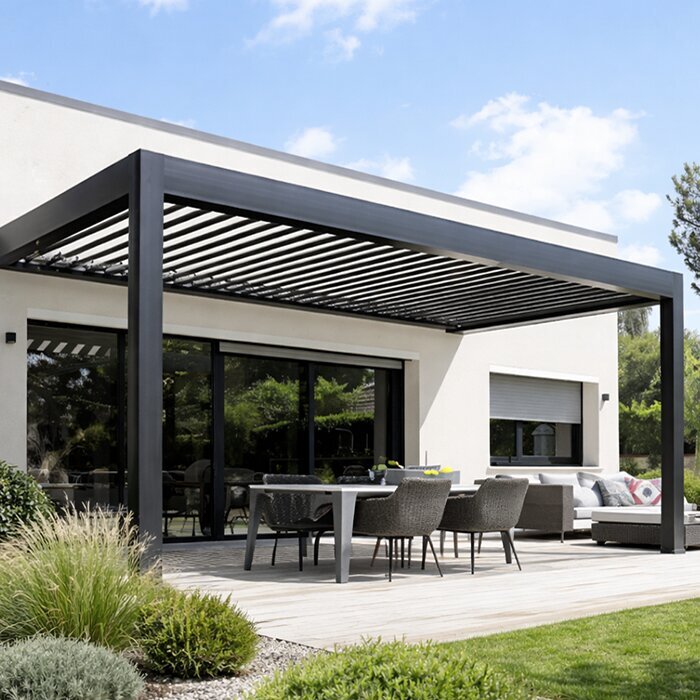
When planning care for a louvred-roof version, take a look at bioclimatic aluminium pergolas and their associated operating and care guidance.
02 · Season start
Spring: inspect and clean thoroughly
After winter is the right time for the most comprehensive care session. First remove twigs, early moss growth, pollen residue and settled dirt from safely accessible areas. Check posts, frames and visible fixing covers for changes. Look beneath furniture and along less visible sides too, as moisture and dirt often remain there longer.
Next, inspect accessible roof drainage. Leaves or fine silt can restrict outlets even when the surface looks clean. Pour water carefully into the designated areas and watch the flow. If water backs up or emerges unexpectedly, stop the test and clarify the cause using the documentation or a suitable professional. During the spring routine, also check the ground around the posts. Carefully clear accumulated soil, leaf debris or mulch so moisture is not held against the structure and connections and outlets remain visible.
First remove coarse debris dry from frames, posts and accessible roof edges before using water and cleaner.
Record noticeable scratches, discolouration or loose parts with a date and photograph rather than attempting premature repairs yourself.
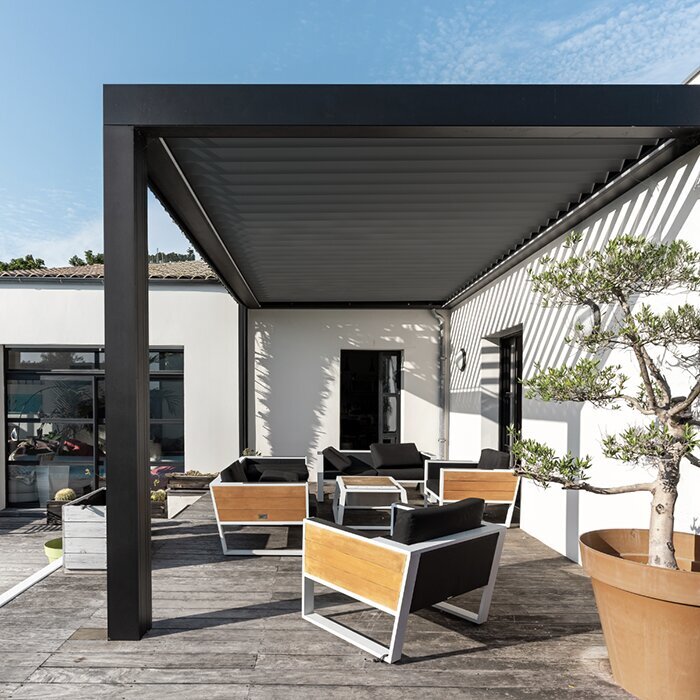
If you would like to compare the construction and care of a fixed cover, find guidance on classic aluminium pergolas for patios and gardens.
03 · Louvred roof
Check moving elements thoughtfully
On a bioclimatic aluminium pergola, louvres and their joints deserve particular attention. Remove leaves or small twigs only where the area is safely accessible and operation follows the instructions. When opening and closing, observe whether movement is even and whether anything rubs, sticks or sounds unusual. Cleaning is not technical maintenance and must never alter settings.
Wipe accessible louvre surfaces with soft, well-rinsed equipment. Make sure no cleaning cloths, twigs or foreign objects remain between them. Seals should only be gently cleared of dirt and must not be treated with unsuitable care products. Keep electrical areas dry on motorised systems and do not open them. Visible damage or functional irregularities need professional attention. Carry out a function check only with a clear movement area and good visibility. If a louvre stops or runs unevenly, avoid further operating attempts. Record the observation and consult your model documentation.
Operate louvres only as instructed and completely remove obstacles from the movement area beforehand.
Do not use oils or lubricants as a precaution; unsuitable products can trap dirt or impair components.
Discover suitable construction details in bioclimatic pergolas with louvred roofs in the current range.
04 · Summer care
Tackle pollen, dust and marks early
In summer, a light interim clean is often enough. Pollen, bird droppings, flower dust and splash marks can show clearly on light and dark surfaces alike. Remove fresh dirt promptly with water and a soft cloth rather than allowing it to dry on for weeks. This requires less rubbing and helps you monitor the overall condition during busy patio use.
With every clean, inspect the areas around posts and ground connections. Soil, mulch or potted plants should not create permanently damp deposits against components. Position furniture, barbecues and plants so cleaning routes and water flow remain accessible. A short walk-around after heavy rain is worthwhile, not as a load test but to check visible deposits and free drainage. Sunshades, decorations and loose accessories also deserve a quick look. Remove dust and pollen in line with each material’s guidance, ensuring nothing rubs against frames or blocks natural cleaning and inspection routes.
Wipe away fresh bird droppings with plenty of water; do not rub them dry or work pigmented residue into the surface.
Keep planters and climbing supports away from posts so moisture, soil and leaves do not stay in contact.
For a fixed patio cover without louvre mechanics, see standard aluminium pergolas as a suitable product category.
05 · Water management
Keep gutters and outlets clear
Drainage is a small area with major importance in everyday care. Visible gutters and inlets should be cleared regularly of leaves, seeds, flower remnants and fine silt. Use gloves and soft, non-sharp tools. Work only from a secure position; risky stretching from ladders or over the roof is not a sensible DIY task.
Check not only that water drains, but that it follows its intended route. Drips at joints, overflow in moderate rain or recurring puddles deserve attention. Carefully clean external, accessible outlets without dismantling components. Internal pipework or difficult-to-reach blockages should be assessed by qualified people, especially if water repeatedly escapes. After cleaning a gutter, you can test the area with a small amount of water. Watch from a safe distance to see whether drainage works evenly. Record recurring issues instead of masking them through repeated flushing.
Check outlets more often in autumn because wet leaves stick together quickly and can cover inlets.
Do not remove covers or downpipe sections unless the assembly instructions describe a safe method.
Regular visual checks of water management also matter for bioclimatic pergolas .
06 · Autumn check
Focus on leaves and joints
In autumn, care needs usually rise not because of the aluminium surfaces, but because of organic deposits. Wet leaves retain moisture, conceal gutters and can collect in corners. Plan several short inspections, especially after windy days. It is better to clean more frequently in small stages than leave tightly packed deposits for a long time. This makes work easier and changes visible sooner.
Also inspect seals, cover caps and transitions between components. They should look clean and undamaged without being pulled or removed. Check screw connections visually only, unless an explicit maintenance instruction says otherwise. If parts are loose, bent or missing, document them and seek professional advice before the cooler season starts. When plants are cut back in autumn, do not store cuttings on or against the structure. Small twigs and leaves readily reach gutters. Keeping the area around the pergola clear also makes inspections safer.
Remove wet leaves with gloved hands or a soft brush, never with metal tools or sharp-edged scrapers.
Watch plant growth beside the structure; pruned branches reduce renewed deposits and make inspection routes easier.
A straightforward starting point for seasonal checks is offered by classic aluminium pergolas with their fixed construction.
07 · Winter preparation
Check before winter and quieter months
Before winter, there is no need for a complete overhaul, only a straightforward final check. Remove accessible deposits, clean visible surfaces and ensure water routes are not blocked. Check for loose nearby items such as decorations, lightweight planters or textiles. These do not belong in gutters, on moving parts or against the structure. Always follow the operating guidance for your specific version.
If frost or ice occurs, take a cautious approach. Do not scrape coatings, seals or roof areas with tools, and do not climb onto the structure for cleaning. Follow the product documentation for operation and precautions in winter conditions. If distortion, unusual noises or escaping water appear, stop using the affected functions and arrange a competent inspection. Prepare the patio so all relevant areas remain clearly visible from ground level during winter checks. Store delicate textiles and check whether planters or decorations obstruct drainage or access.
Store loose patio accessories under cover so they cannot strike frames or block access to inspection points.
If frost occurs, follow only your system’s operating instructions; forcing movement can cause damage.
For weather-conscious outdoor living with an adjustable roof, explore bioclimatic pergola solutions for your own outdoor space.
08 · Care log
Record anything unusual properly
A simple care log saves time later. Note the cleaning date, observed deposits, drainage tests carried out and visible changes. Add photographs from the same viewpoint where useful. This makes it easier to tell whether an area was dirty once or has changed repeatedly. The record is not a diagnosis, but helps when reviewing assembly documents or informing a professional precisely.
Keep cleaning and repair clearly separate. Removing leaves, wiping surfaces and visual inspection are part of a normal routine. Work on the load-bearing structure, drive, wiring, seal arrangement or difficult-to-reach roof areas is not. For questions about care intervals, spare parts or permitted products, consult your model documentation and, where appropriate, the responsible contact. Keep photos and notes with your product documents. A factual record of location and time makes changes easier to describe and supports a focused enquiry without drawing your own technical conclusions.
Keep the model designation, purchase documents and assembly information ready with your care log for enquiries.
For unusual findings, note weather conditions, location and time without diagnosing a technical cause yourself.
For the long-term routine of a fixed version, fixed aluminium pergolas fit neatly into a clear care plan.

Seasonal care at a glance
The tasks repeat, but their emphasis shifts with the weather and how you use the space. This overview helps you schedule short checks sensibly without confusing every season with a major deep clean.
Spring
Deep clean and drainage test
Check pollen residue, winter deposits, visible joints and clear inlets.
Summer
Light interim clean
Watch fresh marks, dust, nearby plants and water routes after heavy rain.
Autumn
Remove leaves regularly
Clear wet deposits from gutters and inspect seals visually only.
Winter
Final check and follow instructions
Avoid risky work on icy surfaces; operate functions only as stated in the product documentation.
All year
Document unusual findings
Keep photographs and dates, then seek professional clarification if needed.
Your care year in five steps
With a few fixed appointments, care becomes a manageable habit. Adapt the rhythm to nearby trees, use and local weather rather than following a calendar date rigidly.
01
Prepare the documentation
Find the assembly, operating and care guidance. Mark notes on cleaning, drainage, moving parts and electrical components.
02
Set a spring date
Plan a thorough clean with safe access. Then inspect visibly accessible gutters and carefully test the intended water outlet.
03
Add a summer walk-around
Combine wiping down with patio care. Remove fresh marks and check whether plants or furniture conceal inspection points.
04
Check again in autumn
Inspect more often after leaf fall and wind. Brief visits stop damp deposits from permanently blocking gutters and inlets.
05
Complete the winter check
Document outstanding points before winter weather. Seek professional advice on the next steps for damage, leaks or functional irregularities.
Care-day checklist
Work through these points calmly. Not every point requires action; often, a clean visual inspection and a short note are enough.
01. Clear the work area and arrange safe access without climbing on frames, roof surfaces or unsuitable furniture.
02. Carefully remove coarse leaves, twigs and dust from accessible surfaces before wet cleaning.
03. Test mild cleaner in an inconspicuous spot, then rinse thoroughly with plenty of clean water.
04. Clean frames and posts from top to bottom in sections using a soft cloth or brush.
05. Clear accessible gutters and inlets of leaves, seeds and silt without removing components.
06. Observe water flow carefully and note recurring pooling, drips or unusual escapes.
07. Inspect seals, covers and joints visually only; do not repair loose or damaged parts yourself.
08. Update the care log, save photographs of unusual findings and use documentation or professional help when unsure.
Frequently asked questions about pergola care
How often should I clean an aluminium pergola?
A thorough spring clean and regular short checks through the year are a good starting point. If trees are nearby, gutters and outlets may need considerably more attention in autumn. An additional gentle clean is sensible after pollen periods, heavy rain or visible dirt.
Can I use a pressure washer?
Use one very carefully and give priority to the guidance for your model. A hard jet at close range can strain seals, coatings, joints or electrical areas. For normal care, water, soft cloths and mild cleaners are usually the more controllable choice.
Which cleaner is suitable for aluminium?
In many cases, a mild pH-neutral cleaner suitable for painted or coated surfaces is sufficient. Avoid abrasive, strongly alkaline, strongly acidic or solvent-based products. Always test new products in an inconspicuous area and rinse the cleaned surface thoroughly afterwards.
What should I do if roof drainage is blocked?
Carefully remove accessible leaves and loose deposits without taking components apart. Then use a small amount of water to see whether the outlet runs freely again. If water remains, emerges unexpectedly or the cause is in a difficult-to-reach area, a professional should assess the situation.
Do I need to grease or treat seals?
No, not as a precaution and not without model-specific guidance. Seals should be cleared of dirt and checked for visible changes. Unsuitable care products can impair material or function. If seals look damaged, detached or unusual, document this and seek professional advice.
When should I seek professional help?
For leaks, loose parts, distortion, repeatedly blocked drainage, unusual noises, or motor and electrical problems. Work at risky heights is also outside a normal routine. Good photographs, your care log and the model documentation help explain an enquiry clearly and efficiently.
Explore pergola versions
Care that fits everyday life
A clean aluminium pergola does not result from aggressive products or rare major jobs, but from regular, gentle attention. By cleaning surfaces carefully, removing leaves promptly and checking outlets, the care effort remains manageable. You also get to know your structure and notice changes earlier.
Adapt your annual plan to location, vegetation and intensity of use. For specialised components, always follow your model documentation and leave technical or difficult-to-reach work to qualified professionals. This helps keep your patio a well-kept place for relaxed time outdoors.
Compare fixed and bioclimatic aluminium pergolas from Bloomcabin for your outdoor space.
