
Black Friday: Choose a Small Wooden Garden Shed with a Practical Layout
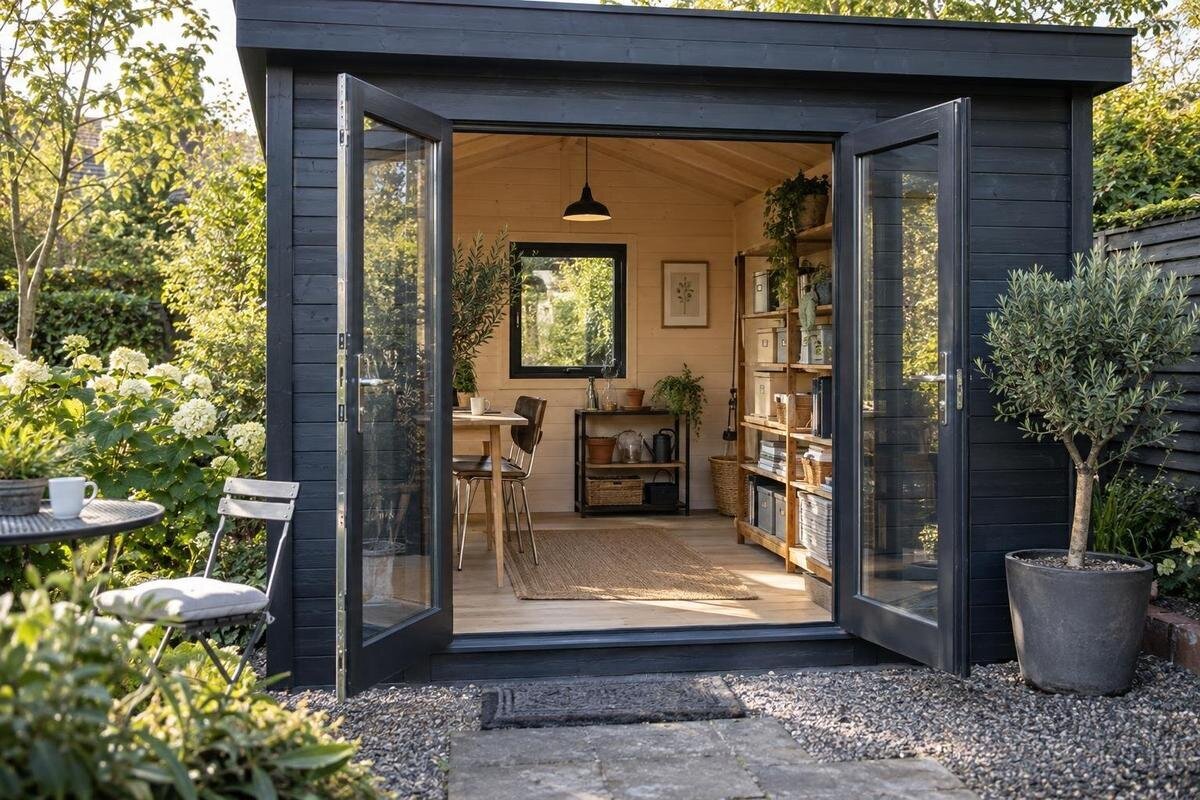
Black Friday garden shed guide
Black Friday can be a useful time to compare garden shed listings, but the seasonal label does not tell you whether a compact layout will work or whether a particular offer applies. If you plan to buy a small wooden garden shed, begin with the space available, the largest item to store and the route through the doorway. Then compare each candidate’s stated dimensions and layout details on the same basis, rather than choosing from its footprint or a product photograph alone.
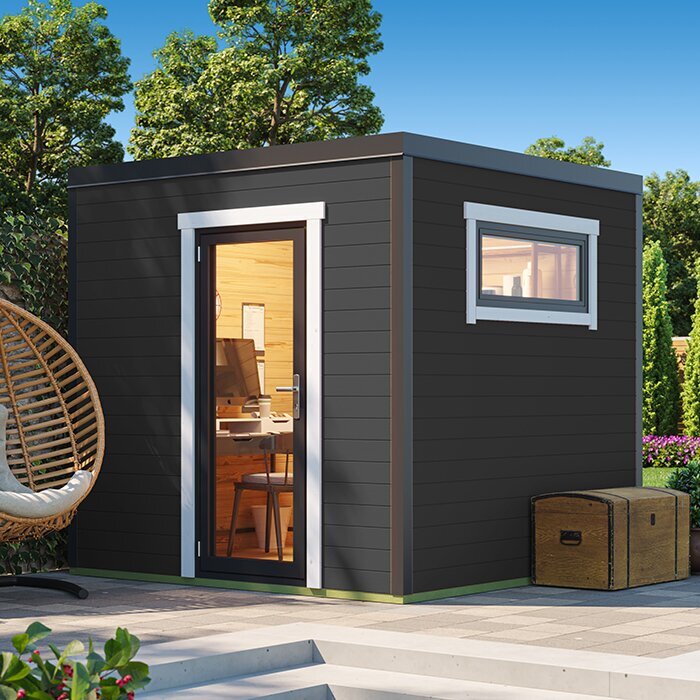
Begin with the items you need to store
Write down what you expect to store before comparing compact sheds. Include the largest item’s full length, width and height, including handles, wheels or attached parts that cannot be removed; record whether it must go in upright or be turned on entry. Add smaller equipment and boxes, then distinguish items used regularly from those brought out once a season. This prevents a floor plan from appearing adequate simply because the objects could be squeezed inside. The layout must let you reach everyday items without shifting everything else. Your list should therefore describe both capacity and access: what has to fit, which pieces should be near the entrance and how much clear space you need to move them.
Sketch the items as simple shapes and lengths, without assuming that everything can be stacked or hung. Allow room to lift, turn or draw each piece towards the doorway, and decide which items belong together. Long-handled tools might suit a side area, while boxes may be easier to reach on a shelf; these are layout possibilities, not claims about a particular shed. If the Verdana 1 garden shed listing is on your shortlist, record it beside the same questions you use for every candidate: stated internal dimensions, door position and any storage fittings explicitly included. A model name does not answer those questions, so leave unknowns blank and seek clarification rather than filling gaps with guesses.
Measure the garden space and the route to it
Measure the clear area where the shed is intended to stand, not just the general patch of garden. Note fixed boundaries and anything that could restrict the footprint or the door opening, such as a wall, fence, established planting or a path. Check the external dimensions against that space, and account for any overhang or projection only if it is shown in the product information. A photograph can help you picture a design, but it is not a reliable way to estimate its size. Marking the proposed outline on the ground with string or removable markers can make the space easier to judge from different angles.
Measure the route to the proposed position as well as the destination. A shed may fit the chosen space while the largest stored item is awkward to carry through a gate or around a corner. Check the narrowest points and note where someone might need to turn with a long object. If delivery or assembly arrangements affect how components reach the garden, ask what access is required rather than assuming. When comparing options, add the Verdana 2 garden shed listing to your notes only if it is a candidate; enter the dimensions and access details actually stated, then compare them with the same measurements for the rest of your shortlist.
Check the doorway against your largest item
The outside width of a shed does not tell you whether a bulky object can pass through its entrance. Measure the item at its widest and tallest points in the position you expect to carry it, including protruding handles or wheels. Then look for the clear opening dimensions, not simply the width of a door panel or the overall front wall. Consider the space needed to turn the item just inside the entrance as well. If the product information does not state the clear opening, ask for it; do not assume that an item will fit because its measurements look close to the shed’s external dimensions.
Door operation affects the space around the entrance. A door that swings out needs room beyond the opening, while other door arrangements have different clearances and may still affect a path or nearby storage. Check the position shown in the plan and imagine opening it fully beside the fence, planting or walkway. Do not assume that the entrance can be moved to another side or that the layout is reversible unless the product information confirms it. Use the same test for the Durano garden shed listing as for any other option: check the stated opening, location and operation before deciding whether the access suits your routine.
Compare usable internal space, not just the footprint
External dimensions help you judge whether a shed fits in the garden; internal measurements help you judge what can be stored. Compare both where they are given, and check what each figure refers to on the product plan. Do not estimate the difference between the outside and inside from a photograph or assume that the full external footprint is clear floor space. The narrowest internal area can matter more than the widest point if you need to manoeuvre a long object or reach something at the back. If only one kind of measurement is available, mark the missing information as a question rather than treating it as an estimate.
Plan the interior around access as well as storage volume. Keep the items you reach most often near the entrance, and place occasional or seasonal pieces where they will not block the route to daily-use equipment. A layout that fills every corner may look efficient on paper but leave nowhere to stand while retrieving an item. If the Veltor 1 listing is on your list, enter its published internal measurements and plan details in your comparison notes; do not infer them from the name or assume that a pictured arrangement is included. Apply the same standard to all the candidates so the comparison reflects usable information rather than impressions.
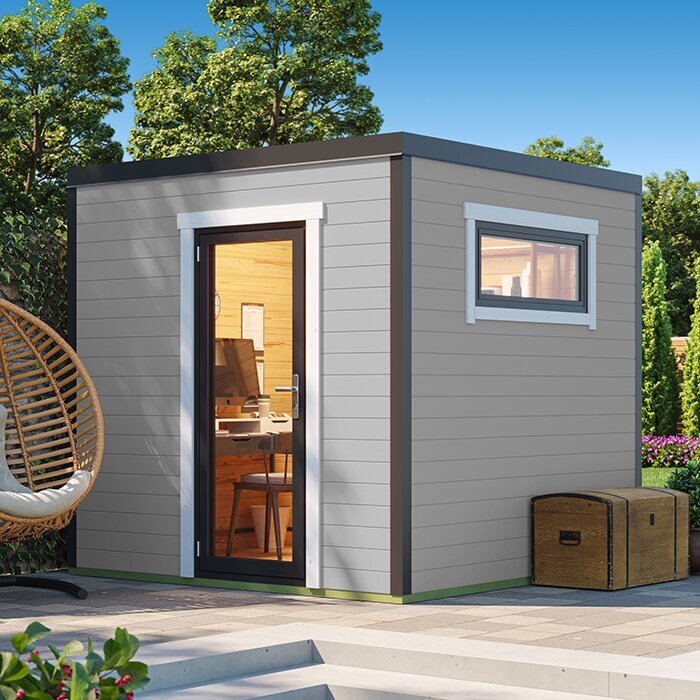
Decide whether shelves or wall storage will help
Shelves and wall-mounted storage can free floor area, but only if they suit the things you own and are actually available for the model. Check whether fittings are included, optional or not mentioned, and look for information about where they can be placed. A deep shelf may make it harder to reach an item behind it; a hook or rack may project into the space needed for a long tool. Draw these additions into your plan with their approximate depth and position, and leave room to get items on and off them without blocking the door.
Vertical storage is useful only when the arrangement remains accessible and is supported by the product’s stated guidance. Do not assume that a wall can take shelves or that a pictured accessory comes with the shed; check the listing or ask before relying on it. For the Orello 1 listing, for example, note only storage features and fittings that are explicitly described, then list anything you would need separately. This keeps the floor plan honest: if the shed works only after adding an unconfirmed shelf or fixing, you do not yet have enough information to judge the layout.
Position the entrance for everyday garden access
Think about how you will approach the shed during an ordinary week. A door facing the route you use most can make it easier to take out tools or put away equipment; an entrance facing a narrow passage or blocked by pots can make a compact space feel inconvenient. Trace the route from the gate or house to the doorway, then consider where you will stand while opening it and carrying an item through. Include the door’s open position in that sketch. This is a practical way to spot clashes with garden paths, nearby planting or stored objects before committing to a particular arrangement.
Check the plan for the entrance’s position and whether any alternative orientation is actually offered. Do not assume that a shed can be turned around or that the door can be placed on a different side. If the Modano 1 listing is one of the options you are comparing, use the details stated for that exact configuration and ask if the plan leaves an important point unclear. The right orientation depends on your site and routine, not on a product name. A layout that makes the route to frequently used items direct may be more practical than one that simply leaves the most open space on paper.
Compare the exact model and configuration on Black Friday
Use Black Friday as a prompt to compare current listings, not as proof that a particular shed is discounted or suitable. If an offer is displayed, check which model and configuration it applies to and read the terms shown at the time you are deciding. A seasonal label cannot tell you whether the dimensions, door position or included fittings match your plan. A price that looks attractive is not useful if the chosen configuration cannot accommodate the largest item or leaves no clear route to regular-use equipment. Make layout requirements the filter first, then consider any offer that is actually stated for a matching option.
Keep the exact product name and any selected variant beside the measurements in your shortlist. Separate items explicitly included from accessories you may need to add, and confirm that the information you are comparing refers to the same configuration. If the wooden garden shed M listing is under consideration, do not read a size or layout into the letter in its name; use the product details provided for that listing. Where a term or configuration is unclear, ask before placing an order. This avoids comparing a headline description with a different set of dimensions or features and keeps the seasonal decision tied to the shed you actually intend to buy.
Use product plans and stated measurements
Use a labelled plan or written measurements to check the details that affect your layout. Look for the external footprint, internal floor dimensions, door opening and entrance position where those details are provided. If height matters for a stored item, check the relevant stated measurement rather than judging it from a picture. Pay attention to whether a number describes the clear opening, a panel or the outside of the building. These distinctions are important when space is limited: similar-looking figures may describe different parts of a shed and cannot safely be compared as if they meant the same thing.
If the wooden garden storage shed S listing is on your shortlist, record its published measurements and note any information that is absent or ambiguous. Do not use a model letter, product image or apparent scale to fill in a gap. If two listings describe measurements differently, ask the seller what each figure covers before ranking them. Keep the answer with your notes so you can compare like with like. A clear list of confirmed dimensions and open questions is more useful than a detailed sketch built on assumptions, particularly when a few centimetres could affect the doorway or the route between stored items.
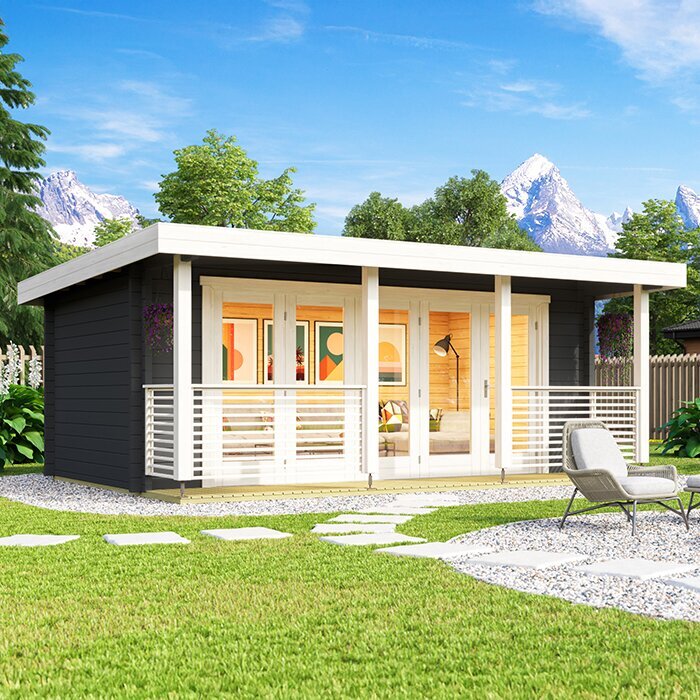
Test the layout on paper before choosing
Turn the measurements you have into a simple floor plan. Draw the interior to a consistent scale, mark the entrance and outline the larger objects using their measured sizes. Paper shapes can be moved around to test different positions without committing to a layout. Leave a route from the doorway to anything you expect to reach regularly, and check whether a long item can be turned into position. If the product plan does not give a dimension you need, do not make the drawing look precise by guessing; mark that point as unconfirmed and request the information.
Test more than one storage arrangement. Put everyday equipment in the easiest-to-reach area, then see whether seasonal items can be stored without blocking it. Consider the sequence of taking an item out and putting it back, rather than only asking whether all the shapes fit at once. If accessing one object requires removing several others, the plan may not suit your routine. Repeat the test with the door fully open and any shelves or accessories you have confirmed. This paper exercise helps reveal a poor layout before you order, without assuming that every shed or storage fitting will have the same internal arrangement.
Make a like-for-like shortlist before ordering
Compare a small number of candidates against the same practical requirements: available garden space, largest item, clear doorway, entrance position and route to frequently used belongings. Treat any requirement that has not been met or confirmed as an open question, not as a pass. This makes it easier to remove options that are too large for the site or difficult to use, while avoiding a choice based only on the smallest stated footprint. If two layouts both work, consider which one keeps your regular equipment accessible without relying on unconfirmed shelves or accessories.
Before placing an order, check that the product name and configuration match the details you compared. Revisit the stated dimensions, door information, included fittings and any offer terms that apply to that exact option. If a key measurement remains unclear, get an answer before deciding rather than expecting to resolve it after delivery. The aim is not to find the smallest possible structure at any cost; it is to choose a compact garden shed that fits its intended position and lets you store and retrieve your actual belongings. A layout that passes those tests will be more useful than one selected from a Black Friday label alone.
Frequently asked questions
How should I measure the space for a small garden shed?
Measure the clear area at the proposed position, then account for any projections shown on the product plan and the space needed to use the door. Mark the approach route too, including gates and tight turns. There is no universal clearance figure, so use the stated dimensions and check any local requirements that apply.
Which dimensions matter most when comparing sheds?
Compare the external dimensions to check that the shed fits the garden, and the internal dimensions and clear door opening to check that your items fit inside. Use figures labelled on a plan or listing, not estimates from a product photograph.
How can I tell whether the doorway will work for my equipment?
Measure the widest and tallest parts of the largest item as you will carry it. Compare those measurements with the clear opening, then consider whether you can turn the item once inside. Check the door’s position and how it opens rather than relying on the overall shed width.
Does Black Friday mean a garden shed is discounted?
Not necessarily. The event label alone does not confirm a discount or its terms. Check the current information for the exact model and configuration you are considering, and do not assume a price, offer or deadline that is not stated.
What should I check about the timber and finish?
Use the product information to confirm the stated material, finish and care guidance. Do not infer timber type or treatment from a name or photograph. If an important detail is unclear, ask the seller before ordering.
A practical small wooden shed is one that fits the garden, admits the largest item and leaves everyday belongings reachable. Measuring the site, doorway and stored objects before comparing listings makes those tests concrete. Then use stated dimensions and configuration details to choose between candidates, and treat any Black Friday offer as relevant only when it applies to the exact layout you have checked.
