
Budget or Premium? Greenhouse Costs Over 10 Years
Long-term cost check
Budget or premium? What a greenhouse really costs over ten years
When comparing greenhouses, look beyond the purchase itself. Over a long period, construction, glazing, foundations, care and access to suitable components determine whether an initially economical choice remains convincing.
Short answer: value is created in daily use
A budget-conscious greenhouse can be economical when construction, site and use remain straightforward and you are happy to handle maintenance yourself. A premium model may suit you better over time when robust finishing, considered details and dependable spare-parts prospects matter more than a low entry price.
So compare more than price and size: consider the whole ownership cycle. Ask which tasks you are willing to do regularly, what exposure the site brings and whether the greenhouse should still suit your garden concept functionally and visually after several years.
01
Purchase decision
The entry price is only part of the calculation. Foundations, assembly, care and later adjustments shape the long-term commitment just as strongly.
02
Quality check
Look for understandable construction, accessible connections, well-planned drainage and components that can be replaced individually when needed.
03
Practical value
The more regularly you sow, raise and grow plants, the more important comfort, order, access and a design that remains enjoyable become.
The entry price alone does not decide; substance, maintenance, spare parts and enjoyment of use all count.
A budget greenhouse may be exactly right when you are gaining experience, need little space or plan clearly limited use. A higher-quality model is more likely to suit gardeners who grow regularly and seek a lasting, well-designed solution. What matters is not the label “budget” or “premium”, but how well the product matches your site, expectations and maintenance routine.
A meaningful ten-year comparison includes all follow-on costs: site preparation, assembly, seasonal cleaning, possible repairs and whether individual parts can still be sourced later. Time also matters. Someone who must repeatedly adjust, make temporary repairs or replace components experiences the purchase differently from someone with a stable, predictable garden routine.
This guide therefore considers long-term ownership rather than simply comparing prices. It helps you assess quality features, spot maintenance risks early and choose a greenhouse that suits your growing approach. Actual costs always depend on size, equipment, site and current offer, and should be checked with an individual configuration.
Inspection 01 · Review area one
Put the purchase price in context
The lowest purchase price may look clear at first, but it often hides different starting points. Size, frame construction, doors, ventilation and included accessories can vary substantially. Compare greenhouses with similar usable area and equipment levels only. Then you can see what is genuinely included and what must be planned as an extra later.
A higher-quality greenhouse is not automatically right for every garden. Someone housing a few herbs and young plants seasonally may have different priorities from a household raising plants extensively. Define your needs before comparing: how often will it be used, which crops will it hold and what design role will it have outdoors? Check the scope of supply closely too. Elements included from the outset and components added later affect not only total effort but assembly planning. A clear list prevents essential functions emerging only after selection and being solved with improvised additions.
- Create a comparison list covering area, access, ventilation, foundation needs and sensible basic equipment, not purchase figures alone.
- Cost optional interior equipment separately so an apparently cheap base model does not look misleadingly attractive.
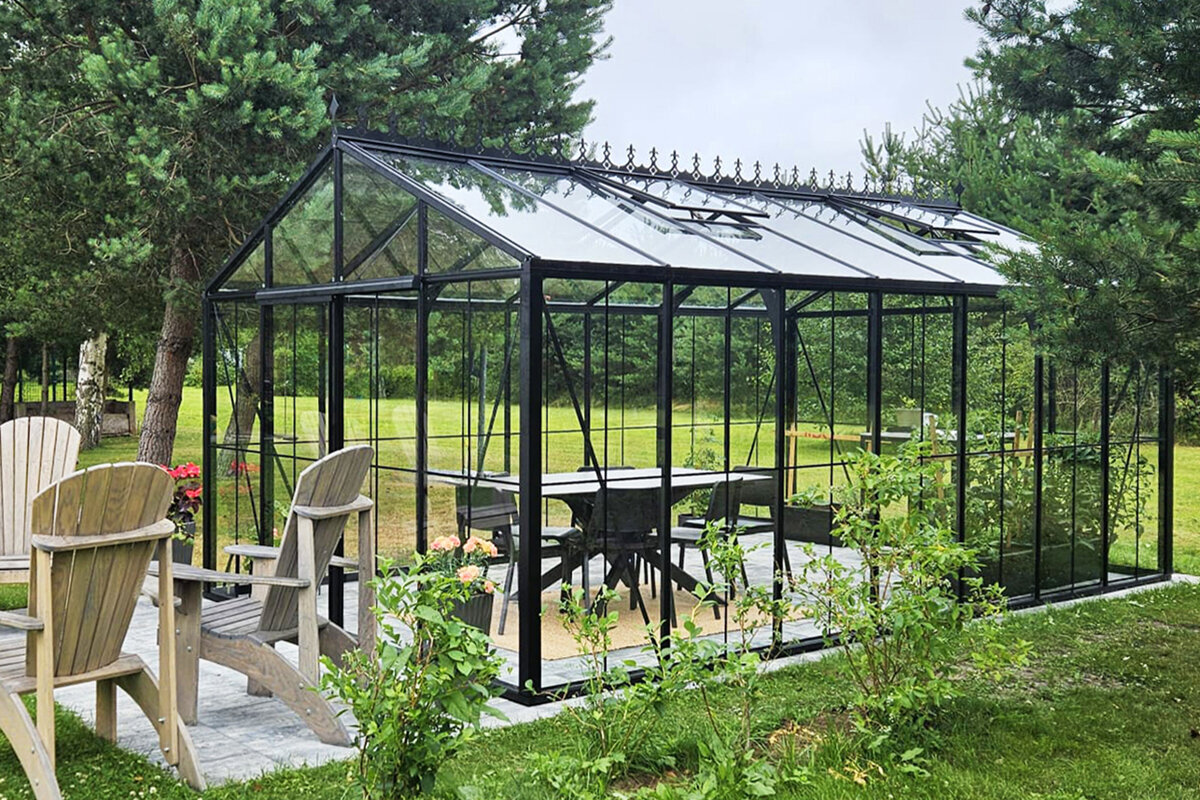
For a clear starting point, consider a Standard Classic garden greenhouse with a manageable concept that can be extended flexibly.
Inspection 02 · Review area two
Site and foundation as the cost base
The site helps determine whether the coming years feel straightforward or demanding. A level, accessible place makes assembly, cleaning and use easier. Check sunshine, wind, distance from trees and routes for water and materials. A poorly selected location can later cause extra cleaning, difficult ventilation or unwanted makeshift solutions.
Treat the foundation as part of the overall plan too. It must suit the construction, ground and intended assembly. Careful preparation can help avoid distortion and later realignment. The right solution depends on soil, model and local circumstances. If unsure, seek professional advice and check local requirements with the competent authority. Consider routes after assembly as well. Soil, pots, tools and harvests should be easy to reach. A site can appear sunny yet prove impractical if access, water or working surfaces are poorly positioned.
- Measure more than the footprint: allow movement space for the door, cleaning and working with plant containers.
- Consider slope, ground conditions and drainage early; later corrections are usually harder than good preparation.
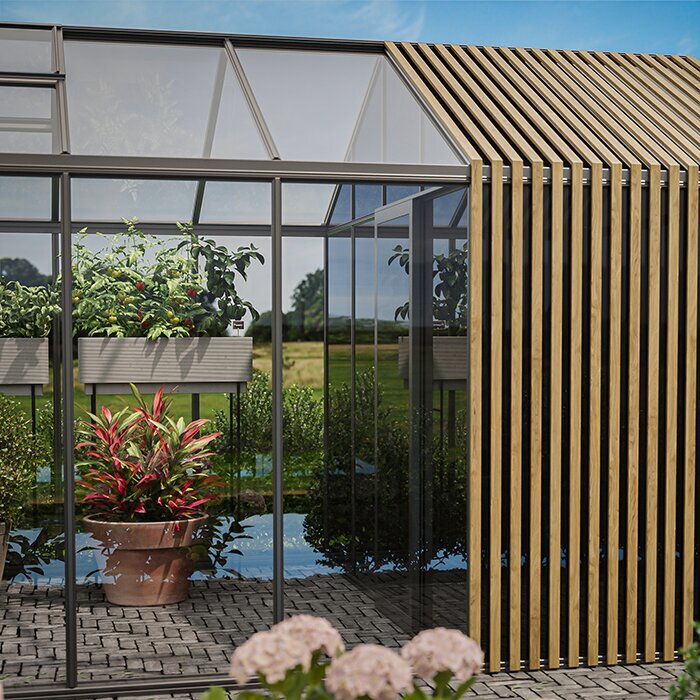
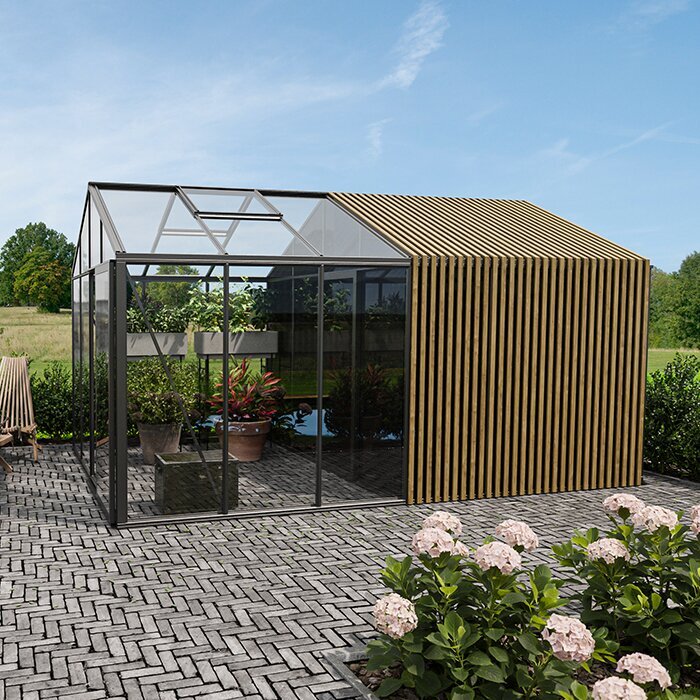
Against a house wall, a full-size lean-to greenhouse can save space, provided the site and construction are assessed carefully.
Inspection 03 · Review area three
Construction shows in the details
Long-term quality is rarely apparent from one feature alone. Look at how profiles, corners, doors and glazing work together. Relevant points include understandable construction, neatly finished connections and parts that remain accessible for care. Feel matters too: moving elements should be pleasant to use daily without constant adjustment.
With a budget model, not every simple solution is a drawback. The key is whether it suits your use and whether you can realistically plan any care required. With a more refined design, you often pay for material character, constructional care and stronger integration into the garden design. Assess these benefits against your own expectations of durability and appearance, not in the abstract. Ask for clear information on assembly, fastenings and access for maintenance. It is especially revealing whether typical tasks can be done without dismantling other parts. That turns a visual impression into a practical assessment of construction.
- Before buying, check which areas will need regular cleaning, tightening or access when required.
- Assess doors and ventilation from your daily viewpoint: access with crates, work in wet weather and operation during peak season.
Anyone comparing a freestanding option will find a traditional Standard Classic greenhouse a useful basis for directly comparing construction details.
Inspection 04 · Review area four
Calculate maintenance honestly
A greenhouse remains pleasant long term only when its care fits your garden routine. This includes cleaning glazing and gutters, checking moving parts, and clearing leaves and dirt around the foundation. Neglected small matters can build up over time. Plan not only material costs but regular time for the start and end of each growing season.
Premium does not mean maintenance-free, but an accessible, thoughtfully built structure can make routine jobs easier. Budget models can also serve well for years when positioned suitably and maintained conscientiously. The main difference is often how much attention particular details demand. Do not choose equipment whose upkeep you will later resent. Care becomes easier when linked to recurring garden tasks. While watering, for example, check that gutters are clear, doors run smoothly and moisture is not collecting in unusual places. Small checks maintain oversight without turning every task into a major project.
- Set a simple seasonal routine: visual checks in spring, cleaning during use and an inspection before winter.
- Keep cleaning products and suitable tools ready for the materials and surfaces used.
When direct access from the house matters, a full-size lean-to greenhouse can simplify maintenance routes and daily checks.
Inspection 05 · Review area five
Plan ahead for repairs and spare parts
Over a long service period, the issue is not whether anything will ever need replacing, but how easily an individual part can be identified and sourced. Keep product documents, assembly information and details of your configuration. This makes conversations with the supplier easier and helps avoid improvised or unnecessarily extensive replacement after a small defect.
When comparing, look for logically structured components and whether wearing parts can be clearly assigned. Ask before purchase about the spare-parts process and what information it needs. This does not promise a specific availability, but it gives a better picture of how manageable a later repair may be. Clear documentation also helps with garden changes. Record added accessories, replaced parts and special assembly notes in the same place as product documents. Your configuration then remains traceable even if someone else later takes over its care.
- Document the model, purchase date, configuration and greenhouse changes in an easy-to-find place.
- Address small damage early, before moisture, dirt or repeated stress turn it into a larger issue.
For a garden solution intended to last, a clearly structured Standard Classic greenhouse is particularly useful if you want to manage documents and components systematically.
Inspection 06 · Review area six
Use determines real value
The long-term value of a greenhouse grows with its actual use. Anyone sowing early, protecting sensitive plants, growing tomatoes or harvesting herbs regularly has different needs from someone visiting it only occasionally. Work surfaces, storage, paths and proximity to the house influence whether it becomes an established part of the garden or remains rarely used.
Also consider how your garden routine may change. You may start with young plants and later want to grow more, repot more often or add accessories. A suitable model should fit your habits without buying capacity that stays empty. Good long-term planning means allowing realistic room to develop rather than assuming the largest solution is automatically best. Practical value often appears in small routines: where will you set down a watering can and pots, how will you reach plants at the back, and where will materials go in poor weather? Walking through a working day reveals requirements that dimensions alone cannot explain.
- List planned crops by season; this reveals requirements for area, surfaces and routes.
- Imagine a rainy day: are access, workflow and material storage still as practical as they appear on paper?
For short routes between kitchen and plants, a full-size lean-to greenhouse by the house offers an obvious perspective for everyday use.
Inspection 07 · Review area seven
Assess appearance and adaptability
A greenhouse is not merely a functional structure; it shapes sightlines, terraces and planted areas. Over the years, it increasingly matters whether its form, material effect and proportions suit house and garden. A carefully chosen design can make you happy to include the building in garden life. This is not purely emotional; it affects long-term appreciation of the purchase.
A tidy interior arrangement helps too. Shelves, planting tables and storage should support your routine without blocking paths. Plan additions so light, access and cleaning remain possible. Do not compare photographs alone: use your garden measurements to consider how the greenhouse looks from different viewpoints and which extensions are truly useful. Consider its effect through the year. In summer, planting and open doors are more visible, while the structure may be more prominent in quieter garden periods. A successful placement therefore considers not only the growing season but views from house and garden.
- Take garden measurements so height and footprint sit in proportion to beds, terrace and house façade.
- Plan interior equipment after the layout; clear circulation space is often more valuable than maximum furnishing.
As a striking garden feature, a freestanding Standard Classic greenhouse can be coordinated deliberately with paths, beds and sightlines.
Inspection 08 · Review area eight
Risk, documentation and confidence
A sound decision comes from resolving open questions before ordering. These include assembly responsibility, the foundation, site conditions, care guidance and the scope of documentation. If you wish to check insurance cover, discuss your particular situation with your insurer. For building questions or possible permission, consult the Planning Authority and a perit; general statements are not reliable for this purpose.
Request an up-to-date summary for your selection and read product and assembly information carefully. Also check written terms and the precise scope of any warranty or guarantee. This distinguishes marketed expectations from what is actually documented for your configuration. Such care is often more valuable than a quick price-led decision. A good decision may take time. Rank open points by their importance for site, assembly and later use, and record answers in writing. You can then compare options on the same basis instead of being guided by isolated equipment features.
- Before ordering, collect all measurements, site photographs and questions so the configuration can be assessed properly.
- Compare written documentation by scope and conditions, not by slogans or broad assumptions about protection.
For a site-specific choice, a full-size lean-to greenhouse for a house wall can be compared with existing wall, access and light conditions.
Comparison
Long-term comparison: budget or premium
The table does not replace an individual quotation, but shows the questions that make a comparison over a long ownership period more robust. Assess each row according to your site, maintenance input and planned intensity of use.
| Assessment area | Budget approach | Higher-quality approach |
|---|---|---|
| Purchase | Focused on essential function and limited initial spending. | Considers material character, details and lasting design expectations. |
| Site preparation | May remain manageable for a simple installation, but still needs careful basic work. | Often planned as part of a permanently designed garden area. |
| Maintenance | Personal effort and regular checks are especially important for preserving value. | Good access and execution can make routine tasks more pleasant. |
| Repairs | Check whether components can be clearly identified and replaced. | Question documentation, system logic and the parts process early. |
| Use | Suited to seasonal growing plans with clearly limited scope. | Suited to regular propagation and high design expectations. |
Your review plan before deciding
Work through the comparison in a fixed order. This prevents one attractive feature from obscuring site, use and follow-on costs.
01
Record your use profile
Note crops, seasons, frequency of use and required working area. This creates a realistic picture of the right size.
02
Survey the site
Measure area, access and distances. Observe light, wind, fallen leaves and water routes before deciding on form and position.
03
Compare basic equipment
Compare only similarly equipped models. Treat access, ventilation and accessories as part of future everyday practicality.
04
Simulate maintenance
Think through cleaning, checks and seasonal work in detail. Ask who will do these jobs and how accessible they are.
05
Check documentation
Read assembly, care and terms documentation before ordering. Clarify open questions about the site or legal requirements with the relevant authorities.
Ten-year checklist
These points help you assess a greenhouse not only at purchase, but by its place in your long-term garden routine.
01. Usable area and working depth suit the crops genuinely planned, not only a short-term wish.
02. The site gives sufficient access for assembly, cleaning, planting and moving soil or pots.
03. Foundation and ground are prepared to suit the chosen model and local conditions.
04. Doors, ventilation and internal routes work practically and safely with your usual tasks.
05. You understand recurring care tasks and can allow realistic time for them each year.
06. Product documents are retained so the configuration and individual components remain clearly traceable.
07. Optional equipment is assessed for usefulness, not selected solely for an attractive overall appearance.
08. For unresolved building, insurance or site questions, seek an assessment from the relevant competent body.
Frequently asked questions about long-term greenhouse costs
Is a budget greenhouse automatically more expensive to maintain?
No. A simple greenhouse can work well long term if it matches the site, intensity of use and your willingness to maintain it. A lower entry price does not automatically create higher follow-on costs. Construction, careful assembly, regular checks and the ability to identify and source suitable parts when needed are more important.
Which follow-on costs are most often overlooked?
Foundations, site preparation, interior equipment, cleaning effort and possible adjustments are often missed. Time is relevant too: anyone who must make many seasonal adjustments or clean extensively should assess that effort honestly. A complete plan separates essential basics from optional additions and checks current costs individually.
When is a higher-quality greenhouse especially worthwhile?
It can make sense if you use the greenhouse frequently, want to integrate it permanently into your garden design or have high expectations for details and material character. Accessible routines can also be valuable for intensive propagation. However, no general financial payback can be inferred, because use and circumstances vary greatly.
How important are spare parts when buying?
They are a key point for the long-term outlook. Ask how the model and components are identified and which documents are important. Retain configuration details and assembly information. This does not promise permanent availability, but it makes targeted clarification easier if repair is needed later.
Do I need planning permission for a greenhouse?
This depends on the site, size, design and local requirements, among other matters. Do not rely on broad online statements or rules from other places. Ask the Planning Authority and a perit to classify your project in advance, including land designation, existing permit conditions and the details of your proposed structure.
Should I tell my insurer about the greenhouse?
Whether notification is sensible or required depends on your policy, site and the cover you want. Ask your insurer using the specific construction and installation details. Request a written explanation of scope instead of assuming that every garden structure is automatically included in the same way.
Plan the right greenhouse
The better choice is the one planned to fit
Over a long period, the least expensive or most elaborate greenhouse does not necessarily win. What matters is choosing a structure that suits your site, growing routine and willingness to maintain it. Checking these factors systematically before ordering creates a far more reliable basis for deciding.
Use your measurements, growing wishes and open questions as the basis for a specific configuration. Bloomcabin can help you assess different greenhouse forms objectively. Check current product information and align building, legal and insurance questions with your individual situation.
Compare forms and equipment options against your site and long-term use.
