
Budget or Premium Pergola: Compare Costs Over 10 Years
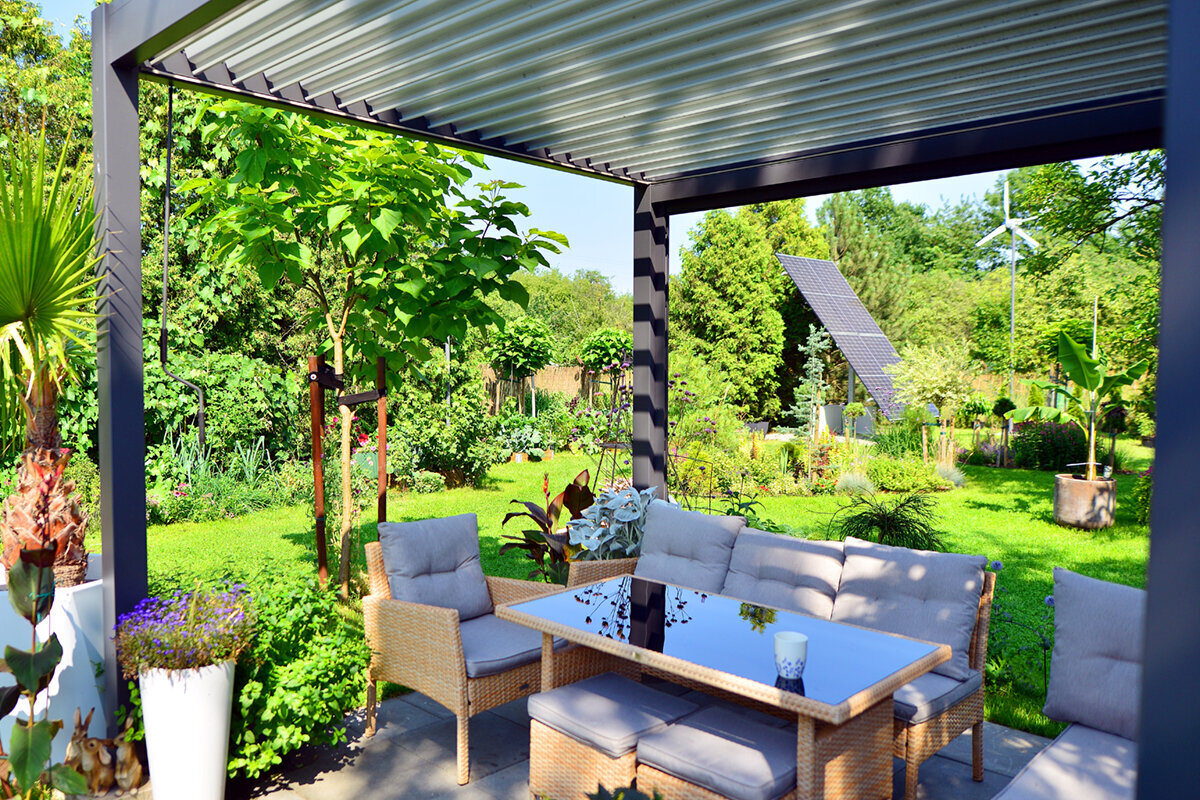
Long-term cost comparison
Budget or premium pergola: what really matters over ten years?
The initial price is an important starting point, but it does not answer the question of long-term value. When comparing budget and premium options, consider materials, construction, care, spare-part access and your own use together.
The short answer
A budget pergola can be the right long-term choice when size, use and desired features remain modest and you plan realistically for upkeep. A premium pergola can offer greater value where build quality, design freedom, comfort and post-purchase support matter to you.
Never compare only similar external dimensions or a single product photograph. Check the full configuration, installation scope, drainage, operation and possible spare parts. Only in context do differences emerge that can shape everyday use and effort over the years.
01
Construction
Look for clear material specifications, neat connections and a design suited to the base and intended use.
02
Ongoing effort
Cleaning, adjustment and possible replacement of individual components deserve a fixed place in your cost comparison.
03
Practical value
More features are valuable only when they genuinely support your routine, site and design idea.
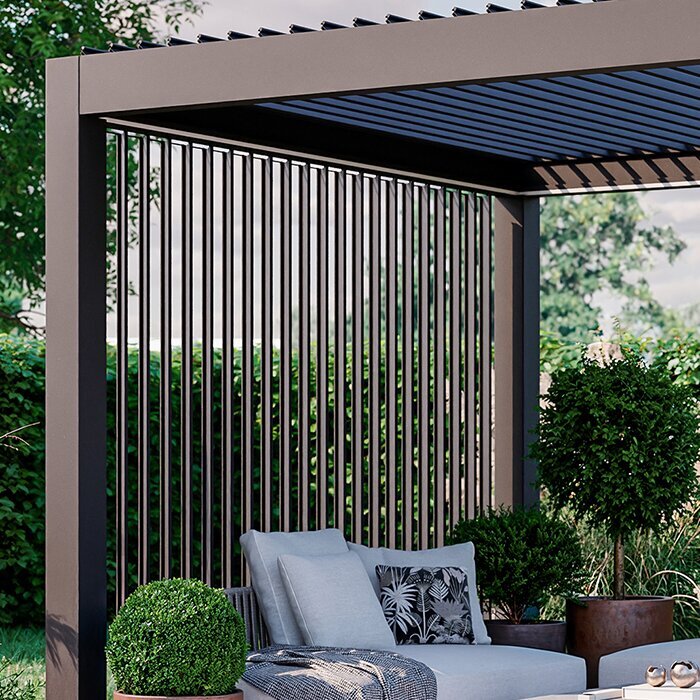
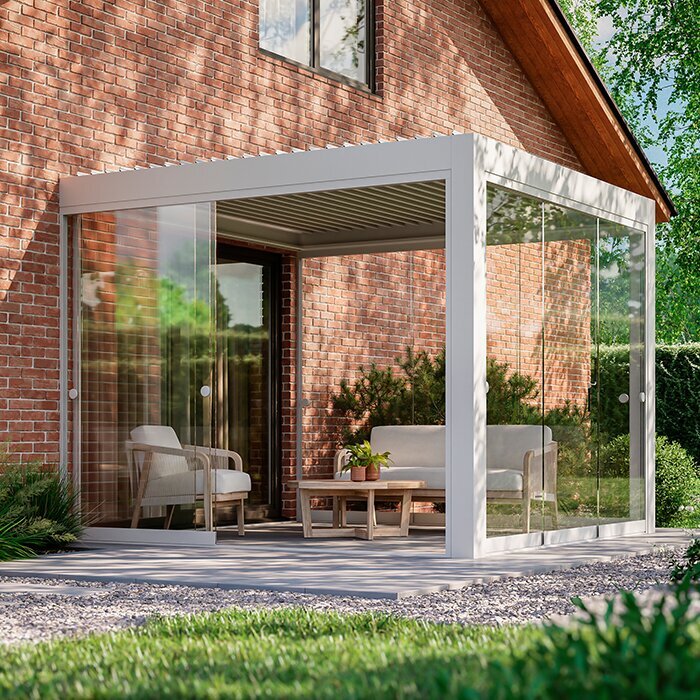
An aluminium pergola should convince not only at purchase, but throughout its intended years of use.
An aluminium pergola can define a terrace and garden more clearly, creating a sheltered setting for everyday outdoor life. In a budget versus premium comparison, visible features are not the only consideration. What matters is how well construction, details and service fit your site, use and expectations for the years ahead.
Lower-priced options can suit simple, occasional use. A more premium design may offer greater choice in features, finishes, operating comfort or later additions. Neither route is automatically right; a sound comparison considers which qualities you will actually use and which follow-up costs may arise.
Treat ten years as a planning horizon, not a promise about lifespan or expenditure. Alongside the initial investment, note installation, cleaning, possible alterations and the handling of wear parts. This turns a price comparison into an informed decision for your terrace.
Check 01 · Assessment criterion 01
Put the purchase price in context
An entry price provides guidance, but it is only a snapshot. For a fair comparison, use configurations that are as alike as possible: dimensions, fixings, roof design, finishes, accessories and installation should be clearly stated. If one element is missing, an offer may look cheaper even though extra costs arise later. Ask for the exact delivery and service scope of your chosen configuration.
For an aluminium pergola, planning affects the price as much as the product itself. A level, load-bearing base, suitable connection points and chosen features all influence how involved the project becomes. Before comparing, decide which functions are essential. This avoids comparing a basic solution with additions that are already included in another option.
- For each offer, record dimensions, roof type, fixings, drainage, finishes and every desired additional element in one overview.
- Separate product costs from preparatory work on site so different conditions do not distort the product comparison.
If adjustable shading and a broader choice of features matter, consider bioclimatic aluminium pergolas as a separate comparison group.
Check 02 · Assessment criterion 02
Quality lies in the details
You rarely recognise long-term quality from one feature alone. More revealing is the interaction of profiles, connections, fixing points, finishes and water management. Look closely at how components meet and whether the overall structure is clearly documented. A transparent product description helps you understand differences rather than relying solely on an impression of high quality.
Suitability for the site is also part of the quality question. Wind, rain, shade from buildings or trees, and planned furniture create different demands. Do not be persuaded into features that complicate your daily routine. A straightforward design can be convincing when it suits the space, frequency of use and your care habits.
- Check visible transitions, screw connections and covers for a coherent, accessible design that is clearly described.
- Assess finishes not only by colour, but also by how well they suit the façade, terrace surface and cleaning routine.
For a clean-lined terrace design, consider classic aluminium pergolas with a clearly defined range of functions.
Check 03 · Assessment criterion 03
Assess features by use
The budget-or-premium question becomes particularly tangible once features are considered. Consider when and how you want to use the space: breakfast, longer evenings, working outdoors or framing a dining area. This sets priorities for light, shade, side screening and operation. Choose not the longest feature list, but the combination that genuinely makes everyday life easier.
Comfort functions can increase practical value, but they also bring additional components and coordination needs. Check whether operation, controls and accessories are clearly explained and will remain relevant to you later. A forward-looking solution can be more sensible than adding features later. Equally, a deliberately simple layout is often better if you prefer uncomplicated use.
- Set out three specific use scenarios and check whether each offer supports them without improvised add-ons.
- Ask which features must be planned immediately and which additions can generally be considered later.
For terraces with changing light requirements, bioclimatic pergolas with louvred roofs can be a relevant option in the comparison.
Check 04 · Assessment criterion 04
Calculate upkeep realistically
No pergola remains well kept without attention. Dust, pollen, leaves and deposits build up differently depending on the location. The key question is whether you can reach surfaces and drains easily, notice dirt early and integrate recommended care into your seasonal routine. A higher purchase price does not replace this routine, although thoughtful details can affect handling.
Do not compare care needs in the abstract; assess them for your property. Under large trees, near busy roads or in exposed locations, cleaning effort can be higher. Allow enough time and choose cleaning products that are suitable for the materials. If you intend to arrange help, cost it separately from the product and obtain current quotations where needed.
- Inspect gutters, drains and hard-to-see junctions regularly before leaves or dirt become permanently lodged.
- Keep care instructions and do not use products or tools that could damage finishes and seals.
If you prefer a deliberately straightforward setup, also compare standard aluminium pergolas with access for maintenance in mind.
Check 05 · Assessment criterion 05
Consider spare parts and service
Over ten years, individual components may require attention, regardless of whether a pergola is positioned as affordable or high-end. Questions about identifiable parts, instructions and contact routes therefore belong in every purchase discussion. Document the model, configuration and purchase records carefully. This makes it easier to identify the correct component or technical information in a later enquiry.
A good understanding of service begins before purchase. Clarify which information you will need for a maintenance question and whether accessories or configuration components can be identified clearly. Avoid assumptions about future availability or cost; these can change. More important is a transparent starting point from which you can assess options later.
- Store invoices, installation documents, care instructions and photographs of the installed configuration together where they remain easy to find.
- Ask for the names of key components so later questions can be precise rather than based on general descriptions.
For technically complex outdoor projects, bioclimatic pergola systems deserve especially careful documentation from the outset.
Check 06 · Assessment criterion 06
Prepare installation and site
Installation is not a side issue in a long-term comparison. A carefully prepared site supports accurate alignment and helps avoid later changes. Check the base, slope, access, services and proximity to façades or boundaries early. The preparation needed depends on the particular site and chosen structure and should be professionally assessed.
Clarify responsibilities before work begins: who measures, who prepares the base and who carries out installation? Written agreement reduces misunderstandings. There is no universal answer for every property on planning matters, distances or possible permissions. Consult the Planning Authority and a perit in good time, taking current site requirements into account.
- Create a sketch showing terrace dimensions, doors, windows, downpipes, services and the main routes through the garden.
- Have the existing base assessed for suitability before finalising dimensions or the fixing method.
For clearly defined outdoor spaces, traditional aluminium pergolas can provide a straightforward starting point for planning.
Check 07 · Assessment criterion 07
Plan flexibility over time
A pergola often accompanies changes in the household and garden. New furniture, different planting or a changed daily rhythm can shift requirements. Ask not only what works today, but what design freedom you may value later. This includes adequate circulation space, well-considered access and a configuration that does not unnecessarily restrict future terrace ideas.
Long-term value does not mean choosing every conceivable option immediately. It is more likely to arise from a sound basic decision and consciously set priorities. If an extension seems important, ask which conditions should be considered today. Do not rely on general statements; refer to the specific product version and intended site.
- Measure not only the roofed area, but also chair routes, door openings, the barbecue zone and paths to the garden.
- Plan furniture and possible planters early so post positions and circulation routes do not conflict later.
If adaptability is part of your home concept, assess bioclimatic terrace pergolas against your specific use scenarios.
Check 08 · Assessment criterion 08
Decide value objectively
The best comparison does not end with a winner, but with a reasoned choice. A budget option is convincing when it reliably meets your needs and you accept its maintenance and planning effort. A premium design can suit you if its details, equipment and visual effect remain relevant over time. What matters is value in daily life, not a label on a price scale.
Take time for a written comparison of every item. Add open questions, possible later expenditure and points where you do not want to compromise. Make a final comparison of current offers only once scope and conditions are clear. This supports a decision guided neither solely by a low starting sum nor by an abstract premium expectation.
- Weight your criteria before comparing offers, including use, design, care, installation effort and later support.
- Where anything is unclear, request a precise breakdown rather than adding missing services or qualities yourself.
For a restrained, consistently coherent concept, look at classic garden pergolas with the same care.
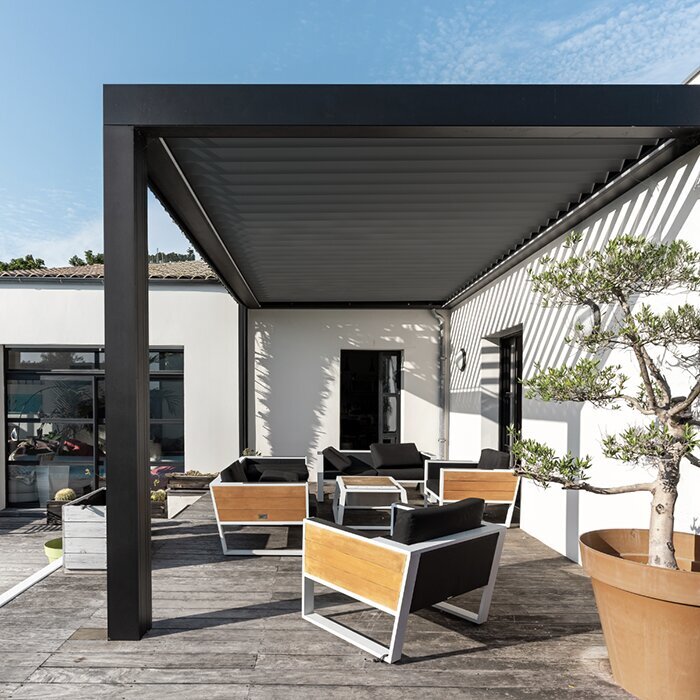
Comparison
Budget and premium over the long term
This overview does not replace individual advice or a detailed review of an offer. However, it helps organise typical decision points over a longer period of use and makes assumptions visible.
| Criterion | Budget-focused choice | Premium-focused choice |
|---|---|---|
| Purchase | Focus on the necessary basic configuration and a clearly defined feature set. | More scope for details, options and design coordination. |
| Construction | Careful review of material descriptions, connections and installation scope required. | Equally close review; added value must be clear for your site. |
| Care | Accessibility and a straightforward cleaning routine are particularly important. | Details can affect handling, but do not replace maintenance. |
| Features | Choose only functions that will be used regularly. | Assess comfort features through concrete everyday scenarios. |
| Spare parts | Retain documents and component names from the outset. | Clarify service routes, documentation and possible components carefully. |
How to compare two pergolas over time
Use the same starting point for each offer. A clear sequence prevents attractive individual features from obscuring the decisive questions of site, scope and ongoing effort.
01
Define use
Describe typical days on the terrace: time of day, number of people, furniture, light preferences and desired screening. This creates reliable priorities.
02
Record the site
Measure the area and access points, note slopes, existing elements and trees. Record special features with sketches and photographs.
03
Standardise the configuration
Compare only offers with clearly documented dimensions, roof design, fixings, drainage, finishes and accessories. Mark missing details immediately.
04
Note ongoing effort
Plan cleaning, seasonal checks and possible support as separate items. Check which documents and contact routes are available.
05
Justify the decision
Weight your criteria in writing and check unanswered questions before ordering. Review current conditions and design details when finalising the offer.
Checklist for your long-term decision
Use this list to check whether your comparison goes beyond first impressions. Tick off each point only when it has been answered for your specific configuration.
01. The planned dimensions allow for doors, routes, furniture and actual terrace use.
02. The base, slope and fixing options were assessed realistically before the final choice.
03. Both offers include comparable details on roof, drainage, finishes and accessories.
04. Installation scope and necessary preparatory work on site are set out separately in writing.
05. Access for maintaining gutters, drains and relevant surfaces is practical for you.
06. Documents, product names and configuration details can be stored securely for the long term.
07. Possible future wishes have been identified without relying on unconfirmed extension assumptions.
08. Clarify local requirements and, where relevant, insurance questions individually with the appropriate authorities or organisations.
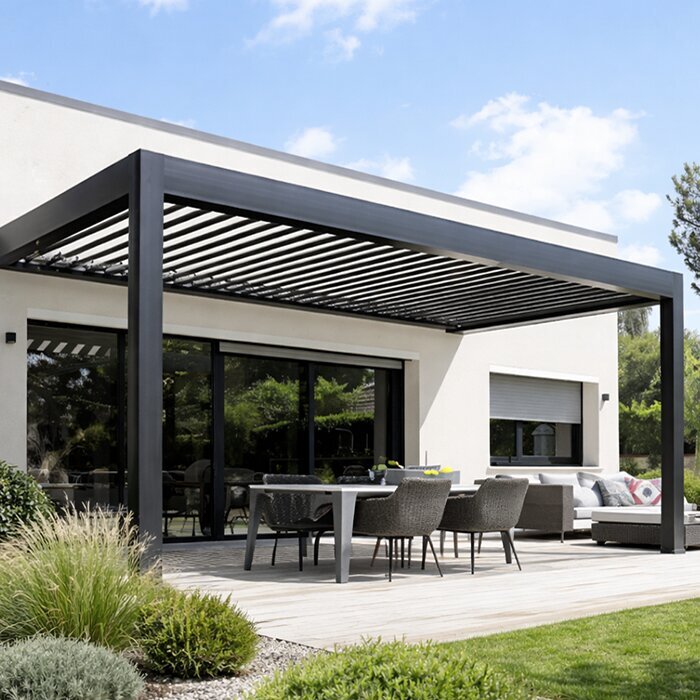
Frequently asked questions about cost comparison
Is a budget pergola automatically more expensive over ten years?
No. Long-term effort depends on your configuration, site, care and type of use. A suitably chosen simple solution can make sense. Conversely, a more extensive design can be convincing when its functions and details deliver lasting, tangible value for you.
How can I recognise good quality when comparing?
Check not only appearance, but also the clear description of materials, transitions, fixings, drainage and installation. It is also important that the design suits the base and your use. Ask specific questions about the selected configuration rather than drawing conclusions from general images.
What maintenance costs should I allow for?
Flat amounts would be unreliable because site conditions, dirt, access and personal input vary greatly. Allow for regular cleaning and inspection of drains. If you want to outsource work, obtain current quotations in your area and assess them separately from the product price.
Are spare parts guaranteed to remain available for a premium pergola?
A blanket promise of future availability is not possible. Before purchase, ask about documentation, component names and service routes. Keep documents, invoices and configuration data. This will help you ask much more targeted questions later and have options assessed.
Do I need permission for a pergola?
This can vary according to site, size, design and local requirements. Do not make assumptions from general guidance. Before proceeding, ask the Planning Authority and consult a perit on the relevant classification, site restrictions and any special property or building circumstances.
Is premium equipment worthwhile for my terrace?
It is more likely to be worthwhile when it regularly improves your daily life and suits your site. Define specific use situations rather than only desired features. Then check whether operation, design and possible care requirements support that benefit. This keeps the decision personal and understandable.
Compare pergolas
Compare for the long term, choose what fits
An aluminium pergola is a decision about shaping your outdoor area over many seasons. A practical comparison of budget and premium begins with the full scope, continues through care and installation, and ends with the comfort and design freedom you will genuinely use every day.
Bloomcabin helps you distinguish product groups clearly and organise your requirements in a structured way. Prepare your site carefully, review current offer details and clarify open questions before deciding. The price comparison then becomes a choice that suits your terrace.
Discover suitable pergola designs and compare the options using your own planning criteria.
