
Buying a Garden Shed with Sliding Glass Doors
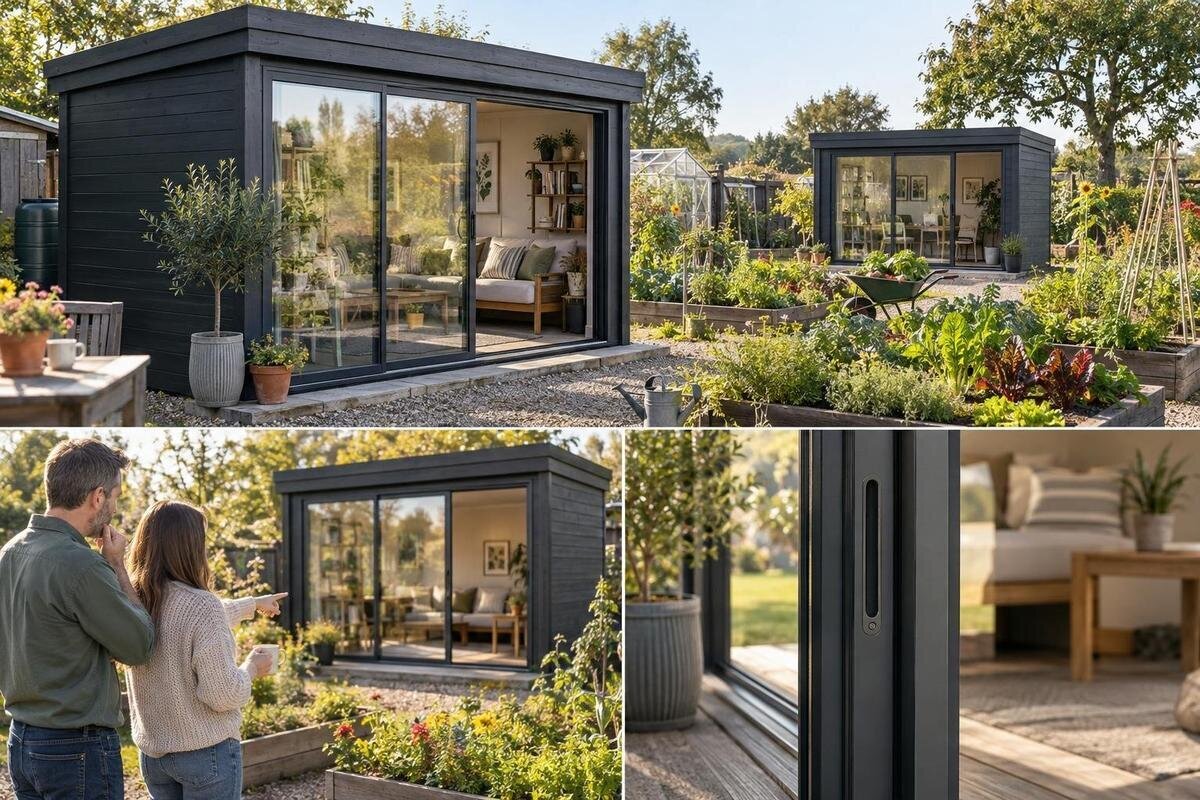
Garden shed buying guide
Sliding glass doors affect more than a garden shed’s appearance: they change how you enter, arrange the interior and manage privacy. Before you buy a garden shed with sliding glass doors, decide what the building will be used for, measure the available space and check how much of the doorway actually opens. Then compare the glazing, construction and ordering details for the exact version you are considering. Product photographs and model names can help identify a design, but they do not establish usable dimensions or performance.
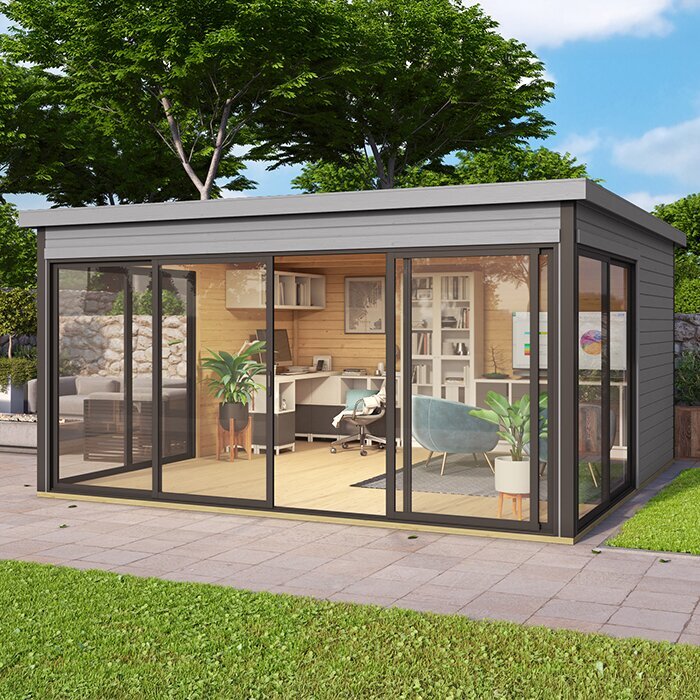
Decide what the shed needs to do
Begin by deciding whether the shed is mainly for storage, a hobby, occasional seating or a combination. Write down what will go inside and how often you will use each item. A tool store may need straightforward access and wall space; a workspace may need a clear area around a bench; mixed use requires a route that stays open when larger items are put away. A glass frontage can make contents more visible, so consider whether that suits your plans. This brief helps you judge a model by the space and access it offers, not simply by the appeal of a particular photograph.
Be realistic about how long and how often you expect to spend inside. A glazed front does not, by itself, establish that a shed is insulated, ventilated, secure for valuable equipment or comfortable for extended use. If you have a purpose beyond basic storage, identify the performance information that matters and look for it in the product specification. Also decide whether you want a view through the doors from the house or would rather keep stored contents out of sight. Settling these points first helps prevent a spacious-looking image from steering you towards a layout that does not suit daily use.
Measure the footprint and usable space
Measure the proposed site in metres and record its usable width and depth, then compare them with the external dimensions in a product drawing. A floor size may not be identical to the building’s furthest projection, so check whether the drawing gives overall dimensions and shows any overhang. Where practical, mark the intended outline on the ground and consider paths, planting, gates and other nearby features. Check how a delivery and assembly route reaches the site as well. A shed that fits on paper can still be awkward if access to the garden is blocked during installation or everyday use.
Keep the exterior size separate from the interior measurements and the opening size. Wall thickness and the way dimensions are labelled can affect usable floor area; a stated overall width does not tell you how much room remains between the inside walls. Check the door position on the same plan and note which figures the seller actually provides. For any listing you inspect, including the Verdana 1 garden shed listing, use its current drawing and written dimensions rather than estimating scale from an image. If a measurement you need is missing or unclear, ask for clarification before ordering.
Check how much of the doorway opens
A sliding door avoids the outward swing required by a hinged leaf, but it still needs an unobstructed route along its track. Check which panel moves, which remains fixed and where the moving panel sits when open. That arrangement affects the clear passage: the width of the glazed frontage is not necessarily the width you can walk through. It also affects where you can place a bin, shelving or a work surface beside the doorway. Look for a drawing that shows the doors both closed and open, rather than relying on a front-on photograph.
Compare the stated clear opening, if provided, with the items you need to carry through it, including bulky garden equipment. Check the threshold and handle position, how the door is secured, and whether the panels move in a direction that suits the approach from your path. Do not assume that sheds with similar-looking fronts have the same operating layout. Apply this test to every page you open, including the Verdana 2 garden shed page: use only written details for the exact model and version. If the open-door arrangement is not shown, ask before treating the apparent width as usable access.
Consider light, views and privacy
Glass can bring daylight into an interior, but transparency affects more than brightness. Think about what can be seen from the house, neighbouring properties and garden paths, as well as what you will see from inside. Observe the intended position at different times if glare or direct sun may affect where you work or sit; the building’s orientation can change the view and light. Consider whether tools or other stored items will be visible with the doors closed. If privacy matters, decide whether a screen, curtain or different position will work, and check that any proposed covering is compatible with the sliding-door arrangement.
Read the specification for the exact glazing rather than assuming all glass panels are alike. Look for the stated glass type and construction, and any available safety or security information; ask about cleaning or replacement if those details matter to your purchase. A product image cannot confirm these points, and the word glazed does not describe them. If you need particular light-control, privacy or heat-related characteristics, seek written details from the supplier and make sure they apply to the chosen configuration. For any shortlisted page, including the Durano garden shed listing, check the specification instead of inferring glazing details from a model name.
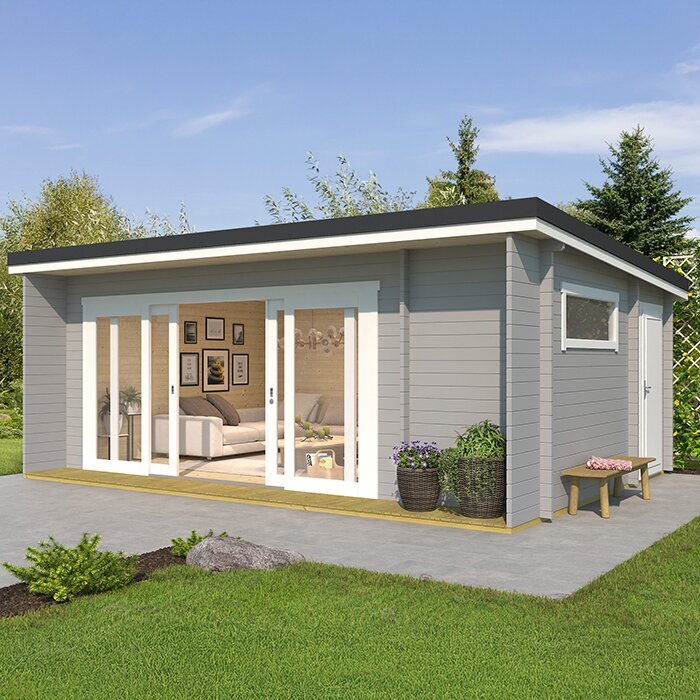
Plan the interior around the glazed front
Map the interior before settling on a size. Draw the door opening and mark where you would like shelves, a bench, hooks or larger stored items; then leave a practical route between the entrance and the area you use most. A glazed front may leave less uninterrupted wall space than a solid side, depending on the layout, so plan where items can actually go rather than assuming every wall is available. For storage, think about the tallest and longest objects, not only the total volume of boxes. For a hobby, note how much clear floor area you need when equipment is in use.
Check whether the product provides internal measurements or a floor plan detailed enough to test your arrangement. Confirm whether shelves, floor components, fittings or other accessories shown are included; do not assume a photograph depicts the supplied package. Consider what happens when the doors are partly open as well as fully closed, since a moving panel can affect movement near the front. The Veltor 1 product page can be assessed by the same rule: compare its stated layout with your own drawing, rather than reading usable storage capacity into the name.
Choose a position with a clear approach
Position is part of the buying decision, not a detail to settle after delivery. Decide which side should face the main approach, then walk the route from the house or garden entrance to that point. Consider whether the route will still work when you are carrying a box or tool, and where people will stand while opening and closing the doors. Check that the chosen orientation will not obstruct a gate, path, tap or another frequently used feature. Where space is tight, mark the shed outline and door front on the ground so you can judge the approach before ordering.
Check the ground and the manufacturer’s stated preparation requirements for the exact model. Find out what type of base or support is required, whether a floor is included and whether the chosen position needs attention before assembly. These are specification and site questions, not details to guess from a product photograph. If the surface is uneven, drainage is a concern or preparation is outside your experience, ask the supplier or a suitably qualified installer what the product requires. If current instructions are supplied for a candidate such as the Orello 1 listing, use the ones for that exact model rather than transferring an assumption from another shed.
Check construction, finish and maintenance
Check what the building is made from and how its surfaces are supplied or finished; do not use a model name, illustration or general style description as a substitute for the written specification. Depending on the product, useful details may include the stated materials and dimensions of the main components, the finish at delivery and whether additional treatment is recommended. Ask what routine care is expected and which parts need attention. This makes maintenance part of the comparison, rather than a surprise after assembly. Avoid assuming that sheds with a similar appearance use the same construction or have the same care requirements.
Assembly can also shape your choice. Read the instructions or assembly information before buying, and check whether the package states what tools, fixings, floor components or separate materials you must provide. Confirm whether assembly is self-managed or an installation option is offered on the current order page; do not presume either. Think about access for assembly and whether you can safely handle the work yourself, seeking qualified help for tasks beyond your ability. Apply the same scrutiny to the Modano 1 garden shed listing: compare only what is explicitly stated for that version and record unanswered questions before adding it to your shortlist.
Verify weather protection and security details
Outdoor performance and indoor comfort need to be checked separately from appearance. Look for the manufacturer’s stated information on the roof and wall construction, door seals, threshold and the areas where sliding panels meet. Confirm what protection is described for rain and wind at the chosen site, and whether any restrictions are given. Likewise, ask what the product description says about security, locks, ventilation and condensation if these matter for the contents or activity. Glass and a close-fitting door can look substantial in a photograph, but that does not establish performance. Do not infer insulation or secure storage from the presence of glazing.
Keep every answer tied to the specific model, door arrangement and any chosen options. A general statement about one garden shed does not prove that another has the same seals, glass, lock or weather performance. If the information is unclear, ask the supplier for the relevant specification in writing and decide whether it meets your needs before paying. Read the wooden garden shed M listing on its own terms; details from that page cannot be carried over to a separate sliding-door design. This keeps a shared category label from being mistaken for evidence of matching features.
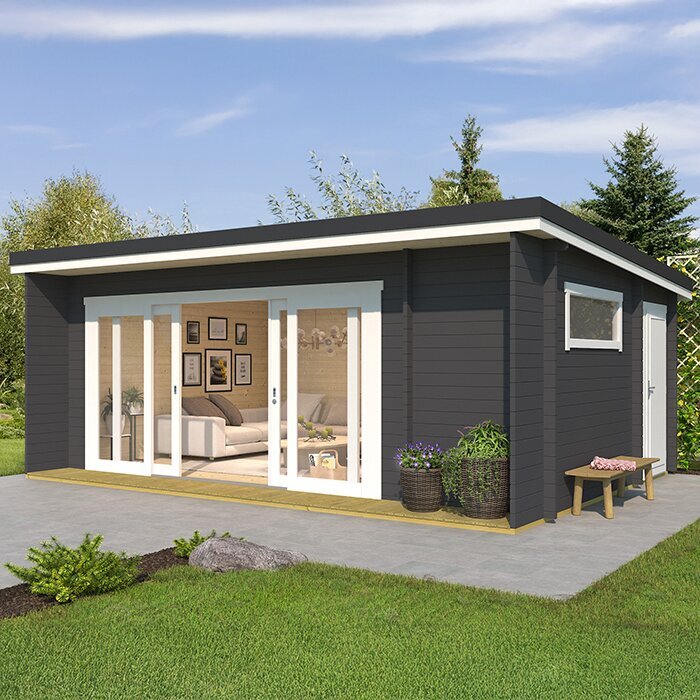
Confirm the order and delivery details
Before placing an order, compare the exact model variant rather than just the short product name. Confirm the stated external and internal dimensions, door layout, glazing information, finish, included floor or other components, and any options that change the configuration. Make a written list of what is included and what is not, especially when the listing shows accessories or finishes that look like part of the product. Check current delivery and assembly terms, charges, access requirements and estimated timing in the order information; do not guess these from another model’s page or from an image.
Think about how the shed will reach its final position: note access width, steps or tight turns on the route, and whether space is available for unloading and assembly. Confirm who is responsible for preparing the site and what needs to be ready beforehand; compare this with the manufacturer’s instructions and current order details. If you are comparing a storage-focused listing such as the wooden garden storage shed S page with a glazed-front option, use the same checklist but do not assume their configurations, contents or assembly requirements match. Keep a copy of the product description and order summary for the model you choose.
Compare shortlisted sheds on the same terms
Make a shortlist using the same criteria for each candidate: external footprint, internal usable space, clear door opening, panel movement, glazing and privacy information, stated construction, assembly, care and order requirements. Mark each point as confirmed, unsuitable or unanswered rather than filling gaps with an assumption. Decide which details are essential—for example, the opening must suit an item you need to carry through—and which are preferences, such as the amount of daylight or how visible the front looks. This makes it easier to rule out a shed that cannot meet a practical need, even if its design appeals.
Compare the remaining options with your site and budget, allowing for any costs or work that are explicitly stated as separate from the product price. Do not focus on an apparent saving or a longer feature list until you have checked the delivered configuration and the details that matter to your use. If two options both fit, favour the one whose dimensions, access and maintenance expectations make everyday use simpler. If an essential detail is missing, obtain the information before completing the purchase. A sound choice is the model whose documented layout fits the garden and the way you plan to use it.
Frequently asked questions
Do sliding glass doors save space outside the shed?
A sliding panel does not need the outward swing space of a hinged door, which can help if the area directly in front of the shed is limited. It still needs a clear track and room for the panel to move. A fixed panel may also make the walk-through opening narrower than the full glazed frontage. Check the stated clear opening and how the doors sit when open; do not choose by the overall width alone.
How should I measure the space for a garden shed?
Measure the usable width and depth of the intended site, then compare them with the shed’s overall dimensions on its drawing. Check whether the figures include projections such as an overhang, and keep exterior measurements separate from internal floor dimensions. Marking the outline on the ground can help you assess paths, gates and the door approach. Also check the route needed to deliver and assemble the shed.
Can a garden shed with glass doors be used as a garden room?
Glass doors alone do not establish that a shed is insulated, ventilated or suitable for extended use in different conditions. If you intend to use it as a workspace or for another regular activity, check the specifications for the exact model and look for information relevant to that use. Consider privacy and the amount of usable wall space, too. Do not assume that a bright-looking photograph shows how the building will feel or perform.
What should I check about the glazing?
Look for the stated glass type and construction, along with any available information on safety, security, cleaning and replacement. If light control, privacy or heat-related characteristics matter to you, ask for details that apply to the exact configuration you plan to order. A photograph or a general description such as glazed front cannot confirm these points. Check that any screen or covering you are considering can be used with the sliding-door arrangement.
What should I compare before placing an order?
Compare the external dimensions, internal usable space, clear doorway, panel movement, glazing details, stated construction, assembly information and what the package includes. Then check the current delivery terms and any site-preparation requirements for the exact version. Mark essential points as confirmed or unanswered rather than filling gaps with assumptions. If an important detail is unclear, obtain an answer before ordering.
Buying a garden shed with sliding glass doors is a matter of matching a defined use to a real site and a documented door and glazing arrangement. Measure the outside and inside dimensions, test the open-door route, plan for privacy and storage, and read the exact assembly, care and delivery information. The look of a glazed front may catch your eye, but the written details should settle whether the shed can do the job you have in mind. If a specification leaves an important question unanswered, resolve it before ordering rather than relying on a model name or photograph.
