
Buying windows online: How to check a supplier before ordering

A guide to placing your order
A basket can seem like the final step, but for windows it is better treated as a working stage. A sound online order begins not with a colour or handle, but with a comparable project schedule: which openings are being replaced, which dimensions apply, how will each element open, who will install it, and which connections must suit the building? Only once these questions are resolved for the whole project can you assess a supplier properly. This guide explains how to evaluate product pages, quotations, accessibility and the ordering process. It also shows which information to record in writing before approval, so an attractive window does not become an element that fails on installation, use or programme planning.
01 / Create a project list
Start with a window schedule, not individual products
Before comparing suppliers, prepare a window and door schedule for the complete project. Give each line a room or opening reference, structural-opening or existing dimension, preferred opening direction, viewing side and special requirements such as privacy, escape, cleaning or furniture. Also note whether an element replaces an existing one or serves a new opening. This prevents similar windows from being configured with inconsistent assumptions. A supplier is easier to assess when it can turn this schedule into a readable quotation rather than merely showing separate basket items. For renovation work, include photos of the reveal, internal and external views, and any notable junctions in the project file.
The schedule also separates preferences from fixed requirements. For example, an inward-opening window can only be assessed properly once you know whether radiators, curtains or worktops restrict the sash movement. A useful starting point for a specific configuration could be an inward-opening single-sash window ; however, its name does not establish which dimensions, glazing or accessories suit your opening. Ask the supplier which entries become binding and which details still need checking or confirmation before manufacture. This matters more than reaching checkout quickly, because a later alteration often affects several positions and the installation sequence.
Check product pages for verifiable details
A convincing product page lets you identify the selected version without doubt. Look beyond general benefits for clearly assigned choice fields and an understandable summary of your configuration. Can you distinguish the internal from the external view? Is it clear on which side the hinges, handle and opening direction sit? Are dimensions explained as width by height in relation to the stated view? Doors and asymmetric elements in particular can cause misunderstandings when the viewing direction is not fixed. Good information also helps you distinguish a fixed-glazed panel from an opening sash, rather than treating both simply as window area.
Always check what a technical statement refers to. A figure may apply to a particular combination, size or selected specification and does not automatically apply to every basket variant. Ask for the document that describes the configuration actually ordered. For a quiet, non-opening area, a fixed-glazed window is a different product concept from a ventilation window; the product name alone does not show how the element fits your wall opening and intended use. If option explanations are missing or terms remain ambiguous, record your question. The quality of the reply is a useful indication of later cooperation.
02 / Compare product data
Match dimensions, reference points and survey carefully
Dimension errors rarely result from arithmetic alone; they often arise from different reference points. Before ordering, establish whether you are comparing clear opening dimensions, structural-opening dimensions, existing frame dimensions or required external dimensions. With existing windows, uneven reveals, concealed fixings and internal linings can affect measurement. Do not measure in one place only: record width and height at several points, as well as diagonals where appropriate for the opening. Record who is responsible for the survey and on what basis the order will be approved. A reliable process makes these roles clear rather than silently treating a customer-reported dimension as installation approval.
Also consider the space around the element. A large lift-and-slide door changes more than daylight; it affects floor build-up, terrace junctions, the delivery route and later furnishing. For Patio Life lift-and-slide doors the supplier should be able to explain, when asked, which details are needed for the order and how to state the opening side unambiguously. Give the installer the same drawings and dimensions used for the order. Where window delivery, flooring, façade work and interior work are contracted separately, one person needs oversight of sequence and interfaces. This avoids an element being delivered but unable to be fitted because a connection detail remains unresolved.
Assess opening types by their future use
Assess a supplier by whether it considers use as well as listing opening types. Ask for every room: who operates the window, how often, from where, and what is in front of it? In a bathroom, privacy and moisture behaviour may matter; in a kitchen, reach over a worktop; in a bedroom, daily ventilation; and upstairs, external cleaning. A sash that works on a drawing can still collide in daily use with a light fitting, cupboard or balustrade. Mark the opening zone roughly on your plan and check it with everyone involved before the configuration is fixed.
For roof openings, operating height, roof pitch, interior fit-out and maintenance access must also be considered. A centre-pivot roof window is a product category, not a substitute for checking whether the intended position will be practical in the finished room. Ask which information the supplier needs for the specification and which details must be coordinated with the specialist contractor. A helpful contact will not simply claim that one option always fits; they will ask about the installation situation. When comparing window types, do not assess only the external view. A window is part of a room: handle height, sash swing, cleaning access and its effect on furnishing all belong in the decision.
03 / Check the quotation
Check special shapes and appearance separately from performance
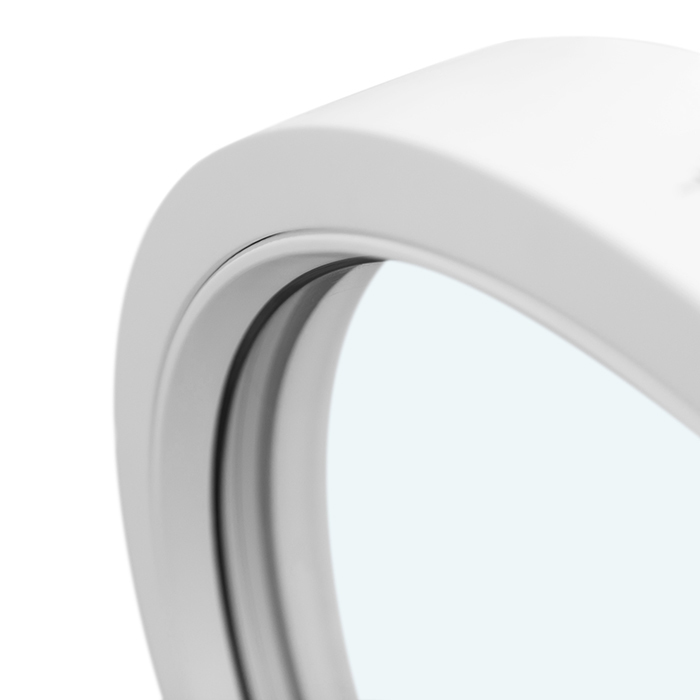
Round, angled or semi-circular openings deserve their own review point because their drawing is not merely decorative. Compare the outline, fixed and moving areas, viewing side and transitions to the surrounding wall. For a triangular or angled fixed-glazed window it must be entirely clear which geometry is being ordered and how it relates to the structural opening. Send the supplier a dimensioned sketch and ask for the key details to be reproduced clearly in the quotation or order confirmation. A description such as “sloping at the top” is not enough when several mirrored versions are possible. Also check whether neighbouring rectangular elements have been considered visually and structurally.
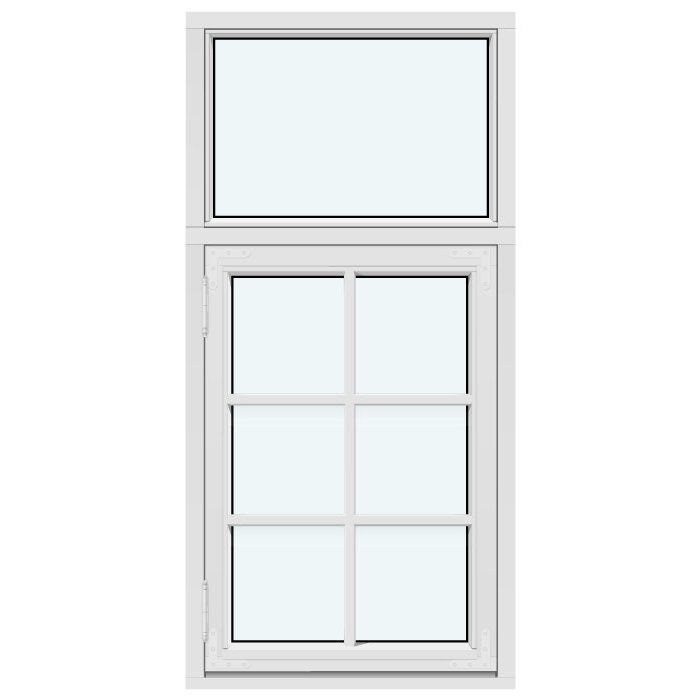
Specify glazing bars precisely too. A glazing bar does not automatically mean a bar dividing the glass unit. State whether you want through-glazing bars, applied bars on the glass, or an uninterrupted glazed area. For an important façade view, ask for an illustration that shows the bar layout and sash arrangement. Compare it with existing photographs, heritage sketches or the design, where these documents matter to your project. For project-specific questions about appearance, junctions or construction, coordinate with the relevant qualified professionals; a product page cannot replace assessment of the actual installation situation. In Malta, also have a perit confirm any planning, façade or protected-property considerations.
Check quotation and basket line by line
A final total is not enough for comparing quotations. Transfer each supplier’s positions to your own table and check the same features on every line: quantity, dimensions, opening type, handing, colour or finish, glass layout, bars, handles, accessories and scope of supply. Mark fields described only generally. For historic elevations, wording such as “similar style” may be inadequate. An outward-opening heritage-style “Kombi” casement window must be checked against your plan from the selected specification, not its name alone. Keep the product view, configuration summary and quotation version together.
Pay particular attention to the boundaries between the product, an optional extra and work to be completed on site. Is a statement included in the item, recorded as a selection, or merely a note for further planning? Which tasks does the supplier expressly not undertake? These are not minor questions: installation needs coordinated responsibility for the opening, connections, sealing, internal work and any remedial work. If anything is unclear, do not rely on a brief verbal answer; request written clarification for the specific position. Then compare again whether every quotation covers the same task. The cheaper quotation may simply include less, while the more expensive one describes a different scope. Only comparable positions provide a sound basis for a decision.
04 / Check before approval
Test contact quality with specific questions
Contact options become meaningful only when they let you resolve a technical point. Test the supplier with two or three project questions that a general help page cannot answer: Which view governs the handing? How should a special shape be dimensioned? Which document forms the binding record of the ordered version? Look for specific, understandable answers rather than broad assurances. It also matters whether the reply reflects your starting position correctly. If someone confuses an outward-opening element with an inward-opening one, treat this as a sign that the order will need especially careful checking. Also see whether follow-up questions are answered completely or only individual keywords are picked up. A good reply identifies missing details, separates confirmed matters from open points and refers to the relevant quotation line. For complex questions, send a labelled sketch and request confirmation of which element is meant. This also tests whether attachments, item numbers and corrections are reliably assigned in the process.
Also check that you can find reachable company details, clear responsibilities and a route for questions after receiving a quotation. Briefly document emails, quotation versions and telephone discussions with date and item reference. This is not about distrust, but about maintaining a shared project position. For the entrance, an outward-opening panelled front door may be an option; whether it suits your opening, use and design must be answered in the context of your details. Do not ask only “Is this possible?” Ask instead, “Which details from my sketch will you include in the order confirmation?” That wording is more likely to produce a checkable answer than a general product question.
Understand the ordering process before payment
A trustworthy ordering process makes clear when an enquiry becomes a quotation, a quotation becomes an order, and an order becomes a binding approval for manufacture. Read notes on changes, corrections and queries before paying. What matters is not whether a form works particularly quickly, but whether you can check the final configuration before approval. Ask which details the supplier wants confirmed again and how you should report a correction if you spot an error. Save the basket or configuration summary as a working record. Compare it with your window schedule, not merely with your memory of the image selected.
Allow enough time for coordination as well. Orders from Bloomcabin have a delivery time of 4 to 6 weeks, subject to order confirmation. Do not automatically link this period to a fixed installation date while the survey, order and site preparation remain unresolved. The delivery address, access route, unloading point, storage space and sequence of trades can be just as important as production. Tell the installer about the expected process, without scheduling work around unconfirmed dates. A good supplier explains which confirmation the date relies on. This helps prevent delivery while openings are still unprepared or the installation team is allocated elsewhere.
05 / Document your order
Keep documents for delivery, installation and future service
Create a digital project file for every element. It should include the approved order confirmation, drawings, configuration summaries, correspondence about changes, delivery note and photographs of openings before installation. This file helps the installer check the delivery against the order on arrival. Check quantities, visible damage, dimensions and recognisable specification features against the order, as far as possible without unpacking. If there is a discrepancy, document the issue and affected item clearly rather than reporting only a “wrong window”. The clearer the record, the easier it is to allocate a query.
Keep the care, operating and any maintenance information supplied for the product actually delivered. This is especially useful if ownership changes later or individual fittings need adjustment. Windows and doors from Bloomcabin carry a 5-year manufacturer guarantee; check its applicable terms and keep the invoice and order documents accessible. This guarantee does not replace careful inspection on delivery or coordination of the installation. For the order, the key point is that the document contains the exact configuration. General brochures can offer guidance, but do not automatically prove which option was selected in your order. Statutory consumer remedies remain separate from the manufacturer guarantee.
Decide carefully with a final-approval checklist
The final check should not happen in a rush. Place the final order confirmation beside your window schedule and go through every element: room, quantity, dimension, shape, opening direction, viewing side, fixed or opening parts, visible design and selected options. Then review project-wide points: do the elements fit the intended installation sequence? Have special features at the terrace, roof, façade or interior fit-out been passed to the responsible people? Is the delivery address complete and can the goods be received there? A second pair of eyes is valuable, particularly with several similar positions. Checking takes little time compared with a change after manufacturing has begun. Use only one clearly dated final version for this review. Mark older quotations as superseded so neither client nor installer uses an earlier version by mistake. For mirrored elements, check both positions separately rather than assuming that approval of one applies to the other. If the total quantity and individual positions do not match, pause approval until the difference is explained and corrected in the documents.
Place the order only once open points have been answered in writing and your documents are consistent. For small, high-level ventilation openings, an outward-opening top-hung casement window may be one possible option; do not decide from the category alone, but from operation, dimensions and installation conditions. If a technical or building question remains unanswered, postpone approval and clarify it with the supplier and, where appropriate, the design or installation specialist. This is not indecision but professional risk management. The right supplier supports a traceable order rather than pressuring you into a decision with gaps in the project data.
Frequently asked questions
How can I tell whether two online quotations are genuinely comparable?
Compare more than the total. Check every item against the same schedule. Dimensions, opening direction, number of sashes, fixed panels, design, selected options and scope of supply must match. Mark unclear details. Only when the described task is the same can you sensibly weigh up price, communication and the ordering process.
Are self-measured dimensions enough to order windows?
They can prepare an enquiry well, but they do not automatically replace a project-appropriate site survey. The reference point used, several measuring points and the actual opening condition are important. Confirm in writing who checks dimensions and when they become binding. Coordinate the same details with the contractor planning the installation.
What question should I definitely ask a supplier before ordering?
Ask which document forms the binding record of your exact specification and when you can check it before manufacturing approval. Add a question about your most difficult detail, such as handing, a special shape or the measurement reference. A clear answer based on your information reveals more than a general product description.
Should I order windows and installation from the same supplier?
That can simplify coordination, but it is not an automatic requirement for a good project. If delivery and installation are commissioned separately, responsibilities must be especially clear. Give the installer the final documents and clarify handover, checks, junctions and programme sequence before approving the order.
What should I do if the plan changes after the basket stage?
Do not change only one item if the same decision affects other elements. Update your window schedule first and ask for the affected positions to be summarised again in writing. Recheck dimensions, views and opening directions across the whole project. Only then should the revised configuration receive binding approval.
Next step
Buying windows online is above all a task of clear project organisation. A good supplier provides traceable product information, answers specific questions and leads you to a checkable order confirmation. Your own foundation remains essential: a complete window schedule, reliable dimensions, coordinated installation interfaces and a calm final review. Compare not only products, but also the quality of information and the ordering route. When every item is clearly described and everyone works from the same documents, an online order becomes a manageable part of your building or renovation project.
