
Buying a Garden Shed with Folding Glass Doors
Garden shed buying guide
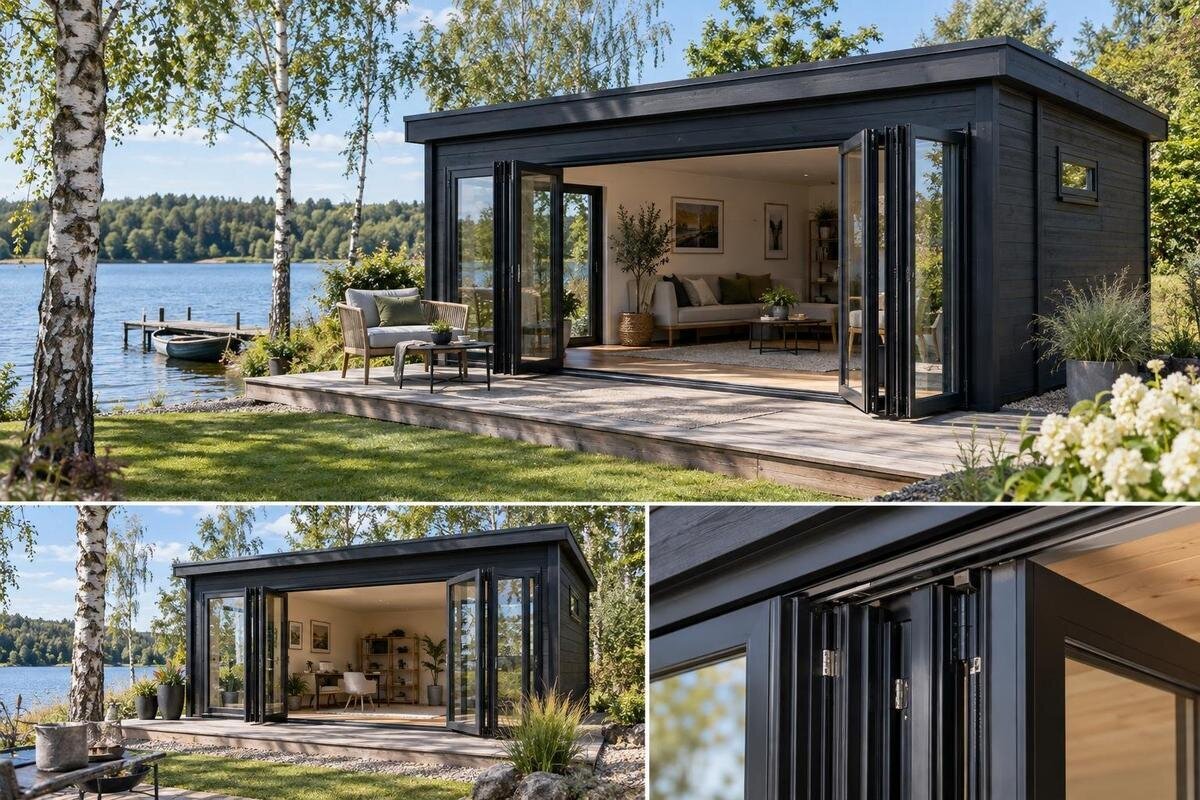
Buying a garden shed with folding glass doors is less about choosing the widest-looking front than checking how the doors will work in your garden. Panels may fold in a particular direction, leave part of the opening fixed or need space where you plan to walk and place furniture. Start with the job the shed must do, measure its footprint and the route through the doors, then compare the exact model details, site preparation and full order cost. The glazing is one part of a useful purchase, not a substitute for checking the building as a whole.
Decide how you will use the shed
Before comparing garden sheds, decide how this one will earn its space. A building used mainly for tools has different priorities from a place for potting, hobbies or occasional sitting. List the largest items that must pass through the doors, how often you will move them, and whether furniture or shelving will stay in place. This turns the opening and clear floor area into practical criteria rather than decorative ones. Consider storage zones too: items used frequently should be reachable without moving chairs, tables or bulky equipment. If a sitting area is the aim, consider when you expect to use it; glazing alone does not establish that the building is insulated or comfortable in every season.
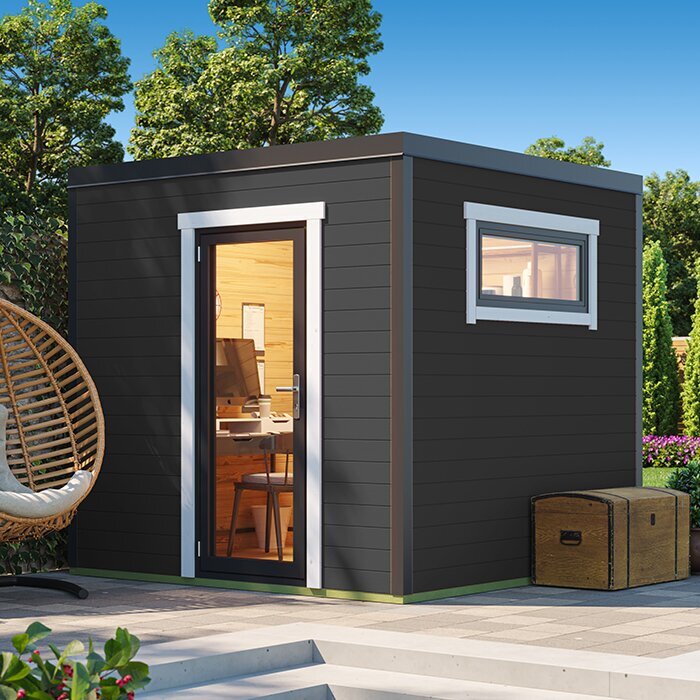
Separate essentials from preferences. You may need a certain clear passage for equipment, while being able to fold several panels back could be a preference. Consider whether you need access with the doors closed during ordinary storage, or expect to open them often to connect the shed with the garden. That distinction affects how much of the front needs to move and whether the arrangement suits your routine. When assessing Verdana 1 garden shed, compare its own published details with your list and ask about anything not stated. Its name or photograph alone cannot confirm that its layout meets your needs.
Check how the folding doors open
Folding glass doors do not all create the same opening. Check how many panels move, whether any part of the front is fixed, which way the panels fold and on which side they stack. Look for the stated clear opening with the doors fully arranged as intended, not just the overall width of the glazed front. Check whether a partly opened arrangement gives enough access for daily use, especially if you will regularly carry tools, pots or outdoor furniture through the entrance. If only some panels can be opened independently, that may affect how you use the entrance on an ordinary day. Ask for a plan or written door description for the exact model if the product page does not make these points clear.
Think through the movement on both sides of the threshold. A door that folds inward may take space intended for a shelf; an outward-folding arrangement may overlap a path or seating area. Check whether the route remains comfortable when the doors are partly or fully open, and ask how the handles and lock work. Do not assume the panels can be reversed or that every panel opens independently. Make a sketch of the threshold, the stacking side and the usual walking route. Include nearby walls, fences and planting, since these can make an apparently generous opening awkward in use. This is more reliable than judging access from the overall frontage alone. For Verdana 2 garden shed, use the stated configuration for that precise version, or request a drawing before relying on a clear-width figure.
Measure the footprint and access route
Measure the place where the whole building will sit, not just a patch that looks large enough. Compare the stated external dimensions with the usable area, leaving room for any projections shown in the model drawing and for access to the side or rear if needed for upkeep. Allow for nearby boundaries, planting beds, taps, drains and outdoor lighting that could make access inconvenient. Check gates, paths, steps and fixed garden features along the route to the chosen position too. Mark the proposed footprint on the ground; an outline can make awkward corners and conflicts with planting easier to spot before ordering. Also mark where the folded panels will stand when open and walk the route as you normally would. This can reveal whether an open door would narrow access to a tap, bin, clothes line or seating area. Note these measurements on a simple plan, so every shortlisted model is tested against the same space rather than against memory.
Check internal dimensions and doorway height as well as width. External measurements do not tell you how much floor remains after the walls, or whether a tall item will pass through the entrance. Look at the measurement diagram to see what each figure describes and whether it refers to the base, walls or another point. For Durano garden shed, use only measurements stated for that model and ask the seller to clarify anything unclear rather than calculating from a photograph. Include the open-door area in your plan so the shed does not obstruct a route you use every day.
Consider light, views and privacy
A glazed front changes the way the shed relates to the rest of the garden. Notice how sunlight moves across the proposed position at the times you expect to use the building. Direct light or reflections may affect where you would place a desk, seating or stored items. Consider whether equipment, textiles or other contents should be kept away from the brightest part of the room. Also consider the view from inside and what people can see from outside. A position that looks private in one part of the day may feel more exposed at another, so assess the setting rather than judging it from a single photograph.
Decide which direction you want the doors to face and whether the approach will remain clear when they are open. If shade, blinds or a screen would help, check whether an option is available for the exact model and whether it would interfere with the folding panels; do not assume an accessory is included. Ask whether the model documentation identifies the opening side, as this may determine how the proposed position works. Keep the route to any handle clear of pots, furniture and planting. When reviewing Veltor 1 or another candidate, use its dimensions and door arrangement to test your preferred position, not an image that may show a different setting.
Confirm the glazing and door hardware
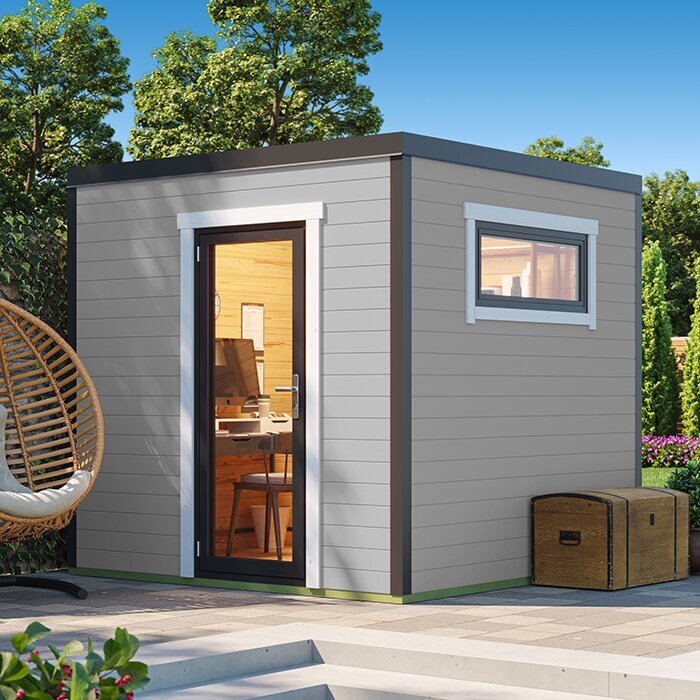
The phrase glass doors does not tell you what glass is specified. Look for a written description of the type of glass and pane construction for the exact model. Ask what safety information applies to the intended installation and how a damaged pane would be replaced. It is also useful to establish whether the listed door set includes every glazed panel shown in the relevant configuration. If these details are missing or unclear, raise the question with the supplier or a qualified installer before ordering. Do not treat the appearance of the glazing in a photograph as evidence of its specification or suitability.
Check the hardware as well as the panes. Find out how the panels are operated, what locking details are provided and whether the description covers the handles and any seals. Ask how the moving parts should be cared for and whether replacement components can be obtained. For Orello 1, check the information for the exact version you are considering; details from another model or a similar-looking image may not apply. A photograph of a lock or handle does not, by itself, establish how secure or durable the system is.
Match construction and upkeep to your plans
Check what the complete shed is made from, how its surfaces are finished and what maintenance the supplier recommends. Read any care guidance alongside the model description, since the demands of a glazed entrance can differ from those of a simple storage door. If you intend to use it for hobbies or regular sitting, ask about the performance of the whole building, including ventilation and any stated insulation or weather information. A glazed front does not, by itself, establish how the walls, roof or floor perform. Make sure the description relates to the exact model and configuration rather than relying on general wording for a product range.
Think about upkeep before committing to a finish or layout. Ask whether any treatment or finishing work is included, what care the materials need and which cleaning guidance applies to the glazing and frame. If you are comparing Modano 1, use its model-specific information to identify what is stated and what still needs clarification. Where details are absent, ask rather than assuming that the pictured finish, ventilation or level of weather protection will match your requirements.
Check the base and site preparation
Find the base and preparation requirements for the exact shed before arranging the garden space. Check the dimensions given for the base, whether a floor is included and what the product instructions say about the surface it needs. Establish early whether drainage, levelling or clearance around the building needs to be considered as part of your site plan. Do not assume that a patio, paving or a prepared patch of ground is suitable just because it appears level. The required preparation can depend on the model and site, so use the supplied instructions instead of applying a generic rule.
Confirm what is included for assembly and fixing, and what you would need to arrange separately. If the instructions do not explain the preparation clearly, ask the supplier for the relevant document before ordering. For Wooden Garden Shed M, check the requirements for that exact listing rather than relying on details from another shed. If you are uncertain about the existing surface or the work involved, ask a qualified local installer to assess it; do not guess at structural requirements.
Plan delivery and assembly access
The shed has to reach its final position as well as fit there. Measure the route from the delivery point through gates, along paths and around tight turns. Note low branches, narrow passages and parked vehicles that might affect the approach on the day. Steps or other obstacles may affect how components can be carried. Ask the supplier what information is available about the packed items and whether delivery is to the garden or to a different point. For a model with glass, confirm how the panes are handled and who is responsible for moving them during delivery or assembly. Do not treat a wide gate as the only access check. A tight turn beyond it, uneven ground or a change in level can be equally relevant when components are moved by hand. Provide accurate route information if the supplier requests it, and keep the approach clear on the day so the delivery arrangements can be followed without avoidable obstacles.
Check whether assembly is offered for the exact model, what that service includes and what preparation must be completed first. Ask which components, fixings or finishing items are supplied and which are not; do not infer this from a photograph. For Wooden Garden Storage Shed S, review the listing and confirm any missing delivery or assembly details with the supplier. Also clarify who removes packaging and what happens if access to the proposed location proves difficult on the delivery day.
Compare the full cost and specification
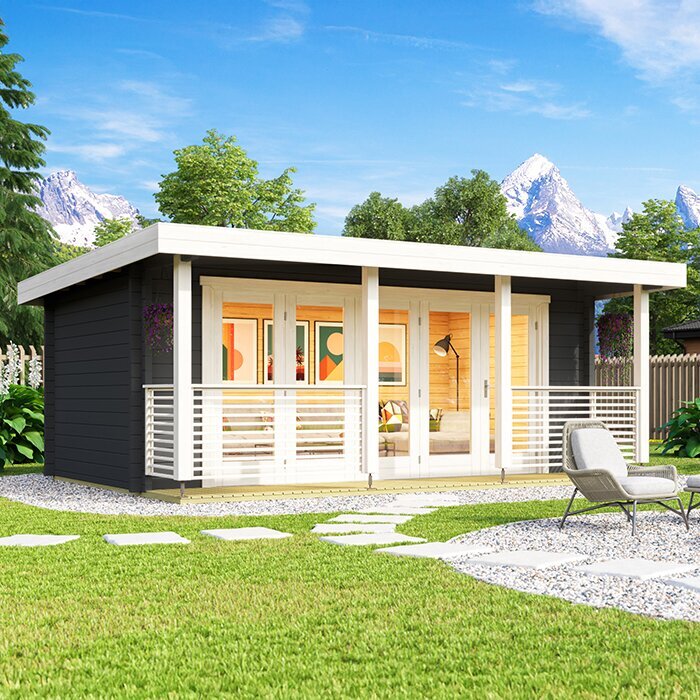
Compare shortlisted sheds on the same facts: external and internal dimensions, clear door opening, folding direction, glazing details and stated construction. Record the source and date of each quotation so that you can identify whether a difference reflects the configuration or a later update. Then compare the complete amount payable for the setup you actually want, not just the product price shown on a page. A base, assembly, finish or other option may be separate, so check what is included in the current quotation. Where a cost or specification is unclear, ask for it to be itemised rather than assuming it forms part of the package.
Keep a simple record of what each model includes and what remains unanswered. That makes it easier to tell a genuine difference in specification from a difference in wording or presentation. Pay attention to the exact version being quoted, particularly if a product range has more than one configuration. Do not compare a door detail from one version with dimensions or options from another. A photograph can help you picture the style, but it cannot replace the written product details or the final order information.
Review the order details before buying
Before completing an order, check the exact model and configuration against your notes. Confirm the dimensions, door arrangement and folding direction, finish, glazing details, included components and any extras you have selected. Check that any drawing, written description or quotation you relied on identifies the same version as the order. Make sure the delivery and assembly arrangements match the access and preparation you have planned. If an important detail was agreed separately, ask for it to be recorded with the order so there is less room for misunderstanding later. Use a final checklist that separates confirmed facts from questions still awaiting an answer. Match the door drawing or description to the side you intend to face towards the garden, because this affects access and the room needed by open panels. Check the order reference, selected options and any promised documents before payment or acceptance. Keeping these records gives you a useful reference when preparing the site and checking the supplied components.
Read the seller’s current terms for the purchase, including delivery, assembly, payment and any process for reporting a problem or requesting a change. Check that the total and the items included match the quotation you accepted, and keep the product information with your order confirmation. If you are choosing a special configuration, confirm how it is described on the order before proceeding. These checks bring the decision back to the practical point: the shed, its opening and the complete arrangement should suit the space and use you planned.
Frequently asked questions
Do folding glass doors open the whole front of a garden shed?
Not necessarily. Some configurations may include fixed sections or panels that open in a particular order. Check which panels move, where they fold and the clear opening shown for the exact model. If the listing does not explain this, ask for a door plan before you buy.
Will glass doors make a garden shed comfortable all year?
The glazing alone cannot establish that. Insulation, ventilation and the construction of the rest of the building also matter. If you plan to use the shed regularly for work or sitting, ask for information about the complete structure and its intended use rather than relying on the door description.
What should I measure before choosing a garden shed?
Measure the full space for the building, the route to its position and the area needed for the doors to fold. Check the model’s external and internal dimensions, plus the clear doorway width and height. Leave room for access around the shed where you will need it.
What should I ask about the glass?
Check what type of glass and pane construction the exact model specifies, and ask what safety information applies to the intended installation. If the product details are unclear, ask the supplier or a qualified installer. Do not infer the glass specification from a photograph.
Can I put the shed on an existing patio?
That depends on the requirements for the particular model and the condition of the surface. Check the product instructions for the base dimensions and preparation, and ask a qualified local installer if you are unsure whether your patio is suitable.
A folding-glass front is a useful choice only when its opening, position and upkeep fit the way you will use the shed. A sound comparison brings together the clear passage, space for the folded panels, the whole building’s stated details, site preparation and the complete order. When those points are clear for the exact model, the purchase is based on how the shed will work in your garden, not just how its glazed front looks.
