
Buying a Garden Shed When Delivery Access Is Limited
Garden shed buying guide
An awkward route can change which garden shed is practical, even when the intended site has ample room. A narrow gate, a sharp turn or a low obstruction may matter more to delivery than the shed’s final footprint. Before comparing options, trace the route from the place a delivery vehicle can stop to the intended position, then find out how the shed is packaged and where the carrier will leave it. This helps separate a genuinely workable purchase from one that only appears to fit on a product page.
Map the route from the stopping point to the shed site
Start with the whole journey, not only the gate that looks narrowest. On a simple sketch, mark the likely vehicle stopping point, the gate or doorway, each stretch of path, changes in level, turns and the final position. Walk the route and note where a person carrying a bulky package would need to pivot, pass other objects or move through a shared area. A shed that can be placed at the back of the garden is not automatically deliverable there: the carrier’s agreed drop point and the onward route may be different.
Label each passage with its usable width and height, and note steps, slope and surface. Mark fixed features separately from items you can move before delivery, such as pots or a garden table. That prevents temporary clutter from distorting the measurements while making genuine pinch points clear. Record the distance between the unloading point and shed site, and identify any shared access that needs to remain available. Note whether a tight measurement belongs to the gate itself or to a path just beyond it. The route map turns a broad question about restricted access into a set of places and measurements you can discuss with the supplier, rather than a judgement based on how open the garden appears.
Measure usable gate, path and doorway clearances
Measure every gate and doorway at its narrowest usable point, with the gate open to the position it can have on delivery day. The useful width is the gap left after posts, hinges, handles, latch plates or projecting walls are taken into account; a nominal gate size may not be the clear passage. Check more than one height if the frame or opening is irregular, and note the lowest obstruction overhead. If the opening changes between ground and shoulder height, record both, because package orientation may matter. If a gate can be unlatched or removed, do not count on doing that unless the owner permits it and you can arrange it beforehand. Record each reading beside its location on your sketch, not just as a single number.
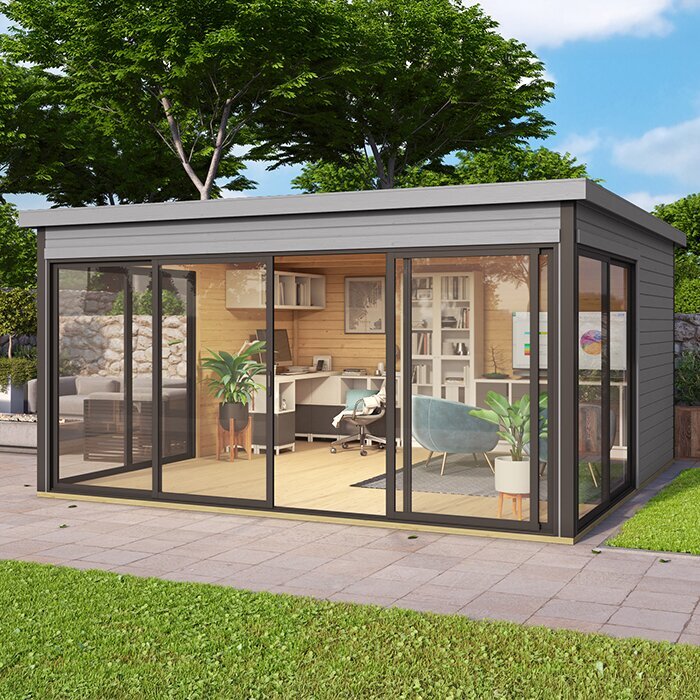
Repeat the check at narrow points along the path, including spaces between a wall and fence or fixed planters. Measure the approach as well as the opening: a wide gate can still be difficult if there is no space to line up a long package. Use one unit throughout, preferably millimetres for tight clearances, so comparison with package data is straightforward. Photographs with a tape measure may help explain a route, but do not replace recorded measurements. The product name and image for the Verdana 1 garden shed do not establish that its packages clear your gate; keep the option subject to dimensions confirmed for the exact order.
Check corners, changes in level and overhead clearance
Check each bend from both approaches. At a sharp corner, measure the clear area before and after the turn, and note walls, posts, railings or planted beds that limit room to pivot. A long package might fit through a gate but have nowhere to turn immediately beyond it. Do not use a diagonal measurement across a corner as proof that it will pass: the package also needs room to change direction, according to its actual dimensions and supplier guidance. Tell the supplier where the tight turn is and ask whether the largest item can be manoeuvred there.
Look above the route too. Tree branches, a low arch, balcony edge, clothes line or eaves can reduce headroom, while steps and sloping paths affect how items can be moved. Measure the lowest fixed clearance and describe changes in level rather than assuming the delivery team can manage them. Identify which obstacles are permanent and who is responsible for any proposed change. A product name such as the Verdana 2 garden shed says nothing about package shape or manoeuvring space, so use the real delivery information. If access would require altering a fixed feature or moving a cable, consult the property owner or an appropriate qualified professional instead of attempting it on delivery day.
Ask how the shed is packaged and unloaded
Before choosing a model, ask the supplier to describe delivery for the exact item: whether it comes assembled or in separate packages, how many packages there are, and the external dimensions and weights of the largest ones. Ask whether the figures include protective wrapping or a pallet, and whether any part is longer or wider than the main packages. Request measurements of each package as it will arrive, not just an unpacked panel. The finished shed’s footprint, advertised dimensions, photographs and name do not establish the size of what arrives. If packaging can vary, ask which maximum measurements to use and keep the answer with your order notes.
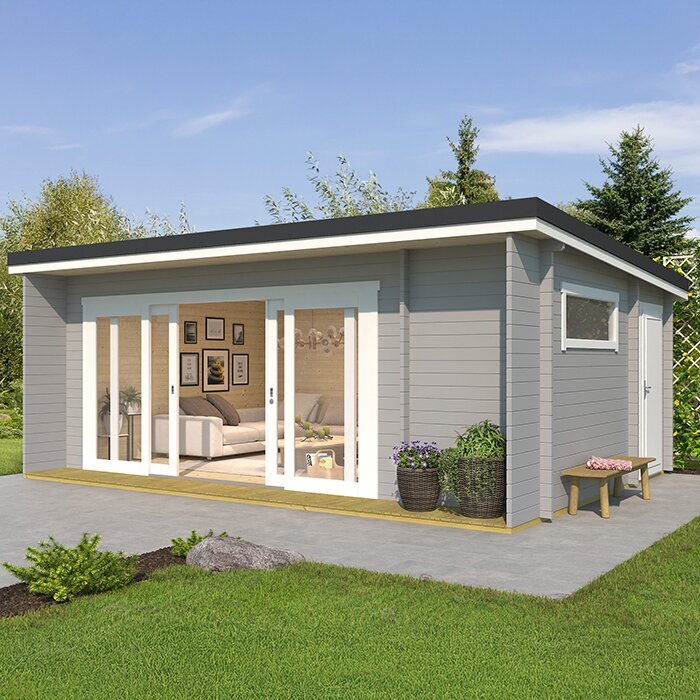
Delivery to a property can mean different things, so confirm the vehicle and unloading arrangement rather than assuming the driver will take the shed to the garden. Ask where the vehicle needs to stop, whether the order is left there or moved further, and what equipment or help is expected from you. Clarify whether delivery includes placing the packages, taking them through restricted access or assembling the shed; these are separate questions. Ask whether the carrier needs access to a particular side of the property or a clear area to unload. For the Durano spacious garden shed, record only details confirmed for that exact order, not an assumption based on the listing title. If any part of the plan remains unclear, get a clear answer before you pay.
Separate package access from assembly access
One important distinction is whether the delivery route needs to take a finished shed through the restricted area or only the delivered parts. Do not assume a garden shed arrives as a flat pack, or that every component will fit through a tight gate: confirm the form and dimensions of all relevant packages. Ask whether opening a package before moving it is permitted and practical, and whether unpacking would leave parts or packaging in a public or shared passage. An unpacked part may still have handling requirements, so ask before making a plan around it. Smaller bundles are not automatically easier to handle, and you should not plan to split a package without supplier guidance. Avoid relying on dismantling a gate or moving another person’s property unless permission and arrangements are settled in advance.
Passing the packages through is only part of the job. Assembly may need working room, and the finished shed may need to be moved into its final position. Ask what space is required, whether assembly is included or arranged separately, and whether the person doing it accepts the access you have described. Include steps, carrying distance and any place where packages must be staged. For the Veltor 1 garden shed, as with any candidate, leave these points open until the applicable product and service details are confirmed.
Agree where the vehicle can stop and unload
Restricted access can begin before the garden gate. Work out where the delivery vehicle can stop and whether its approach is constrained by a narrow street, shared driveway, low entrance or limited turning room. Do not assume a vehicle can enter private grounds or reach the shed site because a car uses the route. Describe the approach to the supplier and ask what vehicle and access conditions the carrier requires. If parking needs coordination, note who must be involved and who will open any gate. Where a common driveway, passage or loading area is involved, get permission from the person responsible.
Then follow the packages from the stopping point to the site. Note the carry distance, gates, steps and surfaces, plus any place where the delivery team would have to wait or turn around. Ask exactly where the carrier’s agreed responsibility ends and where your own begins, including whether packages are left at the kerb, driveway or another point. Do not plan to shift heavy or awkward goods yourself without knowing their weight and safe handling requirements. If the agreed unloading point changes, reassess the onward route and carry distance. The page for the Orello 1 garden shed is one candidate to ask about; its name does not settle the vehicle or unloading plan.
Match the shed to its intended use
Once you understand what can get to the site, decide what the shed must hold and how you will use it. List the items, their approximate dimensions and whether you need to reach them regularly; this helps avoid choosing a shed solely because its exterior seems easy to accommodate. Compare the stated external dimensions with usable interior information where available, and consider the door position and the space needed to open it. If you will store long or bulky items, check the clear opening of the shed door rather than relying on the overall width. Think about how often you need access to those items as well as how much storage space they occupy. A small footprint may suit one storage plan but not another, so treat delivery access as a constraint, not the only measure of suitability.
Measure the intended position too, including room to bring items through the shed door and any clearance for assembly or maintenance specified by the supplier. Compare the route with the dimensions of delivered packages, not simply the finished shed: these are separate fit questions. External dimensions and usable interior space are not interchangeable. Use a page such as the Modano 1 garden shed as a candidate record, then confirm its dimensions and delivery data from the relevant product information. If the shed fits the route but leaves too little usable space for its contents, it is not a good purchase.
Prepare the landing area and assembly space
Check the destination separately from the route. The planned position should be identifiable and clear when delivery arrives, with enough room for packages to be set down at the agreed point. If they cannot be left beside the final position, map the extra movement and staging area. Keep furniture, tools, bins and plants out of the route and landing area, and decide where packaging can be kept without blocking shared access. If packages will be staged outdoors, ask how they should be kept until work begins. Confirm that the proposed base or site preparation matches the product instructions.
Think through the order of work: unloading, moving packages, assembly and any final positioning. If the shed has to be assembled somewhere other than where it will stand, confirm that it can be moved afterwards and who will do so; do not infer this from photographs. If you plan to use a separate installer, share the same access sketch and package data with them, and ask whether they need different space or access. Make sure the assembly area will not obstruct a route that others need to use. For the wooden garden shed M, the name alone does not tell you what assembly area or site preparation is required.
Compare options using confirmed delivery details
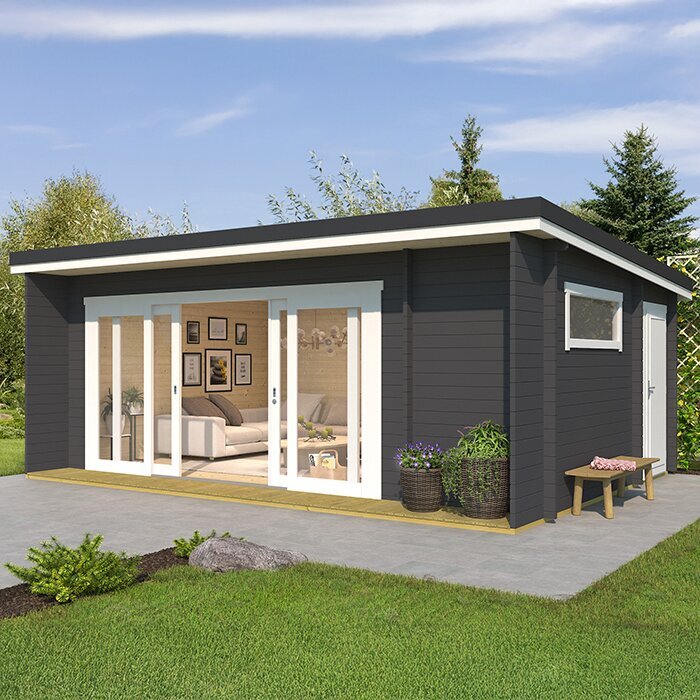
Put the candidate sheds side by side in a simple comparison record. For each one, keep product dimensions and intended-use notes separate from delivery facts: package count and dimensions, vehicle requirements, unloading point, onward carrying, assembly and unresolved access questions. Label every entry as confirmed, estimated or still to be answered, and use the same measurement units throughout. A table can show whether a choice depends on an unconfirmed measurement. An estimate can help screen possibilities but is not a clearance guarantee. Request package details if they are unavailable; a similarly named model or product photograph is not a substitute.
Then compare practical trade-offs rather than checking only whether something can pass the gate. Consider storage capacity for your intended use, the final position, preparation needed and how delivery works with the help available to you. Make sure each comparison uses the same delivery destination and service scope. Include any additional delivery, unloading or assembly charge only when the supplier has confirmed it, and compare quoted totals on the same basis. You can put the wooden garden storage shed S into the table as another named option, but decide only after its own product and delivery details are established. A workable route and a suitable shed need to coincide.
Confirm the route before placing the order
Before ordering, send the supplier a concise description of the route, including every narrow point, turn, step, overhead restriction and stopping location. A sketch with labelled measurements is clearer than a general description such as limited access. Identify the exact item and request confirmation that its delivery method can work on that route, which package measurements apply, where the driver will leave the goods, and what access or assistance is expected from you. If the plan depends on removing a gate, using shared space or changing a fixed obstruction, settle permission and professional advice first.
Ask what happens if the route is not accessible on the day, and clarify the supplier’s terms for an alternative drop point, rearranged delivery, extra handling, cancellation or return before you commit. Do not assume any option is available or included; the conditions should be stated for your order. Reconfirm temporary arrangements, such as an open gate or cleared passage, with everyone involved. If the route or product changes after confirmation, ask again and keep the revised details. Once package dimensions, the agreed handover point and onward plan match your measurements, you can decide with fewer unwelcome surprises.
Frequently asked questions
Which measurements matter most for garden shed delivery?
Measure the narrowest usable width and lowest height at every gate, doorway and pinch point. Include the space needed to approach and turn, any steps or slopes, overhead obstacles, and the distance from the vehicle’s stopping point. Record each location separately. You can then compare the route with the largest package dimensions supplied for the exact shed; the finished shed’s measurements alone are not enough.
Will a narrow gate rule out a garden shed?
Not automatically. It depends on how the exact shed is delivered, the dimensions of its largest packages, the space beyond the gate and the agreed unloading arrangements. Ask the supplier to confirm these details. If your plan depends on removing a gate, unpacking goods at the roadside or using a shared passage, make sure the arrangements are permitted and practical before ordering.
Can I use the finished shed dimensions to check access?
No. The finished dimensions do not necessarily describe the packages or parts that arrive. Ask for the dimensions of the largest packages, including any outer wrapping or pallet, and whether the shed arrives assembled or in parts. Compare those measurements with your gates, paths and turns rather than relying on product photos or a model name.
What should I ask the supplier before ordering?
Confirm the package count and largest dimensions for the exact item, the delivery vehicle and unloading method, the agreed drop point, and whether the carrier will move packages further into the property. Ask what help is expected from you and whether assembly is included or arranged separately. Share your route measurements and request an answer specific to your delivery service.
What if delivery information is not available?
Treat the missing details as unconfirmed. If the route has a tight opening or turn, do not rely on a guess: ask the supplier for the relevant measurements or compare another option whose delivery method can be established. You can also ask whether an alternative drop point or handling arrangement is possible, but get the terms for your order before relying on it.
Limited delivery access does not automatically make a garden shed purchase impossible, but it changes what must be known before you choose. The route, the largest delivered package, the unloading point and the assembly plan have to work together. A measured sketch and specific answers from the supplier let you compare options on evidence, rather than choosing by footprint or appearance alone. If an essential measurement or handover detail remains unresolved, keep the decision open until it is.
