
Can You Put a Garden Shed on Existing Paving?
Garden shed planning
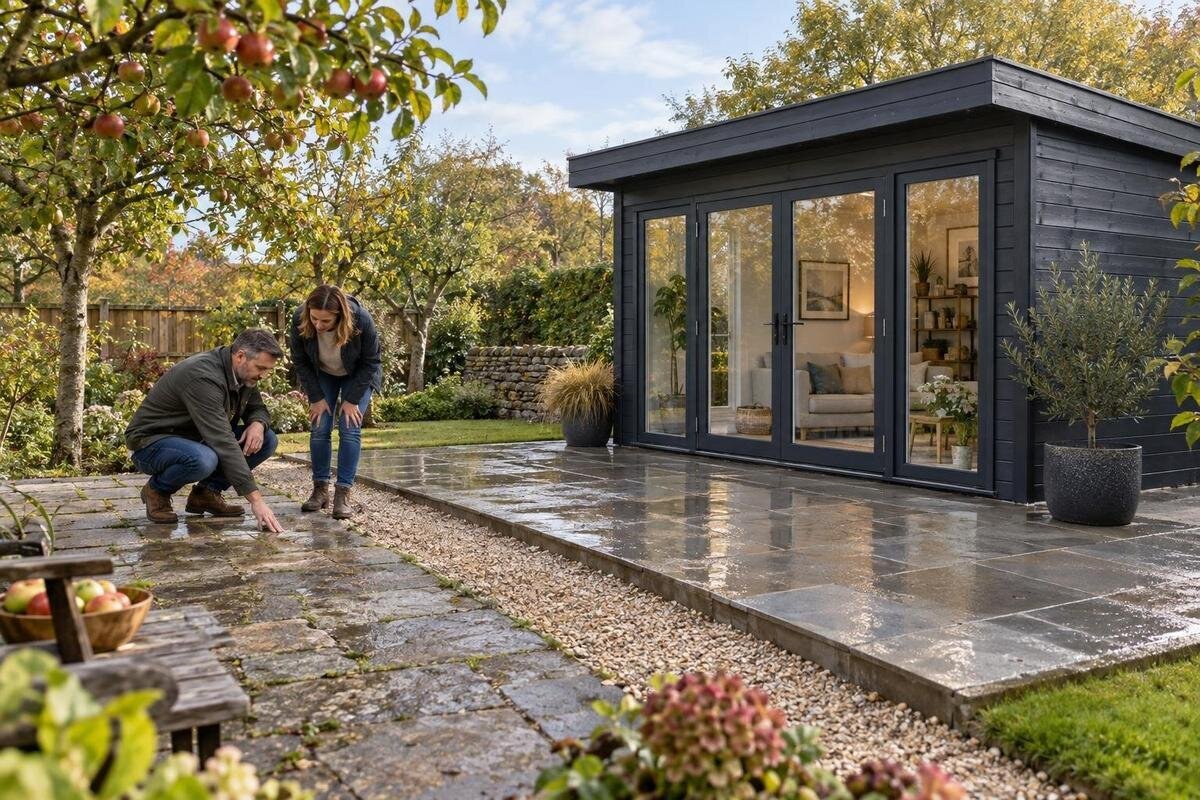
A paved patio or path may seem like a ready-made base, but its appearance alone cannot confirm that it will support a garden shed. Check whether the full footprint is stable and level, what supports the paving, how rainwater drains and whether the chosen model's base and fixing requirements suit the site. Assess these points before ordering or arranging installation; finding a problem after delivery can mean extra work.
01
Can you put a garden shed on existing paving?
Sometimes. Existing paving may form part of a suitable base, but only if it provides the support required for the particular shed and the installation instructions allow that arrangement. A neat-looking finish is not enough. Paving may consist of individual units laid over another layer, a continuous hard surface, or an area altered by previous repairs; the surface does not reveal everything about what lies below. A paved area can also have a slope or move over time. Treat it as a possible base to assess, not as a ready-made foundation.
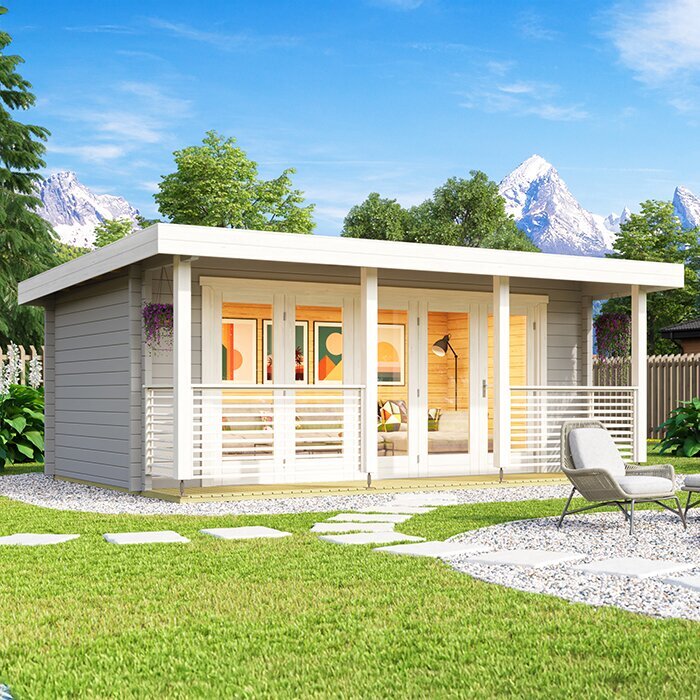
The decision depends on the match between the site and the shed you choose. Compare the model's stated base requirements with the size, condition and known construction of the paved area. If you are considering the Verdana 1 garden shed, consult the information for that exact model and ask the supplier about any unclear base requirements. The model name alone cannot tell you whether your paving qualifies. Assess this before paying or arranging delivery, while you still have time to compare other models or consider site preparation. Keep the model information, your measurements and any supplier replies together, so that the proposed base can be checked against the same version of the shed.
Inspect the entire paved footprint
Mark out the intended base size before inspecting the surface. Check every part that would sit beneath the shed, not only the area by the door or the centre of the patio. Note cracked or displaced units, open joints, depressions, lifted edges, loose paving and patches that have been repaired. Walk carefully over the planned area to see whether any units move under ordinary foot pressure; do not force a loose piece back into place as a test. Photos and notes can help you explain what you have found to an installer.
Separate visible wear from signs of movement. Fading or a surface mark does not by itself show that the paving is unstable, while a clean finish does not prove that it is sound. Repeated gaps, fresh cracks or a slab that shifts deserve attention, especially if they fall under the shed footprint. Check whether the same problem continues beyond that area, and document it while the paving is visible. If you cannot tell whether an irregularity is superficial or a sign of movement, ask a paving contractor or qualified installer before ordering. Note the date of the inspection and whether the surface was dry, as recent rain can make settlement, runoff and loose joints easier to identify.
02
Check level across the whole base
Check the paved area in more than one direction, not just along its longest edge. A straightedge and spirit level can help you compare corners, the centre and joins, while a view from one side may hide a gradual slope. Note high points, dips and transitions between paving types, and record where they occur relative to the planned footprint. Measure the usable rectangle in several places rather than assuming its edges are parallel. A simple sketch with measurements gives an installer a clearer picture than a general description such as roughly flat.
Different sheds and base designs can tolerate different conditions, so there is no universal number for every paved site. A surface that suits one arrangement may not suit another. Avoid trying to compensate for uncertain differences by tightening the shed, bending components or propping them on loose pieces; that does not confirm that the whole base is supported. If the paving has an intentional fall for rainwater, do not remove it casually. Ask whether the base needs separate levelling and how water should continue to drain, using the exact model's requirements. Include changes in height at paving joints in that discussion, because a small local dip can matter even where the overall area appears even.
Find out what supports the paving
Paving shows the wearing surface, not the full ground build-up beneath it. You may not know how the area was prepared, whether its support is consistent, or whether previous work changed part of it. Repairs can also conceal different conditions from one section to another. Rather than trying to diagnose the foundation by appearance, record what you know about the paving's age, maintenance and repairs, as well as any places where slabs have sunk or loosened. If the work was done by a previous owner, ask whether there are details or records available.
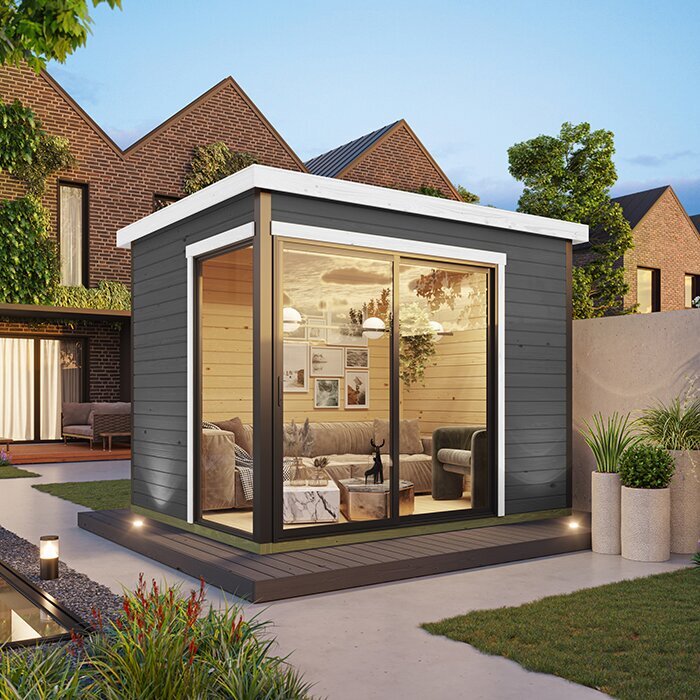
Compare that site history with the requirements for the model you are considering. When reviewing the Verdana 2 garden shed, seek information for that exact model and ask whether paving of known or uncertain construction can meet its requirements. A product title or photograph does not reveal how your patio was built. If part of the paving needs to be lifted to inspect or repair what lies below, arrange an appropriate professional assessment first and check for buried services before any disturbance. Do not start digging simply to settle the question when site conditions are unclear. Tell the assessor about any past drainage work, added utilities or extensions to the patio, since these may explain differences across the surface.
03
Follow rainwater and drainage
Observe where rainwater goes across the paved area. Many paved surfaces have a fall to direct water, so the proposed shed position may be lower than the surrounding patio even when it looks level from a distance. If possible, look at the area after ordinary rainfall; otherwise, note any existing pools, water marks or silt. Check whether runoff heads towards the planned footprint, a doorway, a drain or a channel. The direction matters when you decide where to place the shed and whether the paving needs attention first.
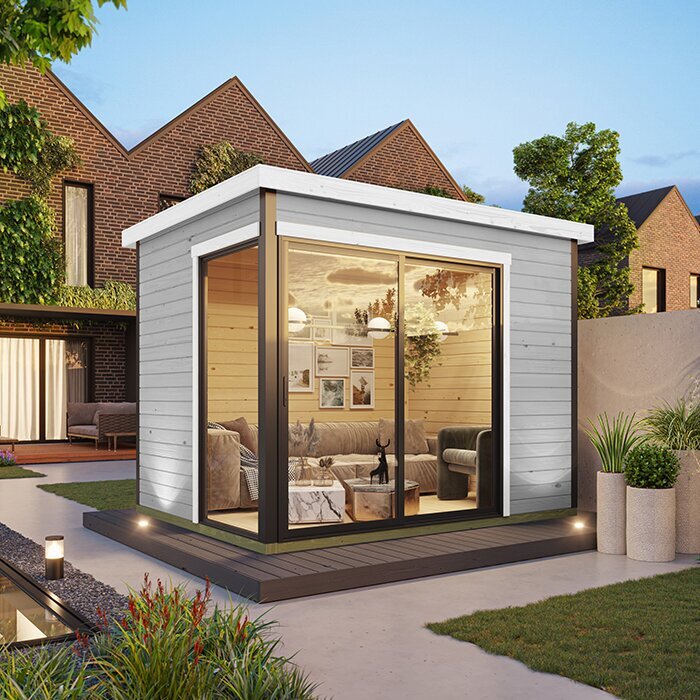
The base still has to meet the shed's requirements while allowing surrounding water to drain. Do not assume that placing a structure on paving will solve a pooling problem, or plan to cover a drain or channel. If you are comparing the Durano garden shed, check the information for the model and discuss how its required base would work with the patio's fall. The model name does not answer that site question. Where water gathers, ask an installer about suitable changes before ordering, and consider where redirected runoff would go. Also consider water running from nearby roofs, planting beds or higher ground, rather than looking only at rainfall that lands directly on the patio.
Match the shed footprint to the paved area
Check the exact measurements for the shed you intend to buy and distinguish its external dimensions from the footprint required for its base. Use the model's published drawing or instructions rather than judging from a photograph. Measure the usable paved rectangle at several points, including its narrowest section, and note where the footprint would meet joints, edges or a change in paving. A patio can look broad enough yet leave too little continuous area for the specified layout. Record the measurements so you can compare models on the same basis.
For the Veltor 1 garden shed, as for any model, compare the stated footprint and base outline with your measurements before placing an order. Do not assume that the wall outline and the required base outline are identical; use the details supplied for the exact model. Check whether the proposed layout crosses loose paving, unsupported edges or areas that need repair. Ask the supplier whether the intended position is compatible with the surface you have. If it is not, you can consider another layout or budget for preparation before committing. Leave room in your sketch for any base perimeter, fixing points or access clearances identified in the model documentation, rather than measuring only the visible walls.
04
Confirm the anchoring method
Support and anchoring are related, but they are separate questions. A paved surface can feel firm underfoot without being suitable for the fixing method required by a garden shed. Some paving acts as a finish rather than a surface intended to receive structural fixings. Depending on its material and arrangement, fastening into paving could loosen or damage it. Do not assume that the shed's weight, a close fit or general instructions for a different model will provide the required security.
Ask the supplier, manufacturer or installer what fixing method the exact model requires and whether the paving and underlying construction can accommodate it. If you are considering the Orello 1 garden shed, make this a question about your site, not an assumption based on the product title. Confirm who is responsible for choosing and carrying out the anchoring, and whether it is included in any installation quote. If a separate base or further ground preparation may be needed, find that out before ordering. A general statement that a shed can be installed does not resolve the details of your paving. Keep any agreed fixing and base responsibilities in the written scope, particularly where different trades will prepare the site and assemble the shed.
Allow for doors, assembly and access
A shed can fit on the paving yet still be difficult to use or install in the chosen position. Mark the proposed footprint and check where the doors will open, whether the route to them will remain clear, and whether nearby walls, fences, drains or garden features restrict access. Use the model's layout information to check the door position and any clearances it specifies. Do not guess at an opening space from a product photograph, or assume that a clear patch of paving is all the room the project requires.
When you compare the Modano 1 garden shed, record its exact dimensions and the door arrangement shown for the chosen configuration, if that information is available. Check whether installers can reach the site through the gate or along the garden path, and ask how much room is needed for assembly. Also consider whether the shed can be positioned without obstructing access to drains or other areas you need to reach. These checks affect the model and location you choose, so make them before delivery is arranged. Measure narrow turns and overhead obstructions along the access route as well as the patio itself, since a clear final position does not guarantee straightforward delivery.
05
Decide whether to retain or alter the paving
If the paving is stable, level enough for the specified base and compatible with the required fixing method, retaining it may be an option. If it has loose areas, uneven sections or drainage problems, do not assume that a small patch will make the whole footprint suitable. Ask a qualified installer or paving professional to assess whether repair, alteration or another base arrangement is appropriate for the site and the model. Their advice should address the full footprint, rather than only the most visible defect.
Compare the complete work involved before you choose a shed or accept a quote. Ask whether preparation, lifting or reinstating paving, removal of waste, delivery and assembly are included, and who is responsible for each part. When reviewing the wooden garden shed M, as with any candidate, consider the site work alongside the model information rather than treating the shed price as the whole project cost. If more than one approach is proposed, ask what each includes so you can compare like with like. Do not commit to a delivery date while essential preparation remains unresolved. Set out any assumptions about access, existing paving and drainage in the quote, so unexpected site work is identified before the project is scheduled.
Questions to settle before ordering
Before ordering, make sure you can answer a few practical questions: What base size and surface does the exact shed require? Is your paved area level and stable across that full footprint? What fixing method is specified, and can the site accommodate it? Where will rainwater go? If any answer depends on an assessment, arrange that before confirming the order. You can share measurements, notes and photographs with the supplier or installer, but make clear that they describe the site and do not establish its construction below the surface.
For a candidate such as the wooden garden storage shed S, confirm the exact model and configuration, what preparation is expected, whether installation is included, and what happens if the paving does not meet the stated requirements. Check delivery access and the agreed scope of work as well as the product details. Ask for unclear points to be explained in writing before you commit, so you know which tasks remain yours and which are included. This gives you a firmer basis for deciding whether to order that model or revisit the site plan. Retain the final measurements and correspondence with your order documents, as they provide a useful reference if the installation plan needs to be confirmed later.
Frequently asked questions
Can a garden shed sit directly on patio paving?
Possibly, but the paving must be stable and sufficiently level across the whole base, and the instructions for the exact shed must allow that arrangement. The paving's appearance alone cannot confirm its support or suitability for the required fixings.
How can I check whether existing paving is level enough?
Check several directions across the full planned footprint, including the corners, centre and edges. A straightedge and spirit level can help you identify slopes or dips, but the acceptable tolerance depends on the shed and its base requirements. Ask the supplier or installer if those requirements are unclear.
Do paving slabs automatically make a suitable garden shed base?
No. Slabs show the surface, not necessarily the condition or construction of the support beneath them. Look for movement, damage and uneven areas, and find out what is known about repairs or settlement before deciding that the paving can be used.
Can I anchor a garden shed to paving?
Do not assume that the paving is suitable for the fixing method required by your shed. Ask about the exact model's instructions and whether the surface and underlying construction can accommodate them. If necessary, have a qualified installer assess the site.
What if rainwater collects on the paving?
Treat pooling or runoff towards the proposed shed position as an issue to resolve before ordering. The base arrangement needs to meet the shed's requirements without creating a drainage problem. Ask a qualified installer how to address the site conditions.
Existing paving is neither an automatic yes nor an automatic no. A sound decision brings together measurements of the paved area, what you know about its condition and construction, and the base and fixing requirements for the exact shed. If those details fit and drainage and access are manageable, the paving may be usable. If not, allow for professional advice or site preparation before you order, rather than trying to make a chosen model fit an uncertain surface.
