
Can You Put a Hot Tub on a Deck? What to Check First
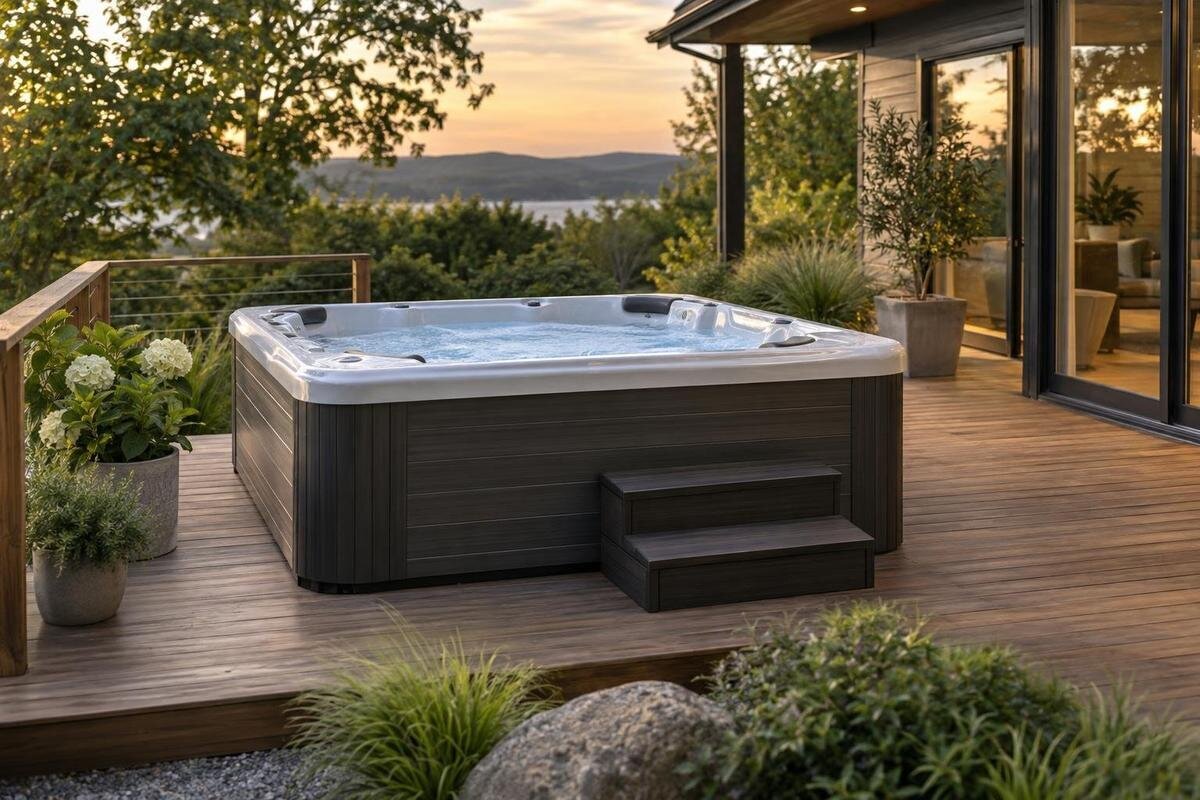
Deck suitability
Planning a hot tub on an existing or proposed deck? Appearance and surface boards cannot tell you whether the complete structure can carry it in use. The answer depends on the exact tub, its filled load and position, and the condition and construction of the frame, connections and supports below. Establish those facts and get a site-specific structural assessment before ordering.
Before ordering 1
Can a deck support a hot tub?
There is no dependable yes-or-no answer based simply on a deck’s age, material or how firm it feels underfoot. A hot tub creates a sustained load at a specific position, and the loaded tub is different from the empty unit. A deck designed for ordinary access may or may not suit that arrangement; the answer depends on its original design, how it was built, its present condition and the exact installation being considered. A general load figure found online cannot settle a site-specific question. Nor does standing or bouncing on the deck prove that it can safely carry a filled tub. A deck may have been designed for a different use or altered since it was built, so neither its original purpose nor its current appearance tells the full story.
Think of the whole route by which the load reaches the ground: through the tub’s support area and deck surface, into joists and beams, through their connections to posts or a building, and down through supports and foundations. A weak or altered point anywhere in that route can change the assessment. A surface that looks robust tells you little about hidden framing; a deck designed for a known installation still needs its design and condition confirmed. For a new deck, include exact tub information in the design brief. For an existing one, have the proposed position examined before committing to the purchase.
Look beneath the decking boards
Decking boards are the walking surface, not a complete description of what supports them. Underneath may be joists, beams, posts, brackets, a connection to a building, or another arrangement; member sizes, spans, direction, spacing and connections all matter. Attached, freestanding and overhanging sections do not share the same load path, so identify which arrangement applies. A tub’s footprint may cross several members or sit close to an edge, but only a review of the actual framing can establish what that means. Information about a board product, if available, cannot by itself confirm the capacity of the full deck.
Mark the proposed footprint on a plan and relate it to the framing, rather than describing the position only as beside a door or in a corner. A product identity such as Bloomcabin Hot Tub Cove 2 gives the supplier and assessor a precise model to discuss, but it is not a load or support specification. If plans are missing, do not infer joist positions from the pattern of the surface boards. Ask whether the professional needs access to the underside or another inspection of concealed connections, and which details remain unknown until they can be seen. The aim is to understand the structure below, not to add a board or layer of decking as a guess.
Before ordering 2
Condition, repairs and alterations matter
Condition is separate from the deck’s original capacity. A sound design can be compromised by deterioration, movement or later work, while a sound-looking surface can cover problems underneath. Note any sagging or springiness, loose or missing fixings, cracked or split members, areas of decay in timber, corrosion or distortion in metal parts, and movement around posts or the building connection. These are details to report, not a home test: the absence of visible signs does not establish suitability, especially where the frame is concealed. Record where you notice anything and when it first appeared; that context can help guide an inspection.
Tell the professional about repairs, extensions, cut-outs for services, moved posts, replaced boards or removed bracing. Seemingly small changes can affect the route loads take, so share available plans and records as well as photographs. When arranging the review, identify the exact proposed model—for example, Bloomcabin hot tub Haven 6—and make clear that its technical load data still has to be obtained. A recent repaint, a tidy surface or a firm feel is not evidence of structural capacity. If the assessment requires an underside view, opening-up or measurements, agree how that investigation will be carried out rather than assuming photographs alone can settle concealed conditions.
Establish the full load for the exact model
An assessment needs the complete load for the exact model and configuration, not a guessed water quantity. Ask the manufacturer or supplier for the empty-unit mass and the operating or filled mass, or enough separate information for the structural professional to establish the relevant cases. Clarify what the figures include: the tub, water, any equipment carried by the deck and accessories. Occupants also matter, so the intended use must be addressed using manufacturer guidance and the professional’s assessment method. Do not infer capacity, mass or footprint from digits in a product name, photographs or a broadly similar model.
When requesting information for Bloomcabin Hot Tub Fjord 8, ask for current instructions and data for that exact version, including its support area and any stated load-distribution or installation conditions. Find out whether a quoted figure describes the empty product or a ready-to-use configuration, and what is excluded. Ask for the confirmed information in writing, with the relevant document version identified. If the supplier cannot provide it, request clarification from the manufacturer instead of filling gaps with an estimate. The structural professional should decide how the figures and intended occupancy apply to the particular deck and position; a single headline mass may not explain how the load is supported.
Before ordering 3
Match the documents to the proposed installation
Keep the model identity, technical documents and proposed configuration together so the assessment concerns the product you intend to order. Numerals in a name do not establish seating capacity, water volume, external dimensions, dry weight or full operating weight. Check that each document refers to the exact version under consideration, rather than a product family or a similar-looking tub. A general product description may not include everything required for a structural assessment. Where information is missing or its meaning is unclear, ask the supplier to clarify it before passing the documents on as a complete set.
Use the exact product entry, such as Bloomcabin hot tub Aurora 10, when asking the supplier to confirm which manual and load information apply. Record the proposed configuration, including equipment that forms part of the installation, alongside the intended position on the deck plan. This gives the supplier and structural professional a consistent description to work from and makes discrepancies easier to identify. If the model changes after the deck has been assessed, give the new documentation to the professional and ask whether the previous conclusion still applies. A change of position also needs review: the same tub elsewhere on the deck may place its load on different members, connections or supports.
What a structural assessment should cover
Ask a qualified structural professional to review the deck for the proposed installation, rather than asking only whether the boards are strong. Agree the scope beforehand: it should cover the frame, connections and supports, how the load reaches supporting ground or a building, the deck’s current condition and the tub’s specified position. Share drawings, dimensions, repair history and photographs, but expect the professional to say if an on-site inspection or access to concealed parts is needed. For a deck that is still being planned, include this review in the design process rather than waiting until the structure is finished.
Send the exact product material, including the Cove 2 catalogue entry, only as a model identifier until its technical data is confirmed. Ask for a written conclusion that distinguishes between suitable as it stands, suitable only after specified work, and not established as suitable. It should name the model, position, loads and assumptions considered, and identify any further investigation needed. Clarify whether the assessment includes the connection to the building, foundations and any strengthening proposal, or whether another professional must address part of the work. A general verbal assurance about a deck is less useful than an answer tied to your structure and the installation being considered.
Before ordering 4
Check manufacturer guidance and local requirements in Malta
Obtain the current manufacturer installation instructions for the exact tub and ask whether they describe support requirements or restrictions relevant to a raised deck. Request any model-specific information needed to assess the in-use load, support area and equipment configuration; if it is not published, ask the supplier to obtain written clarification. For example, the Haven 6 product listing helps identify which product you mean, but a catalogue title is not a substitute for technical instructions. Read the manufacturer’s documents alongside the structural professional’s assessment: one concerns the product, while the other evaluates the particular deck.
In Malta, do not rely on a general online statement about what approval is or is not required. Ask the structural professional which local building or safety requirements apply to the property and any proposed structural changes, and confirm outstanding points with the relevant local authority or adviser. The answer may depend on the site and the work, so this guide does not declare that permission is always needed or never needed. If the deck is part of a shared, managed or rented property, involve the owner or building manager early and ask which permissions or checks apply. Keep the instructions, assessment and any relevant confirmations together so the eventual installation matches what was reviewed.
Could strengthening make the deck suitable?
If the assessment does not support the tub as proposed, ask whether a designed strengthening scheme could change the conclusion. The answer depends on the full load path to the ground, not just the area directly under the tub: changing or enlarging a member can transfer load to connections, posts or foundations that also need review. Fixing more boards over the surface or placing an unplanned prop beneath it is not a substitute for design. Any proposed change needs to be considered in light of the exact tub information, its position and the deck’s existing construction. For a planned deck, the same discussion can inform the original design and avoid relying on an improvised later change.
Provide the product details—for example, the Fjord 8 model information—alongside the assessment of the existing deck when discussing strengthening. Ask the professional to describe the proposed work, the parts of the structure it affects, any assumptions about existing supports and how the completed work will be checked against the design. Clarify which concealed details still need investigation before the proposal can be finalised. Do not alter load-bearing parts on a trial basis. If a proposal depends on details that cannot be confirmed, compare that uncertainty with a different location before ordering. The professional should explain what remains to be established before the deck can be treated as ready for the specified installation.
Before ordering 5
When a ground-level location may be a better option
Moving the tub to ground level can be a useful alternative when a raised deck cannot be verified or would need significant work. It removes the elevated deck’s frame from the support path, but it does not prove that a patio or bare ground is suitable. The exact tub still needs a support arrangement consistent with the manufacturer’s instructions, and the proposed location may need its own assessment if the surface or ground condition is uncertain. Keep the comparison focused on which location can be substantiated; a lower position is not automatically a suitable one.
Use the same model information, such as the Aurora 10 catalogue entry and its accompanying technical documents, when asking a professional to compare the deck with a possible ground-level site. Keeping the tub and configuration consistent makes it clearer which questions concern the product and which concern the supporting structure. Ask what separate checks each location needs, what remains unknown and whether proposed deck work is worth comparing with an alternative site. If you decide to change the model as well as the location, have the revised arrangement assessed rather than carrying over the earlier conclusion. This allows you to weigh the options before ordering without treating either an unverified deck or an unassessed ground-level surface as the default.
What to settle before placing the order
Before ordering, assemble the information needed for a decision: the exact model and current manufacturer instructions, written figures for empty and in-use loading, support conditions, the proposed position on a deck plan, and any available construction or repair records. Add the structural professional’s site-specific written assessment and ask the supplier to resolve missing product information. The professional should identify any gaps in the deck investigation as well as the assumptions behind the conclusion. A document naming only a product family, or saying that a deck looks sturdy, does not tie an answer to the installation you are planning.
Check whether the assessment says the deck is suitable as it stands, requires specified strengthening, or cannot yet be confirmed, and what must happen before use. Make sure its assumptions cover the model, position, equipment and intended occupancy being considered. If one of these changes, return to the professional rather than assuming the original answer still holds. If evidence remains incomplete, delay the order or compare a ground-level option whose support can also be assessed. The decision should follow the verified product information and the actual structure, not the surface’s appearance, a model number or an informal opinion.
Frequently asked questions
Can I tell from the deck material whether it can support a hot tub?
No. The material is one part of the assessment, but the framing, connections, supports, foundations, condition and proposed tub position matter too. Two decks with similar surfaces can have different structures underneath.
If the deck feels solid, is that enough?
No. A firm feel during ordinary use does not show how the deck will perform with a hot tub in use. Nor does a visual check reveal every hidden connection or support. Treat any visible movement or damage as information to share with a structural professional, not as a complete diagnosis.
Can I estimate the loaded weight from the model name or a photograph?
No. A name and image do not establish dimensions, water capacity, weight or support requirements. Request current written information for the exact model and configuration, including what its stated figures include, then give it to the professional assessing the deck.
Should I arrange a structural assessment before ordering?
Yes. The assessment needs to relate to the exact model and proposed position. Getting it beforehand gives you time to investigate missing information, consider designed strengthening or compare another location before committing to a purchase.
Does a deck that needs strengthening mean I cannot have a hot tub there?
Not necessarily, but do not assume that adding boards or supports will solve the issue. Ask a structural professional whether a designed change is viable and what else it affects. If the answer remains uncertain, compare a ground-level location whose support can also be assessed.
Treat the purchase as conditional on evidence for one exact model in one exact position. If a professional can support that arrangement as it stands, keep to the assumptions in the assessment. If it calls for designed work, resolve that before installation; if the deck or product details remain uncertain, pause and compare a ground-level option. The boards, the model name and a quick test cannot establish deck suitability.
