
Cloudy Hot Tub Water: Common Causes and What to Check
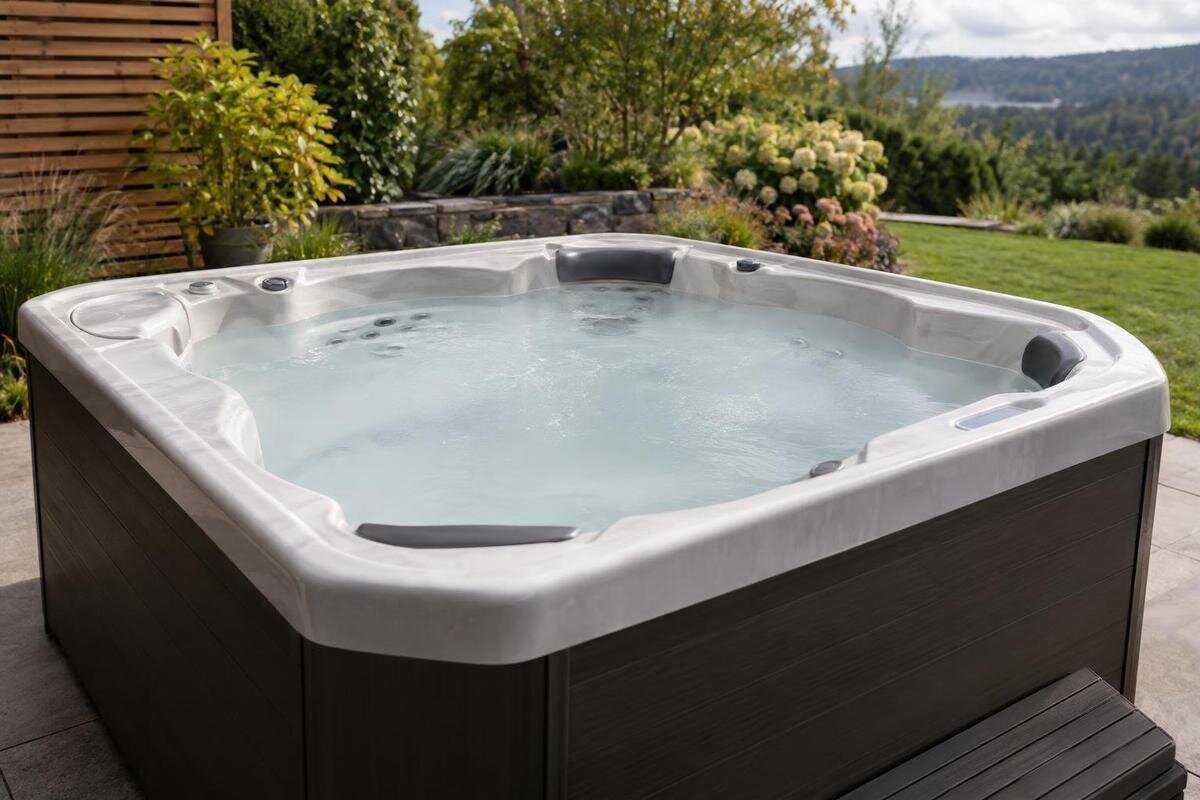
Hot tub water care
Cloudy water can have several causes, so appearance alone is not a reason to buy a clarifier or replace a filter. Begin with the hot tub maker’s water-care guidance, a test method accepted for your tub and the timing of any recent change. The checks below help separate possible water-balance, filtration and contamination issues without guessing at treatment, using appearance as a safety test or adding products one after another.
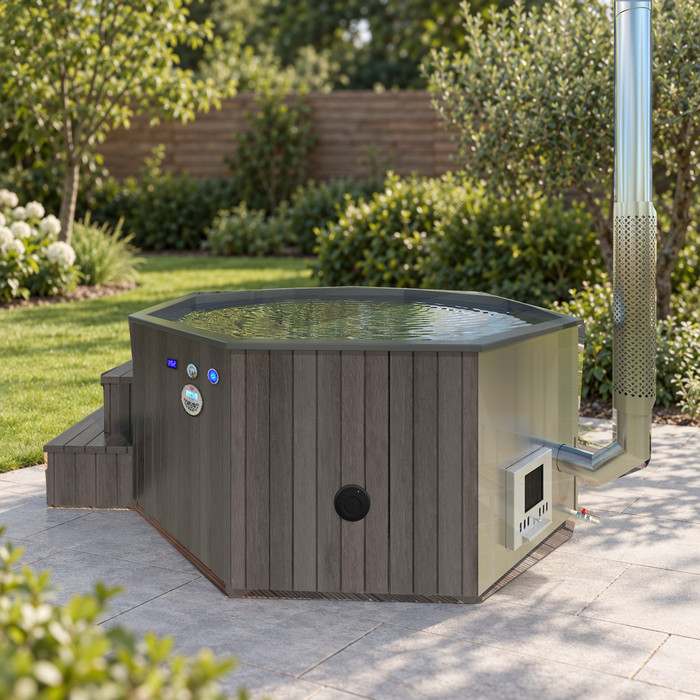
Cloudy water has several possible causes
Cloudiness describes how the water looks, not what has caused it. It may appear as a general haze, visible fine particles, or a change that comes and goes. Possible contributors include readings outside the tub maker’s recommended range, filtration or circulation that is not working as intended, material brought into the water, or a recent water-care product. Two factors can occur together, so a single visual clue rarely identifies one culprit. Water that looks clear is not automatically safe; water that looks cloudy cannot, by appearance alone, confirm a particular chemical imbalance.
Describe the appearance before making changes. Is there a uniform haze, or can you see separate particles? Does the whole tub look different, or is the change visible only in one area? If the appearance changes while the tub is operating or material later settles, note exactly what you see without assigning a cause. Keep observations separate from conclusions: “fine particles are visible” tells a supplier more than “the filter has failed” when no fault has been established. Colour, smell, foam or a clear patch cannot replace a test. A precise description gives the supplier a useful starting point without ruling out other explanations or encouraging a treatment chosen only for its promise of clearer water.
Check readings using the tub and test-kit instructions
Use a test method recommended or accepted by the hot tub and water-care manufacturers for your setup. Follow its directions for taking a sample, handling the test material, reading the result and recording units. Check which measures the kit actually covers; a result for one part of water care does not establish every condition. Compare each reading with the range specified in the tub instructions and the relevant water-care guidance, rather than relying on a chart intended for a different system. A product labelled for spa testing is not, by itself, proof that it covers every measure your tub requires.
If a reading is difficult to interpret, inconsistent with an earlier one or outside the stated range, do not estimate an adjustment from the colour or a vague impression of “high” or “low”. Check that the test product is within date and stored as directed, and repeat a test only as its instructions advise. Record the result as the kit presents it, including the measure, units and time; distinguish a missing result from one that was measured and found to be within range. If the tub manual and a treatment label appear to conflict, pause and ask the manufacturer or supplier which guidance applies. For an enquiry about the Bloomcabin Hot Tub Cove 2, explain which reading you cannot interpret and identify the test kit used. This makes the question specific: you need help understanding a result for your setup, rather than a general recommendation for a cloudy-water treatment.
Assess circulation and the filter without guessing
Water needs to move through the filtration system as the tub maker intends. If the water looks different from usual, check any user-facing indicator or message in the way the manual describes, and note whether circulation seems different from normal. An issue with circulation can affect filtration, but a visual change alone cannot show whether a pump, filter or another part is at fault. Do not open equipment or investigate components beyond the checks the manual identifies as suitable for an owner.
If the instructions describe a user-removable filter, follow their exact procedure for stopping the tub, gaining access, inspecting it and handling it. Look only for conditions the manual tells you to check, such as visible damage or an obstruction; filter designs and permitted cleaning methods vary. Do not assume that a filter needs cleaning or replacing because the water is hazy, or that it is suitable because it looks clean. When asking about a Bloomcabin hot tub Haven 6, distinguish between an observation about circulation and an observation about the filter itself. State whether you saw a message, noticed a change during operation or found something during a permitted inspection. If you could not inspect the filter, say so rather than describing it as clear or blocked. That distinction helps the supplier understand what has actually been checked and whether further owner checks, a replacement part or technical assistance should be considered.
Look for material brought in during use
Use can introduce substances that affect the water’s appearance. Examples include residue from cosmetics, lotions or hair products, detergent left on swimwear, and dust or other debris from the surroundings. These are possibilities, not a diagnosis: cloudy water after a busy session does not prove that a particular product or bather caused it. Consider whether the change followed a noticeable increase in use or a specific event, and note that alongside the test results.
If the timing suggests that something was carried into the water, record what changed rather than trying to counter it with a treatment. Include any relevant change in bathing products or swimwear washing, and whether visible material entered the tub. Separate what you know from what you suspect: a different lotion was used, for example, but that does not establish that it caused the haze. There is no need to identify a particular bather as responsible or buy a product aimed at one suspected contaminant before checking the readings. For a Bloomcabin Hot Tub Fjord 8 enquiry, describe the event and ask whether it changes the checks recommended for your setup. Keep this question distinct from surface cleaning: something visible in the water does not, on its own, justify using a cleaner intended for the tub’s surfaces. The relevant decision is whether the observations and readings support a water-care action.
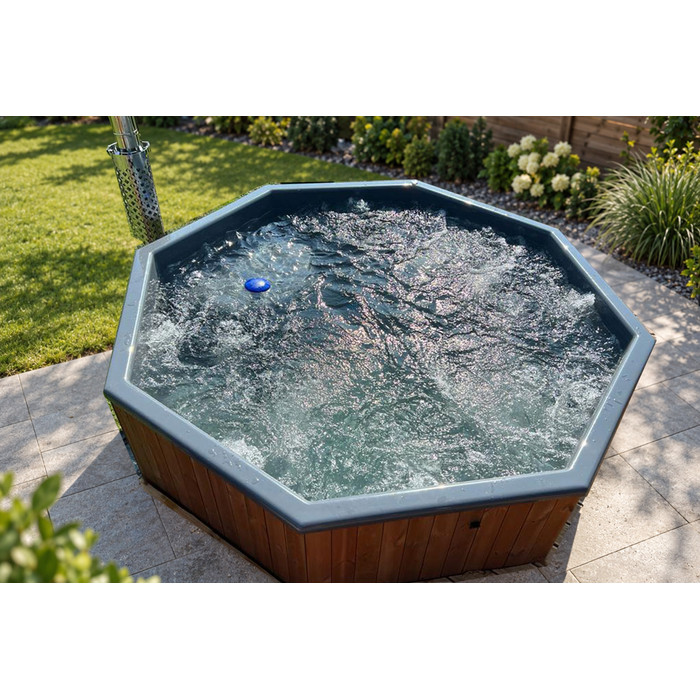
Review recent water-care additions
Cloudiness that appeared after adding a water-care product is worth investigating, but timing alone does not prove that the product caused it. Check the exact product name and label, how it was used, and whether any other product was added around the same time. Record the amount actually added, if known, rather than assuming it matched the intended amount. Keep the packaging details with the test readings so that advice can refer to the specific product rather than a broad description such as “water treatment”. If you are unsure which product was used, make that uncertainty clear. Products differ in purpose and instructions, so do not assume that a treatment suitable for one water-care system is suitable for another.
Do not add a second product just to make the water look clearer, combine treatments, or improvise a neutraliser. First consult the tub manual and the product label; if either is unclear, ask the relevant manufacturer or supplier what to do next. This is particularly important if the water changed unexpectedly after an addition. For advice about a Bloomcabin hot tub Aurora 10, identify both the tub and the water-care product, then explain which instruction or result is causing uncertainty. A useful question is whether the product was appropriate for the setup and how its instructions apply to what has already happened. Asking only which product will clear the water leaves out that context. If a seller suggests another treatment, establish why it is relevant to your readings and recent additions before buying it. The aim is to resolve the uncertainty, not to build a sequence of purchases around the same unexplained haze.
Consider when the cloudiness began
The timing can help narrow down what to ask next. Note whether the water changed after an initial fill, a top-up, a session, a period when the tub was unused, or a water-care addition. A change after filling or topping up may make the source water relevant, but it does not establish that the source is the cause. Do not assume that all water in Malta has the same characteristics; check the tub and water-care instructions or ask the supplier how to assess the water used in your own setup.
Look for a repeated association rather than treating one coincidence as proof. For instance, record whether the haze returns after a particular event and whether the readings also changed. Put the events in order: what the water looked like beforehand, what happened next, and when you first noticed the difference. Distinguish a genuinely new change from something you only noticed later. If the sequence is uncertain, say so; an approximate account is more useful than a precise time invented from memory. Avoid making several adjustments while trying to find a pattern, as that can make the original cause harder to identify. When contacting support about a Fjord 8 hot tub by Bloomcabin, explain whether the problem followed a fill or top-up, an episode of use, or an addition. The supplier can then consider that sequence alongside the readings, rather than receiving a list of events with no indication of their order.
When a water-care product may be appropriate
Consider buying a treatment only when a test result or the manufacturer’s instructions point to a specific need. Check that the product is intended for hot-tub use and that its label and the tub maker’s guidance support using it with your water-care system. Confirm which readings it is meant to address, what the label requires, and whether the tub manufacturer has additional instructions. A product marketed for cloudy water is not necessarily the right response to every cause of cloudiness.
Follow the label and manual for the amount, method, any required checks afterwards and guidance on use of the tub; do not infer timings or doses from another product. Before ordering, check that you can follow the complete instructions, including any specified testing, rather than buying on the strength of the product name alone. If compatibility is uncertain, ask before purchasing rather than trying products in sequence. For a treatment enquiry concerning the Cove 2 hot tub, give the supplier the proposed product name and the reading or instruction that prompted the purchase. Ask what need the product addresses and what would show whether the instructed action had achieved its purpose. Compare pack sizes only after establishing suitability: a larger pack is not useful if the treatment is not warranted. Include any required testing supplies in the buying decision, but do not add unrelated products simply because they are offered alongside it.
When a replacement filter is justified
Cloudy water alone is not a reliable reason to replace a filter. A filter may be relevant if the manufacturer’s inspection guidance identifies damage, or if the manual says it is due for replacement, but other causes can produce the same appearance. Follow the model-specific instructions to decide whether a filter should be handled, cleaned or replaced. If the prescribed inspection is unclear, do not substitute a generic cleaning method or assume that a new filter will resolve the problem.
Before spending, ask the supplier to confirm the correct filter reference for your exact tub and whether the part replaces the component you have. Check any part number or other identification given in the manual; do not rely on a model number alone to match a filter. For the Haven 6 model, explain whether you are replacing an identified damaged component or asking whether replacement is warranted at all. These are different questions, and a compatible part does not by itself establish that you need one. If the supplier offers an alternative, ask for confirmation that it is suitable for your particular setup rather than accepting a visual resemblance. Also establish what the item being sold includes, so that you are comparing the required replacement rather than differently described packages. Keep filter compatibility separate from the cloudy-water diagnosis: buying the correct part still does not prove that filtration caused the change in appearance.
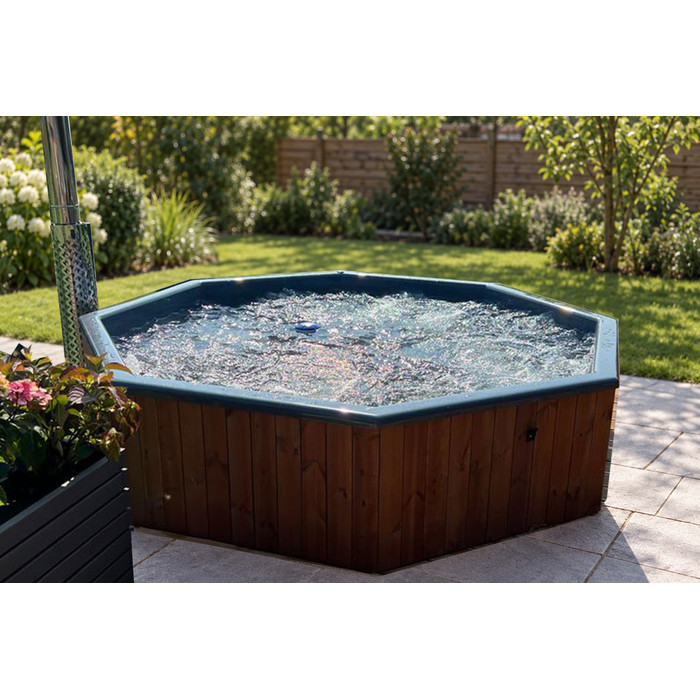
When supplier or manufacturer advice is needed
Ask for help when you cannot interpret the test results, the guidance seems inconsistent, the water changed after an uncertain product addition, or the manufacturer’s permitted checks have not explained persistent cloudiness. Advice is also appropriate if you find visible filter damage or do not know which replacement part is correct. The hot tub manufacturer can clarify model-specific requirements; the water-care product maker can explain its own label and test method. If their guidance does not agree, ask them to resolve the point before taking further action.
Prepare a clear account: the exact model, test results and units, the test method, when the change began, any recent use or water-care additions, and what you observed about circulation or the filter. For an Aurora 10 hot tub enquiry, lead with the unresolved question, such as an unreadable test result or cloudiness that persists after the instructed checks. Then provide the supporting details, including anything you have not been able to check. Ask which action is appropriate and which instructions govern it, rather than requesting a treatment by name. If the answer depends on information you do not have, clarify that gap before proceeding. Keep the response with your notes so that a later enquiry does not begin with the same uncertainty. Do not rely on clear appearance to confirm that the water is safe. If you cannot establish that it meets the manufacturer’s guidance, follow the manual’s advice about use while you seek clarification.
Record readings and changes before acting
Keep a short record of what you observed, the test results, the instructions consulted and any product already added. If the guidance identifies an appropriate action, follow it exactly and note what changed. Where the label or manual calls for a further check, use the stated method and timing rather than inventing your own. Making one instructed change at a time can preserve useful clues; several unplanned adjustments may make it difficult to tell what helped or created a new problem.
If the water remains cloudy or the readings still do not make sense, stop trying additional products and return to the manufacturer or supplier with your record. Do not treat repeated purchases as a substitute for identifying the cause. A suitable treatment or replacement filter may be warranted, but only when the readings, inspection guidance or qualified supplier advice point to it. This approach keeps the decision grounded in the tub’s actual instructions instead of its appearance alone.
Frequently asked questions
Does cloudy water tell me which treatment to use?
No. Cloudiness can have several causes, and appearance cannot identify a suitable treatment. Take readings using a method accepted for your tub and follow the water-care and tub manufacturers’ instructions before choosing a product.
Is clear water proof that the hot tub is safe to use?
No. Clarity is not a substitute for the required water tests. Follow the tub and water-care instructions; if readings are missing, unclear or outside the stated guidance, seek advice before use.
Should I add a clarifier as soon as the water looks cloudy?
Not on appearance alone. First check the readings, filter and recent changes. Use a product only when its label and the tub manufacturer’s guidance support that use, and follow their instructions rather than guessing at a dose.
Can a filter be responsible for cloudy water?
A filter or circulation issue may contribute, but cloudiness does not prove that the filter is the cause. Inspect and handle it only as the manual permits, and confirm the correct replacement before buying one.
What should I tell the supplier if the cause is still unclear?
Give the exact tub model, test results and units, the test method, any recent water-care additions, when the change began, and what you observed about the filter. This gives the supplier useful context without assuming a diagnosis.
A useful diagnosis begins with reliable readings, careful observations and the right manufacturer’s instructions. Check the possible causes one at a time, and confirm compatibility before buying a treatment or replacement filter. If the readings or guidance leave you uncertain, supplier or manufacturer advice is safer than adding another product on guesswork.
