
Drainage Around a Garden Shed: Keeping Water Away from the Base
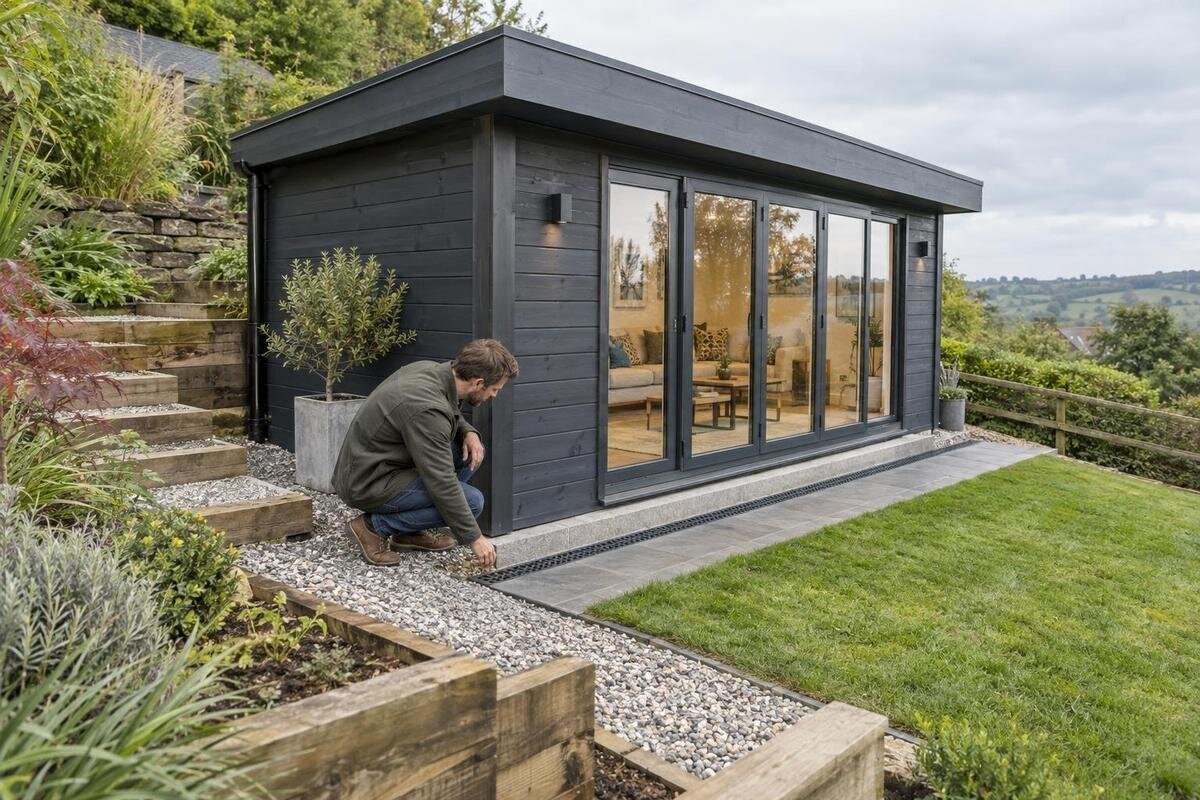
Garden shed planning
Good garden shed drainage is planned around the whole water route, not just the patch of ground beneath a shed. Roof runoff, water crossing the garden and flow from paving can all collect beside a base for different reasons. Before choosing and ordering a model, observe where water comes from, allow for the shed’s confirmed outline and decide where runoff can go without returning to the base or creating a problem elsewhere.
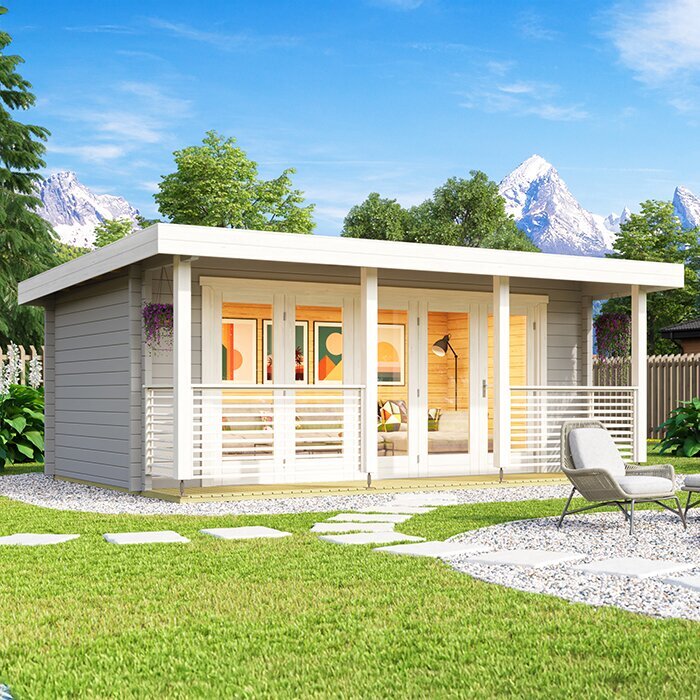
Before you order 1
Identify the source of water before choosing a position
Water beside a garden shed can have several sources, and the right response depends on which one reaches the proposed base. Rain falling from the roof is concentrated at its edges; runoff from another part of the garden may already cross the plot; paving can channel water; and a leaking hose or irrigation line can create a local wet patch. Treat these as separate possibilities rather than assuming the shed itself is the cause. Before comparing models, note which source is closest to the intended position, when the wet area appears and whether it follows a particular route. That distinction prevents a product choice being expected to fix a site problem and clarifies what to ask the seller or installer.
Look at nearby buildings and garden features as well as the intended shed outline. A downpipe from another roof may empty into the same area; a wall, raised bed or path may alter a route that is not obvious when the ground is dry. Check irrigation and hose use before concluding that rainfall is responsible. If the source remains uncertain, record what you can see and observe the site again rather than choosing a drainage accessory on assumption. At this stage, you are describing the problem, not deciding the size or design of a drain. Keeping that distinction makes it easier to discuss the site accurately with a seller or installer.
Observe the site after rainfall
After rainfall, walk the site by a safe, firm route while surface flow is visible, then look again once it has settled. Note where water first appears, which direction it follows, where it slows and any point beside the planned shed area where it gathers. A quick sketch or a few ground-level photographs can preserve details that are easy to forget when the surface dries. Mark existing drains, channels, downpipes, paving and the proposed position on the same sketch. You do not need to estimate how much water is moving; the useful evidence is what happens and where. This gives a supplier or installer a clearer picture than saying only that the garden gets wet.
If possible, compare observations from more than one occasion; a single visit in dry weather says little about runoff. Record garden watering separately so it is not mistaken for rainwater. Check whether the wet patch is beside the proposed base, on a likely route from a roof or simply at a different point in the garden. Do not plan to shift water from one corner to a doorway, access path or neighbouring plot. If the direction changes or cannot be traced, note the uncertainty and ask a qualified installer to inspect before work is planned. These observations can guide placement, but they are not a drainage design.
Before you order 2
Use the shed footprint to keep water routes clear
Mark the exact position of the proposed shed before deciding where roof water will fall. The wall footprint and roof edge may not be the same outline, so find the manufacturer’s stated external dimensions and any roof projections or eaves before setting out the space. Use details for the exact model, not an image or a model name. For example, the Verdana 1 garden shed listing is a page to consult for product-specific information; if a useful drawing or measurement is not provided, ask the seller rather than estimating. A full-scale outline helps reveal whether the roof edge will sit over paving, an existing water route or a low area.
Keep the planned path of water in view as you compare possible positions. A small error in assumed clearance can put a drip line or proposed downpipe into a passage or beside the base, so use the manufacturer’s documented outline and allow for any access required by the installer. Avoid placing the shed where it would cover a drain or make an existing channel difficult to reach. If there is more than one viable position, compare each against the same sketch: which preserves a clear route, allows access around the perimeter and avoids directing water towards the entrance? That is more reliable than choosing by appearance alone.
Plan where roof runoff will go
Rain falling on a roof can be gathered at its edges and delivered to one or a few points, rather than reaching the surrounding area evenly. Decide how that concentrated runoff will be handled before confirming the shed location. Check the information for the exact product to see whether any gutter or downpipe system is supplied, optional or expressly compatible; do not assume these parts are included. When considering the Verdana 2 garden shed listing, use its confirmed details rather than the model name or a photograph. If the information is unclear, ask the seller what can be fitted and whether a separate installer is needed.
Choose an endpoint that will take water without leaving it beside the shed, at the entrance or across a route people use. A collection container, surface route or connection to an existing drain may be considered on some sites, but the suitable method depends on the layout. Get qualified advice where a connection or drainage design is involved. Do not simply let a downpipe empty at the nearest spot or direct it towards another building or neighbouring property. A plan is incomplete until it shows both how water leaves the roof and where it ends up, including what happens if the chosen route is obstructed.
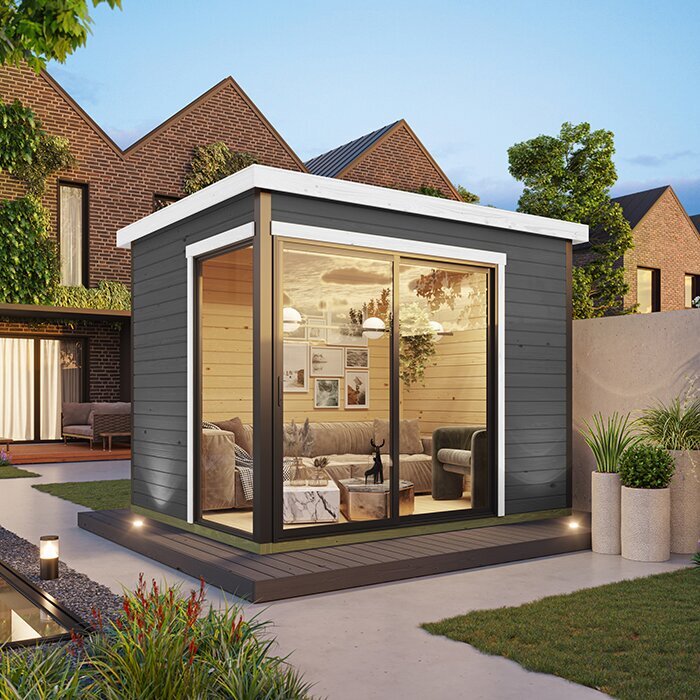
Before you order 3
Check paving and paths around the chosen position
Paths, patios and other paved areas can carry water as well as provide access. A surface that looks flat may still guide runoff towards a shed, while an edge or channel can interrupt an existing route. Observe how nearby paving behaves during rain before deciding whether the shed should sit beside it. When reviewing the Durano garden shed listing, compare its confirmed external measurements with your site sketch; a product photograph cannot establish how the roof edge will relate to the paving. If the information does not provide the dimensions you need, request them before setting out the position.
Pay particular attention to the entrance and the route you will use to reach it. Water collecting along a path can make access unpleasant, and runoff crossing the entrance may carry dirt or leave persistent puddles. Check that a planned drainage route will not create a new obstacle or send flow across the walking line. Do not raise or rework paving just to make it meet the shed without checking how that change affects surrounding runoff. The useful question is not simply whether paving is present, but where it sends water in the arrangement you intend to order.
Leave room to inspect the perimeter
Drainage needs some visibility after the shed is in use. Leave accessible space to inspect the base perimeter, roof-water discharge points and any nearby surface channel, following the supplier’s clearance instructions rather than relying on a generic gap. Store bins, tools, pots and stacked materials where they will not hide a pooling area or obstruct a water route. Use the Veltor 1 garden shed page as a model-specific reference only if it supplies the dimensions you need; otherwise ask for them and mark the outline on site. The model name alone does not establish the room required around it.
Plan a simple, safe routine for checking the area from ground level, especially after rain or when leaves and other debris could block an outlet. Make sure any point that needs attention can be reached without stepping into standing water or climbing onto the shed. Keep the route visible enough to spot a change, such as water settling somewhere it did not before. If inspection would require working at height, moving a heavy structure or opening a drainage system, ask a suitable professional instead of improvising. Access is part of the drainage plan, not leftover space to consider after the shed is in place.
Before you order 4
Get product dimensions and roof details before ordering
Product pages and assembly drawings can answer important questions, but only if they give details for the exact model. Before ordering, seek the outer wall dimensions, the roof-edge or eaves outline, door position and any clearances specified by the manufacturer. These details matter because the base, roof drip line and access route may occupy different areas. For instance, review the Orello 1 garden shed listing for the information actually stated, and request missing measurements in writing. Do not infer dimensions from an image, a model label or another shed in the same range.
Ask as well what, if anything, is supplied for managing water and which items are separate. If an assembly drawing shows a roof orientation, check whether it is fixed or can be changed; do not assume it is adjustable. Put the answers alongside your site sketch so the seller, installer and anyone arranging drainage are using the same outline. Where product details and the proposed water route do not match, pause the order rather than planning around an unconfirmed measurement. Resolving that question early can help avoid late changes to the shed position or the surrounding work.
Confirm any gutters or other additions with the supplier
Adding gutters, downpipes or a rainwater collection accessory is a separate product decision, not an automatic feature of a garden shed. Ask whether an accessory is available and confirmed as compatible with the exact model, where it would discharge and whether it changes the space needed around the roof edge. If you are considering the Modano 1 garden shed listing, use the page as a starting point for questions, not proof that a particular fitting is supplied or suitable. Get confirmation before buying parts separately, since a general-purpose item may not suit the construction or the site arrangement.
Avoid drilling, cutting or altering a roof or wall to add water-control parts on the basis of a guess. Changes may affect assembly or the intended weather protection, so ask the supplier or installer to confirm what is acceptable for that model. Find out who will provide and fit each component, where its outlet will go and how that route will be maintained. If collecting rainwater is part of the plan, check that the arrangement is compatible with the shed and practical at the site. Collecting water does not remove the need to manage any overflow.
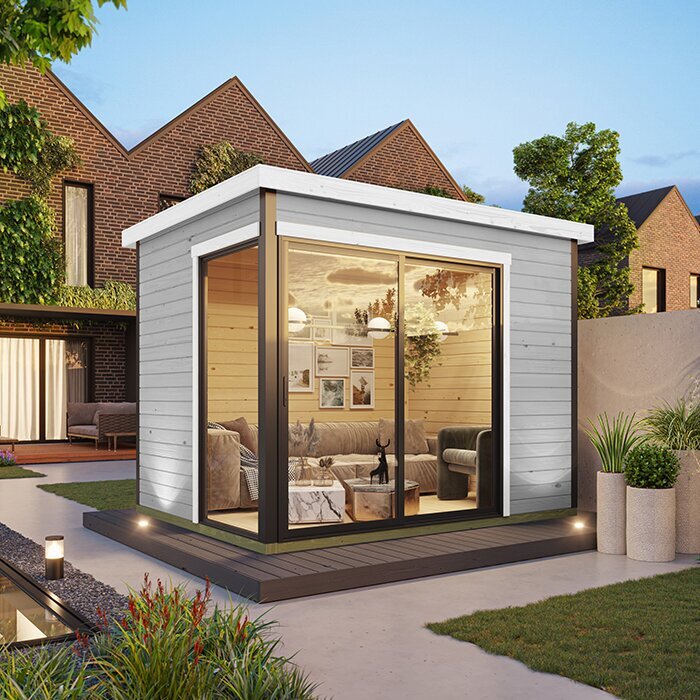
Before you order 5
Ask a qualified professional about difficult water routes
Get an on-site assessment from a qualified drainage professional or installer if water repeatedly pools at the proposed base, flows in from an unclear source, or cannot reach a suitable destination without affecting a path or another part of the property. Do the same before connecting anything to an existing drainage system or making changes where utilities or shared surfaces may be involved. Share photographs, your water-route sketch and the exact product information. The wooden garden shed M listing identifies a product page, but it cannot replace model-specific drawings or professional advice about your site.
Ask the professional to explain the route in ordinary terms: where water enters, where it leaves, how it avoids returning to the shed base and who will keep it clear. Confirm which parts of the work are included and whether the proposed shed position still works once the route is laid out. Avoid accepting a vague instruction to ‘drain it away’ without knowing the intended destination. This is not a reason to calculate gradients or size a drain yourself; site-specific design and connections belong with a qualified person who can assess the conditions.
Keep a written plan for ordering and upkeep
Before checkout, put the key decisions in one place: chosen model, confirmed footprint and roof outline, entrance position, observed water routes, planned destination for runoff, compatible fittings if any, and access for upkeep. Mark unanswered questions clearly rather than filling gaps with assumptions. To compare an actual listing, such as the wooden garden storage shed S listing, use the same list and rely on model-specific information supplied for that product, not conclusions drawn from its name. This makes it easier to see whether the shed and drainage plan fit the site together instead of treating them as unrelated purchases.
Agree with the installer who is responsible for the surface route, any roof-water components and the final outlet, so no part is left to assumption. Keep the finished plan with the shed instructions. After installation, observe the first rainfall from ground level and check whether water follows the intended route or gathers beside the base. Clear accessible leaves and debris as needed, and revisit the plan if landscaping or paving changes. If a new pool appears, identify its source before making an adjustment. A short record helps prevent later garden changes from undoing the drainage arrangement.
Frequently asked questions
How can I tell where water beside a shed is coming from?
Observe the area during or after rain and note where water first appears, the route it follows and where it gathers. Check nearby downpipes, paved surfaces and irrigation too, so you do not mistake one source for another.
Should I place a garden shed over an existing drain?
Avoid blocking a drain or making it difficult to inspect. If the drain affects the proposed position, ask a qualified installer whether the shed can be sited elsewhere and how to preserve access.
Do garden sheds come with gutters and downpipes?
Do not assume they are included or compatible. Check the information for the exact model and ask the seller what is supplied, what may be available separately and what a qualified installer recommends for your site.
Can a downpipe discharge onto nearby paving?
That depends on where the paving directs water. Check that runoff will not collect beside the shed, cross an access route or create a problem elsewhere. If there is no clear destination, ask an installer to assess the site.
When should I ask a drainage professional for help?
Get an on-site assessment if water repeatedly pools, its route is unclear, or an outlet or connection needs to be planned. Share your observations and the exact shed details before work is agreed.
The most useful drainage plan connects the site observations with the exact shed being considered: its confirmed outline, the route taken by roof water and a suitable destination for runoff. When those details are unclear, resolve them before ordering or arranging work. Once the shed is in place, checking the area after rain helps show whether water is following the plan or collecting beside the base.
