
Garden Shed Delivery Day: How to Prepare Your Property
Garden sheds | Delivery planning
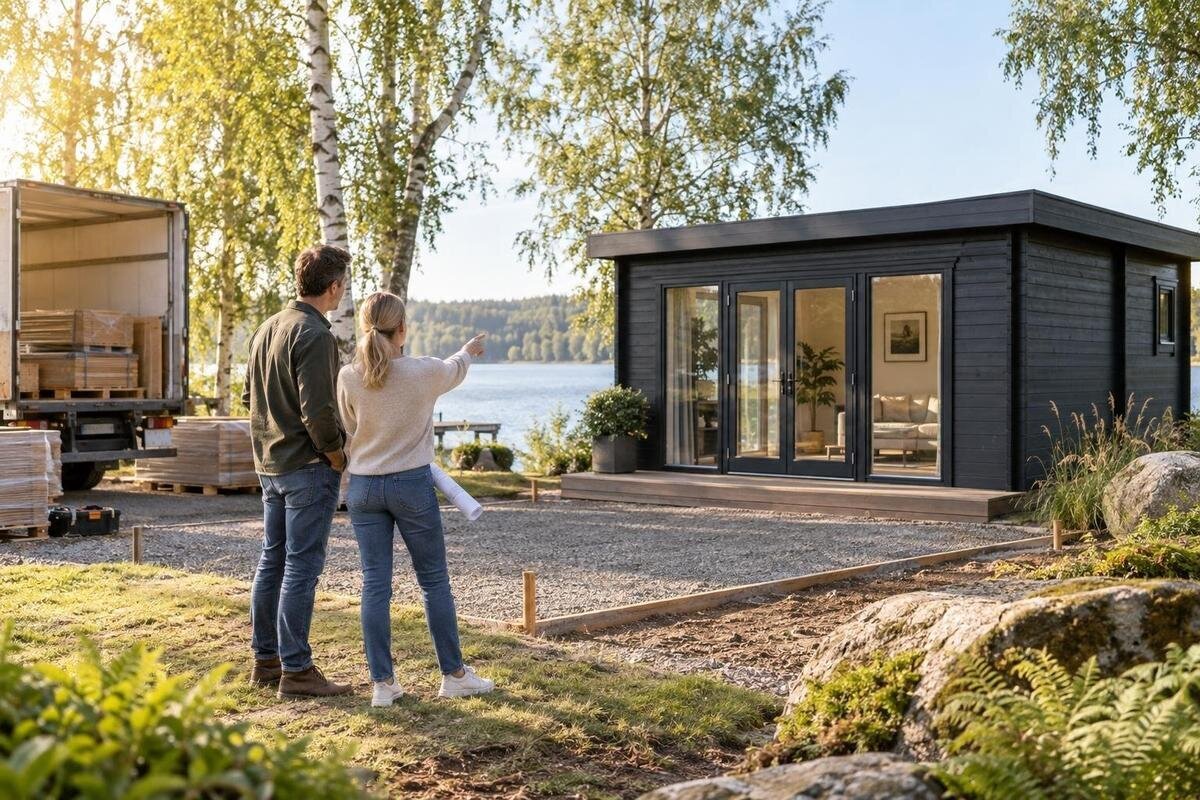
To prepare for garden shed delivery, decide four things separately: what is arriving, how the delivery vehicle can reach the property, where the goods will be unloaded and whether the intended garden shed site is ready. A clear patch of garden does not guarantee a clear route to it. Gates, corners, overhead obstacles and the point where a vehicle can stop can all affect the plan. Confirm the service before ordering, then measure and clear the route using information for the exact item.
Confirm the delivery service before ordering
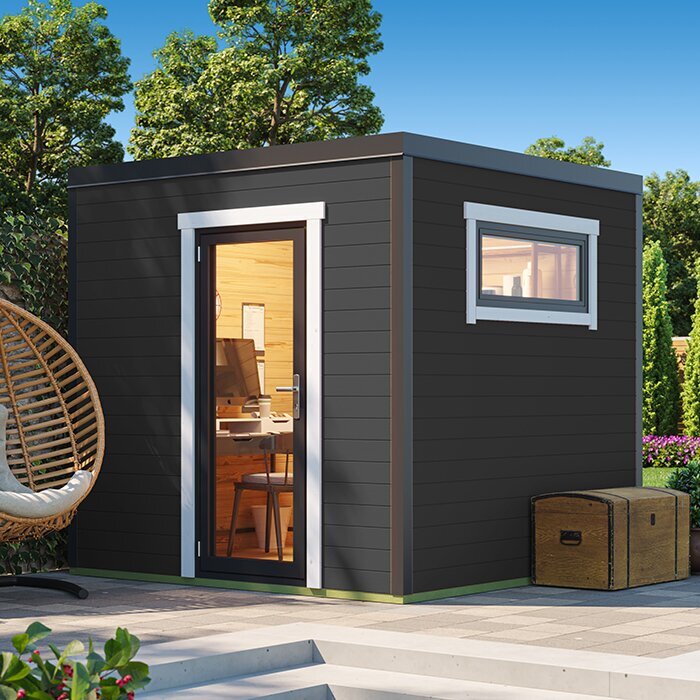
Treat delivery arrangements as part of the buying decision, rather than a detail to sort out after placing an order. Before choosing a garden shed, establish what the seller says about delivery, what the delivery provider will do and which property details you must provide. When reviewing the Verdana 1 garden shed listing, use the exact product and version shown on your order: the name alone does not establish how an item will be packed or brought onto your property. Keep the listing or order confirmation available, with the model name, selected version, quantity and delivery address recorded clearly. This makes it easier to identify a mismatch while there is still time to discuss it.
Ask where the delivery service ends: at the property entrance, at a stated unloading point or somewhere else in the agreed terms. Clarify whether unloading, carrying goods through a gate, placing them near the intended garden location and assembly are included, optional or not offered. A picture of a completed garden house says nothing about those services. Ask whether access-related equipment or arrangements must be booked separately, and whether any extra charge applies. Confirm the contact for delivery queries, how access notes are passed on and how changes are handled. Describe any narrow or shared access before ordering and get the answer in writing, so your plan reflects what has actually been agreed.
Check transport dimensions for the exact model
First establish whether the order will arrive assembled, as a kit or in another format. Ask for the transport dimensions of the largest unit or package, the number of separate items if applicable, and any handling information relevant to unloading. The finished shed’s overall size helps you judge the intended position, but does not show whether it can pass through a narrow entrance. A product page can identify a choice such as the Verdana 2 garden shed, yet its name and image are not evidence of transport dimensions. Check that any figures you receive apply to the exact version and delivery format on your order, rather than a similar model.
Measure your route against the largest delivered unit, allowing for how the crew or equipment will handle it; ask whether a pallet or other packing changes the space required. Keep this separate from the final-position check: compare the product’s stated overall dimensions and any assembly clearance in its instructions with the space available. A kit may fit through the entrance but leave too little room for assembly; a spacious garden does not solve a narrow access point. If transport measurements are not listed, request them before committing. If they do not work, compare another option or agree an alternative drop-off before purchase instead of relying on a last-minute adjustment.
Map the route from the vehicle to the garden
Walk the complete route from the likely vehicle stopping point to the place where the goods are meant to be left. Include the entrance, driveway, side passage, internal doors, garden gates and any section across the garden; a route that looks short on a plan may contain several turns. Note the width of each section and how far the goods would need to travel, not just the distance from the front of the property to the garden. For a possible order such as the Durano garden shed, check access for the exact delivery format rather than assuming the item can follow the same path as a person.
Sketch the route or take clear photographs from both directions, marking the proposed stopping and unloading points. Note fixed obstacles such as posts, walls, downpipes and planters, along with any gate that needs to remain open. Send useful images and measurements to the seller or delivery provider if the crew will have to negotiate an unusual passage. Agree which route will be used and where the goods may be left. If you have an alternative entrance, walk that route from end to end too: a wider gate is not helpful if it leads to steps, a sharp turn or a blocked passage.
Measure gates, bends and overhead clearance
Check clear openings, not just the stated width of a gate or doorway. Measure between the parts that will actually remain in place when a gate is open, including posts, hinges, handles and any door leaf that projects into the passage. Look at tight turns as well as straight sections: a long unit may need more room to pivot than the path’s width suggests. Use the transport details confirmed for your chosen product; for Veltor 1, for instance, the listing name is not a measurement. If a gate panel needs to be removed, arrange that in advance rather than relying on it at arrival.
Look above the route as well. Note branches, eaves, awnings, low canopies, hanging lights and any overhead cable that could affect a vehicle or the goods being moved. Do not try to move or handle a cable; describe the concern to the delivery provider and, if necessary, ask a suitably qualified person for advice. On the ground, flag steps, raised thresholds, drains or loose paving so the provider can consider the route in advance. Photos help make a description precise. Do not assume an obstacle can be cleared safely by lifting or tilting an item.
Agree vehicle access and the unloading point
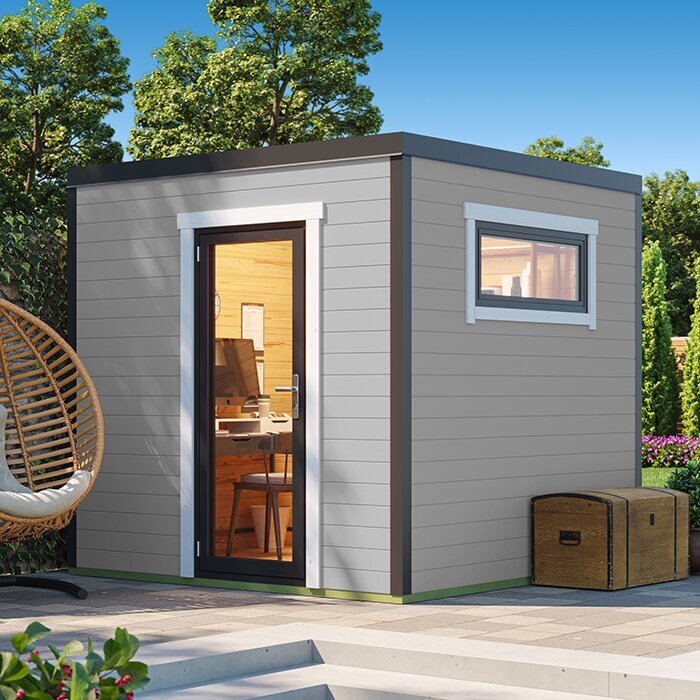
A pedestrian route and a vehicle route are separate checks. Tell the delivery provider about the entrance, available turning space, height limits, driveway layout and any point where a vehicle would have to reverse or stop. Do not assume that because a car can enter, the delivery vehicle can follow; ask what access the actual service requires and whether it can reach the proposed unloading place. Settle this before the order is scheduled, not when the driver is outside. For Orello 1, as with any model you are comparing, the product choice does not establish vehicle access to your address.
Agree where the vehicle can stop and where the goods will be unloaded if it cannot come close to the garden. Check whether the stopping place is shared, frequently occupied or likely to be blocked, and tell the people who use it about the arrangement. If another property manager or organisation controls access, ask them about using the space rather than assuming it is available. Confirm the alternative drop-off point and the route from there; a vague plan to leave goods near a gate can create a long carry that nobody has agreed to provide. Keep the agreed arrangement with the order details.
Prepare the final garden shed location
Prepare the intended garden shed location independently of the delivery route. Move garden furniture, stored tools, pots, hoses and loose items out of the planned area, and make sure it is the position you selected. Check the instructions for the exact product for base, support and assembly requirements; a cleared patch of ground is not proof that the site is ready. If the base or location raises a construction question, seek advice from a qualified installer or another appropriate professional. Before finalising the Modano 1 garden shed, use the instructions for that exact product rather than applying another model’s requirements.
The agreed drop-off point may not be where the finished shed will stand. Confirm whether the service ends at a driveway, gate or another agreed place, and keep that space clear for unloading without blocking the route. The final site also needs to remain accessible for the later assembly stage, but do not confuse that working area with the space a delivery vehicle may need. If you change the proposed position after ordering, check again that the route and new location are compatible with the product instructions and service arrangement. Avoid relying on moving the goods across an obstructed garden after arrival.
Make room for unloading and temporary storage
Ask how the order will be unloaded and what space the delivery provider needs. Depending on the agreed service, goods may be set down at one point rather than carried to the planned building site; confirm this instead of preparing a route on guesswork. Keep the unloading area free of cars, bins, furniture and other deliveries, and check that a gate can stay open if the route requires it. If equipment or a particular handling arrangement is needed, ask the provider to specify it and plan around the answer. Do not arrange for someone to move the goods elsewhere unless that task has been discussed and can be done safely.
If assembly will happen later, identify a secure, weather-protected place for temporary storage and check that it can accommodate the goods once their dimensions are known. Ask for product-specific storage and handling guidance, and keep labels and components together as instructed. Do not assume the items can be left outside, unpacked or stacked in any arrangement. A listing such as Wooden Garden Shed M identifies the item, but the instructions for the exact order should guide its handling. Keep the storage area out of doorways and away from anything that would obstruct household access.
Arrange access for everyone at the property
Before the agreed delivery window begins, move vehicles, bicycles, bins, hoses and garden furniture away from the route, unlock the relevant gate and keep pets away from the work area. If a shared driveway or passage is involved, let its users know when access may be needed and confirm that any agreed space is free. Keep the order reference and delivery contact details easy to find. If you cannot be present, ask the provider in advance whether another named person can receive the order and what information that person will need; do not assume the goods can be left unattended.
Tell household members where the vehicle is expected to stop and which passage will be used. Keep children and pets away from the unloading route, and do not ask someone to handle goods unless the provider has confirmed what help is required and the person can do it safely. If anyone in the household needs the entrance or garden path to remain clear, include that in the plan and arrange an alternative pedestrian route where possible. For an order such as the Wooden Garden Storage Shed S, keep the exact product and delivery details to hand so whoever receives it can check that the correct order has arrived.
Inspect the goods and report problems promptly
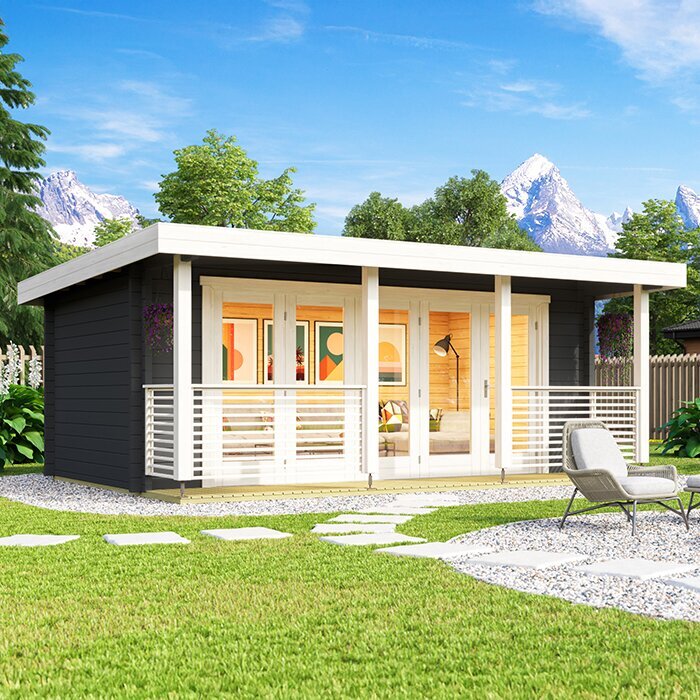
When the goods arrive, compare any visible labels and the quantity with your order and delivery paperwork. Look over the exterior for obvious damage before items are moved or the delivery team leaves, following the provider’s process for recording receipt. If something appears missing or damaged, take clear photographs and note the order reference and what you observed. Report it promptly through the stated contact or procedure, and keep a copy of your message. This creates a clear record of the issue without asking you to guess what caused it or decide on a remedy at the unloading point.
If the delivery cannot follow the agreed route, the vehicle cannot reach the planned stopping point or the goods need to be left somewhere different, pause and discuss the available options with the delivery contact. Do not assume the driver can carry items farther, return later or change the order’s service. Before agreeing to a new drop-off plan, consider whether it leaves the access route clear and whether you can move or store the goods as instructed. If you are unsure how to record a concern, ask the provider what to do before unpacking, discarding packaging or starting assembly.
Run through a final arrival-day check
Use a short final walkthrough the evening before or on the morning of the agreed delivery date. Recheck the latest message from the provider for the time information supplied, then walk the route once more: a parked car, a bin or a garden task may have blocked a passage that was clear earlier. Check that the gate key is available, the unloading area is free and the chosen site has not become a temporary storage spot. If weather, building work or another change affects access, tell the provider rather than waiting for the vehicle to arrive.
Keep four decisions written in one place: the exact order, the route from vehicle to garden, the agreed unloading point and the place for the goods if assembly will happen later. Add the access contact and any alternative plan that has been agreed. If one of these points is uncertain, resolve it with the seller or delivery provider before the delivery date. A clear conversation is preferable to last-minute lifting, an improvised route or goods left where they cannot be reached. A calm arrival depends on a realistic plan, not simply on an empty patch of lawn.
Frequently asked questions
How do I check whether a garden shed can pass through my gate?
Ask for the transport dimensions of the largest unit or package for the exact order, then measure the gate’s usable opening when fully open, including posts, hinges and handles. Check bends, thresholds and overhead clearance along the whole route as well. If space is tight, share the measurements or photos with the seller or delivery provider before ordering; the finished shed’s dimensions are not a substitute.
Does garden shed delivery include carrying it into the garden?
The service depends on what is agreed for your order. Ask whether delivery ends at the property entrance or another unloading point, and whether unloading, carrying goods through gates, placing them near the intended site and assembly are included or separate. Keep the answer with your order details and plan the route around the service that has been confirmed.
What should be ready at the garden shed site?
Clear the intended location and check the instructions for the exact product for any base, support and assembly requirements. The agreed unloading point may be different from the final position, so confirm where the goods will be left and keep that space clear too. For construction or site-preparation questions, seek advice from a suitably qualified professional.
What if the delivery vehicle cannot reach my property?
Raise access with the seller or delivery provider before ordering or scheduling. Describe the entrance, turning space and any height, parking or shared-access restrictions, then agree where the goods can be unloaded and how they will reach the property. Do not assume the driver can use a different vehicle or carry the goods farther than the agreed service allows.
Can I store a garden shed kit before assembling it?
If assembly will happen later, ask for storage and handling instructions for the exact order and arrange a secure, weather-protected place that can accommodate the goods. Keep labels and components together as directed. Do not assume the items can be left outside, unpacked or stacked in any arrangement, and avoid using a doorway or access route for temporary storage.
Good delivery preparation begins with product information that matches the order and a route that works for the actual goods, not with an empty patch of garden alone. Before the agreed date, settle the delivery scope, vehicle access, unloading point, site readiness and any temporary-storage plan. If a measurement or service detail remains uncertain, resolve it before ordering or agree a workable alternative. That leaves both the delivery provider and the property ready for the same plan, without relying on last-minute improvisation.
