
Why Garden Shed Doors Stick: Seasonal Movement and Adjustment
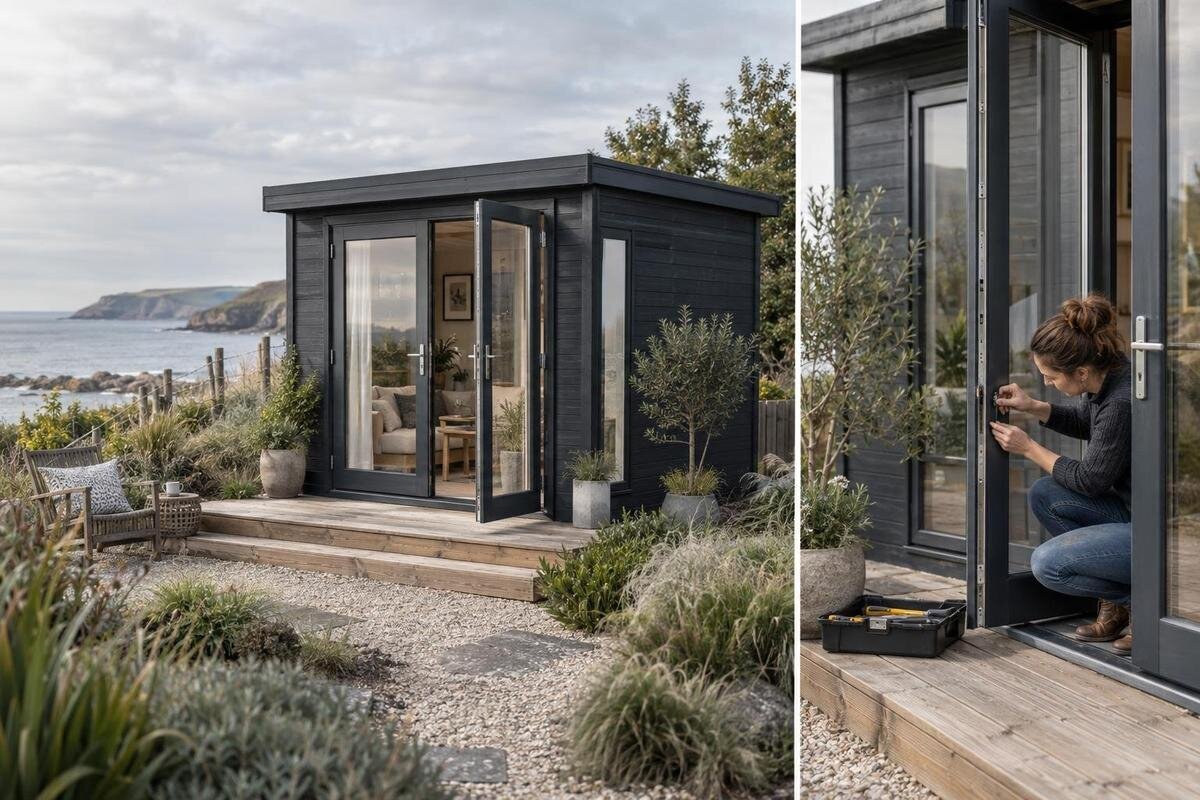
Garden shed doors
A garden shed door that becomes stiff at certain times of year can feel like a fault, but a small change in moisture or temperature may alter the clearance between the door and its frame. The same symptom can also come from a loose hinge, a shifted frame or a latch that no longer lines up. Work out where and when the door binds before attempting an adjustment.

Why a garden shed door can stick as the seasons change
Timber can take in or release moisture and change size slightly; temperature also affects how materials move. The door and frame may not respond at exactly the same rate. A modest change can narrow the clearance at one edge, making a door that previously moved freely rub or feel tight. Conditions around the opening matter: splash, shelter, shade and airflow can differ from one part of the shed to another. Seasonal change is therefore a reasonable possibility, especially when the symptom comes and goes, but it does not prove either that the shed is damaged or that the construction is at fault.
The timing is useful, but the place where the door catches is just as important. Note whether the problem follows a spell of damp weather, a warmer or drier period, or a change that has stayed for weeks. Record whether the door rubs along an edge, catches at the bottom, or moves freely but will not latch. This makes seasonal shed door movement easier to assess than relying on memory. If the problem eases as conditions change, that is useful evidence, not certainty; hinges, the frame and the base can also shift or loosen.
Find the exact point where the door catches
Test the door slowly, without pulling hard or slamming it. Watch the gap around the top, hinge side, latch side and threshold as it opens and closes. Look for a fresh scrape, a shiny rub mark, paint that has worn away, or debris caught in the opening. Keep fingers clear of the narrow spaces between the door and frame, where they can be pinched. If the door is heavy or feels unstable, do not keep testing it alone. A careful visual inspection is usually more useful than forcing the door to prove how badly it sticks.
Notice when the resistance begins. Rubbing during the swing may point towards contact between the door, frame or threshold; resistance only in the final part of closing may instead involve the latch or catch. A tight gap along much of one side is different from a single mark at a corner. These clues help narrow down what to inspect, but they do not identify a fault on their own. Repeat the gentle test once and note whether the contact point stays the same. Avoid inserting tools or objects into the gap to lever the door into place.
Check the base and frame before changing the hinges
The door depends on the frame around it holding its position. Before trying a garden shed door adjustment, look for obvious changes near the opening: a new uneven gap, a visibly shifted frame, loose adjoining boards or a floor that no longer appears to meet the doorway as before. Check whether the door and frame seem to move together or whether one part has shifted relative to the other. These observations can help distinguish a local hinge issue from a wider alignment concern. They are not a substitute for a professional assessment if the base or frame looks unstable.
Also look for standing water, repeated splash at the threshold or another visible source of dampness close to the doorway. These conditions may be relevant, but they do not by themselves explain a sticking door. Do not try to correct a base by adding improvised supports or altering it without suitable guidance. If you are planning a purchase, use a page such as the Verdana 1 garden shed page to identify the exact model, then ask for its applicable site-preparation and assembly instructions. A model name alone does not establish how its frame should be supported or aligned.
Inspect the hinges and their fixings
Look at each hinge and its visible fixings while the door is at rest. Check for a loose screw, a hinge leaf that has moved, a bent part, or a change in the gap beside the hinges. A door that appears to sag at the handle end can be a clue, but it does not confirm that the hinge is the cause. Do not lift or push the door to test its weight. If the wood around a fixing looks damaged, or a hinge appears to be pulling away, stop rather than tightening it repeatedly.
Some hinge designs allow adjustment; others do not. A loose fixing is not the same as an adjustable hinge, and forcing a screw or moving a hinge can worsen the alignment. Only tighten a clearly loose fastener if you can reach it safely, have the correct tool and the instructions allow it; stop if it will not grip. For a new purchase, treat the product page for the Verdana 2 garden shed as a model reference and verify the hinge type, available adjustment and replacement-parts information rather than guessing from a photograph.
Separate a latch problem from door misalignment
If the door swings without rubbing but resists at the point of closure, inspect the latch and catch. Close it gently and see whether the latch meets the catch centrally or appears to strike above, below or to one side. Check for a visibly loose plate or an obstruction around the mechanism. A latch that does not line up may result from the door or frame having shifted, rather than from a faulty latch itself. Do not force a key, handle or locking mechanism, and do not slam the door to make it catch.
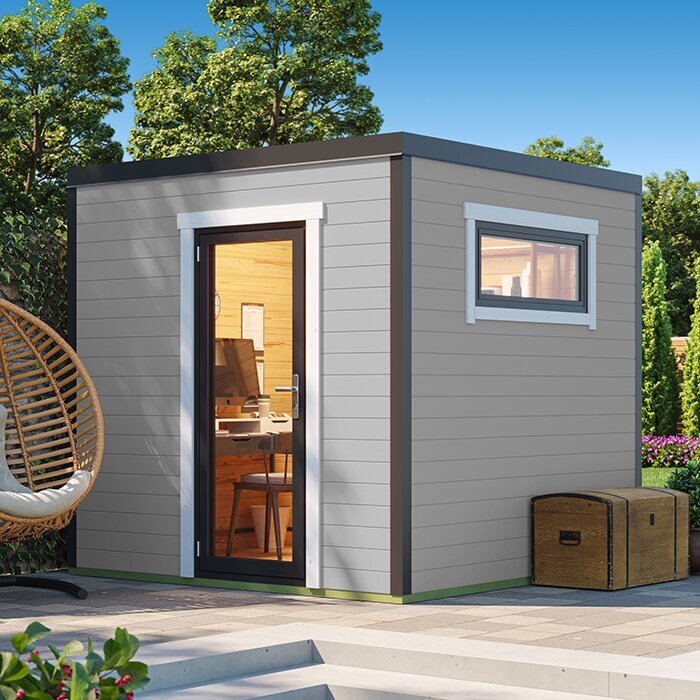
Moving the catch can make a misaligned door close temporarily while leaving the underlying problem in place. Check the door’s position and the surrounding gaps before considering any change to the latch. When comparing a garden shed, confirm the door operation, latch and lock details in the product information or with the seller. The Durano garden shed page can identify a particular model to ask about, but its name or images do not establish how its door operates or how its latch can be adjusted.
When seasonal movement may not be the only cause
Keep a short record if the sticking is intermittent: note the date, recent weather, where the door catches and whether the latch still works. If the door becomes easier to use as conditions change, seasonal movement may be contributing. If it sticks in the same way across different conditions, gets progressively worse or needs lifting to close, look beyond the weather. A pattern is a practical clue, not proof that a particular repair will work. Avoid making several changes at once, since that makes it harder to tell what affected the door’s fit.
Look more closely if there are visible changes around the doorway, such as damaged fixings, a gap that has altered, or deterioration at the lower edge or frame. Do not cover a moving contact point or remove material just to hide a mark. If repair is no longer practical and replacement is being considered, compare confirmed details for the exact model, including its door arrangement and opening dimensions. The Veltor 1 listing can serve as a model reference for that comparison; the name alone does not confirm whether its opening suits your site.
Adjust only what you can identify
Start with the cause you can see, not with a tool. Clear an obvious obstruction from the doorway, then check the maker’s instructions for the exact model and its hardware. If the instructions describe an adjustment, take note of the door’s original position and change only the specified part. Make a small change, close the door gently and check whether the gap and latch have improved. This careful approach helps you avoid turning a minor seasonal issue into a more complicated alignment problem. If you cannot tell which part is adjustable, do not experiment with the hinges or catch.
Avoid planing, sanding, drilling, cutting or levering the door as a quick fix. Removing material is difficult to reverse and may affect the finish, while it will not correct a shifted frame or loose fixing. Do not apply lubricant or other products unless the maker’s instructions identify a suitable one for that mechanism. When comparing a different model, check whether instructions are available for its exact hardware; the Orello 1 garden shed page is a model reference, not evidence of its adjustment method. Do not assume that guidance for another shed will apply.
When a shed installer or carpenter should assess the door
Ask a shed installer or carpenter for an assessment if the frame appears to have moved, a hinge is pulling away, the door is unstable, or the rubbing is severe. Get help if you cannot open or secure the shed without force. Do not remove a heavy door by yourself or keep using a damaged hinge. An experienced professional can assess the opening, frame, base, hinge and latch together, then explain whether adjustment, repair or a wider correction is appropriate. This is especially useful when more than one part appears to have changed.
Give the professional a clear account of when the problem began, where the door catches and what, if anything, has already been adjusted. Photos and the assembly or maintenance instructions can help identify the model and avoid repeating an unsuccessful change. If an estimate leads you to compare replacement options, use a page such as the Modano 1 listing only as a model reference. Confirm the specified door operation, opening dimensions and parts information separately rather than inferring suitability from a product name.

Door details to compare when choosing a garden shed
Before choosing a shed, consider how its door will work in the space available. For a hinged door, check which way it opens and whether there is room for its swing without hitting a wall, fence or stored items. Confirm the stated clear opening, not just the overall size of the shed, if equipment or bulky items need to pass through. If a listing describes a different opening mechanism, check what space and access it requires. A photograph may show a door, but it is not a reliable substitute for stated dimensions or a technical drawing.
Ask what hardware is supplied and whether the maker provides assembly, care and adjustment instructions for that exact model. Check how to identify replacement parts and who to contact with a door-alignment question; do not assume that all sheds use interchangeable hinges or latches. A page such as the wooden garden shed M listing can be one item in your comparison, but use confirmed specifications to assess its fit for your site and needs. Treat any detail that is not stated as a question for the seller, not as a feature you can infer.
What to confirm before ordering and installation
Before placing an order, verify the exact model and variant, the stated door dimensions and operation, the opening direction where relevant, and what hardware is included. Ask what site preparation is required and whether assembly is included or needs to be arranged separately. Check the information against the space where the shed will stand, including room for the door to open and a clear route through it. For example, the wooden garden storage shed S listing can help identify a model to ask about; do not assume that its name confirms door clearance, hardware or installation requirements.
During assembly, follow the instructions for that model and prepare the base as specified. Do not pull or force the frame into position by using the door, and do not overtighten fixings to compensate for a gap that looks uneven. Test the door gently once installation is complete, checking that it swings or operates as described, meets the catch and can be secured without force. Keep the instructions and note any change in the fit over time. If a problem appears, record where it catches before attempting an adjustment or seeking model-specific guidance.
Frequently asked questions
Why does a garden shed door stick after damp weather?
If the door or frame is timber, changes in moisture can make parts move slightly and reduce the clearance between them. That is one possible cause, not a diagnosis. Check where the door rubs and whether the problem changes later; also inspect the hinges, frame and latch for a more persistent fault.
Should I sand or plane a door that is sticking?
Not as a first step. Removing material is difficult to reverse and may expose or damage the finish, while the real cause could be a shifted frame or loose hinge. Identify the contact point first and follow the shed maker’s guidance. If the cause is unclear, ask a carpenter or shed installer to assess it.
Should I adjust the hinges or the latch first?
Inspect both before changing either. If the door rubs as it swings, look at the gap, frame and hinges. If it moves freely until the final part of closing, check whether the latch and catch meet properly. A latch adjustment may hide a wider alignment problem, so avoid moving parts without identifying the cause.
How can I tell seasonal movement from a frame problem?
Record when the sticking occurs and exactly where the door catches, then compare its behaviour as conditions change. A pattern that comes and goes may indicate seasonal movement, but it is not proof. Persistent or worsening rubbing, visible frame changes, damaged fixings or a door that needs lifting warrant a closer assessment.
When should I call a shed installer or carpenter?
Get help if the frame appears to have shifted, a hinge is pulling away, the door is unstable, or you cannot open or secure it without force. Do not remove a heavy door or keep adjusting damaged hardware. Give the professional your notes, photos and any model-specific assembly or maintenance instructions.
Seasonal movement is one possible reason for a sticking garden shed door, but the contact point, frame, hinges and latch all matter. A careful inspection can help you decide whether the change is temporary, whether an adjustment is clearly covered by the maker’s instructions, or whether the door needs professional attention. When choosing a new shed, confirm how its door operates, what space it needs and what installation guidance applies. That makes both day-to-day use and future maintenance easier to assess.
