
Routing Electricity to a Garden Shed: What to Discuss With an Electrician
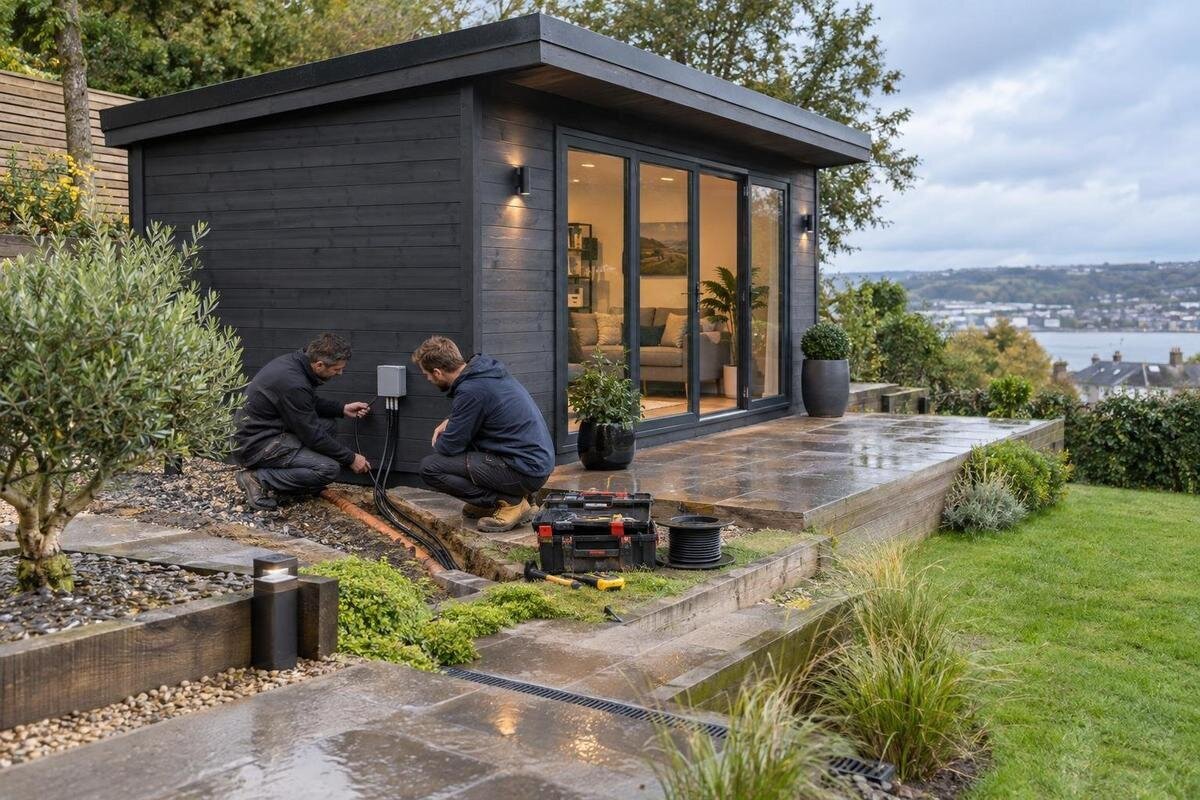
Garden house planning
Routing electricity to a garden shed starts with a clear brief for the electrician, not a guess about the cable. Before choosing a garden house or arranging work, decide how the space will be used, list the equipment you may want to run, and identify a likely position on the property. An electrician can then assess the proposed supply, route, outdoor conditions and requirements that apply to your site. Use this guide to prepare questions and compare the building choice with the electrical proposal before work begins.
01
Describe how you will use the garden house
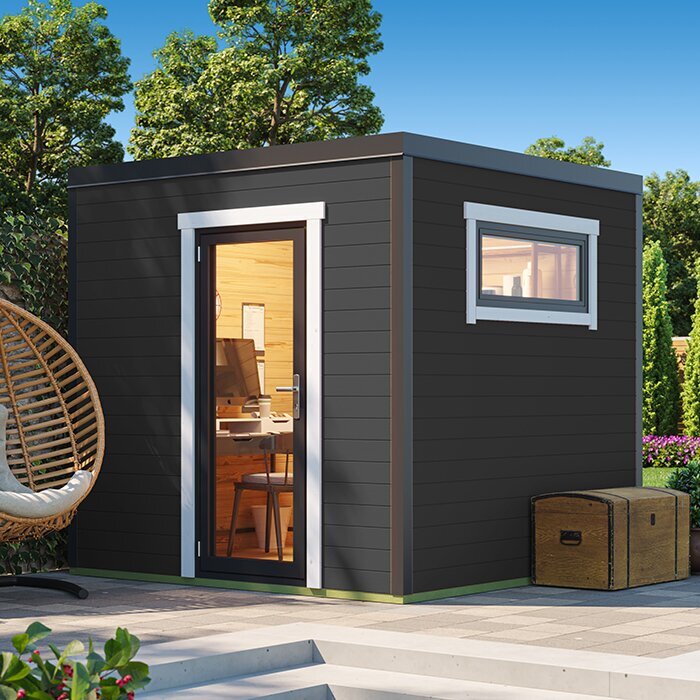
Begin by describing what the garden house must do. Occasional storage with a light has different needs from a space used regularly for desk work, hobbies or powered garden equipment. Note how often someone will be inside, which tasks need illumination and whether equipment will be carried in and out. This makes an electrician’s assessment more meaningful than asking for an arbitrary number of sockets: the proposed arrangement has to reflect actual use and the supply available at your property. If the Verdana 1 garden shed is among your purchase candidates, keep its product information with this brief; a model name alone cannot establish electrical suitability.
Separate essential uses from preferences and future ideas. Mark what is needed from the first day, what would improve comfort and what may be added later; then ask the electrician which details affect the assessment. Sketch where people enter, sit, work or store equipment, and note whether any tasks take place outside the building too. Consider who will use the space and for how long: a quick visit to collect tools is a different brief from regular work inside. Avoid placing fittings by copying a catalogue photograph. If the intended use changes while you are choosing a garden house, revise the brief and ask whether that affects the proposal before ordering.
Prepare an equipment list before requesting a quote
Write down actual equipment, not just broad labels such as office or workshop. Include products you expect to use, any available information from their labels or manuals, whether they are fixed or portable, and how often they will be used. Note ordinary items as well as occasional ones: task lights, chargers, a computer, a small appliance or garden equipment brought inside for maintenance. Do not try to calculate the electrical demand yourself or assume that one socket per device settles the question. A realistic list helps the electrician assess what the supply and proposed arrangement need to support.
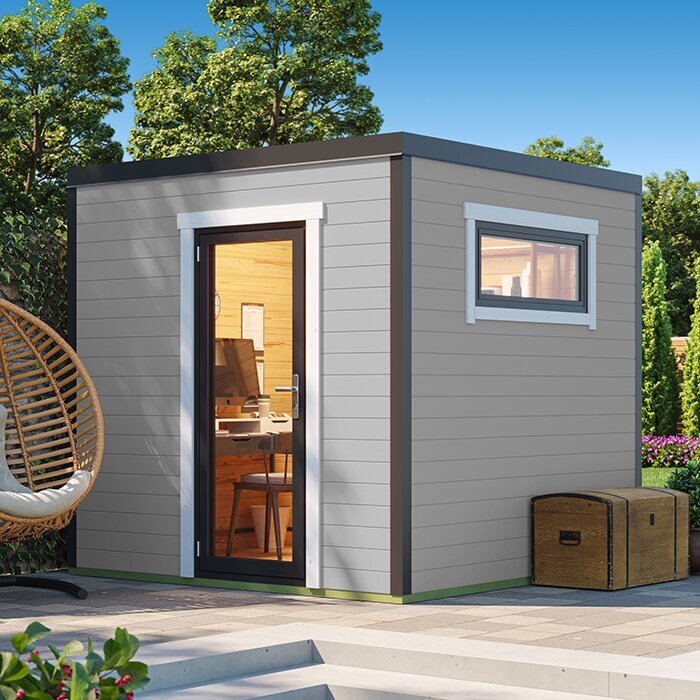
Note whether two or more items may be used at the same time, and flag anything you have not chosen yet. If the Verdana 2 garden shed is on your shortlist, compare its current product information with your equipment plan rather than judging its electrical needs from the model name or an image. Ask the electrician what details are needed for each item and whether a possible addition would change the assessment. That conversation can reveal a mismatch while you still have time to reconsider the layout or the garden house, instead of discovering it after the building is in place.
02
Plan the building position and route together
Draw a simple site plan showing the main building, the proposed garden house position, access paths, paving, planted areas, boundaries and places where people or vehicles pass. Mark known obstacles and any services you are aware of, but do not try to identify buried lines yourself; ask the electrician what information or checks are needed before proposing work. The purpose is to explain the actual setting, not to calculate a route. A rough plan and a few photographs can show why the shortest line on paper might cross a path, a planted bed or an area that would be difficult to reach for future work.
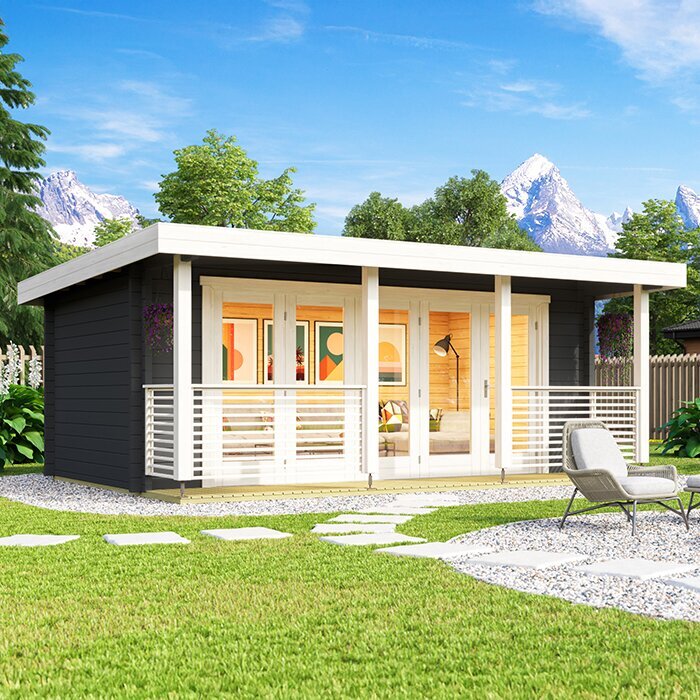
Ask the electrician to consider the exact position and access, not just the distance from the house. Discuss gates, ground coverings, planned planting and any areas where access needs to remain clear. If the Durano spacious garden shed is a candidate, confirm its dimensions and opening positions from current product information before fixing the location on your plan. Those details can help you assess where the building may fit, but they do not determine the electrical route. Tell the electrician about planned garden changes as well as current obstacles, so the proposal does not depend on access that may later be blocked.
Ask how the proposed route will be assessed
Ask the electrician to explain which route options are appropriate for your property and what factors shape that decision. Depending on the site, relevant questions might include whether any part of the route would be exposed, cross an access area or sit near planting and watering. You do not need to choose a wiring method or specify materials yourself. Instead, ask what information the electrician needs to compare the options and how each proposal would affect access, appearance and future maintenance around the garden house.
Discuss the practical consequences of each option before agreeing to work: what areas may be disturbed, whether paving or landscaping needs separate coordination, and how the route can remain accessible for professional inspection or repair. Ask what you should avoid covering, moving or altering after the work is complete. If the Veltor 1 garden shed is on your shortlist, use its current product documentation as a reference for the building you are considering, not as evidence that a particular route will suit it. The electrician’s site assessment, rather than the product name, should guide that decision.
03
Plan lighting around entrances and tasks
List the places where light would be useful: the entrance, a workbench, storage areas or a desk. Consider whether tasks need different lighting from general movement through the room, and whether any outdoor light is part of the plan. Show these areas on your sketch rather than choosing fitting positions from memory. Ask the electrician how the proposed lighting and controls could relate to the way you use the space, including whether you need to operate a light as you enter or leave. Do not assume that daylight will be adequate for every task or at every time you expect to use the garden house.
Check the arrangement against the product’s actual layout before settling on positions. For example, if the Orello 1 garden shed is a candidate, ask for current drawings or instructions showing its openings and relevant layout details; do not rely on a photograph to infer where doors or other features sit. Share that information with the electrician and ask whether your lighting plan makes sense for the chosen arrangement. If the building or intended use changes, revisit the sketch. This keeps decisions about lighting tied to the actual space, rather than to an earlier idea of where furniture or equipment might go.
Discuss equipment you may add in future
It is worth mentioning foreseeable additions before the electrical proposal is settled. You might later want to use different powered tools, charging equipment, a small appliance or other items that are not part of the first-day plan. Separate likely additions from vague possibilities, and explain when and how often you expect to use them. Do not assume that an arrangement planned for lighting and occasional use will automatically suit every later purpose. The electrician can assess whether a future use matters to the current proposal and what information would be needed to consider it.
Ask what planning for future use would involve and whether a later change could require another assessment or work. There may be a difference between leaving room in your plans and having a confirmed capacity for equipment that has not yet been selected; ask the electrician to explain that difference for your site. If you are considering the Modano 1 garden shed, keep the product details and your future-use notes together while comparing options. Neither the model name nor a general intention to add equipment is enough to establish what the eventual electrical arrangement can support.
04
Discuss exposure and ongoing access
Describe the conditions around the proposed building and route, rather than assuming an outdoor installation faces the same conditions everywhere. Tell the electrician about areas exposed to rain or direct sun, watering, dust, cleaning or accidental knocks. Note where people will walk and whether gardening tasks could bring equipment or materials close to the route. The professional can use this information to assess suitable protection for the actual site. Do not assume that the garden house itself protects electrical equipment, or that a product’s general description answers questions about outdoor electrical use.
Ask how the arrangement should remain accessible for maintenance and what you should avoid doing around it. For example, discuss whether proposed shelving, stored tools or later landscaping could obstruct equipment that needs professional access. Ask what routine checks or care the electrician recommends for the completed installation, and what signs should prompt you to seek professional help. When comparing a candidate such as the wooden garden shed M, treat its name as an identifier only; check current product information and ask the electrician to assess the exposure and access conditions at your property.
Check product information before making changes
Before ordering, obtain current information for the exact garden house you are considering, such as its dimensions, layout drawings and assembly instructions. Ask the seller or manufacturer whether there are any instructions or limits relevant to the position of an electrical entry or other alteration. Do not assume that any wall or surface can be changed to accommodate a route. The electrician needs information about the actual building, while the seller or manufacturer is the appropriate contact for questions about its construction and permitted changes. Keep the answers with your project notes rather than relying on a photograph or a model name.
Share the relevant documents with the electrician before finalising the route or asking for a final scope. Check whether the proposed arrangement needs to be coordinated with the building’s delivery, assembly or landscaping, and ask who should confirm that each part is compatible. If the wooden garden storage shed S is among your options, use its current product information in the same way: as material to verify for that specific choice, not as evidence about electrical features. Resolve questions about possible alterations before work is agreed, rather than leaving them until the building is already in position.
05
Confirm which local requirements apply
Ask the electrician which current requirements apply to the proposed work at your property. Depending on the project, you may need to establish whether approvals, notifications, inspections or involvement from a supply provider are relevant; do not assume that any one of these is always necessary or that a process for another site applies to yours. Ask who can confirm each point and what information they need. If anything is unclear, check with the relevant local authority or provider rather than relying on a general online guide.
Clarify responsibilities before committing to a date. Ask who is expected to identify and arrange any required permissions or checks, and who will coordinate with the seller, building installer or other contractors. If the property is rented, managed, shared or subject to another party’s control, raise that early and find out who must be consulted. Record the answers alongside the agreed scope. This does not replace professional confirmation, but it helps prevent a gap between the electrical work and the separate decisions about the garden house or the property.
Agree the work scope and handover
Before work begins, ask for a clear description of what the quotation covers and what it leaves out. It may help to distinguish the site assessment, design, materials, installation, any required testing and work to make good affected areas. Ask whether access or preparation is your responsibility and whether other trades need to be involved. These questions make it easier to compare proposals on the same basis without assuming that a short description includes every part of the job. Confirm the final building position and intended use against the written scope before giving approval.
Ask what information you will receive when the work is complete, including any relevant test results, records or instructions for safe use and future changes. Confirm whom to contact if the arrangement needs attention, and whether the electrician recommends any limits on moving equipment or altering the garden around it. Coordinate the work with the garden house’s delivery or assembly and with any planned landscaping, so the site details remain accurate. A well-defined handover leaves you with a clear record of what was agreed, rather than relying on memory when a new need arises.
Frequently asked questions
What information should I give the electrician?
Share the garden house’s intended use, a list of equipment and its available product information, and a sketch of the proposed position and route. Include any known obstacles, access limits and planned changes to the garden. The electrician can tell you what else is needed to assess the work.
Should I choose the garden house before the cable route is finalised?
You can discuss a possible position and route while comparing garden houses, but avoid treating either as final until the electrician has assessed the site and the chosen product’s current information is available. The building’s actual position and layout may affect the practical options.
Do I need an electrician if I only want a light?
Ask a qualified electrician even if lighting is the only planned use. The supply, route, outdoor conditions and requirements for the property still need professional consideration. This guide is for preparing that conversation, not for designing or carrying out electrical work yourself.
Which local requirements should I ask about?
Ask which current requirements apply to the proposed work at your property, and whether approvals, notifications, inspections or involvement from a supply provider need to be considered. Also ask who is responsible for confirming and arranging each item; do not assume the same process applies to every site.
Can I add more equipment later?
Possibly, but do not assume the original arrangement will support equipment that has not yet been considered. Tell the electrician what you might add, such as powered tools or charging equipment, and ask whether planning for it now would affect the proposal. Any later change should be discussed before use.
The most useful preparation is a clear account of how the garden house will be used, what equipment it may need and where it is likely to stand. Share that brief and the chosen product’s current information with an electrician, then discuss the route, outdoor conditions, local requirements and work scope together. This keeps the purchase decision connected to the practical needs of the site, while leaving technical choices and installation to the professional who can assess them.
