
Greenhouse Polycarbonate | Thickness, Multiwall Sheets & Insulation
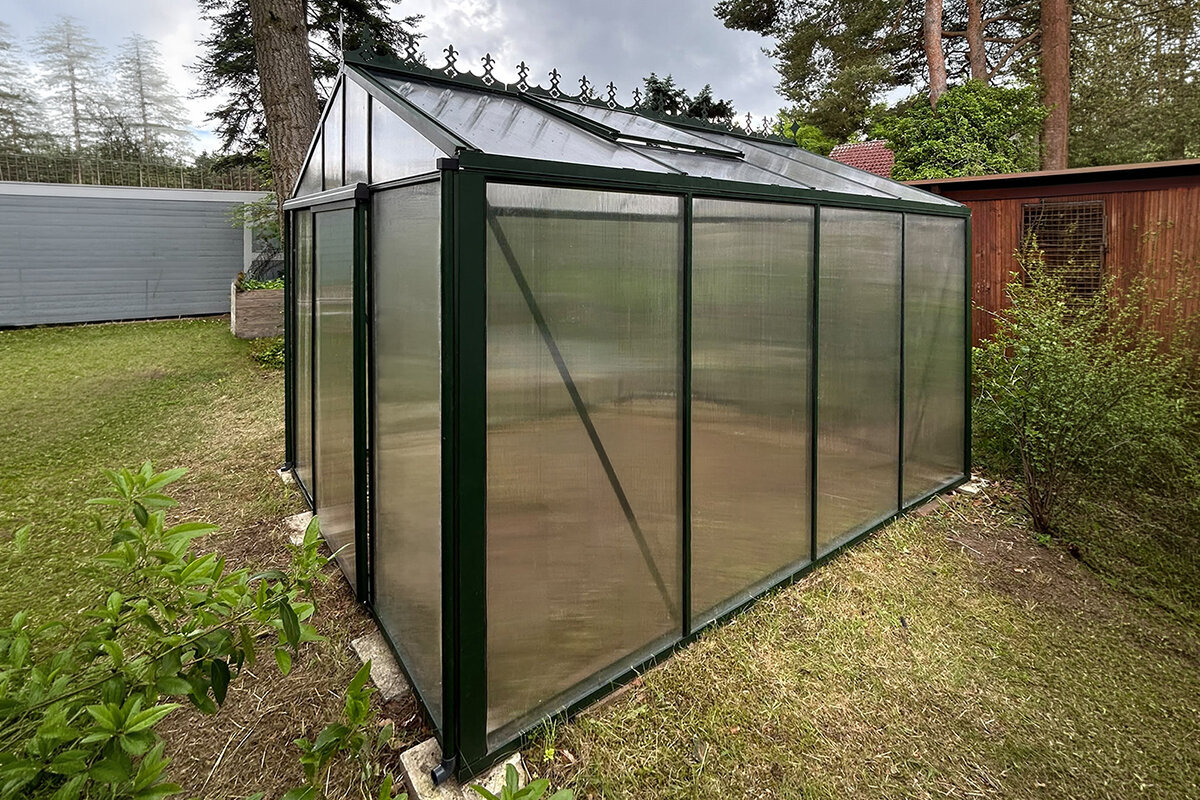
Malta • Greenhouse materials guide • Bloomcabin Journal
Greenhouse polycarbonate: the complete guide
Thickness, twinwall versus multiwall sheets, thermal insulation, UV protection, condensation and the details that determine real performance.
Start with the right question
“How thick should greenhouse polycarbonate be?” is a useful question, but it is not the whole decision.
Polycarbonate is used for greenhouse glazing because it combines low weight with high impact resistance and useful thermal insulation. Multiwall sheets enclose air chambers; these still air layers can reduce heat flow compared with a single thin skin, while internal ribs add stiffness.
Two sheets with the same nominal thickness need not perform alike. A 10-mm twinwall sheet, a 10-mm triplewall sheet and a more complex multiwall sheet can have different air chambers, U-values, light transmission, weights and permitted spans.
This guide therefore shows how to read a sheet as a complete system rather than following a single millimetre figure. If you want to combine polycarbonate with a high-quality aluminium greenhouse, the Bloomcabin Classic aluminium greenhouse is the main commercial starting point for Malta.
The best choice starts with climate, growing season, light needs, heating plans and frame design. Malta has hot, dry summers and mild, wetter winters, so summer heat management, ventilation and seasonal light should be assessed for your site.
01 • The material
What is greenhouse polycarbonate?
Polycarbonate is a thermoplastic available as solid, corrugated, twinwall and multiwall sheet. Hollow multiwall sheets are especially relevant for greenhouses: internal ribs connect the outer skins and create enclosed air chambers. The result is a lightweight component that can be stiffer than a very thin solid sheet and offer better thermal properties.
Suitable exterior sheets are made with UV-stabilised or co-extruded protective layers. Depending on the product, they may also offer light diffusion, different transparency levels or special anti-condensation surfaces. “Polycarbonate” therefore describes the base material, not the complete technical performance of a greenhouse sheet.
02 • Thickness
4 mm vs. 6 mm vs. 8 mm vs. 10 mm vs. 16 mm polycarbonate
Sheet thickness is useful because greater depths can allow deeper air chambers and more complex internal geometry. It is not, however, a universal insulation rating. The following ranges guide the questions to ask; they do not mean every sheet of a given thickness performs identically.
| Nominal thickness | Typical planning question | Potential benefit | What to check |
|---|---|---|---|
| 4 mm | Are minimum weight and a slim sheet the priority? | Light, simple construction | Insulation, permitted span, impact resistance and frame specification |
| 6 mm | Is a light twinwall sheet wanted for seasonal use? | A useful entry into air-chamber insulation at low weight | Exact rib structure, U-value, support spacing and UV side |
| 8 mm | Is greater chamber depth or a triplewall structure required? | Potentially improved insulation in a compact sheet | Twinwall versus triplewall, light transmission and weight |
| 10 mm | Is the growing season extended and heat retention more important? | More insulation and stiffness potential | Light transmission, cell geometry, profile compatibility and thermal movement |
| 16 mm+ | Is stronger thermal performance a main project aim? | Allows more sophisticated multiwall constructions | Possible light loss, frame compatibility, cost and structural load assumptions |
03 • Internal geometry
Twinwall vs. triplewall vs. multiwall
Twinwall sheets have two outer skins joined by internal ribs. This essentially forms one layer of elongated air chambers. These sheets are light, comparatively simple and common in thinner greenhouse glazing.
Triplewall sheets add another internal skin, creating extra separated air layers. Depending on the precise geometry, this can improve insulation compared with a similarly thick twinwall sheet.
Multiwall is the umbrella term for more complex cross-sections. They may contain extra horizontal skins, diagonal ribs, X-structures or combinations of these. That is why “10 mm polycarbonate” is insufficient for a professional choice: read the cross-section and technical values too.
04 • Thermal insulation
How polycarbonate insulates a greenhouse
Multiwall polycarbonate insulates mainly through its enclosed air chambers. Relatively still air transfers heat more slowly than a solid, highly conductive path. Cell geometry, number of skins, material depth and conditions can therefore create very different performance despite the same stated thickness.
Universities and agricultural advisers recommend comparing greenhouse coverings by actual heat transfer rather than material name alone. A lower U-value generally means less heat flow; a higher R-value generally means more thermal resistance. Planning should therefore use the value for the specific sheet.
If winter growing or heating costs matter, ask for the U-/R-value of the sheet actually supplied. Thermal performance remains relevant for cool periods, but must be considered with local wind exposure and the frame designed for it. For a greenhouse used mainly from spring to autumn, light, price, ventilation and straightforward construction may matter more than maximum insulation.
05 • Light
More insulation is not automatically better if too much light is lost
Every extra skin, rib, tint or solar-control layer changes how light enters. Malta's bright summers can bring intense solar gain, while lower winter light remains important for crops. Available plant radiation can therefore become a more important limit than the final small improvement in U-value.
For plants, ask for visible-light transmission or PAR data and consider light diffusion. A well-diffusing sheet can spread radiation more evenly through the crop and reduce sharp local peaks. Strongly tinted or solar-reflective sheets can lower summer heat, but may also sacrifice plant light.
06 • UV protection
Which side of a polycarbonate sheet must face the sun?
Polycarbonate for permanent outdoor use is normally made with a UV-stabilising protective layer. It protects the sheet itself from long-term ultraviolet ageing. Some products have protection on one side only; others have it on both. Check this before installation.
Where UV protection is one-sided, the marked protected face must point outward towards the sun. Installing the sheet the wrong way around can compromise the weather resistance intended by the manufacturer. Do not remove protective films until the fitting direction is certain.
Do not assume both sides are identical. Check the marking and installation instructions for the specific sheet.
07 • Condensation
Condensation on the sheet differs from moisture inside its air chambers
In a humid greenhouse, condensation forms when warm moisture-laden air meets a colder surface. Special horticultural sheets can have an anti-condensation surface that lets water run as a thin film rather than form large droplets. This may reduce dripping and optical losses from strongly reflecting drops.
Moisture inside hollow chambers is a different issue. Channels, edge closures and profiles must be fitted to avoid trapping water unnecessarily and to limit contamination. Polycarbonate also moves substantially with temperature changes. Edge clearances, profile engagement, drilling and drainage must therefore be planned as one system.
08 • Lifespan
How long does greenhouse polycarbonate last?
There is no single lifespan for all polycarbonate. University greenhouse guides often indicate around ten to fifteen years for suitable polycarbonate coverings, while actual guarantees depend greatly on the product, UV protection and guarantee wording. Ageing is also influenced by sunlight, cleaning, chemical contact, installation and the frame's mechanical condition.
A sheet can remain structurally intact while declining optically. Yellowing, surface haze, scratches, chamber contamination or damage around fixings and edges may become relevant long before mechanical failure.
For a high-quality greenhouse, therefore read not only the guarantee period, but also what is guaranteed: impact resistance, light transmission, yellowing or another performance measure may be treated differently.
09 • Impact resistance & construction
High impact resistance does not replace sound greenhouse engineering
Polycarbonate is valued for its high impact resistance, and multiwall sheets are often chosen where break resistance matters. The sheet, however, is only one part of the system. Wind, imposed loads and impacts are transferred through glazing profiles, rafters, screws, anchors and foundations.
A thicker sheet cannot compensate for a weak frame, oversized unsupported spans or poor fixings. Follow the approved glazing for the greenhouse system instead of fitting an arbitrarily thicker sheet. Profile geometry, engagement depth and expansion allowances may be designed for a specific thickness.
Where demanding weather is an important purchase criterion, also compare Bloomcabin greenhouse models for Malta and review the wind and snow loads stated for your project.
10 • Installation
Installation details that determine multiwall-sheet performance
Align the channels correctlyWith sloping or vertical glazing, channels generally run so moisture can drain down the fall, rather than becoming trapped across it.
UV side outwardIf the sheet has UV protection on one side, its marked protected face must point towards the sun.
Treat sheet ends correctlyUse the closure tapes, profiles and ventilation/drainage details specified for the system. The top and bottom ends do not necessarily serve the same purpose.
Allow for thermal movementPolycarbonate changes dimensions with temperature. Drilling, edge clearances and profile depths must follow the technical installation instructions.
Compatible cleaners & sealantsSome chemicals can damage polycarbonate. Use only cleaners and sealants confirmed as compatible with the particular sheet.
11 • Cleaning
Clean polycarbonate without unnecessarily damaging its surface
Polycarbonate is impact resistant, but its surface can scratch more easily than glass. Avoid dry rubbing, abrasive pads and unapproved solvents. A soft cloth or sponge, clean water and a mild compatible cleaner are normally a better starting point, followed by thorough rinsing.
Keep leaves and organic deposits away from sheet edges, gutters and glazing profiles. Dirt that retains water can encourage algae, staining and persistently damp edge zones, even when the polycarbonate sheet is technically intact.
For care of the complete frame, also read the local Bloomcabin guide to cleaning and maintaining aluminium greenhouses.
12 • Polycarbonate or glass?
Use determines which glazing suits you better
Polycarbonate is often a better fit when …
high impact resistance and low glazing weight are important.
you want to use a hollow sheet's cell structure for insulation.
softer, less crystal-clear transparency is acceptable or even preferred.
the greenhouse is primarily a growing space, rather than a clear-glazed living area.
Toughened safety glass is often a better fit when …
maximum visual clarity is a central design goal.
you want a particularly premium, architecturally transparent appearance.
scratch resistance and enduring visual clarity are highly valued.
the greenhouse will also serve as a display, dining or living space.
The Bloomcabin glazing guide explains the broader choice between glass and polycarbonate. This article deliberately explores polycarbonate selection in more depth.
13 • Polycarbonate + aluminium
Why an aluminium frame and polycarbonate can be a strong combination
A rigid aluminium frame and lightweight hollow-sheet glazing perform complementary tasks. Aluminium enables precise profiles, lasting shape stability and corrosion-resistant load-bearing structures; polycarbonate reduces glazing weight while providing high impact resistance and useful insulation.
For Bloomcabin customers, the key example is the Classic aluminium greenhouse. It is the central product page referenced by this guide when you want to combine classic greenhouse architecture, an aluminium frame and polycarbonate.
The benefit is that you need not switch between entirely different frame concepts. With the Classic greenhouse the architectural form remains constant; you can select glazing according to light, thermal protection, use and desired appearance.
If you need more width and interior space, also compare the Classic Plus 385.
14 • Choose by use
Which polycarbonate qualities should different greenhouse owners prioritise?
Spring–autumn hobby growingGood light transmission, adequate impact resistance and secure frame compatibility come first. Maximum insulation is not automatically worthwhile if it unnecessarily reduces light.
Extended season in a cool climateU-/R-value, chamber geometry, edge sealing and air chambers become more important. Enough plant light must still be retained during darker months.
Hail / high impact exposureCheck impact data for the exact sheet alongside spans, profile supports and fixings. The whole assembly must carry the load.
Hot summer conditionsInclude diffusion, ventilation and shading in your plan. During hot spells, large ventilation areas and shading where needed are often more effective than heavily tinting the glazing. A darker or solar-reducing sheet can reduce heat gain, but should not needlessly cost plant light.
Garden room / representative appearanceWhen crystal-clear views and architectural transparency matter more than low sheet weight, safety glass may be the more suitable glazing.
15 • Common mistakes
Seven polycarbonate mistakes to avoid
1. Buying by thickness aloneCompare cell structure, thermal data and light data too.
2. Installing the UV side inwardFollow the protected-side marking precisely.
3. Fully sealing both ends in the same wayMany multiwall systems need controlled drainage or ventilation at the lower edge.
4. Ignoring thermal movementMaintain the joints and profile overlaps required by the manufacturer.
5. Using aggressive cleanersChemical compatibility matters with polycarbonate.
6. Optimising for insulation onlyPlants still need sufficient light.
7. Considering glazing separately from the frameSpan, fixing, expansion and structural loads must work as a system.
16 • FAQ
FAQ: Polycarbonate in a greenhouse
Is 6 mm polycarbonate sufficient for a greenhouse?
For certain seasonal greenhouse systems, 6 mm can make sense. Whether it is sufficient depends on cell structure, frame spacing, wind and snow loads, thermal aim and approval from the greenhouse manufacturer. Sheet thickness must not be selected independently of the frame.
Is 10 mm automatically better than 6 mm?
A 10-mm multiwall sheet may offer better insulation, but the result depends on its internal cross-section. It may also transmit less light or require different profiles. Technical data is therefore more informative than nominal thickness alone.
Can polycarbonate yellow?
Unprotected polycarbonate can age under UV radiation. Suitable exterior sheets have UV stabilisation or co-extruded protection. Correct fitting direction, product quality, exposure and the specific guarantee are decisive.
Why is there water in the air chambers?
Over time, moisture can enter hollow chambers. Correct channel direction, edge treatment, suitable closure profiles and controlled drainage help limit the issue. The installation instructions for the specific system are authoritative.
Can I use polycarbonate in a high-quality aluminium greenhouse?
Yes, if the greenhouse is designed for it. The Bloomcabin Classic aluminium greenhouse is deliberately the central product reference for this combination in this guide.
What works where space is very limited?
A lean-to model can use the same glazing principles while saving garden space. See the Bloomcabin lean-to greenhouse solutions for Malta.
17 • Decision
The best greenhouse polycarbonate is the sheet that suits the whole greenhouse system
First define the growing season, climate, desired light level, any heating and the frame. Then compare cell structure, U-/R-value, light transmission, UV protection, condensation behaviour, impact resistance, thermal movement and guarantee for the specific sheet.
For many hobby gardeners, a lighter twinwall sheet can be entirely sensible. For a cooler project with a longer season, a thicker or more complex multiwall sheet may justify its added cost. Thermal performance is valuable for cool periods, but must never be considered independently of local wind exposure and the frame designed for it. Where clear architectural glazing is the priority, safety glass remains a strong alternative.
To compare polycarbonate and glass options within a high-quality aluminium frame, start with the Bloomcabin Classic greenhouse. It remains this guide's central commercial destination.
View the Classic aluminium greenhouseSources & further information
- German Weather Service — German Climate Atlas
- Oklahoma State University Extension — Greenhouse Structures and Coverings
- Washington State University Extension — Greenhouse Construction and Management
- Cornell University / NRAES — Greenhouses for Homeowners and Gardeners
- Cornell University / NRAES — Greenhouse Engineering
- University of Arkansas Cooperative Extension — High Tunnel Production Guide
Technical values vary with sheet structure, thickness, formulation, coating and manufacturing specification. This guide uses only universities, public weather/climate services and agricultural advisory bodies as external sources, not competitors. For installation, always follow the technical data for the sheet actually purchased and the Bloomcabin frame.
