
Growing Basil in a Greenhouse | Malta Planting & Harvest Guide
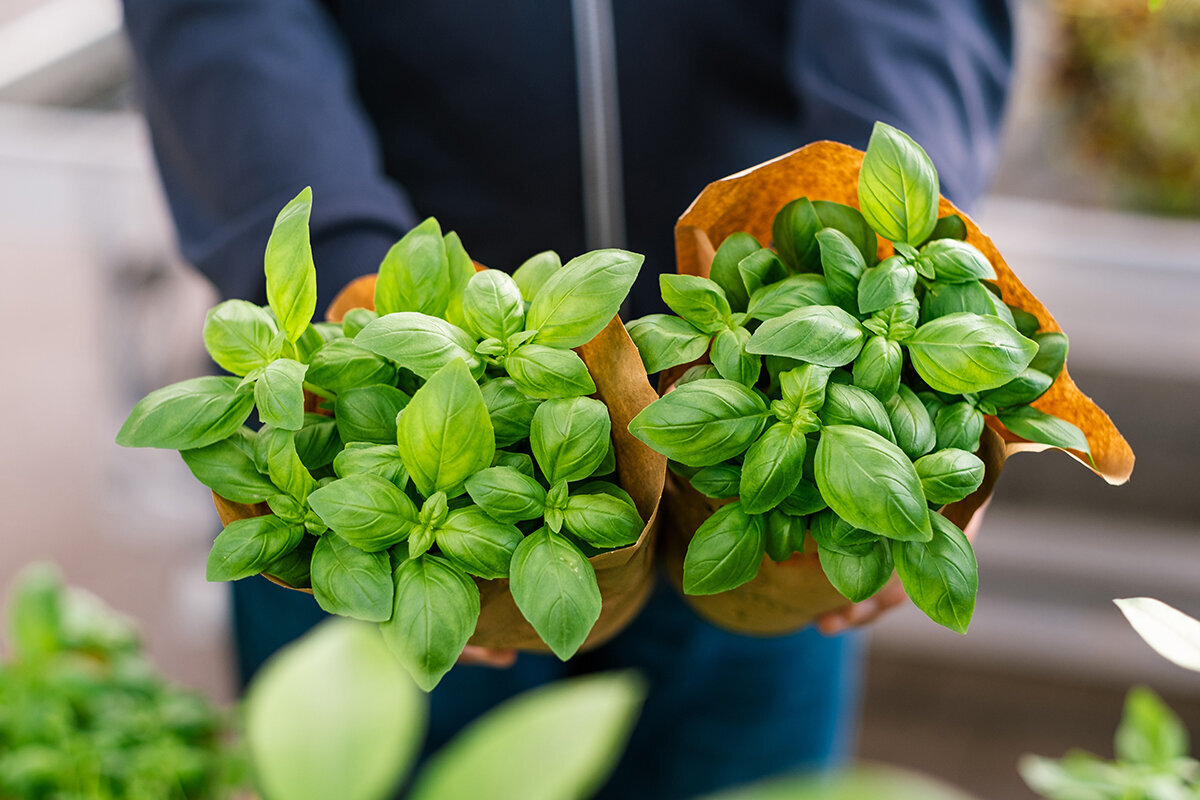
Bloomcabin Malta • Greenhouse growing guide
Growing basil in a greenhouse: sowing, care & harvest
Warmth, fragrance and repeated harvests make basil an ideal greenhouse herb. Success depends not on maximum heat, but on balancing light, airflow, even moisture and regular cutting.
Basil is straightforward, but reacts quickly when warmth, light, water or humidity are out of balance.
Basil comes from warm climates and grows most strongly with steady warmth and abundant light. A greenhouse suits the crop well: it protects young plants, extends the season and makes watering easier to control. Yet an enclosed greenhouse can also create high humidity and stagnant air, conditions that encourage basil diseases.
In Malta, a greenhouse offers control as well as warmth during windy spells, humid weather and intense summer sun. It can shelter basil, yet strong sunshine may quickly overheat an enclosed structure. From late spring through summer, ventilation and shading may matter more than heat retention, while conditions vary by site.
For a quality harvest, Bloomcabin uses a simple system: warm roots, plenty of light, dry leaves, moving air and frequent picking. Keep these five points in view and a few plants can provide fresh shoot tips for many weeks.
Basil in the greenhouse – key conditions
Light: at least 6 hours of direct sun
Temperature: usually ideal at around 21–32 °C
Growing medium: nutrient-rich and well drained
Moisture: even, never waterlogged
Main risk: downy mildew and wet foliage
01
01 — Protected growing
Why basil works especially well in a greenhouse
Basil dislikes frost and can stop growing, discolour and develop soft tissue after prolonged cool conditions. Outdoors in Malta, a mild spring week can bring excellent growth, while a cool, wet or windy spell may quickly set plants back. Under cover, these swings are easier to moderate.
The main benefit is predictability. Young plants are sheltered from heavy rain and wind; water reaches the root zone precisely; leaves stay cleaner; and the season can begin earlier and continue later. That stability is especially useful for basil, which is harvested continuously.
A greenhouse also allows succession growing. Rather than sowing once in spring, raise small batches every three to four weeks. When older plants become woody or flower heavily, a younger generation is already ready.
If you are still planning your greenhouse, consider the crop from the start: a bright position, an accessible water supply, easy-to-open vents and an area for young plants matter more for basil than elaborate equipment.
02 — Choosing varieties
Which basil varieties suit a greenhouse?
For pesto, tomatoes and classic Mediterranean cooking, Genovese or large-leaved sweet basil remains the essential choice. Thai basil grows more upright, often has purple stems and a hint of anise. Lemon basil suits lighter dishes, while compact Greek types work particularly well in pots.
In a greenhouse, choose for resilience as well as flavour. Downy mildew can rapidly spoil basil. Seed descriptions that state mildew resistance are therefore particularly useful for dense plantings or crops kept for longer.
A good approach is a combination: a robust Genovese main variety for volume, a speciality such as Thai or lemon basil for variety, and a compact type for pots. This also shows which genetics suit your own greenhouse climate best.
With saved seed, remember that hybrid traits may not remain reliable. For uniform plants and more predictable resistance, start regularly with tested seed.
03 — From seed to plant
Raising greenhouse basil from seed
Basil is easy to raise from seed. Use clean seed trays, module trays or small pots with a loose, fine growing medium. Cover seed only lightly or press it in gently. Even moisture matters: the medium must not dry during germination, but should never stand wet.
Once seedlings emerge, light becomes immediately important. Insufficient light produces long, thin seedlings with wide gaps between leaf pairs. Give plants the brightest possible position, without overheating young seedlings behind closed glazing on very hot spring days.
Prick out or pot on when plants have several true leaves and are easy to handle. Do not plant basil deeper than before. Water thoroughly after transplanting and allow excess water to drain away.
At final spacing, air matters more than the highest possible plant count. Crowded crops dry slowly after watering and create a humid microclimate. In a home greenhouse, a little more spacing is almost always the better choice.
For a continuous supply, make small follow-up sowings. Alongside harvest-ready plants, there will always be a younger batch ready to take over when older plants flower, turn woody or become diseased.
04 — Greenhouse climate
Temperature and light: two non-negotiable factors
Basil grows most vigorously in warm conditions. Around 21–32 °C is a useful practical guide, although healthy plants tolerate brief departures. Avoid extended cool periods. Below about 10 °C, the risk of chilling damage rises markedly.
Light is equally important. Aim for at least six hours of direct sunshine each day. This is usually achievable in bright spring and summer weather; at shaded sites or during shorter winter days, available light may become the limiting factor.
Across the Maltese Islands, the greenhouse advantage is managing exposure through the seasons, not merely trapping heat. Bright days can make ventilation and shading the priority from late spring into autumn; during humid or unsettled spells, open airflow and careful watering help avoid a sealed, damp growing space.
On sunny days, indoor temperature rises rapidly above outdoor temperature. Open doors and roof vents early. Automatic openers can help, but do not replace observing the whole climate. In extreme summer heat, temporary shading is better than plants that wilt every day.
The aim is not the hottest possible greenhouse but a stable growing space. Stored warmth helps in the morning, excess heat must escape at midday, and plants should enter the night with dry foliage.
05 — Root zone
Soil, pots and feeding for strong basil
Basil needs a medium that holds water without becoming airless. In beds, mature compost improves structure; in pots, a quality loose compost is better than heavy garden soil. A pH of roughly 6 to 7 suits the crop well.
Pots should be large enough. Small supermarket pots dry extremely quickly in a greenhouse and often contain many plants crowded together. Dividing them or moving them into larger containers produces steadier roots and makes watering much easier.
As a leafy crop, basil benefits from regular, moderate nutrition. Too much nitrogen, however, creates very soft growth. Balanced feeding matched to the growing medium is better than frequent heavy doses of liquid fertiliser.
In greenhouse beds used continually, occasional soil testing is worthwhile. Without rain to wash salts through, nutrients can build up over several years.
06 — Moisture without disease
How often should greenhouse basil be watered?
A fixed two-day schedule does not work. A pot may need water morning and evening on a hot July day, while the same plant may manage for several days in April. Judge the root zone: it should remain evenly moist but contain air.
Morning watering is ideal. Plants can use the water during the day and accidentally wet leaves dry more quickly. Drip irrigation or careful watering directly onto the medium reduces wet foliage and saves water.
Ventilate after watering when humidity is high. Standing puddles, wet floors and dense foliage extend the damp period. This matters because downy mildew takes advantage of wet leaves and high humidity.
Do not check only the surface. In larger pots, the top layer may look dry while the root ball remains wet. A finger test, pot weight or a simple moisture sensor gives better guidance.
A simple rule
Keep roots evenly moist, while keeping leaves as dry as practical. This principle improves growth and disease prevention at the same time.
07 — Shape through harvesting
How to cut basil for bushy growth
The most common beginner mistake is picking only the largest lower leaves. That gives an immediate harvest but does not shape the plant. Instead, cut whole shoot tips just above a healthy pair of leaves.
New buds sit in the leaf axils. When you cut above a leaf pair, one shoot becomes two new side shoots. Repeated through the season, this creates a broad, productive plant rather than one long stem.
Start pinching early. Young plants respond particularly well. Later, harvest regularly but always leave enough foliage for photosynthesis and quick regrowth.
Remove flower buds when leaf production is the goal. Flowering basil is not unusable and its flowers benefit insects, but the plant increasingly invests in seed and leaves often become firmer and more intense.
08 — Mixed growing in the greenhouse
Can basil grow with tomatoes in a greenhouse?
Yes. Both crops like warmth, abundant light and regular watering. Basil uses the lower level and can grow at bed edges or in pots between tomatoes without taking their vertical space.
Practical crop management matters more than popular claims about improved flavour. Large tomato plants can shade basil. Under a dense canopy it becomes dark and humid, and basil grows lanky, soft and more prone to disease.
Place basil on the brighter side of the tomato row and ensure air can circulate between the crops. Remove excessive tomato foliage only correctly and never so heavily that fruit suddenly suffers sunscald.
Both benefit from water at the roots. In pots, basil can be fed separately; in a shared bed, the feeding plan should not be designed solely for hungry tomato plants.
09 — Diagnose before treating
The most common basil problems in a greenhouse
Yellow leaves
Yellowing may result from excess water, nutrient imbalance, cold or disease. With downy mildew, symptoms often begin as yellowish patches, so always inspect the underside of leaves too.
Downy mildew
This disease is among basil’s most important problems. Wet leaves, high humidity and dense growth encourage it. Resistant varieties, wider spacing, watering at the base and consistent ventilation are key preventive measures.
Wilting despite wet soil
A wilted plant is not automatically thirsty. In saturated growing medium, roots lack oxygen. Check drainage and root condition before adding more water.
Long, thin shoots
Lanky basil usually indicates insufficient light, overcrowding or a lack of cutting. More light and early pinching above a leaf pair encourage a more compact plant.
Aphids, whiteflies and mites
Check shoot tips and leaf undersides regularly. Small populations are far easier to manage biologically or mechanically than a late infestation. Inspect new plants before bringing them into the greenhouse.
10 — Extending the season
Can basil grow through winter in a greenhouse?
In an unheated greenhouse, winter basil in Malta depends on actual night temperatures and available light. Strong growth in December and January may require extra warmth, particularly at cooler sites, while supplementary lighting is useful only when natural light is insufficient.
A greenhouse is not automatically warm in winter. After sunset, the indoor temperature in an unheated structure can approach the outdoor temperature quite quickly. Measure the real night temperature for basil, rather than relying on a pleasant sunny afternoon.
Light limits winter growing as well as warmth. Even at an adequate temperature, shorter days and a lower sun angle can produce slow, soft plants. Supplementary lighting is often more effective than extra fertiliser.
For many home growers, a seasonal approach is more economical: begin early in spring, harvest into autumn, manage plants carefully through summer heat and raise fresh batches in late winter. Year-round growing mainly pays where any needed temperature control and lighting are already available.
11 — Cutting for new shoots
When and how should greenhouse basil be harvested?
Harvest once the plant has several strong shoots. Cut whole shoot tips above a leaf pair. The buds below will grow out and form the next harvest.
Frequent moderate harvests are better than occasional drastic cuts. Always leave enough leaf area. A plant cut almost bare takes much longer to recover.
Harvest during a cooler part of the day where possible and handle leaves gently. Basil bruises easily and then loses quality faster. Use it fresh for full flavour; surplus can be frozen or made into pesto.
When older plants remain woody, repeatedly flower or lose quality, a younger replacement batch is often more productive than trying to force the old plant further.
12 — A practical annual rhythm
A simple basil calendar for Malta
Late winter to early spring: make the first sowings warm and very bright; an unheated greenhouse may still be too cool for young basil.
Spring: plant sturdy young plants once greenhouse nights remain reliably warm; begin pinching early.
Early summer: harvest regularly, start follow-up sowings and greatly increase ventilation as sunshine strengthens.
High summer: manage heat and humidity, water at the roots and inspect leaves continuously for disease and pests.
Late summer to early autumn: keep cutting, raise younger replacement plants and remove diseased or very woody specimens.
Autumn to winter: keep cropping while measured light and night temperatures remain suitable; use heat or supplementary light only if worthwhile, otherwise finish the season, clean up and restart in late winter.
Frequently asked questions
FAQ: basil in a greenhouse
What temperature is ideal for greenhouse basil?
Around 21–32 °C is usually a useful working range. Avoid prolonged cold periods and ventilate early in strong sunshine.
How much sun does basil need?
At least six hours of direct sun each day is a good target. Supplementary lighting may be needed in dark winter weather.
Pot or bed – which is better?
Both work. Beds are steadier in temperature and moisture; pots are flexible but dry out faster.
Why do basil leaves turn yellow?
Possible causes include waterlogging, nutrient problems, cold stress or downy mildew. Check both leaf surfaces before feeding.
How can I prevent flowers?
Remove flower buds early and cut shoot tips regularly. This makes the plant branch and produce tender leaves for longer.
Can basil grow with tomatoes?
Yes. Both like warmth, but basil still needs enough direct light and airflow beneath the tomato canopy.
Is an unheated greenhouse enough in winter?
It depends on the site. An unheated greenhouse may be enough only while night temperatures and light remain suitable; active winter growth can require extra warmth and plant lighting during cool, short-day spells.
The Bloomcabin perspective
A small crop that teaches you to read the whole greenhouse
Basil responds so quickly to its surroundings that it is one of the best learning plants for a greenhouse. Too little light shows in long shoots, poor watering in soft or stressed growth, and weak ventilation in a rising risk of disease.
Learning to recognise these signals early transfers directly to tomatoes, peppers, cucumbers and many other crops. Greenhouse gardening is less about following rigid rules than observing climate, plants and the root zone every day.
A well-planned greenhouse creates a controllable space: enough light, effective vents, accessible watering and room for different crop stages. That is how a dependable, aromatic basil harvest develops through the season.
Discover Bloomcabin greenhousesSources & further information
- Bavarian State Institute for Viticulture and Horticulture – basil and light
- Mein schöner Garten – basil in the herb garden
- Rutgers U.S. Basil Consortium – Growing Basil
- Cornell – Managing Basil Downy Mildew in the Greenhouse
- University of Minnesota Extension – Growing Basil
Growing conditions vary across the Maltese Islands with exposure, elevation, greenhouse type and season. Use this guide as a framework and adapt heating, ventilation, shading and watering to the conditions at your site.
