
Growing Green Beans in a Greenhouse
Bloomcabin Field Guide 14 · protected vegetable growing
Growing Green Beans in a Greenhouse
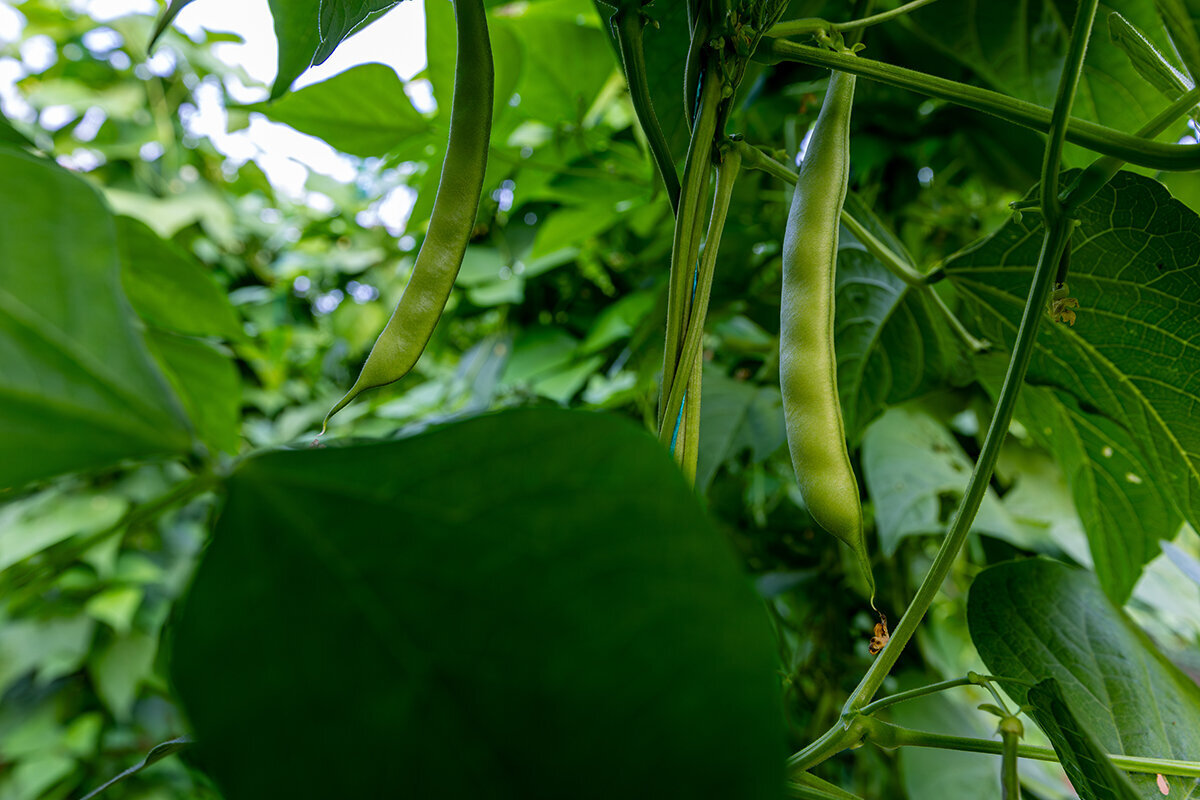
Green beans are straightforward under cover but respond closely to their surroundings: warm soil, open root space, clear training, moving air during flowering, even moisture without waterlogging and timely picking all matter.
Choose a growth habit
Choose bush beans for a quick, low, concentrated crop and flexible follow-on sowings. Choose pole beans for a longer vertical harvest from fewer plants, with a greenhouse wall or bed edge that can hold sturdy support.
01 / Growing principle
A greenhouse extends the season – it should not overheat.
Growing under cover is especially useful when spring soil stays cool, outdoor rain keeps foliage wet or late-summer nights slow a late sowing. Beds warm sooner, young plants have more protection, water reaches roots precisely and harvests can continue into early autumn.
A greenhouse magnifies more than benefits: it increases heat, evaporation, humidity after watering and the effects of crowding. A bean that merely pauses outdoors may shed flowers behind closed glazing in fierce midday sun. The aim is not a sealed tropical room, but a well-ventilated growing space with steady root conditions and a clear escape route for warm, moist air.
In Malta, the main challenge is often managing heat rather than gaining an early start. Sow when soil is reliably warm, then prioritise ventilation, temporary shading and steady watering through bright, dry weather. In cooler spells, cover still helps plants establish and makes shoulder-season crops more dependable.
Roof ventilation, responsive shading and usable working space are growing tools, not decorative extras. Consider the Classic Aluminium Greenhouse when planning climate control and layout for productive vegetable crops.
02 / Choose a growth habit
Decide on plant architecture before choosing a variety.
Low-growing option
Bush beans
- Space Low, wide and accessible.
- Support Usually unnecessary.
- Timing Earlier first crop.
- Harvest Short and concentrated.
- Position Bright, airy bed edge.
Same crop · different training
Vertical option
Pole beans
- Space Narrow below, tall above.
- Support Strong poles or strings.
- Timing Later first crop.
- Harvest Long and continuous.
- Position Rear bed or north side.
Choose bush beans for a compact crop with a relatively early harvest, for processing a larger quantity at once or for several planned sowings. Plants are usually around 40 to 50 cm high, forming a low, broad stand with a strong but limited harvest flush. Two to three staggered sowings extend supply better than one oversized sowing.
Give bush beans air rather than packing them into a solid green carpet. They generally need no support, but their foliage needs room to dry. A broad front bed, raised bed or large containers work well under cover. Both sides can then be checked, watered at soil level and picked without trampling plants or trapping moist air inside the canopy.
Pole beans suit growers with sufficient height who want a long harvest from less ground area. Cropping begins later but can continue for a long time with regular picking. They need secure training, reachable pods and a summer climate where trapped heat does not interrupt flower set.
Install poles, taut sisal strings or another vertical system before sowing. Young shoots can then be guided loosely without later disturbing roots. A climbing height of around 1.8 to 2.2 m is usually enough in a hobby greenhouse. Use a rear bed edge or north side if lower crops will not be shaded; shoots must not block vents, doors or paths.
03 / Sowing points
Start with warm, loose root space.
1Warm the soil.
2Direct sow.
3Check sowing depth.
4Leave spacing.
5Moist, not wet.
Direct sowing is usually easiest because bean roots dislike disturbance. Do not be misled by pleasant midday air; check the bed several centimetres deep in the morning. A practical starting point is a sustained soil temperature of around 16 °C. Cold, wet seedbeds readily cause uneven germination, rot and weak plants.
Place seeds in loose, well-drained soil according to the chosen variety’s directions. Sow slightly shallower in heavy substrate than in light, fast-drying soil. A uniformly warm, open seed zone matters more than a universal centimetre measurement. Leave enough room for light and air. A few clearly trained pole-bean clusters are often more productive than an overcrowded row, and a genuine picking edge should keep every plant within reach.
Prepare beds with mature compost incorporated lightly and evenly. Fresh manure or large amounts of fast-acting nitrogen do not belong around the roots. Beans are legumes and, once established, partner with root-nodule bacteria that contribute to nitrogen supply. That does not make them maintenance-free: excess feeding often produces soft, dark-green foliage instead of balanced flowers and pods. A soil test is more useful than precautionary feeding in permanently used beds.
Water the sowing area evenly and keep it moderately moist until emergence, without saturating the bed. For an earlier start, raise individual seeds in warm, bright conditions in deep small pots of peat-free sowing compost. Plant out while very young, when the root ball is stable but not fully rootbound. Older, leggy seedlings usually lose their apparent head start. In a hobby greenhouse, waiting until the final bed is warm enough is often more reliable than starting too early.
04 / Space management
Keep shoots, vents and picking sides accessible at all times.
Beans should never become a living wall that cuts off the rest of the greenhouse. Training is part of plant health: reachable shoots get picked regularly, visible foliage can be checked early for pests and a clear corridor between door and roof vents helps cooling on hot days. Paths are active growing space, not wasted space.
In a compact greenhouse, place pole beans on the north side or a rear long side where possible. Their vertical foliage then shades lower crops less. If that orientation is impractical, put the tallest crop where it casts the least shade. Preserve both the path of light and your own route through the house.
Top view of the layoutTall crop · low crop · clear path
Pole-bean bed
Vertical support
Ventilation corridor
Bush-bean block
Door and path
Keep the central path consistently clear.
Pole beans belong in the tall zone because they are easier to manage when strings remain visible, both sides of the row are reachable and no neighbouring crop blocks picking. One row along the rear edge of a wide bed is often enough in a small greenhouse. Secure the support before emergence so wet foliage and many pods do not strain the frame, glazing or vent mechanism.
The greenhouse itself should support these routines. A Classic Aluminium Greenhouse gives keen home gardeners a clearly organised rectangular format for beds, a central path, roof vents and a purposeful vertical bed edge. Consider proportions, glazing, access and ventilation together. Explore further versions and configuration options in the Classic Aluminium Greenhouse as a practical basis for individual growing plans.
05 / Water, nutrients, air
Three controls that must work together.
Beans need a steady root-zone rhythm, not a cycle of drought and flooding. Under glass, rain does not correct missed watering, while dense foliage can hide dry soil. Check several centimetres down before watering. A finger test, trowel or simple moisture sensor tells more than the colour of the top compost or mulch layer.
Water
Water deeply into the root zone rather than spraying the surface often. The bed must not dry out while buds, flowers and young pods are forming. Drip irrigation or a directed hose keeps leaves and blooms drier than overhead watering. Even moisture does not mean permanently wet soil: saturation excludes oxygen and weakens roots.
Nutrients
Start with mature compost and consider a soil analysis for repeatedly used greenhouse beds. Beans generally need less added fertiliser than hungry fruiting vegetables. If leaves remain unusually pale despite suitable warmth and moisture, assess nutrient supply, soil structure and pH together. Repeated nitrogen feeding on speculation delays flowering and turns a productive row into dense foliage.
Air movement
Ventilate early, before the greenhouse heats strongly. On mild days an open roof vent may suffice; in bright or humid weather, roof vents and the door should create a continuous air route. Small circulation fans can improve still corners but cannot replace fresh-air exchange. Aim for gentle leaf movement, not a strong draught that dries young plants and their root zone.
Foliage canopy
Guide young pole-bean shoots regularly and loosely onto their support. Do not remove large amounts of healthy foliage as a precaution; leaves feed the crop. Remove damaged leaves, shoots permanently lying on wet soil and isolated obstructive growth only where this genuinely improves access and drying. Correct spacing works better for bush beans than trying to rescue an overcrowded stand by cutting.
06 / Heat protection
Flower set is the system’s most sensitive stage.
Beans enjoy summer warmth, but flowers react sensitively to prolonged temperature peaks. Blooms may fall and pod set can stall. Treat the thermometer as a prompt to act, not a passive display.
Below 16 °CSlow
Around 18–29 °CActive
Around 30–34 °CAct early
From 35 °CSet at risk
01 · Ventilate
Exchange air.
Exchange air.
02 · Shade
Filter peak sun.
Filter peak sun.
03 · Water
Steady the roots.
Steady the roots.
04 · Check
Watch flowers.
Watch flowers.
Do not wait for the thermometer to reach 35 °C. Open roof vents and the door during the morning when a bright day is likely to bring a sharp rise. A heat peak is easier to prevent than remove once glazing, paths and soil have stored heat. Prolonged heat affects pollen and flowers, especially if the root zone is dry and air is still in dense foliage.
In intense sun, use suitable temporary shading on the sunny side rather than darkening the greenhouse permanently. Water early enough for plants to enter the hottest part of the day with evenly moist roots, and avoid leaving foliage wet late in the evening. On warm Maltese nights, keep doors and vents open unless protection from a cooler spell is genuinely needed. The Classic Aluminium Greenhouse offers configurable access and ventilation options for a controllable summer growing climate.
07 / Diagnosis guide
Read a symptom where it appears.
Not every imperfect pod is disease, and not every yellow leaf needs fertiliser. Pause first, inspect the whole plant and check moisture, air movement, temperature and pests in that order. Remove seriously diseased material; do not leave it in the greenhouse or compost it there.
LeafCurling, stickiness, pale speckling
Possible signals: Aphids often gather on young soft growth, leaving sticky honeydew, curled leaves or visible shed skins. Spider mites are more common in hot, dry air. Fine pale speckling, bronzed patches and sometimes delicate webbing beneath leaves are typical.
First response: Check shoot tips and leaf undersides at least twice weekly. Small aphid colonies can be removed carefully with water if foliage dries quickly afterwards. Remove heavily affected leaves and protect beneficial insects. For spider mites, first stabilise watering and improve air movement. Use any plant-protection product only if currently authorised in Malta for the crop, pest and user category, and follow its label.
FlowerDrop or poor pod set
Possible signals: In a greenhouse, heat is the first suspect, especially when flowering coincides with intense sun and closed vents. Dry roots, insufficient light from crowding and heavy nitrogen supply can also create lush shoots with disappointingly few pods.
First response: Record maximum and minimum temperatures for several days, open earlier and shade the sunny side temporarily when needed. Check moisture at root depth too. Do not answer flower drop with nitrogen-rich fertiliser. Once heat, drought and still air have been corrected, new flowers can set.
PodStringy, thick, crooked, sparse
Possible signals: Thick, bulging or fibrous pods are usually a harvesting-timing issue: seeds have already developed. Unevenly filled or distorted beans can also indicate heat or water stress during rapid growth. Feeding marks on nearby foliage call for a separate pest inspection, not automatic extra fertiliser.
First response: Pick more often and younger in the main harvest, ideally every two to three days. Stabilise soil moisture, harvest in the cool morning where possible and inspect unusual foliage closely. If diseases repeatedly affect the bed, include robust varieties, checked seed, hygiene and a new growing position in next season’s plan.
Root and stemWilting, soft patches, weak growth
Possible signals: Weak growth despite wet soil, yellowish plants or sudden wilting often point to a heavy, cold or long-saturated root zone. Dense foliage, fallen plant matter and stagnant humid air also encourage fungal disease. Watch for water-soaked areas, soft tissue, unusual coatings and wilting above a damaged stem.
First response: Check drainage and soil structure rather than watering reflexively. Remove clearly affected plants and clear fallen flowers, leaves and pods fully from the bed. Improve spacing and ventilation, then water at soil level. After serious or recurring problems, avoid growing beans in the same position for several years. Seek an informed diagnosis for unclear symptoms.
08 / Harvest feedback
Pick young Before seeds bulge.
Remove old pods Renew flowering.
Harvest mornings.
Harvest often.
Harvest often.
Check both sides Find hidden pods.
Cool quickly Protect quality.
Harvest green beans while pods are smooth, crisp and not visibly swollen with large seeds. A tender pod snaps cleanly. Removing mature beans signals that seed production is unfinished and supports further flowering. Check both sides of each row and lift foliage gently. Pole beans in particular hide oversized pods effectively behind dense leaves.
Bush beans often deliver their main harvest in one strong flush. Two to three staggered sowings turn that short crop into a longer supply. Pole beans behave differently: with regular picking, they can continue flowering until heat, cooler weather or declining plant health ends the crop. Walk through the greenhouse every two to three days in peak season, more often in rapid growth. Place beans loosely in a shallow basket, move them quickly into shade and store unwashed and cool. Cook green beans before eating.
09 / Clear and reset the bed
Finish the growing cycle cleanly and assign the bed again.
When yield and fresh flower set clearly decline, remove all above-ground plant material. Healthy roots may remain in place or be loosened only shallowly to avoid unnecessary disturbance. Clear visible pods, yellow leaves, fallen flowers and ties carefully. After rust, leaf spots, root disease or another serious problem, remove the whole plant where possible and do not use diseased material in home compost.
Beans are legumes, not free complete fertiliser for the next crop. Some nutrients held in the plants leave with harvested or removed material. Loosen the surface gently, add mature compost only where needed and assess long-used beds occasionally. A break from beans is especially important after disease. Autumn salads, Asian greens, spinach or winter purslane are possible follow-up crops that use protected space differently and are not legumes.
Final checklist
- +Take down supports and clean reusable strings, clips and tools before storage.
- +Remove fallen pods and flowers completely from paths, bed edges and beneath shelves.
- +Check drainage before the next crop and correct compacted or persistently wet areas instead of hiding them under fresh compost.
- +Review the season: which ventilation choice, watering routine or variety made the greatest difference?
- +Plan the next crop by light requirement and height, not only by the space left vacant.
Explore suitable layout, access and configuration options in the Classic Aluminium Greenhouse.
10 / Greenhouse beans: FAQ
Practical answers before your next sowing.
Can green beans be grown all year in a greenhouse?
Usually not in an unheated greenhouse. Beans need warmth, frost-free conditions and adequate light. In Malta, the hottest periods can also interrupt growth and flower set, so the useful season varies with site and weather. A greenhouse can extend the season, but it cannot replace sufficient daylight, ventilation or temperature control; use unsuitable periods for preparation or crops better matched to the conditions.
Are bush or pole beans better for a small greenhouse?
Pole beans suit a reliable vertical support and a grower seeking a long harvest from a narrow root area. Bush beans are better for a quick crop, low beds or staggered sowings. In a very small house, one carefully trained pole-bean row often uses height more elegantly than several crowded bush-bean rows, provided it does not shade everything else.
Do greenhouse beans need hand pollination?
No. Common garden beans are mostly self-pollinating and do not normally need hand pollination. Poor pod set under cover is more often linked to heat, dry roots, limited air movement, crowded low-light conditions or too much nitrogen. Check climate and crop management first.
How often should greenhouse beans be watered?
Do not water to a fixed weekly schedule; respond to root space, weather, plant size and container volume. Check moisture several centimetres down. During flowering and pod formation, soil should remain evenly moist while still containing air. Daily checks may be necessary in sunny high summer, especially for containers, while demand falls in cooler, cloudy periods. Water preferably in the morning and directly onto soil.
Why do my beans have lots of leaves but few pods?
Common causes include excess nitrogen, lack of light in a crowded stand, dry roots and high temperatures during flowering. Check whether the greenhouse overheats at midday, flowers are falling or the bed has received generous nitrogen-rich feed. Ventilate earlier, water more evenly and avoid further nitrogen applications on speculation.
Can I grow green beans in greenhouse containers?
Yes, especially bush beans suit large containers. Use generous volume with reliable drainage and maintain even moisture. Pole beans also need a heavy, stable pot and firmly anchored support that is not carried by the container alone. Pots dry much faster under glass than ground beds, so they need frequent checks and particularly benefit from drip watering at soil level.
Sources and further reading
Technical foundations for this field guide.
More from Bloomcabin: Sliding-door options for aluminium greenhouses · Automatic greenhouse window openers · Greenhouse curtains and shading
- Bavarian State Institute for Viticulture and Horticulture: Small greenhouses
Practical knowledge on small greenhouses, climate management, ventilation, growing areas and seasonal use. - Hortipendium: Pole beans in commercial and greenhouse production
Technical information on growth, crop management, supports, harvesting and protected pole-bean production. - Hortipendium: Plant protection for beans
Overview of symptoms, diseases, pests, prevention and plant-protection measures in bean growing. - Royal Horticultural Society: How to grow French beans
Growing advice on sowing, care, growth habits, watering and harvesting green beans. - Oregon State University Extension: Grow crisp, flavorful beans
Practical information on soil preparation, sowing, crop care and picking tender beans promptly. - University of Georgia Extension: Home Garden Green Beans
Technical guidance on variety types, crop planning, care, problems and harvesting in the home garden.
Main takeaway
Give your bean crop a greenhouse suited to its route.
Whether you plan compact bush-bean blocks or a productive wall of pole beans, match the greenhouse to the key functions: early ventilation, clear working paths, ample light and reliably usable height. The result is not simply more weather protection, but a calm, precisely managed and productive growing system for the long term.
Classic Aluminium Greenhouse