
Growing potatoes in a greenhouse
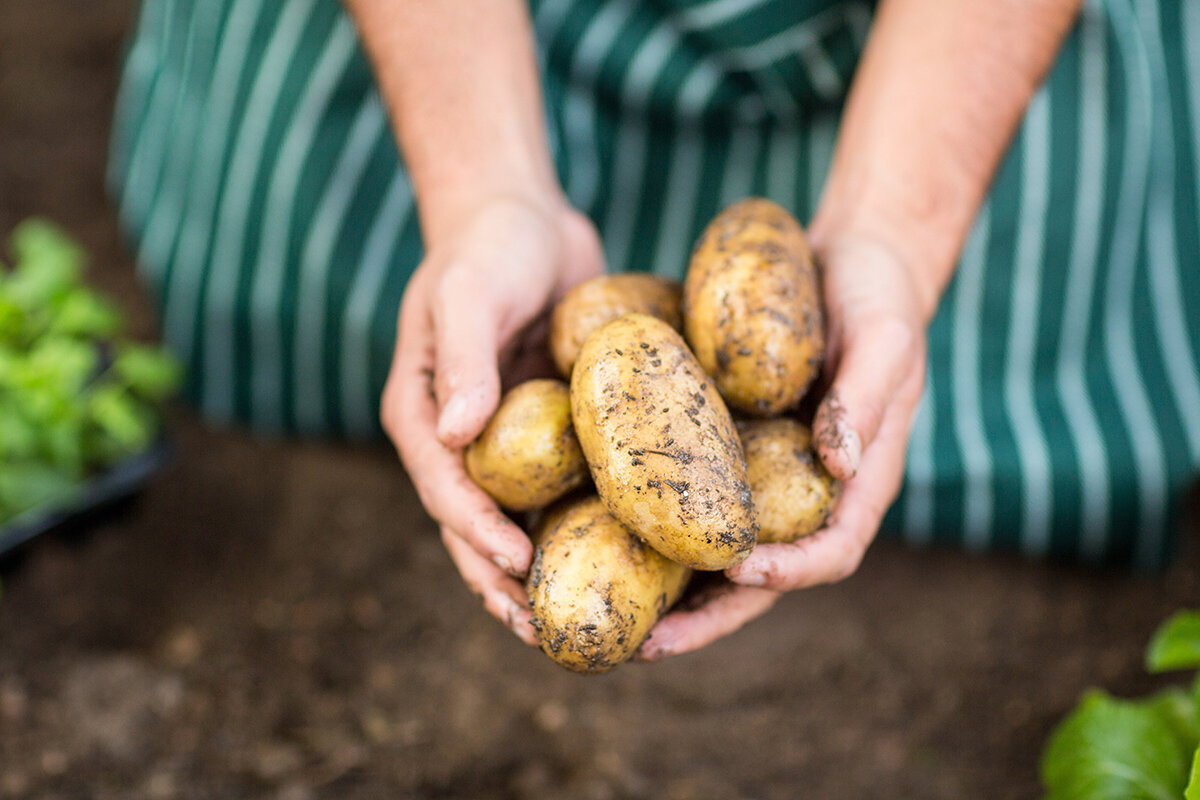
The hidden yield balance · Greenhouse growing No. 09
Growing potatoes in a greenhouse
With potatoes, the visible foliage alone does not determine the harvest. The real yield develops in cool, light-proof soil, where covered stems form stolons and new tubers grow at their ends.
A greenhouse gives you close control over this underground crop. Growing medium, watering rhythm, air movement, hygiene and the soil held back for earthing up are all in your hands. It does not turn potatoes into a tropical all-year crop. Instead, it supports a considered early season: chitted tubers, earlier-warmed soil, protected shoots and a harvest before tomatoes or cucumbers take over.
Folio 09 · Malta · From seed potato to storagePlate A · Where the harvest forms
Chapter I · Reading the underground plant
A potato is a store on a side shoot, not a root vegetable.
Potatoes are normally grown from seed tubers rather than true seed. Shoots emerge from their eyes and become stems. Fine side shoots, called stolons, form on the underground sections of those stems. New tubers are stored at their ends. This explains the essential tasks: plant in loose soil, protect the stem base, add soil as plants grow and keep every tuber reliably away from light.
Earthing up is therefore not decorative soil work. It keeps the tuber-forming area dark, protects shallow potatoes and, in suitable loose soil, improves the growing zone around the stems. Germany’s Federal Centre for Nutrition likewise explains that tubers form on underground side shoots and that the ridge protects them from light. Do not fill grow bags and tall pots to the brim on day one; keep clean, loose medium back for topping up later.
Balance check — myth and reality.
Myth: the higher the ridge, the bigger the harvest automatically becomes. In reality, sufficient soil volume must work together with healthy foliage, even moisture and oxygen around the roots. A deep, waterlogged container is not a productive store; it is a rot risk.
Myth: the higher the ridge, the bigger the harvest automatically becomes. In reality, sufficient soil volume must work together with healthy foliage, even moisture and oxygen around the roots. A deep, waterlogged container is not a productive store; it is a rot risk.
A greenhouse changes the weather around the foliage, not the potato’s basic needs. Its advantage is precision: the roof keeps rain off the crop, containers can be filled with clean growing medium and vents remove humid air after watering. Temperatures can rise quickly under cover, however. Avoid sudden swings between hot, dry medium at midday, soaked soil in the evening and still, humid air overnight.
Chapter II · The starting record
Begin with planting material you can trust.
Healthy starting material is the first disease-control measure, not an unnecessary luxury. Supermarket potatoes may have been treated to suppress sprouting and can carry problems that are invisible at planting. Whenever possible, use certified seed potatoes from a specialist supplier. This matters especially in a small, intensively used greenhouse, where losses are difficult to make up.
01
Choose the purpose
Early · waxy · suitable for storage
For a short greenhouse window, early varieties are usually the best choice. They benefit from the protected start and clear the bed before summer heat and main crops claim the space. Choose for your kitchen too: waxy types are excellent as new or boiled potatoes, all-round types are versatile, while floury potatoes suit mash. Cooking texture describes use, however, and does not guarantee a high yield.
02
Select seed tubers
Plant small whole · cut large only if needed
Seed potatoes about the size of a hen’s egg can be planted whole in a home garden. They have several eyes and a dependable nutrient reserve. Very large tubers do not have to be cut. If you do cut them, use only firm, healthy stock and a clean knife. Each piece needs several intact eyes. Open cut surfaces increase the risk of rot and require especially careful handling.
03
Let cut surfaces heal
Store briefly, dry and protected
Lay cut pieces in one layer in a dry, airy place out of direct sun until the cut surfaces have dried. Never plant freshly cut tubers in cold, waterlogged growing medium. In those conditions, their stored reserve may rot before roots form instead of powering strong shoots.
04
Keep a crop record
Variety · source · planting day
Record the variety, supplier, planting date, emergence, first earthing-up and any unusual symptoms. This small log becomes valuable in the second year, when you can see which variety was genuinely early, stayed healthy, gave the texture you wanted and stored well. Also note which bag dried quickly or which position became too warm.
Chapter III · Before planting
Chit for short, sturdy shoots instead of pale threads.
Chitting allows seed potatoes to form compact shoots before planting. It is not essential, but can shorten the route to an early harvest and lets you inspect every tuber. Place them eyes-up in shallow boxes or egg cartons. The Bavarian Garden Academy recommends a bright but not fully sunny position at about 15 to 20 °C. Aim for firm, pale-green shoots, not long, fragile growth from dark storage.
01 · Sort
Firm and healthy
02 · Position
Eyes facing up
03 · Wait
Short, sturdy shoots
04 · Plant
Ready for loose soil
- Sort Discard soft, mouldy, badly shrivelled or clearly damaged tubers before they enter the growing area.
- Position Arrange tubers in one layer with space between them. Bright, indirect light encourages short, resilient rather than long, glassy shoots.
- Wait Firm shoots one to two centimetres long are sufficient. Handle each shoot gently so it does not break during transport.
- Plant For cut seed potatoes, check that the surfaces are dry and healed before planting. Soil should be fresh, never waterlogged.
Chapter IV · The protective ridge
Start deep. Add soil gradually afterwards.
Plant chitted potatoes in a greenhouse bed roughly 10 to 15 cm deep and usually 30 to 40 cm apart, with shoots facing up. In a large, light-proof container, begin with a well-drained base layer rather than filling the whole volume immediately. This preserves the important reserve: enough room for later earthing up.
Stage 1 · Planting
Cover the seed tuber lightly
Stage 2 · First ridge
Foliage reaches 20 to 30 cm
Stage 3 · Final ridge
Keep every tuber dark
- Planting Use loose, humus-rich soil with dependable drainage. Do not tread down bed soil; in containers, use stable growing medium rather than heavy, sodden garden soil.
- First ridge Draw loose soil gently towards the stems and cover their lower section. Leave a healthy tuft of foliage free. Work without hard pressing, root damage or snapped shoots.
- Final ridge Top up again as plants grow. The finished ridge must keep all developing tubers dark without compacting the root zone.
Plant spacing also influences the distribution of tuber sizes. Plants set too close together compete for light, water and nutrients. For a home greenhouse, 30 to 40 cm between plants is a sensible starting point. Leave a walkable path beside the row so you can check foliage, water at soil level and add soil without compacting the crop area.
Chapter V · Space account
Choose a system with sufficient reserve.
Visible floor area is not the only consideration. Include usable soil volume and the free space that can later become a protective ridge.
In a spacious greenhouse, a ground bed provides even root room and makes earthing up easier. In smaller houses, a few large containers make the lower level productive without committing the whole area permanently. They can be cleared after the early potato harvest. Whatever the system, free drainage, light protection for tubers and an accessible watering route at soil level are essential.
When planning a purposeful growing area, consider the usable floor space and ventilation options of the Classic aluminium greenhouse. Roof vents, doors and a clearly organised interior support the controlled climate potatoes need during Malta’s changeable cooler season.
| Growing system | Space per plant | Soil reserve | Check point |
|---|---|---|---|
| Ground bed | 30 to 40 cm spacing | Loose planting zone | Access and rotation |
| Grow bag | From about 40 l, one plant | Leave room at top | Dry outer edges |
| Large container | About 35 to 45 l, one plant | Top up in stages | Drainage and density |
- Greenhouse bed row. It offers the most even root space for several plants. Soil reserved at the side can be drawn easily towards the stems. Keep a working path free and plan crop rotation: potatoes should not immediately follow tomatoes, peppers, aubergines or potatoes again in the same soil.
- Grow bag. A sturdy, permeable bag is movable and also suits paved greenhouse floors. Allow at least about 40 l for one seed potato. Larger bags can take two plants if spacing and water supply are right. On sunny days, check the outer areas that dry out quickly.
- Large light-proof container. Use drainage holes and normally one plant per container. Containers organise small spaces neatly and can be refilled with clean medium. Several seed potatoes in a small pot, by contrast, mainly create competing foliage, uneven moisture and many small rather than fewer well-developed tubers.
For one plant, about 35 to 45 l of growing medium is a practical guide; a grow bag should hold at least about 40 l. Opaque walls are not merely decorative: tubers turn green when light reaches them. Drainage holes must remain clear, and saucers must not stand full of water.
Chapter VI · Keeping the balance even
Water the soil, exchange air and avoid excess.
Moisture
Potatoes react poorly to sharp swings between dry and wet. Keep the medium evenly fresh during tuber set and growth, without leaving it permanently saturated. Check with a finger about 5 to 8 cm deep each morning. When the root zone begins to dry, water slowly and thoroughly; with very dry medium, do so in two passes. Let excess water drain away completely.
Nutrients
Work mature compost or a moderately dosed organic vegetable fertiliser into the soil before planting. Potatoes need nutrients, but too much readily available nitrogen promotes lush foliage at the expense of timely tuber formation. Extra feeding only makes sense when plants clearly remain weak and the crop is still early enough. In permanently used beds, a soil test helps avoid overfeeding.
Ventilation and heat
Open doors and roof vents early on bright days, before heat builds up inside. In hot spells, additional shading is helpful; containers should not stand directly against heated glazing or walls. Potatoes are not a crop for a closed, steamy summer greenhouse. A fresh root zone and moving air are more valuable than maximum warmth. Automatic vent openers can support daily regulation.
Dry foliage
Use a watering can, drip hose or slowly directed line to water directly into the growing zone. Avoid overhead watering late in the day, so foliage does not enter the night wet. Air movement helps dry condensation and prevents humid, stagnant heat. Remove yellowing or suspect leaves with clean tools, and keep paths and containers free from plant debris.
A high-quality greenhouse is especially useful when its details support this calm care routine. Explore the Classic aluminium greenhouse and factor ventilation, shading, standing space and accessible paths into your plan. Our range of aluminium greenhouses offers a starting point for container crops, ground beds and a deliberately structured seasonal plan.
Chapter VII · Risk register
Respond early before hidden yield disappears unnoticed.
A greenhouse protects the crop, but poor ventilation and incorrect watering can hold moisture around the foliage. Inspect plants at least twice a week: leaf tops and undersides, stem bases and the growing-medium surface. When symptoms appear, check the cause before acting. Is the root zone too wet or dry? Has the house overheated? Is there a nutrient shortage, pest damage or perhaps disease?
Case file 01 · Late blight
Water-soaked leaf patches turning brown quickly
Late blight can affect potatoes and tomatoes and spreads quickly when foliage stays wet. Start with certified seed potatoes, avoid watering over leaves and ventilate consistently. Remove suspect leaves immediately with clean tools. Do not compost heavily infected material. With clear symptoms, an early harvest can be wiser than hoping for potatoes suitable for storage.
Case file 02 · Rot in seed tubers and stems
Weak emergence, dark base, collapse
Cold, waterlogged soil and compromised planting stock are typical causes of early failure. Use healthy seed potatoes, allow cut surfaces to heal and do not plant into cold, slimy soil. Questionable growing medium should not be reused. Remove collapsing plants promptly from the vicinity of healthy ones.
Case file 03 · Potato scab
Corky patches on otherwise firm tubers
Scab is mainly a soil-related problem. Healthy planting stock, clean container medium, suitable varieties and thoughtful crop rotation work better than late rescue attempts. In permanent greenhouse beds, potatoes and other nightshades should not repeatedly occupy the same growing zone. Keep moisture even without saturating the soil.
Case file 04 · Pests and viruses
Chewing damage, aphid colonies or curled leaves
Check leaf undersides for aphids and look for mosaic-like pale areas or weak, uneven shoots. Small aphid colonies can be rubbed off early or rinsed away with a targeted stream of water, while avoiding soaking the whole crop. Isolate or remove abnormal plants. At the end of the crop, clear away all plant remains so neither pests nor possible pathogens remain in the house.
Case file 05 · Heat and uneven watering
Wilting leaves, uneven or misshapen tubers
These signs often record stress rather than a single pest. Tuber set and growth are sensitive to heat and large moisture swings. Ventilate and shade in good time. Do not let containers become dust-dry and then flood them suddenly. A consistent morning check works better than frantic corrections.
Case file 06 · Green tubers
Green skin or exposed tuber shoulder
Light exposure causes greening and indicates increased solanine formation. Cover visible tubers immediately with loose soil, and check after heavy watering whether the medium has settled. Keep harvested potatoes protected from light too. Small green patches can be cut away generously; heavily green, bitter or strongly sprouted potatoes should not be eaten.
Chapter VIII · Closing the account
Harvest in stages and give skins time to set.
New potatoes and storing potatoes are two different endings to the same crop. Young potatoes are harvested with tender skins and eaten soon afterwards. For storage, tubers remain in the soil longer until foliage dies back and their skins are firm. This ripening stage belongs to the harvest. Shorten it and you will have delicate tubers that damage more easily and store far less well.
1 · Early harvest phase
First young potatoes
2 · Foliage dies back
Let ripeness show
3 · Skin firms
Harvest dry and gently
4 · Storage
Keep cool, dark and airy
- First young potatoes With early varieties, you can carefully reach into the side of the ridge and take individual tubers once they reach the desired size. Close the opening afterwards so the remaining potatoes stay dark. This thin-skinned harvest should not be stored, but eaten within a few days.
- Dying foliage For potatoes intended for storage, wait until the foliage yellows and dies back. Reduce watering towards the end of the crop. Depending on variety and soil, it may then take two to five weeks for skins to become firm enough. A thumb test shows whether the skin still rubs off easily.
- Harvesting In dry weather, lift potatoes carefully with a garden fork or empty containers onto a sheet. Brush soil off gently; do not wash. Sort out cut, bruised or soft tubers and, if otherwise sound, use these first in the kitchen.
- Storage place Store only healthy, undamaged, unwashed tubers in breathable crates. The place must be dark, frost-free and cool; around 5 °C is a useful home-garden guide. Check the crop regularly and remove soft or rotting potatoes. Keep apples away because their ethylene can encourage sprouting.
Chapter IX · Malta’s seasonal window
Use the protected edges of the season deliberately.
In Malta, an unheated greenhouse can be especially useful for chitted potatoes through the cooler months, provided the soil is crumbly rather than cold and wet. The best planting week depends on the site, local weather, greenhouse and soil temperature. Sheltered coastal gardens can warm earlier, while exposed sites may need more caution. Watch for unusual cold nights and protect tender shoots with horticultural fleece where required.
Do not treat the greenhouse as an invitation to force potatoes through every season. A crop from the cooler part of the year into spring is often the most elegant approach. Afterwards, the space can be released for warmth-loving plants such as cucumbers or basil. Summer growing is difficult because protected spaces can overheat quickly; without cooling and careful shading, dependable growth is unlikely.
Crop-rotation note
Plan not only around potatoes, but around their plant family. Tomatoes, peppers and aubergines are also nightshades and share several disease risks. Avoid planting potatoes directly after these crops in the same soil where possible. In large greenhouses you can rotate zones; in smaller houses, containers simplify rotation because both medium and position can be changed more deliberately.
For a carefully planned seasonal start, take a look at the Classic aluminium greenhouse. If you want to organise beds, containers, working paths and the following summer crop around a larger footprint, our selection of aluminium greenhouses shows different sizes and designs for practical, long-term growing plans.
Seasonal principle: Potatoes in a greenhouse thrive through consistency, not intensity. The best harvest rarely comes from the hottest house, the strongest fertiliser or the tallest later ridge. It comes from regular observation and calm, timely adjustments.
Potato clinic
Questions from the greenhouse.
Can I grow potatoes in a greenhouse all year round?
Usually not in a normal, unheated hobby greenhouse. Potatoes are primarily a cool-season crop. In Malta, use the greenhouse during the cooler months to shelter shoots from cold wind and manage rainfall. High summer is often too hot, while low winter light or prolonged damp weather can slow growth. Reliable year-round cropping would require close control of temperature, ventilation and light.
How many potato plants fit in a 40-l container?
One plant is the most dependable starting point. A light-proof container with about 35 to 45 l of growing medium, unobstructed drainage holes and enough height gives one seed potato root room and space for topping up. Two tubers can grow in a clearly larger bag if spacing and moisture control are right. Overcrowding makes watering difficult and often produces many small tubers.
Can I use supermarket potatoes as planting stock?
It is generally better not to. Eating potatoes may be treated to suppress sprouting and have an unknown plant-health history. Introduced diseases can be particularly troublesome in a small greenhouse crop. Certified seed potatoes from a specialist supplier provide the more reliable and hygienic start.
How often should I water greenhouse potatoes?
Water according to the condition of the root zone, not a rigid calendar. Check about 5 to 8 cm deep each morning. When the medium begins to dry, water slowly and thoroughly. Even moisture matters especially during tuber set and growth. Pots and bags may need more frequent checks on sunny days. The aim is fresh, freely draining soil — never a permanently wet pot.
Why are my greenhouse potatoes turning green?
The tubers have been exposed to light. Cover them immediately with loose soil and check whether the growing medium settles after watering. Keep harvested potatoes in the dark too. Heavily green, bitter or strongly sprouted potatoes do not belong on the plate.
Sources and further reading
Specialist information behind this guide.
More from Bloomcabin: Setting up a greenhouse: layout, plants and care · Water-saving greenhouse gardening · Summer greenhouse care
- Bavarian Garden Academy — Chitting potatoes for an earlier harvest
- Federal Centre for Nutrition — Why potatoes are earthed up
- Bavarian Garden Academy — Pre-sprouting potatoes and sweet potatoes
- Berlin Plant Protection Service — Late blight in potatoes
- Bavarian Garden Academy — Potatoes for garden and balcony
- North Rhine-Westphalia Chamber of Agriculture — Harvesting and storing potatoes
- Organic Farming NRW — Growing guide for organic potatoes
Open up the lower level
Plan yield beneath the visible canopy of leaves.
A good greenhouse offers serious home gardeners more than a protected place for plants. It creates an orderly growing space for overlooked harvests: loose ground beds, generous containers, accessible watering routes, controlled ventilation and a ridge beneath which the next meal grows quietly out of sight.
Classic aluminium greenhouseClassic aluminium greenhouse