
Growing zucchini in a greenhouse
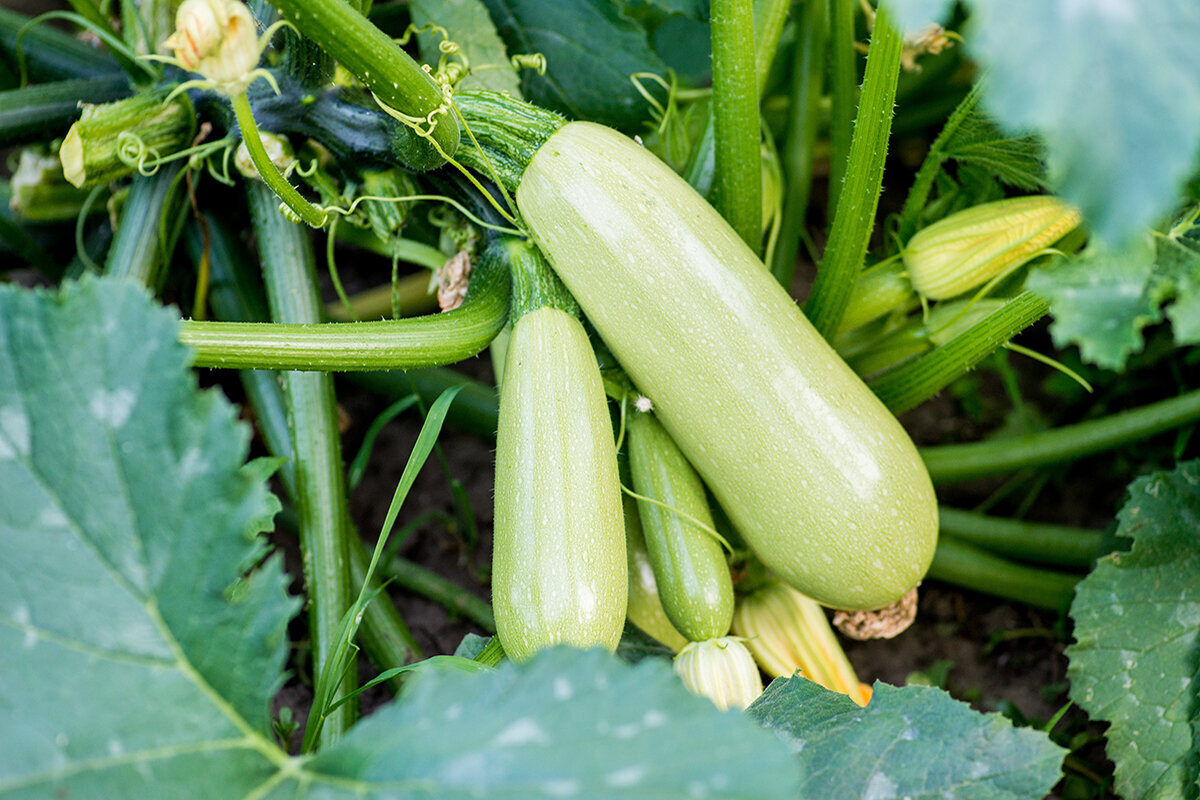
Greenhouse notes · Cucurbita pepo
Growing zucchini in a greenhouse
Early in the morning, flowers are open and foliage is still cool – and one well-planned plant can crop abundantly all season.
Under glass, zucchini reward growers with early growth and generous harvests. Shelter alone is not enough: the plant needs ample room, moving air, even root-zone moisture and a reliable route for pollen to the briefly open female flowers.
One plant can be enoughOpen vents earlyHarvest young and tender
Why grow under glass?
Zucchini is not a small-scale greenhouse crop. It quickly develops a broad canopy with time-sensitive flowers at its centre.
A greenhouse makes the earlier and later edges of the growing season more comfortable for this warmth-loving plant. It shields large leaves from prolonged rain and allows controlled watering. Under glass, however, casual visits from pollinators can be missing, even though they are routine in an open vegetable bed. Success is not about creating tropical heat. Access matters more: air must move through the foliage, the crown must remain reachable for checks, and a bumblebee or soft brush must reach an open flower in the morning.
For most home greenhouses, a compact, bushy or open-growing variety is the wisest choice. Give one plant its own bed or a large, stable container rather than squeezing it between tomatoes, cucumbers and shelves. Leaves stay drier, young fruits are easier to see and the plant centre remains accessible. Harvesting every day or two is also possible without damaged leaf stems or searching beneath a densely tangled canopy.
Treat greenhouse zucchini as a short morning appointment, not a crop that looks after itself. Flowers, vents, soil moisture and harvest-ready fruits deserve a careful daily check.
Space requirements & variety choice
Plan for foliage first – then for fruit.
A zucchini needs an open growing space, not a forgotten corner.
Choose a compact, bushy or openly structured zucchini variety for the greenhouse. Seed-catalogue descriptions vary, so look beyond the term “bush zucchini”. Notes on short internodes, suitability for containers or tunnels, and good powdery-mildew tolerance are particularly useful. A fruit shape you will enjoy harvesting and using regularly matters just as much. An open plant habit makes hand pollination, thinning and harvesting far easier. It does not replace sufficient spacing or consistent ventilation. Always follow the pollination notes for the specific variety.
As a practical starting point, allow a compact plant roughly 0.9 to 1.2 m of width; vigorous varieties need more. This is not a fixed planting rule but usable working space. You should be able to reach the crown, harvest from several sides, collect fallen leaves and open doors and roof vents without continually brushing wet foliage. In a narrow greenhouse, zucchini is therefore best placed along an outer bed edge, leaving the central path and ventilation corridor clear. One zucchini can occupy as much growing space as several smaller vegetables.
Clear space per plantTop view
Foliage reachCrownHarvest pathVentilation corridor
Dashed circle Mature foliage needs free, moving air all around it.
Visible crown Keep the centre reachable for harvesting and disease checks.
Clear corridor Leave a free route for watering, harvesting and pollination.
Door and roof vent Protect the route through which warm air can escape.
Raising plants without haste
Sow late enough that growth never has to stall.
Zucchini dislike cold soil and a long stay in a pot that is too small. Direct sowing into a prepared greenhouse bed is straightforward once the soil has warmed reliably. For a small head start, sow one seed per sufficiently large pot around three to four weeks before planned planting out. Move the young plant while it is compact and its rootball still holds together. Sowing too early is more likely to produce overgrown, stressed plants than a better crop.
01
Sow calmly
Place the seed around 1.5 to 2 cm deep in loose, well-drained seed compost. At 18 to 21 °C it usually germinates quickly. Keep the medium evenly moist, never permanently wet. A warm root zone matters more than an especially early calendar date. One seed per pot avoids separating sensitive roots later.
02
Pot on only when needed
If cool weather delays planting, carefully move the zucchini once into a larger container instead of allowing roots to circle tightly. Leave the growing point untouched. Provide plenty of light, gentle air movement and enough spacing. After emergence, the plant may stand a little cooler provided it remains frost-free. Two to three strong true leaves are enough to prepare for planting.
03
Set the rootball at soil level
Prepare a generous planting position with mature compost and soil that is humus-rich yet structurally stable. Set the rootball at the same level as in its pot. Water it in thoroughly, then mulch the warmed soil without sealing the stem base airtight. Avoid burying the crown or heavily compacting soil immediately beside it.
An unheated greenhouse can bring planting forward, but it does not turn Malta’s cooler months into summer. Plant when the soil has warmed, and acclimatise young plants briefly to direct sun and moving air. Timing varies with exposure and greenhouse location; in bright, sheltered sites, monitor heat build-up and dry root zones rather than relying on a fixed calendar date.
Flower biology
Two flowers. One brief golden exchange.
Zucchini carry separate male and female flowers on the same plant. At the beginning of the crop, several male flowers often appear first; this is normal, not a sign of deficiency. The key difference is visible: behind a female flower sits a small zucchini-like ovary. The male flower, by contrast, stands on a long slender stem and carries pollen-bearing anthers in its centre. Both flower types usually open in the morning and remain usable only for a limited time.
Male flower
Slender stem · anthers
Anthers
Stigma
Female flower
Ovary · stigma
Male: slender stem, central anthers
The male flower produces pollen. Especially at the beginning, it can be much more common than the female flower. This shows that the plant is entering its flowering phase, but does not yet mean fruit has set. If harvesting flowers for cooking, leave enough newly opening male flowers for insects or hand pollination.
Recognise it by: no mini zucchini behind the flower and a pollen-covered centre.
Female: swollen ovary, receptive stigma
The small zucchini at the flower base is not yet a guaranteed harvest. If the stigma receives too little pollen, the young fruit may yellow, shrivel, grow only at the stem end or become misshapen. It often drops within a few days. Full pollination supports even development.
Recognise it by: the immature fruit directly behind the petals and the divided stigma at the centre.
The morning flower round
Open.
Transfer.
Observe.
Zucchini flowers open only for a short window in the morning. Crop guidance for cucurbits confirms that male flowers may appear before female ones and that pollen must reach the female stigma. In a greenhouse ventilated early, bumblebees and other pollinators may do this themselves. If doors and windows remain closed, or weather is cool and rainy, pollinate by hand until regular insect visits are clearly evident.
A soft artist’s brush works well. Alternatively, take a freshly open male flower and carefully expose its pollen-bearing centre. Brush the pollen gently over the stigma of an equally fresh female flower. One male flower can serve several female flowers. Work early while flowers are open and dry, and avoid pulling the delicate flower crown apart unnecessarily.
01Open
02Find pollen
03Transfer
04Watch the fruit
Open flower Walk through the greenhouse in the morning. A fresh female flower has a small fruit directly behind its petals.
Check pollen Find a fully open male flower with visible, dry yellow pollen on its central anthers.
Transfer Use a soft brush, or the male flower itself, to place pollen onto the female stigma with a light, deliberate movement.
Read the fruit Over the following days, a well-pollinated fruit enlarges evenly. Yellow, dropping, narrow or markedly distorted fruits often indicate incomplete pollination.
A note on summer heat
Persistent heat stresses flowers, can cause buds to abort and may impair reliable fruit set. Do not wait until air has built up beneath the glass at midday. Open doors and roof vents wide in the morning, keep the ventilation route clear and use moderate temporary shading in intense sun. The aim is not a dark crop, but a bright greenhouse with moving, less overheated air. A dense canopy must not trap heat at flower height.
Water, nutrients & ventilation
Keep the root zone steady and the greenhouse open.
Zucchini have a large leaf area and need plenty of water during rapid growth. Water thoroughly at the soil, rather than regularly over the foliage. How often water is needed depends on weather, soil structure, container size, mulch and fruit load. Check moisture with a finger beneath the mulch or a simple sensor. Automatic irrigation is only properly set once you have observed how quickly the particular bed dries on warm days.
A mulch layer reduces water loss once soil is warm and keeps moisture more even. Mature compost and humus-rich soil provide a good nutrient base. Once the plant is cropping continuously, an organic liquid feed at a moderate dose can be useful. Follow the directions for the product or growing medium used. Too much nitrogen creates impressive, soft foliage but can push flowers and fruits into the background. In containers, regular light feeds are more dependable than rare heavy doses.
Ventilation is the necessary companion to watering. Open roof vents and doors before heat builds. Remove old, badly damaged or soil-bound wet leaves with clean tools, without stripping a healthy plant bare. Do not crowd neighbouring crops into the zucchini’s air and working space. During intense summer sunshine, moderate shading can soften the harsh midday sun; it complements ventilation but never replaces air exchange.
From water to fruit
Moist soil
Roots
Leaves
Fruit
Calcium
Evenly moist and well drained.
Uptake without dry-wet swings.
An airy canopy supports transport.
Steady growth supports tender flesh.
Stress can interrupt calcium transport.
If a dark, sunken patch develops at the blossom end, first check watering consistency, drainage and root health. Blossom-end rot is associated with disrupted calcium supply in fast-growing fruit tissue; the immediate problem is often uneven water movement. Adding lime or fertiliser speculatively will not fix interrupted water supply and can further upset nutrient balance.
See how bed space, access and ventilation can be planned as one growing area with the Classic aluminium greenhouse.
Fruit development & diagnosis
Read the fruit before judging the plant.
Many zucchini problems announce themselves early and visibly. The daily harvest round is a chance to check new flowers, leaf undersides, the stem base and young fruit. Watch a pattern for several days rather than dramatizing every yellow leaf. The solution is often manageable: create more air, steady the water supply, pollinate in the morning, harvest promptly or cleanly remove badly damaged tissue with disinfected scissors.
Fruit set
Weak set
Fruit quality
Blossom end
Foliage
Powdery mildew
Pest check
Feeding damage
Climate
Heat stress
Small fruits yellow and drop
Usually the female flower was not pollinated sufficiently. Check whether male and female flowers are open at the same time, then hand-pollinate deliberately on the following dry mornings. Open doors and windows early so insects can enter. The first fruits of a young plant may also occasionally fail without the entire crop being permanently affected.
Dark patch at the blossom end
Blossom-end rot is a physiological disorder associated with interrupted water and calcium transport. Stabilise soil moisture and avoid waterlogging, root damage and nitrogen-heavy overfeeding. Remove badly affected fruits. Do not automatically add lime or extra nutrients before checking irrigation, root space and growing medium.
White powdery patches
Powdery mildew is common on cucurbits. Remove old leaves with heavy white coating, improve spacing and air movement, and keep foliage dry when watering. Do not leave infected plant debris in the greenhouse. When choosing future varieties, good mildew tolerance can help, but it does not replace necessary ventilation.
Feeding damage or sudden wilting
Check leaf undersides, leaf stems and the plant crown carefully for pests or injury. Slime trails and irregular holes may indicate slugs, for example; limp foliage can also result from heat, a dry rootball or stem damage. Check drooping leaves again in the evening: if they recover, temporary midday heat was often the cause. Choose control measures only after a clear diagnosis.
- Never treat open flowers indiscriminately while pollinators are active.
- Clean tools thoroughly after diseased plant tissue.
Flowers drop during a heat spell
Open the door and roof vents in the morning before heat accumulates. Shade moderately in intense sun and keep watering even. Young fruits and leaves can develop sun and heat damage behind glass. Aim for a cooler, moving atmosphere – not a closed, humid refuge. Shading must therefore always complement active ventilation.
Harvest in rhythm
Regular harvesting keeps the plant producing.
Harvest zucchini while their skin is glossy and tender and seeds are still small. For many long varieties, a particularly good harvest size is around 15 to 20 cm. Form and variety traits matter more than a ruler alone; round varieties are picked earlier according to their typical size. Check plants daily in high summer, or at least every two days. Under glass, an overlooked fruit can move surprisingly quickly from ideal to oversized in warm weather.
Cut fruit with a clean knife or scissors and leave a short stem attached. Hard twisting or pulling can damage the plant. Frequent picking directs the plant into new flowers and fruits. If a zucchini does become very large, remove it too. It is usually still usable, but develops firmer skin and larger seeds; on the plant it uses unnecessary energy and can slow the next flush.
Store freshly picked zucchini cool only briefly and use them as soon as possible. Fruit is at its best when harvested young: its skin is fine, flesh dense and seeds barely noticeable. Longer chilled storage offers no quality advantage over using it directly.
Mini5–10 cm
Young10–15 cm
Ideal15–20 cm
Oversizedover 20 cm
Very tender; ideal for brief cooking or fine raw strips.
Fine skin and small seeds; a versatile everyday size.
Balanced texture and yield; pick often at this stage.
Firmer skin and larger seeds; suitable for grating or stuffing, and best removed promptly.
The two-minute harvest round
Open the greenhouse, check temperature and vents, then feel beneath the mulch for soil moisture. Lift leaves gently from the outside inward, cut harvest-ready fruits and inspect each freshly open female flower. This short round spots a hidden zucchini, missing pollen, a dry root zone, rotting flower remains or the first mildew patches before they become a larger crop problem. It also keeps the central path in daily use – exactly why it was left clear.
Finish the season cleanly
End the crop clearly and reorganise the space.
When yield drops markedly, disease pressure rises or cooler weather ends the crop, remove the whole plant and all fallen debris. Leave neither mildew-covered leaves nor soft fruits beneath bed edges or worktables. Clean paths, containers, cutting tools and accessible irrigation parts before the next planting. Ventilate the greenhouse thoroughly on dry days afterwards. A clean finish is more useful than forcing every last flower in weakening conditions.
If zucchini grows in the same greenhouse soil every year, rotate plant families as far as available space allows. In containers, spent growing medium can be replaced or properly refreshed. A greenhouse does not cancel the principles of crop rotation, hygiene and needs-based soil care; it simply offers a more controlled place to apply them consistently. Also note where the canopy narrowed paths or vents. That observation is often more valuable next season than adding another plant.
End the season consciously
- Remove fruits, plants and leaf debris completely and promptly.✓
- Clean harvest tools and check drip lines or outlets.✓
- Clean glazing and reclaim valuable winter light.✓
- Check where foliage narrowed the path or ventilation.✓
- Plan the next plant’s footprint before buying seed.✓
For a structure where generous paths, roof ventilation and bed layout can be planned as one growing area, discover the Classic aluminium greenhouse from Bloomcabin.
Frequently asked questions
Zucchini under glass, clearly answered.
Can zucchini grow in an unheated greenhouse?
Yes, provided soil and air are warm enough for active growth. Zucchini is a warmth-loving summer crop, so do not plant a young plant into cold soil simply because it has a glass roof overhead. An unheated greenhouse is especially useful for protection from wind and heavy rain, a longer growing season and more controllable watering. Once rooted, excessive heat in a closed greenhouse is often the greater risk on sunny Maltese days.
How many zucchini plants fit in a greenhouse?
For many home greenhouses, one plant is the most productive decision. Depending on variety, allow roughly 0.9 to 1.2 m of usable width and keep the crown and route to the door and roof vents clear. A second plant is only worthwhile if both canopies have separate air corridors and working paths remain comfortable. Two crowded plants are usually less useful than one specimen accessible from every important side.
Must greenhouse zucchini be hand-pollinated?
Not necessarily. If doors and windows are opened early and bumblebees or other pollinators reach flowers regularly, pollination can succeed without intervention. Hand pollination is, however, a simple reliable routine where the greenhouse remains very closed, mornings are cool and rainy, or female fruits repeatedly yellow and drop. Check in the morning that both flower types are open, then transfer pollen with a soft brush or a fresh male flower.
Why does my zucchini have many leaves but few fruits?
Check pollination, heat and nitrogen supply first. A very dense, soft canopy can be encouraged by too much nitrogen, while trapped heat stresses flowers and fruit set. Check whether male and female flowers are open together, hand-pollinate in the morning and improve ventilation. Do not automatically add more fertiliser. Several male flowers without female partners are also normal at the beginning; the young plant often simply needs time and even growing conditions.
Should zucchini leaves be pruned in a greenhouse?
Do not prune a healthy plant drastically. Remove only leaves that are old, badly damaged, clearly diseased or permanently lying on damp soil. Individual leaves completely blocking access to fruit or the crown can also be taken out cleanly. Use sharp, disinfected scissors and cut thoughtfully. The plant needs enough healthy leaf area to support its ongoing crop. Free growing space is better than trying to keep an overcrowded zucchini small through constant cutting.
Sources & further reading
Good growing decisions begin with reliable sources.
The following German and international specialist sources inform guidance on sowing, planting, greenhouse climate, flower biology, fruit set and typical disorders. Local conditions vary across Malta with exposure, wind, season and greenhouse design. Observations in your own bed therefore remain an important complement to general recommendations.
More from Bloomcabin: Classic aluminium greenhouse · Sliding-door options for aluminium greenhouses · Greenhouse curtains from Bloomcabin
- Bavarian Garden Academy – Zucchini gets goingPractical information on raising, planting, caring for and harvesting zucchini.
- Bavarian Garden Academy – Preparing the vegetable gardenGuidance on sowing, planting times and reliably mild growing conditions.
- Bavarian State Institute – Small greenhousesBasics of construction, ventilation, use and crop management under glass.
- Royal Horticultural Society – How to grow courgettesGrowing, watering, pollination and harvesting for home-garden zucchini.
- Royal Horticultural Society – Courgette, marrow and squash problemsIdentifying and understanding common zucchini and cucurbit problems.
- University of Minnesota Extension – Flower and fruit set in cucurbitsSpecialist guidance on flower sequence, pollination and fruit set in cucurbits.
Plan the morning space
Give a productive plant space, air and easy access.
A good zucchini greenhouse is not crammed with possibilities. It is deliberately arranged around a clear path, early-opened vents, a visible plant crown and the daily pleasure of harvesting on time. Protected space then becomes a precisely usable summer room: warm enough for strong growth, open enough for pollinators and comfortable enough for a short morning round.
Classic aluminium greenhousePlanning tip: reserve the central path first. Bed edges, planting positions and worktables come afterwards – only where every roof vent, flower and harvest-ready fruit remains comfortably reachable. What looks like empty space on a plan is, in daily practice, the most important part of a reliably tended greenhouse crop.
Plan proportions, glazing, ventilation and access further with the Classic aluminium greenhouse and discover the available Classic aluminium greenhouses.
