
Heating a Garden Shed for Occasional Use: Options to Consider
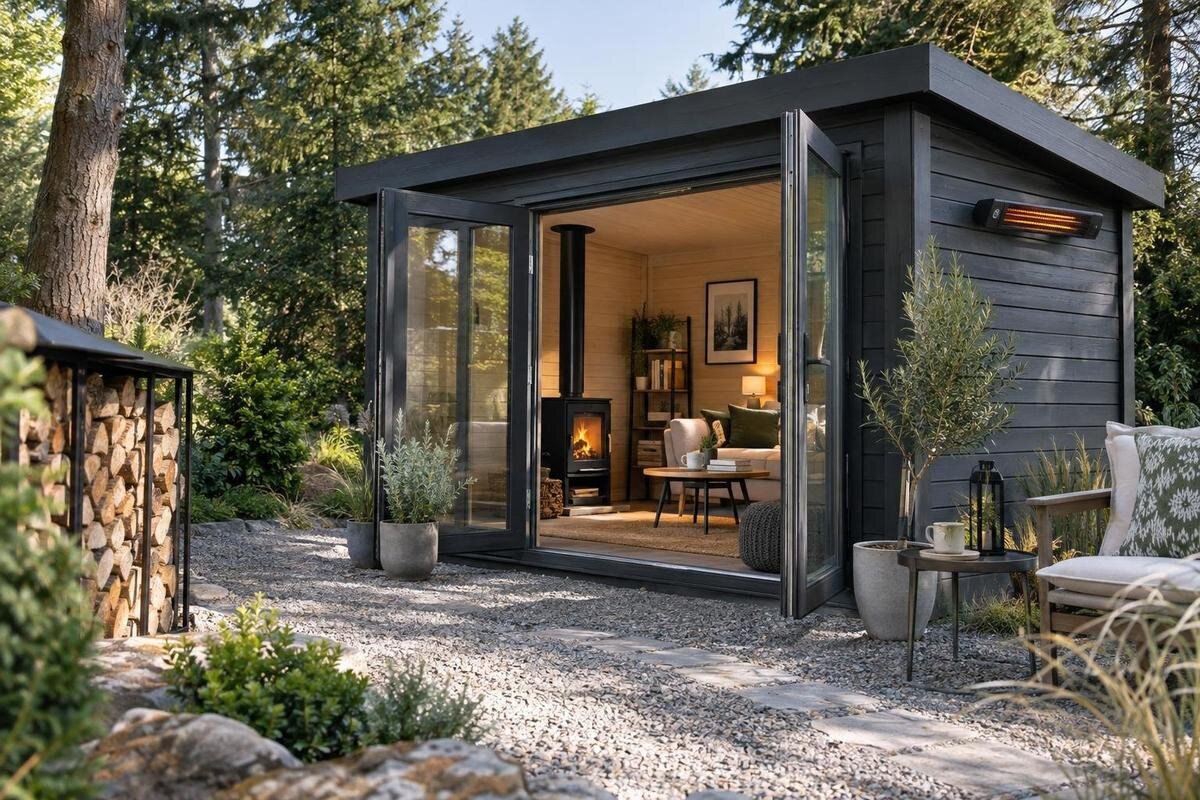
Garden shed heating
Heating a garden shed for occasional use is a different decision from keeping a room warm throughout the day. The right choice depends on how long each visit lasts, how quickly you need comfort, how much of the interior you intend to use and how readily the building loses heat. Before ordering a heater, look at the shed itself, its insulation and openings, the available power supply and the cost of each session. This guide compares practical options and sets out the checks that matter when the building will be heated only intermittently.
Before you buy 1
Define what occasional use means for your household
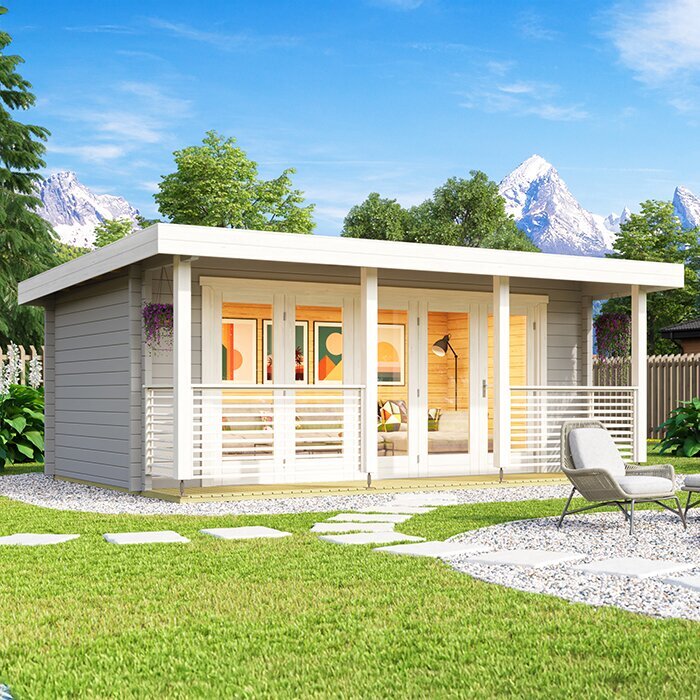
For an occasional-use garden shed, first define what comfortable means in practice. Note whether you plan to read, work at a desk, use a bench or simply sit for a while; how many people are usually present; how long visits tend to last; and which times of year matter. Decide whether you need warmth around one occupied spot or across the whole interior. Those aims can call for different heating methods. Keeping stored goods at a particular condition is also different from making a room comfortable for people, so do not assume one heater will cover both jobs. If you are shortlisting buildings, keep the Verdana 1 garden shed listing with these notes and base questions on published information, not on a model name or image.
Occasional use changes the value of preheating and of maintaining warmth between visits. Record a typical visit and the longest one you expect, rather than choosing an appliance solely by the shed’s floor area. Consider whether you can wait for the room to warm after you arrive, or need warmth close to a chair or workbench quickly. A short stop may not justify warming the whole building, while a longer hobby session gives a slower heater more time to work. Avoid planning around unattended preheating unless the heater is designed for it, its controls allow it and the arrangement has been confirmed safe. Switching on only while present is a straightforward starting assumption.
Measure the usable space and plan heater placement
Use the building’s internal usable dimensions when judging how much space a heater must serve. Published outside measurements, if supplied, do not by themselves tell you how much room remains after walls, a workbench or storage are accounted for. Check whether the product information distinguishes external from internal size, and whether ceiling height or layout is clear. The Verdana 2 garden shed page is one place to review stated measurements and note any information you still need; do not infer room size from a model name or photograph. If internal dimensions are not given, ask before deciding what output to buy.
Make a simple layout for your own planning: mark the seat or bench, doors, windows, stored items and possible heater position. An open room, partitions, a high ceiling, frequently opened doors and glazing can all affect where warmth goes or escapes. A heater aimed at a workbench may not make a seat at the other end comfortable. Consider whether doors will be open while moving tools or people, as that can lengthen warm-up. These details help you compare appliances on the same assumptions, rather than buying more output without knowing what problem it needs to solve.
Before you buy 2
Compare heaters by how they deliver warmth
Electric fan heaters can warm nearby air promptly, which may suit someone who values a quick response during a short visit. They also need a suitable electrical supply, and the fan adds sound and air movement, so check the controls and noise if the space is quiet. A radiant heater directs warmth towards people and objects in its path instead of heating every corner evenly. It may be worth comparing if you spend time in one defined place, but furniture or other objects can interrupt its effect. For any type, follow the maker’s stated use and clearance requirements rather than assuming a compact room makes placement straightforward.
Panel convectors and oil-filled electric models primarily warm the surrounding air and may take longer to make a cold interior feel comfortable; the actual response varies by model, room and heat loss. Compare rated input, thermostat, start-up behaviour, noise and portability, not just headline output. If you want to carry a portable unit in and out, consider where it will be stored and how the maker says it should be moved. For a shortlisted building, the Durano garden shed listing should be assessed from its published details; its title or image cannot predict how a chosen heater will perform there.
Check insulation and draughts before choosing output
Insulation slows heat loss; it does not create heat. If a shed loses warmth quickly through its roof, floor, walls, doors or windows, a heater may need to run more often and the room may cool soon after it is switched off. Look for information about the actual building rather than assuming that a particular appearance or model name means it is insulated. When assessing the Veltor 1 listing, for example, look for explicit insulation details and ask the supplier if an important point is not stated. A photo alone cannot establish how well a building retains heat.
Treat a retrofit as more than covering the walls. Ask whether the building is designed to take added insulation and how the roof, floor, joints, door and window areas and ventilation will be handled. Poorly planned layers can trap moisture or cover ventilation paths. Better insulation may change warm-up time, but it cannot fix a leak or make an unsuitable electrical setup safe. Do not seal vents or modify the structure on assumption; follow supplier guidance and involve a building professional where needed. For intermittent visits, a dry, sound envelope matters as well as heater output.
Before you buy 3
Budget for the complete heating arrangement
Compare the expected cost of the whole arrangement, not only the heater’s purchase price. Depending on the building and the option chosen, your budget may also need to account for insulation, electrical work or professional installation. How often you expect to visit matters: a higher initial outlay may be difficult to justify for very rare use, while frequent, longer sessions make running costs more important. No single approach is automatically cheapest over time, so compare options against the same realistic pattern of visits. Allow for any preparatory work before settling on an appliance.
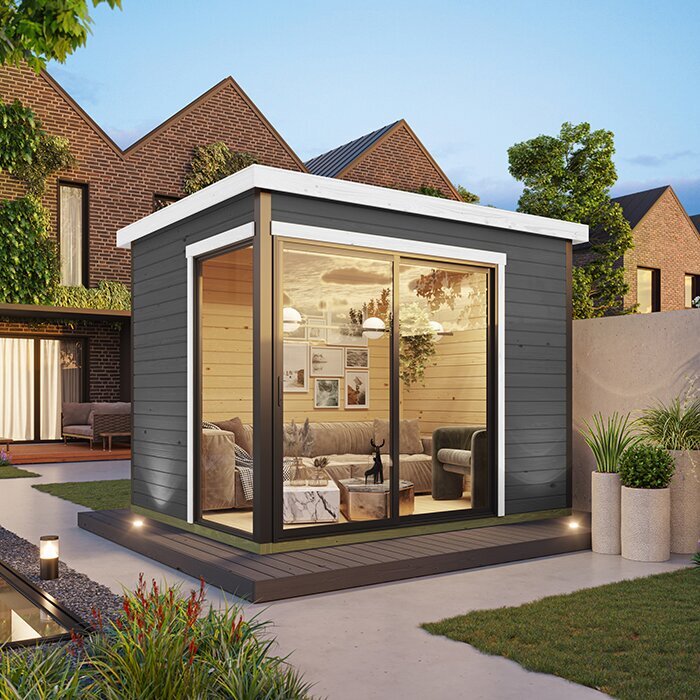
Before ordering a building, check what its price and product information actually cover, including any optional items or work you may need to arrange separately. Use the Orello 1 garden shed listing as a page to review, not as evidence of a particular insulation level or heater suitability. Look for stated details about the building and ask about missing information, including whether the features you need are included. Also consider site access and preparation so that the intended location and planned use are practical before you commit.
Check the electrical supply before buying an electric heater
Electric heaters avoid combustion at the point of use, but choosing one is not simply a matter of plugging it in. Ask a qualified electrician whether the existing supply and intended location are suitable for the heater you are considering, particularly if you plan a fixed installation or the shed has no dedicated supply. Do not assume an outdoor socket, shed wiring or an extension lead can support the intended use. A product listing does not establish that wiring, a socket or a heater is included; for instance, check what is actually specified on the Modano 1 garden shed listing.
Choose an appliance intended for the environment in which you will use it, and follow its instructions. Keep the required clearance around it, on a stable surface, and away from curtains, paper, stored garden items and other combustible materials. Do not cover a heater or use damaged leads, and avoid relying on multiple adaptors or a long-term extension lead. Do not leave a portable heater unattended or running overnight unless the appliance is designed for that use and its instructions permit it. Have fixed electrical work assessed and carried out by a qualified professional.
Before you buy 4
Fuel-burning heaters require additional safety checks
Portable gas or paraffin heaters bring different risks from electric models. Fuel-burning appliances can produce carbon monoxide and water vapour, and an unsuitable appliance or inadequate ventilation can create serious hazards. Never use a barbecue, outdoor patio heater, camping stove or other appliance intended for outdoor use inside an enclosed shed. A garden building’s appearance does not show whether it has suitable ventilation or a flue arrangement. Even the Garden Shed M listing cannot establish that a particular fuel-burning heater can be used safely in the space.
If you are considering a fuel-burning appliance, check that it is designed for the intended indoor use and get qualified advice on the complete appliance and ventilation arrangement. Follow the manufacturer’s requirements rather than relying on a door or window being left open. A carbon monoxide alarm may provide an additional warning, but it does not make an unsuitable appliance or installation safe. If the necessary conditions cannot be confirmed, choose another heating approach. Occasional use does not remove the risks associated with combustion.
Estimate the cost of each visit
For an electric heater, estimate energy use by multiplying its rated input in kilowatts by the hours it runs. For example, a 1 kW heater running at full input for two hours uses 2 kWh; multiply that figure by your current price per kilowatt-hour to estimate the energy cost. This is an illustration, not a prediction for a particular appliance. A thermostat may switch the heater on and off, so actual use can differ from the full-input calculation. Use the rating for electrical input where provided, and check your current tariff rather than relying on an old estimate.
Build a realistic session into the comparison: include warm-up time, the length of the visit and any time the appliance remains on when the room is empty. For fuel, use the manufacturer’s consumption information and your price per unit; do not assume that different fuel types or models have the same running cost. Compare the same visit pattern for each option. Insulation, doors being opened, heater controls and the area you intend to warm all affect how much energy the arrangement uses, so headline output alone is not a cost estimate.
Before you buy 5
Plan ventilation and manage moisture between visits
Heating changes the temperature; it does not by itself solve damp or ventilation problems. Moisture can enter with wet coats or equipment, and warmer air may meet cooler surfaces in a building that has been unheated for a long period. Follow the building and heater manufacturers’ ventilation guidance, and do not block vents or seal openings simply to keep warmth in. If you bring in damp items, plan to dry them elsewhere or ventilate the room appropriately rather than relying on the heater to deal with the moisture.
After the heater is switched off, the shed will cool again. Do not treat occasional heating as protection for belongings that need stable, dry conditions between visits. If condensation keeps appearing, address the source of moisture and seek building advice before sealing gaps or adding insulation. Think, too, about what is stored near the planned heater position: the layout should leave the maker’s required clearances free when the shed is in use. These checks matter because a problem may go unnoticed while the building is empty.
Confirm the building details before ordering
Before ordering, read the exact product information for the garden shed you are considering and list any unanswered questions. The Garden Storage Shed S listing is one page to review, not evidence by itself of suitability for heating. Confirm the usable dimensions, any stated insulation details, openings and ventilation information, what is included, and whether the building can accommodate the arrangement you have in mind. If a detail is missing, ask the supplier rather than treating a photograph, model name or category as an answer.
Then compare the chosen heater’s instructions with the planned layout and ask a qualified professional about any electrical work or fuel appliance requirements. Keep the likely running cost and any preparation or installation costs in view, not just the heater’s output rating. If the building, supply and appliance cannot be matched safely, reconsider the combination before placing an order. A realistic plan for the length and frequency of your visits is a better basis for buying than choosing a heater first and trying to make the rest fit afterwards.
Frequently asked questions
Which heater is best for a garden shed used only occasionally?
There is no single best option. A fan heater may offer a quick response, while a radiant heater directs warmth towards a particular spot. Panel and oil-filled models may take longer to warm the room. Compare the maker’s guidance with the shed’s layout, insulation and the length of your visits.
Should I insulate the shed before buying a heater?
Check what insulation the building already has and how well the roof, floor, walls and openings retain heat. If you are considering a retrofit, ask whether it suits the building and how ventilation and moisture will be managed before choosing a heater.
Can I use a portable gas or paraffin heater in a shed?
Only consider an appliance designed for the intended indoor use, and get qualified advice on ventilation and installation. Never use a barbecue or outdoor heater inside. An alarm is an additional warning, not a substitute for a suitable appliance and safe arrangement.
How can I estimate the running cost?
For an electric heater, multiply its rated input in kilowatts by the hours it runs to estimate kilowatt-hours, then multiply by your current unit tariff. Allow for thermostat cycling and use. For fuel, use the maker’s consumption information and your price per unit.
Can I set a heater to switch on before I arrive?
Do not assume that a timer or remote control makes unattended heating safe. The appliance must be designed for that use, its instructions must allow it, and the power or fuel arrangement must be suitable. If in doubt, plan to switch it on only while you are present.
For a garden shed used only now and then, the most practical heating plan is the one that fits the length of your visits and the conditions inside the building. Compare how quickly different heaters deliver warmth, account for insulation and layout, and work out likely running costs. Safe power or fuel arrangements matter just as much as output. Choosing the building and heater as one considered setup can avoid paying for a solution that takes too long to warm the space or cannot be used safely.
