
Hot Tub Installation Costs in Malta: What to Budget Beyond the Tub
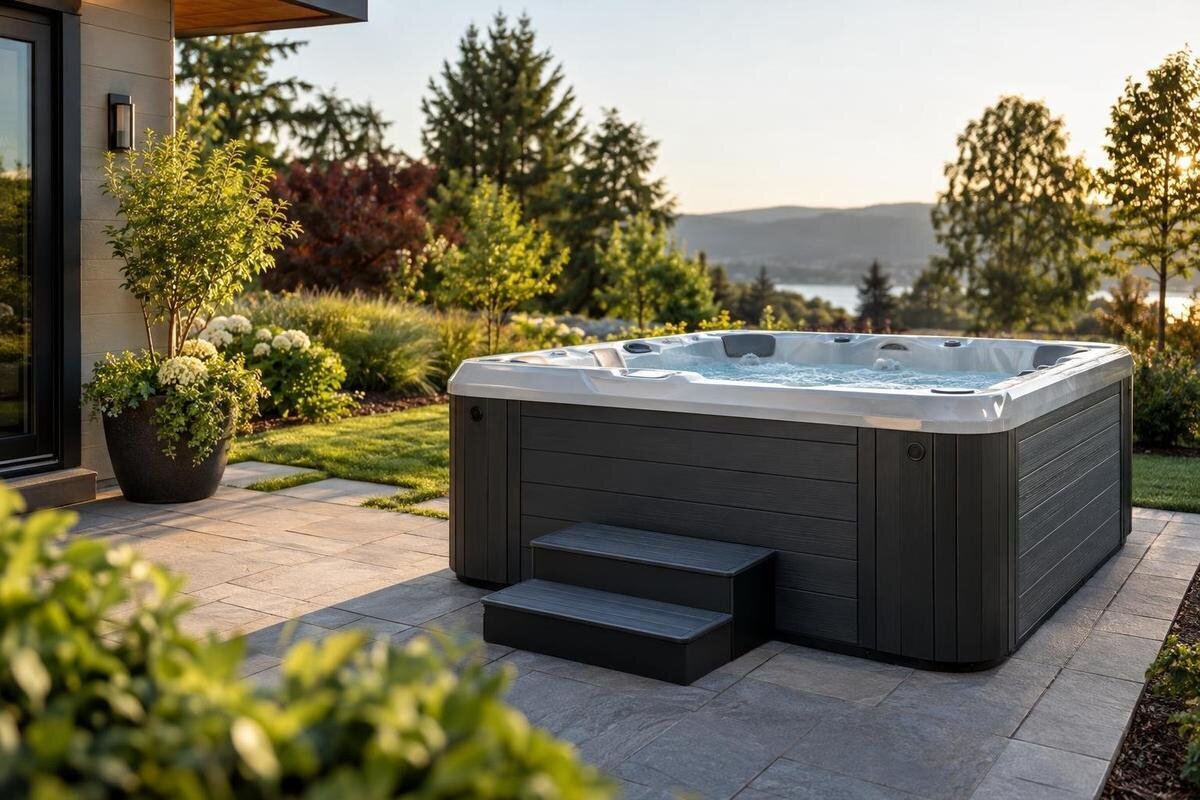
Installation budget
The price shown for a hot tub is only one part of getting it to the chosen position and ready for use. The final installed cost depends on the delivery route, property access, the existing ground or terrace, any base work, connections, drainage and repairs to the surrounding area. Some costs may be included in a supplier’s package; others may not apply or may need a separate trade. No dated, like-for-like Maltese installation quotations are available for this guide, so it does not present a guessed local price range. Instead, use the itemised approach below to request comparable quotes in euros, record VAT treatment and keep unresolved work visible.
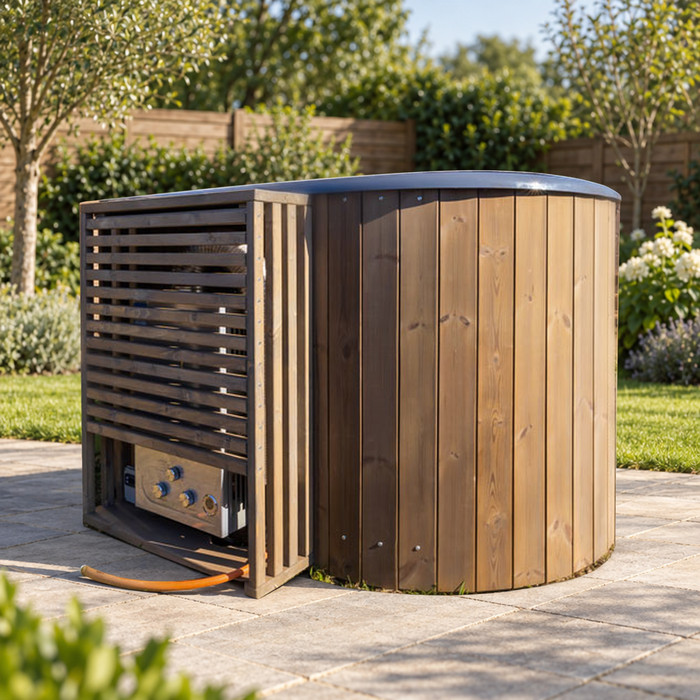
Quote checklist 1
What sits outside the hot tub’s purchase price?
The listed price is not automatically the installed total. Keep the tub itself, delivery, placement and site works on separate lines until the supplier confirms in writing what the package covers. A delivery charge may end at a stated handover point rather than at the prepared position; a service described as installation may cover some tasks while excluding trades or finishing. Ask where each included service begins and ends, who performs it, and whether labour, materials and equipment are included. This makes it possible to compare the tub purchase and one-off work without counting an advertised package twice.
If your shortlist includes Bloomcabin Hot Tub Cove 2, use the exact product identity when asking the seller for written installation requirements and package inclusions. The catalogue name alone does not establish dimensions, handling needs, connection type or a suitable surface, and a product price does not prove that site work is included. Record the tub price once, then add only the one-off tasks not already covered by a confirmed package. Keep electricity use, water care and annual maintenance outside this installation worksheet so the figure answers one question: what must be paid to get the tub delivered and installed at this property?
Delivery, access and lifting
Ask the seller to define the delivery service and its endpoint. Does the quote cover transport to the property, unloading, movement through the access route and placement at the prepared position, or only some of these? Request any separate charge for additional labour or equipment, and ask whether a restricted route or a failed delivery attempt changes the price. Do not assume that the word delivery includes lifting into place. A written description of the service helps you identify which part belongs in the supplier’s quote and which part needs a separate estimate.
Describe the actual route before accepting a delivery estimate: note doors, turns, stairs, gates, level changes, overhead obstacles, shared passages and where a vehicle can stop. Photographs or a site visit may identify an access issue early. Ask who arranges specialist lifting, who assesses whether it is feasible and whether the estimate covers final placement. For a balcony or roof, obtain site-specific advice from a qualified structural professional and lifting provider; suitability for a garden installation does not establish suitability for a rooftop. Use the exact model identity, such as Bloomcabin hot tub Haven 6, when asking the provider to assess access and quote for lifting.
Quote checklist 2
Budgeting for ground and base preparation
A base quote should reflect the chosen position and the condition of the existing surface, rather than a generic assumption about what every property needs. Ask the tub supplier to provide any model-specific siting requirements, then have the proposed area assessed by an appropriately qualified professional. Depending on the site, a contractor may need to price clearing, removal of an existing finish, levelling, repairs or construction of a suitable support surface. These are possible budget lines, not a checklist that applies automatically. Ask what materials and labour are included, how the work area is defined and whether removed material will be taken away.
An existing paved area or apparently level ground is not, by itself, confirmation that the position is suitable. If the proposed location is on an upper floor, balcony or roof, obtain a site-specific structural assessment before treating it as viable; do not rely on a generic base estimate as proof of suitability. For a shortlist containing the Fjord 8 catalogue listing, share the supplier’s siting guidance with the professional preparing the quote. Ask them to identify the area covered by the proposed work and distinguish preparation of the support surface from repairs to surrounding paving. Include removal and disposal of disturbed material where these apply.
Electrical, plumbing and drainage: possible extra work
Electrical or plumbing work may be needed, but the requirements depend on the selected tub and the property. Ask the supplier for the product’s written connection requirements, then request a site-specific estimate from an appropriately qualified electrician or plumber where relevant. The quote should describe the work, its limits, whether labour and materials are included, and whether existing services need assessment or upgrading. Keep this as a cost item, not a do-it-yourself task: this guide does not prescribe connection methods or technical specifications. If more than one trade is involved, confirm who coordinates the work and whether that coordination is priced separately.
Treat drainage as its own question rather than assuming that a nearby drain is suitable. Ask the supplier and relevant qualified professional to confirm what arrangements are needed for the proposed installation and where water can be directed. If pipework, a new route or cutting and restoring a surface is part of the plan, have that work described and priced separately. When considering the Aurora 10 product listing, request its drainage requirements alongside the connection details so the relevant trades can define their scope. Record who will confirm the route, who will carry out any work and whether surface restoration belongs in the drainage quote or a separate finishing estimate.
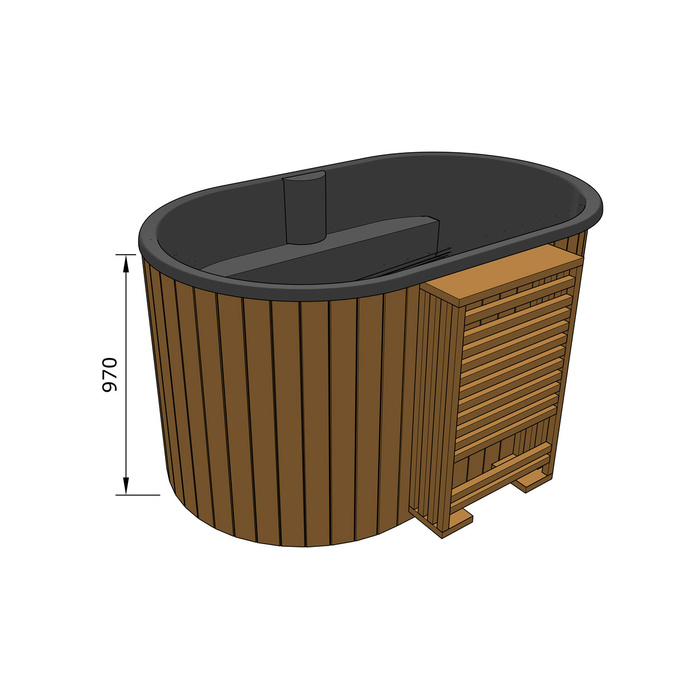
Quote checklist 3
Site finishing and reinstatement
Installation can leave work beyond the prepared base. If access or site preparation affects paving, a garden area, a wall, a gate or another existing finish, ask who will put it back and to what agreed standard. Possible charges include removing and disposing of material, reinstating a surface, repairing disturbed areas or clearing the work area. None applies automatically, and some properties may need no finishing work. Ask each contractor to state whether their price includes making good, what area it covers and what materials are allowed for, rather than relying on a general phrase such as tidy-up.
Consider the whole route used by delivery and trades, not only the footprint of the hot tub. Agree which existing surfaces or features are to be protected, and note any visible damage before work starts so responsibilities are clear. If a replacement finish is required, specify the material or describe what has been agreed; do not assume that a contractor’s allowance guarantees an exact match to an existing surface. If the Cove 2 catalogue entry is on your shortlist, keep any site restoration estimate separate from the product price and ask whether the supplier’s package includes any finishing at all.
Allowances for unresolved site work
A quote written before a site visit may depend on assumptions that still need checking. Ask the provider to mark each item as included, separately priced, provisional or not assessed. A provisional allowance should name the work it covers, the information it depends on and what would trigger a revised price. Avoid an unexplained figure labelled simply as extra costs: it does not tell you what has been allowed for or whether another estimate is needed. A contractor can price known uncertainty; a made-up contingency percentage cannot replace a site assessment or a description of the missing work.
List practical unknowns individually, such as access feasibility, the condition of an existing surface or the need for a connection upgrade, and record who will resolve each one and by when. Ask for a revised estimate when new information changes the scope, rather than assuming the original total still applies. If the Haven 6 listing is part of your shortlist, identify any unanswered questions about its installation requirements separately from uncertainties about the property. This helps you direct each query to the supplier or the relevant contractor. When an allowance is replaced by a confirmed quote, update that budget line rather than adding both amounts to the total.
Quote checklist 4
Dates, VAT and scope in Maltese quotes
A useful local price comparison needs dated Maltese quotes tied to a property and a defined scope. No dated, like-for-like installation quotations are available for this guide, so a euro range would be guesswork. To build a credible budget, request written estimates from the supplier and relevant local contractors using the same property details and work description. Ask each provider to date the quote, state its validity period, identify the locality, price in euros and say whether VAT is included or additional. Record assumptions and exclusions beside the amount; do not treat an online headline or verbal estimate as a confirmed installed cost.
Use a worksheet that adds the tub price once, then lists only unbundled delivery and placement, access or lifting, base work, electrical or plumbing work, drainage, and making good where relevant. Keep confirmed amounts separate from allowances and unpriced tasks. Do not calculate a tax adjustment from a general assumption; use the VAT treatment stated by each provider and clarify any uncertainty with them. When requesting an estimate for the Bloomcabin Hot Tub Fjord 8, give each contractor the same product identity, address and scope so differences in their totals can be traced to their stated work rather than to different assumptions.
Compare installed totals for shortlisted tubs
Compare quotes only after checking that they cover the same property and tasks. One may include delivery to a stated point while another includes final placement; one may price a base while another assumes it is already prepared. Mark each line as included, separately priced, not required or unresolved, and compare the stated totals only after you understand those differences. If one quote is less detailed, ask the provider to clarify its scope rather than treating the lower headline figure as a saving. Use the same VAT basis when comparing totals, and keep excluded items visible beside each quote.
For each shortlisted tub, request the supplier’s written installation requirements and ask contractors to price those requirements against the actual site. Do not infer dimensions, capacity, weight or extra work from a model name or number. If the Bloomcabin hot tub Aurora 10 is under consideration, identify it consistently on the product and site-work estimates. Keep any work common to all shortlisted options separate from work priced specifically for that model. Where an alternative has not yet been assessed, leave the relevant amount unresolved rather than copying a figure from another proposal. This shows which differences in the installed totals are supported by quotes and which still need clarification.
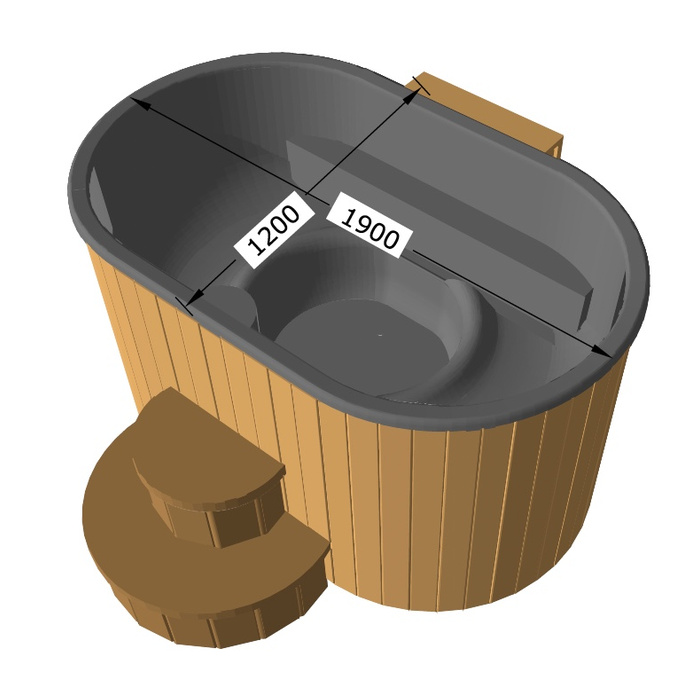
Quote checklist 5
Prevent double-counting supplier and contractor work
When a supplier and outside contractors are quoting, assign every task to one line and one responsible provider. A package might include some delivery or placement while a separate contractor quotes work around the site; the written scope should show where those responsibilities meet. For each item, mark whether it is included in another price, separately charged, not required or still unconfirmed. Ask for confirmation if two quotes appear to cover the same task, or if neither clearly accepts responsibility. This prevents adding the same service twice and also makes gaps easier to spot before work is booked.
Pay particular attention to tasks that overlap between trades. Removal of material may appear in both a base quote and a finishing quote, while surface repairs may be excluded by both the connection contractor and the person preparing the site. Match the descriptions before deciding whether two charges cover the same work: disposal from different areas, for example, should not automatically be treated as a duplicate. Where responsibilities overlap, ask the providers to clarify or revise their scopes. Record any separately stated equipment or coordination charge against the task it supports, so it remains clear what the charge covers and who is responsible.
Checks before ordering
Before committing to a purchase, check that the key site questions have an owner and a written answer: the delivery endpoint, access and lifting plan, suitability of the proposed position, base scope, relevant connections and any drainage or reinstatement work. This does not mean every property needs every trade; it means that a necessary task should not disappear between a supplier’s package and a contractor’s estimate. Ask for revised quotes if the confirmed site details differ from the assumptions on which the price was based. Keep order terms and any price changes in writing, rather than relying on an informal estimate.
Check that the quotes you intend to rely on are still valid when you are ready to order. If the chosen model, proposed position or delivery route has changed, identify which estimates need updating and keep the revised versions with the order details. Retain the earlier quotes for reference, but use only the current version of each in the total. Keep the equipment purchase and one-off installation costs identifiable, with running costs and annual maintenance outside this comparison. Your final record should show the agreed work, the current amounts and any essential task still awaiting a price, so you can see what remains unsettled before committing.
Frequently asked questions
Does the tub’s listed price include installation?
Not necessarily. Ask the seller to state in writing whether the price covers delivery, unloading, moving the tub to its final position, connection work and any site preparation. Treat each item as unconfirmed until its scope is clear.
Will every property need a new base?
No. The work depends on the proposed location, the existing surface and the supplier’s requirements for the selected tub. Have the site assessed by an appropriately qualified professional and ask for a quote that describes any required preparation.
Should delivery and lifting be priced separately?
Request separate prices where the supplier’s delivery service does not clearly include unloading and placement at the intended position. Share access details and ask who arranges any specialist lifting, what the estimate covers and what happens if the route differs from the information provided.
What should a Maltese installation quote state?
It should be dated, identify the property or locality, state the currency and VAT treatment, and describe its scope, assumptions and exclusions. Ask for the price of each relevant task and a validity period, rather than relying on an unexplained total.
How much should I allow for unexpected work?
There is no reliable universal percentage for an unknown site. Ask a contractor to price unresolved items as separate, clearly described allowances or obtain a site-specific quote. Mark work that has not been assessed as unresolved rather than treating it as free.
A reliable installation budget is a site-specific worksheet, not a guessed Malta-wide figure. List the tub price once, add only the one-off work that is not already included, and keep confirmed costs separate from unresolved items. When delivery, the base, connections, drainage and any finishing have clear written scopes, you can compare shortlisted options on equal terms. If an essential task is still unpriced, leave it marked as unresolved rather than treating it as free.
