
How Often Should a Wooden Garden Shed Be Repainted?
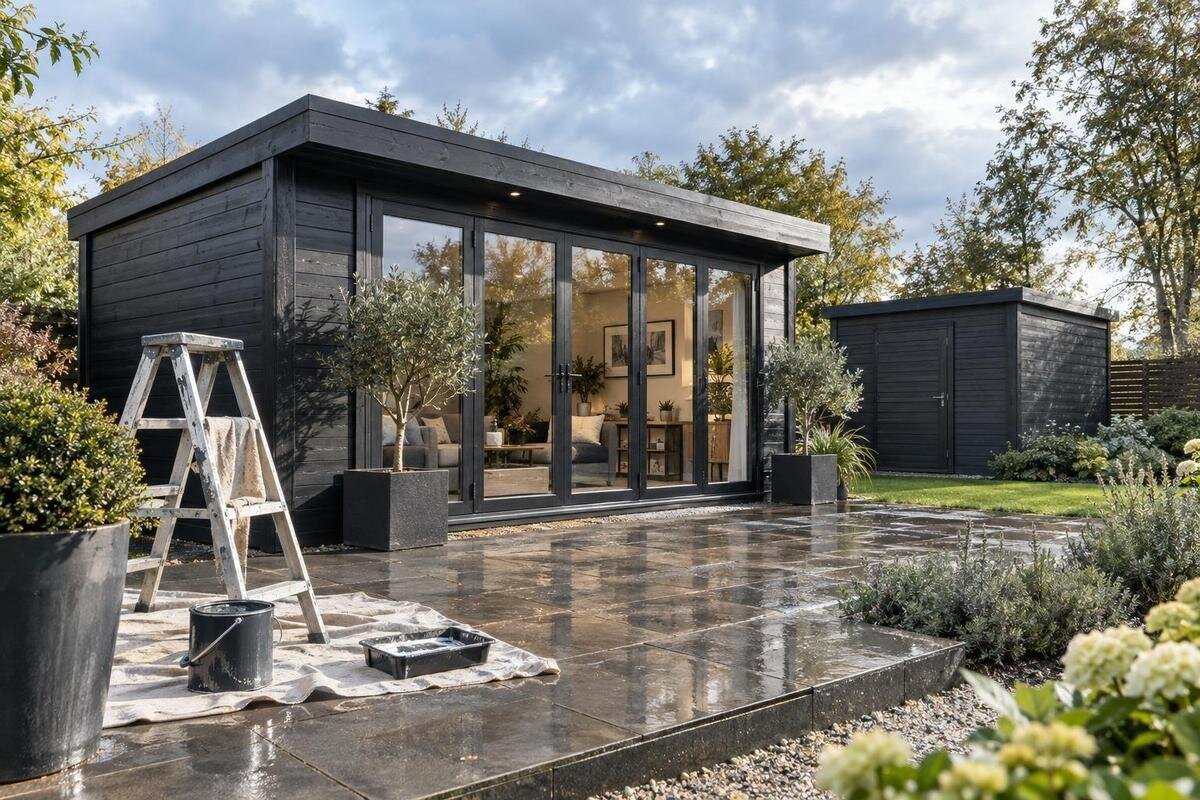
Garden shed care
How often to repaint a wooden garden shed cannot be answered with one reliable number of years. The interval depends on the coating, the timber beneath it and the weather the shed faces. Regular checks help you see when paint is wearing; a calendar date alone cannot show whether it is still sound.

01
There is no fixed repainting interval
There is no universal repainting interval for a wooden garden shed. Exterior paint systems differ, and a coating's life depends on what was applied, how sound the surface was beforehand and how much weather it receives. One shed's paint may remain intact while an exposed wall on another starts to fail sooner. Treat any period quoted for a particular paint as guidance for that product and its application, not a deadline for every building. A yearly visual review is a practical baseline for judging your own shed; it does not mean you should repaint every year. Compare the same faces each time so gradual changes are easier to notice. Age alone is particularly unreliable if ownership has changed: the date the shed was made may not be the date its last coat was applied.
Start by identifying what is actually on the timber. A shed may arrive with paint, another exterior finish, preservative treatment or bare wood, and these do not all call for the same care. Keep the original care sheet, finish name and any later coating details with the purchase record. If you are considering the Verdana 1 garden shed, ask what finish is supplied and where its maintenance advice is documented; the model name alone does not establish an initial repaint date. If a previous owner applied an unknown coating, do not guess what to put over it: identify the existing finish and check compatibility before planning work.
What makes paint wear sooner
Several variables act together. Direct sun gradually fades colour and weathers exposed paint; wind-driven rain, repeated wetting and water running down from above can put extra strain on weak points. Changes in timber moisture can contribute to small cracks around joints, while the surface condition, earlier coats and how the finish was applied affect adhesion. A sheltered spot is not automatically kinder: a wall that remains damp or dries slowly can still develop problems. That is why another owner's repainting interval, or a generic figure from an online source, is a poor substitute for inspecting your own coating and following its instructions. Check that the product guidance is for exterior timber rather than assuming all paints are suitable.
When comparing a new building, ask the supplier the same questions about each candidate: is the external timber bare or coated, what finish is used, and what does the maker recommend for maintenance? If you are looking at the Verdana 2 garden shed, use the page to identify the model, then confirm the finish and care details directly instead of inferring them from its name or photographs. Include maintenance effort in your decision: you may need to reach all sides, keep records and allow time for renewal. Compare the care information alongside your purchase budget, not only the shed's appearance on delivery.
02
Check the shed's actual exposure
In Malta, exposure varies from one garden to another. A wall receiving many hours of strong sunshine may fade faster than a shaded one; a coastal location may also receive salt carried in the air. Wind-driven rain, splashback from the ground and water that repeatedly runs down one section deserve attention too. This does not create a single repainting interval for Malta: distance from the sea, shelter, orientation, roof overhang, drainage and the exact coating all affect what reaches the timber. Judge the position of the shed itself rather than applying a country-wide rule. A sheltered wall can still need attention if it stays damp. Changes such as new paving, a fence or nearby planting can also alter shade and splash.
Before placing or ordering a garden shed, think about which walls will face the sun and rain and whether you can reach them for inspection and future work. A listing such as the Durano garden shed does not answer site-specific questions, so ask for care guidance and consider the actual location in your garden. Note any area repeatedly splashed by runoff, and avoid letting water collect against the base. If one side takes more exposure than the others, check it more closely; do not assume all faces will age at the same rate. Repainting will not resolve recurring wetting, so identify its source rather than simply covering the affected wall.
Where to look for early wear
Paint wear is not always uniform. Look particularly at the lower boards, corners, joints, visible end grain and areas around door or window openings. These details may receive more splash or movement, and exposed edges can lose their coating before broad, flat wall areas do. Check near roof edges and wherever runoff seems to track down the cladding. Also look behind stored items that obscure the wall, moving them only if it is safe and practical. The point is not to find a reason to repaint every mark; it is to catch a small break in the finish before it spreads or leaves timber exposed.
Walk around the whole shed rather than inspecting only the most visible wall. Record which side has fading, cracks, blisters or bare patches, and whether the same area changes at the next review. If you maintain more than one garden building, note its model name—for example, the Veltor 1 garden shed—alongside the date and affected side so observations stay with the right structure. Label the sides consistently, such as door wall, left, right and rear. Photos taken from a safe, consistent position can make gradual changes easier to judge. Do not climb or reach into an unsafe position to examine a high area; ask someone qualified to assess anything you cannot see safely.

03
Signs that the paintwork is failing
Fading on its own is mainly a change in colour; it does not prove that the coating has stopped protecting the timber. A powdery residue, often called chalking, a dull or patchy finish, or cracking are stronger prompts to check the paint maker's maintenance advice and inspect more closely. Look at whether the paint remains continuous and firmly attached, whether an edge has lifted and whether bare wood is visible. Compare the same area over time: one discoloured patch may come from local exposure rather than failure across the whole shed. A single blemish still deserves a note, but a growing patch or several signs together are reasons to look more closely.
Peeling, flaking, blistering and cracks that expose wood are clearer warnings that the finish needs attention; do not leave them until a convenient repaint date. If you have bought a shed such as the Orello 1 garden shed, keep its original finish and aftercare details so you can identify what is on the timber. Neither the model name nor a photograph tells you which coating to use next. Where timber is soft, swollen, distorted or persistently damp, look for the moisture source and assess the wood before planning paint. A surface coat cannot correct decay or damage underneath.
When repainting is due—and when it is not enough
Plan a repaint when the coating has lost adhesion, is widely cracked or peeling, or leaves areas of timber uncovered. A small failure may also need prompt attention if it exposes a vulnerable area to repeated wetting. If the finish is intact and the only change is modest fading, it may be reasonable to monitor rather than rush into a full repaint. Use the coating maker's directions to decide whether a local repair, one face or a larger area needs renewal. A small patch may not blend in, but repainting every side may be unnecessary. Compatibility with the existing finish matters, so do not choose a new paint solely by colour or a broad claim that it suits wood.
Look beyond the paint if you see swelling, recurring damp, softness, loose joints or damage that returns after drying. Those signs can point to water entry or timber deterioration and should be understood before fresh paint covers them. If you are considering replacing a badly damaged shed, use a listing such as the Modano 1 garden shed only to identify a possible model; ask for exact material and finish details, plus written care instructions, before deciding. For substantial timber damage or uncertainty about repairs, a qualified carpenter or suitable building professional can assess the underlying issue. Repainting is for a sound surface, not a substitute for repairing damaged wood.
04
A yearly check makes changes easier to judge
Choose a recurring time of year for a full visual review and inspect sooner if peeling appears or after unusually severe wind and rain, once it is safe. A yearly check is a planning habit, not a repaint schedule: if the paint remains sound, record that and review it again; if a change appears, note its size and location. Exposed faces may need more frequent attention than sheltered ones. Use similar lighting where possible and compare the same areas rather than relying on memory. A brief, consistent inspection is more useful than waiting until a large section has peeled or repainting automatically to meet an arbitrary calendar.
For a new or recently acquired shed, write down when it was installed or last coated, its model name and the finish instructions. If your records identify it as the wooden garden shed M, keep that name with the finish notes. Note the wall affected, the type of wear and any repair or coating work, and take a photo if it will help you compare later. Keep product labels or receipts, including the date, so you or a painter can see what has already been applied. This history can help make sense of recurring failure and provide useful context if you need advice.
Allow for maintenance in your budget
An upkeep plan is easier to follow when you allow for it before the paint has visibly failed. Budget for future coating and the time needed to reach the painted sides, move stored items and keep the area usable while work is carried out. If you hire someone, photos and notes can help you describe the job's scope rather than assume a full repaint is due. More frequent touch-ups are not automatically better; repeated coats need to suit the existing finish. Keep appearance and protection separate in your judgement: fading may be cosmetic, while a small break in a vulnerable area can deserve earlier work.
If you are choosing a shed for storage, make maintenance part of the comparison. The wooden garden storage shed S is one model to ask about, but confirm its supplied finish, written care requirements and whether later coatings need to be compatible. Think about whether there will still be room to inspect and paint the walls after shelves, bins or equipment are in place. A building that is difficult to reach can make small problems easier to miss. When comparing models, consider the aftercare information suppliers provide rather than assuming two wooden sheds need the same schedule.

05
Plan the work around the coating instructions
Once the surface needs renewal, plan around the coating maker's application guidance as well as the calendar. Exterior products may specify a dry surface and limits for temperature or weather; follow the exact instructions rather than assuming all paints behave alike. In Malta, strong heat or direct sun can make a particular time of day unsuitable for some products, and unexpected rain can disrupt drying. Drying and recoating times are product-specific too. The relevant conditions are those stated for the finish and present on site, not a generic month or season.
Allow enough time to identify and prepare the timber and old coating before applying anything; a new layer cannot reliably bond to a dirty, loose or damp surface. Use the manufacturer's directions for compatible preparation and the coating system rather than guessing. This guide is about deciding when repainting is due, not a substitute for those instructions. If the paint is failing extensively, the coating history is unknown or the timber appears damaged, ask a qualified painter or carpenter before committing to a full repaint. Arrange safe access rather than improvising, and resolve recurring wetting instead of relying on another coat to cover it.
Ask about aftercare before choosing a shed
Repainting frequency is worth considering while deciding what sort of garden building suits your plans. Ask about the finish supplied, expected maintenance and any restrictions on future products, and request written care information rather than relying on photographs or a broad claim of low maintenance. Check how much space you can leave around the walls for inspection and repainting, and whether you can reach areas near fences or stored equipment. Ask whether any first maintenance is due after installation. These details make it easier to compare like with like without assuming two timber buildings need the same upkeep.
After installation, the shed's actual location and the condition of its coating become more reliable guides than the purchase decision alone. Keep a yearly note, follow the finish maker's advice, and bring attention forward if peeling, cracking or bare wood appears. If the timber itself is damaged or damp, investigate that problem before repainting. The aim is not to keep applying paint; it is to renew the coating when it no longer protects the surface.
Frequently asked questions
Is there a standard number of years between repaints?
No. The interval depends on the existing coating, the timber, the garden's exposure and the paint maker's instructions. Set an annual inspection reminder, then repaint when the finish begins to fail or bare wood is exposed. A figure borrowed from another shed cannot account for your site or coating.
Does faded paint mean I must repaint?
Not by itself. Colour can fade while paint remains attached, so note fading separately from chalking, cracks, blisters, peeling or exposed timber. If the coating's condition is uncertain, check its care guidance. Widespread or progressive failure is a clearer reason to plan renewal.
How often should I inspect the paintwork?
Once a year is a practical baseline for a full visual check. Look more closely at exposed sides if they show changes, and check again after unusually severe weather once it is safe. Keep a brief note or photo so you can compare the same areas rather than relying on memory.
Can I put new paint over peeling areas?
A fresh coat over loose or failing paint will not make the old layer sound. Assess and prepare the coating and timber according to the maker's instructions, using compatible products. If failure is widespread or the coating layers are unknown, ask a qualified painter for advice before repainting.
What should I do if the timber is soft or damp?
Do not treat paint as a repair for the wood. Find out whether water is entering or remaining against the affected area, and have significant softness, swelling or recurring damp assessed before coating it. A carpenter or suitable building professional can help if the cause or extent is unclear.
The most dependable approach is to inspect the paintwork each year and let its condition, rather than an assumed lifespan, set the repainting date. Note the finish and exposure, compare the same walls over time and follow the coating maker's advice. Fading may be cosmetic; peeling, cracking or exposed timber needs attention, while soft or damp wood calls for investigation before paint. This helps avoid both premature repainting and leaving a failing finish until the damage spreads.
