
How to Care for a Hot Tub’s Wooden Exterior
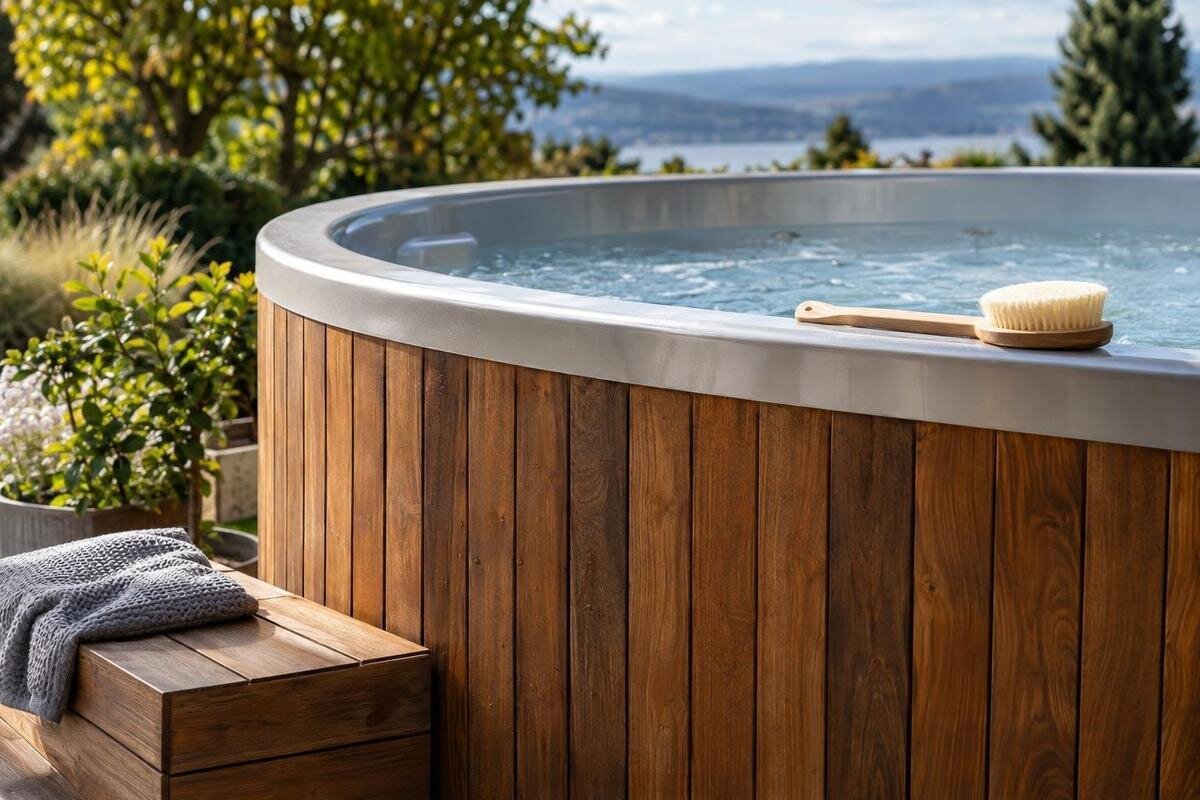
Hot tub care
Looking after a hot tub’s wooden exterior begins with identification, not a tin of oil. The panels may be untreated timber, finished wood or another material made to look like wood, and each may need different care. A change in colour is not, by itself, proof that the finish has failed. Check the manufacturer’s instructions for the precise model and exterior parts before cleaning or refinishing. On a Maltese property, also consider the conditions at the tub itself: direct sun, rainfall and exposure to coastal air vary from one garden to another. This guide covers exterior timber only.
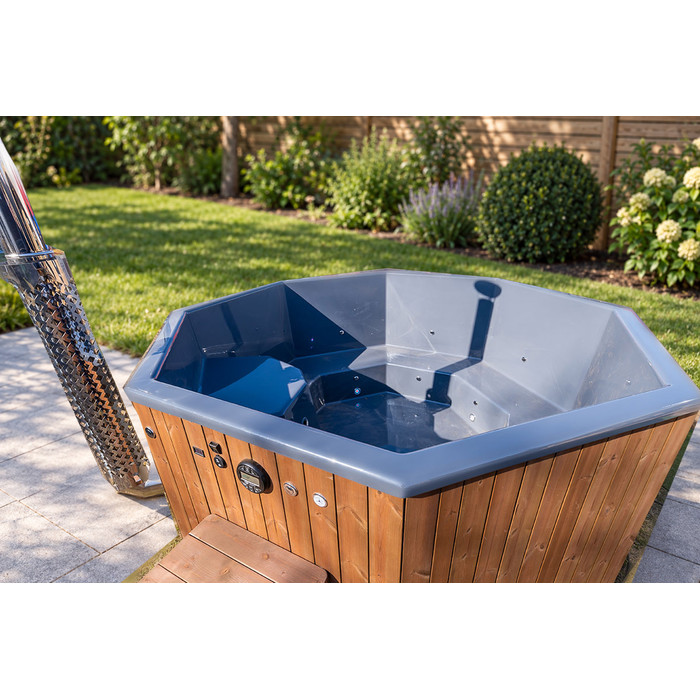
Identify the exterior material and finish
Start by finding out what “wooden exterior” means on the exact hot tub. It may refer to solid timber boards, a wood-based panel, timber trim around another outer surface, or a wood-effect covering. These are possibilities, not interchangeable care categories: bare timber, a coated panel and a decorative surface can need different products. Read the model’s product documents and care guide for the component names, not simply the headline description. Identify which parts are cladding, trim and any visible frame, and ask the supplier to clarify ambiguous terms such as “wood finish”. If the specification names only the panels, confirm whether it also covers corners, edging and other visible timber. This avoids carrying one care instruction over to a different part.
Find out what, if anything, has been applied to the timber. Ask whether it is supplied untreated or with a factory-applied finish, and request the finish’s product name, colour, application details and any permitted touch-up product. A glossy or coloured surface does not reliably tell you whether it is varnished, stained, oiled or painted; appearance alone is not a specification. If the hot tub has been used before, ask about earlier treatments as well. Keep the answer with the care guide instead of relying on memory or a generic label such as “exterior wood”. When considering Bloomcabin Hot Tub Cove 2, include the exterior material and factory finish in your specification enquiry.
Use the care instructions for the exact exterior
Use instructions for the exact hot tub and exterior component, not a generic timber-care routine. Check the manual, specification or separate care sheet for the names of the outside materials and any maintenance restrictions. A guide may deal with timber panels and other exterior parts separately, so apply only the directions relevant to the surface in question. Keep the latest version supplied with your purchase, or ask where to obtain it if the documents are incomplete. If instructions describe cleaning but say nothing about renewing a finish, do not treat that silence as permission to oil or stain. Ask the manufacturer or supplier for written guidance that identifies the material and existing finish.
Match both the cleaner and the tool to the named surface: a label saying “for wood” or “for outdoor use” is not proof of compatibility with a particular coating. Follow the maker’s stated method and the cleaner’s own label without increasing pressure, concentration or time to tackle a stubborn mark. Do not assume a pressure washer, abrasive pad, solvent or household cleaner is suitable; use one only if the hot tub manufacturer explicitly permits it. If the cleaner label and model instructions appear to conflict, stop and ask which applies rather than combining directions. For Bloomcabin hot tub Haven 6, request the exterior-care guidance before choosing cleaning products and tools.
Clean gently and stop if the surface reacts
Before cleaning, record the surface’s starting appearance and read the approved method from beginning to end. Check which cloth or brush is permitted, whether a small test area is advised and how the instructions say to handle any remaining cleaner. Do not fill gaps with a method used on decking, garden furniture or another hot tub, even if the timber looks similar. If the supplier recommends a test patch, use the stated location and process; do not invent a stronger test. A patch may show an immediate reaction but cannot prove that an unapproved product is safe over time. If the guidance omits a step you need, ask before trying several cleaners in sequence.
Work only within the approved method and pause if the surface changes unexpectedly. New colour transfer, cloudiness, streaking, roughness, raised fibres or lifting finish are reasons to stop and seek advice, not to scrub harder or apply a stronger solution. Take a photograph and note the product, tool and sequence used, including when the change appeared. Check the surface only as the instructions allow; do not add a second treatment to disguise a mark. A supplier can compare your description with the stated finish and recommend an appropriate response. If considering Bloomcabin Hot Tub Fjord 8, review the permitted cleaning method to understand what routine exterior care would involve.
Inspect timber and finish for changes
Inspect the exterior as often as the manufacturer recommends, and look at dry, accessible surfaces in consistent daylight where possible. Compare with an earlier photograph rather than memory: gradual fading is easy to miss, while changing light can make the same panel look different. Note whether a change is limited to one sun-exposed side, follows a drip or splash path, or appears near an edge or joint. Check lower edges only where they are safely visible; do not dismantle panels or scrape the coating for a closer look. A simple observation should preserve the surface, not become a test that damages it.
Describe what you see rather than diagnosing it as rot or finish failure. Peeling, blistering, a widening crack, a loose panel, softness, persistent dampness or an area that continues to darken deserves supplier advice, especially if the change is spreading. A grey, pale or uneven colour alone does not show that oil is needed; it may relate to the timber, the finish, exposure or a previous treatment. Photograph the location and date, and note whether nearby panels look different before comparing your observations with the care instructions. When enquiring about Bloomcabin hot tub Aurora 10, ask what changes in its exterior appearance are expected and which should be reported.
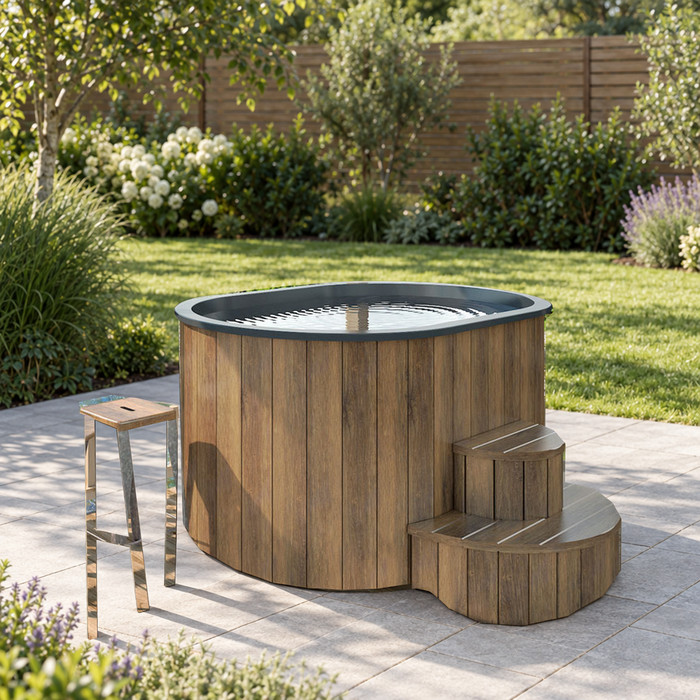
Take account of the tub’s actual exposure
Assess the tub’s real setting rather than assuming every Maltese garden has the same weather exposure. Note how long each face receives direct sun, whether the area is sheltered or open to wind-driven rain, and whether the location is exposed to coastal air. Shade can vary during the day and between seasons, so a single glance may not describe the timber’s routine conditions. Also note where water regularly reaches the outside panels, without confusing this exterior check with advice about the tub’s water. A sheltered position and an exposed one can have different conditions even on the same property. These observations help you explain the site to the supplier; they do not prescribe a cleaner or coating.
Ask whether the maker’s care instructions change for the exposure you have recorded and what signs would justify an earlier inspection. Do not invent a shorter treatment interval just because a tub is in sun, or assume a sheltered position makes refinishing unnecessary; use the manufacturer’s advice. Describe the conditions on each side rather than simply calling the site sunny or coastal. If you are comparing Cove 2 with another model, give the supplier the same site description for both. This makes the care advice easier to compare without assuming that the models share an exterior material or finish.
Decide whether refinishing is needed
Base the decision to refinish on the exterior’s documented finish and condition, not on a rule that all timber needs oil or stain. An exterior may need cleaning without routine refinishing, while another may have a specified finish-renewal process. These are general possibilities, not statements about a particular model. Check whether the manufacturer describes how the coating should be maintained or renewed, or says that it must not be altered. Look for an explicit trigger or interval for renewal. If the surface simply looks different with age, ask whether that is expected before applying a product that changes its colour or sheen. If the instructions give no trigger, ask whether routine finish renewal is needed at all.
Before any sanding, stripping, staining, painting or oiling, confirm the approved preparation and treatment for that exact surface. Preparation can remove or alter an existing finish, and a product intended for bare timber may not suit a coated panel. Ask about approved removal of old coatings, compatible treatments, application conditions, drying requirements and how to protect nearby materials. Follow the response rather than borrowing steps from a different timber project, and keep any named product and instructions in writing. If Haven 6 is on your shortlist, establish whether its exterior requires refinishing before including treatment products in your maintenance budget.
Choose a treatment only after compatibility is confirmed
Once the need for a treatment is confirmed, check the exact product against both the timber and the existing finish. “Exterior wood”, “decking” or “garden furniture” on a tin describes a broad intended use, not approval for a hot tub’s cladding. Ask the manufacturer to confirm the product name or type, whether the existing coating must be removed, and whether the treatment is appropriate for the identified panels. Avoid mixing brands or layering a new finish over an unknown one unless the maker confirms that approach. If you cannot identify what was previously applied, pause until the supplier can advise. Keep the product label so its exact name can be checked later.
Compatibility is only part of the decision: a treatment may change the colour, sheen or texture, so ask what the finished surface should look like and how localised touch-ups are handled. Obtain the maker’s guidance on quantity, application method and when reapplication is needed; do not estimate these from another tub or a generic timber-care label. Ask whether the specified product is readily obtainable and whether the work is suitable for an owner or should be referred to a professional. When reviewing Fjord 8, use the answers for its documented exterior to assess the practical demands of any required treatment.
Ask the supplier when instructions or condition are unclear
Pause and contact the supplier or manufacturer if the manual does not name the outer material, the coating is unknown, approved cleaning advice is missing, or the surface has reacted to a product. Ask sooner if a panel appears loose, cracked, soft or persistently wet, or if a finish is lifting; do not try to seal over a problem or hide it with stain. If a tub has changed hands, tell the supplier about any previous treatment you know of. For unclear damage, a qualified timber-care professional may be able to assess the surface, but the hot tub maker still needs to confirm product compatibility. Do not continue with a treatment while you are waiting for that advice.
Make the enquiry specific. Provide the model name, clear photographs, the location and extent of the change, the cleaner or treatment used, and when it was applied. Identify the affected component as precisely as you can: a panel, trim piece or edge, for example. Ask whether the mark needs assessment and which approved action, if any, you should take while waiting for a response. For an enquiry about Aurora 10, include the exterior material and finish if you know them, or explicitly say that they are unknown. This helps distinguish a question about the original exterior from one involving a later treatment.
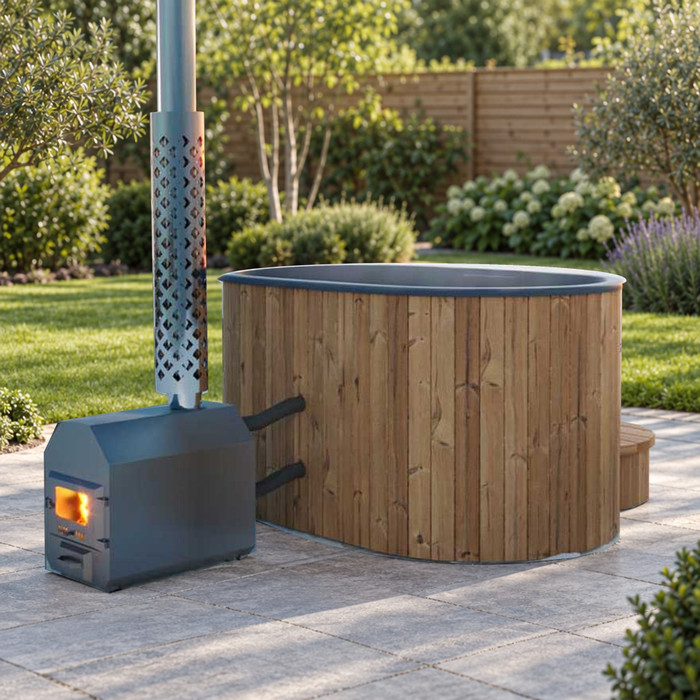
Compare exterior upkeep before you buy
Request exterior-care information alongside the product specification before choosing a hot tub. Ask for the material of each outside panel or trim piece, the factory finish, permitted cleaner and tool, whether any ongoing treatment is required, and the manufacturer’s stated inspection or renewal guidance. Ask for exact product names rather than a broad assurance that the cladding is “easy to maintain”. If there is more than one exterior option, get the advice for the option you would actually order. A clear answer lets you compare care plans; an attractive image or short catalogue title cannot tell you what the finish needs.
Turn that information into a realistic ownership estimate. Include only the maintenance tasks the maker specifies, the cost and availability of approved products, any stated frequency, and whether the work might need paid assistance. If frequency, labour or product cost is unknown, record it as unknown rather than inventing a yearly figure. Consider whether you are comfortable with the required checks and any approved renewal work, and compare models only when the same details are available. A claim of lower upkeep is useful only if the seller explains what it means for that specific exterior.
Keep a record of the exterior care
Keep one simple exterior-care record once the tub is installed. Note the model and exterior parts, timber and finish details supplied by the maker, the approved cleaner and tools, and the date or version of the relevant instructions. Add the names of any treatment used, where it was applied and when, together with photographs of the panels before and after work. This is not a substitute for manufacturer advice; it prevents uncertainty later about whether a finish has already been changed. Save receipts or product labels where they identify the treatment, and separate your observations from the manufacturer’s instructions.
Add brief observations about exposure and condition, such as which side receives the most sun or where the finish is changing, but do not turn these notes into a treatment schedule unless the manufacturer specifies one. When you ask for support, the record helps you give the supplier a precise history and reduces the temptation to apply an unknown product over an old one. Review it whenever you receive updated instructions or a professional carries out approved work. A few accurate notes are more useful than a generic checklist that assumes every wooden exterior needs the same cleaning, oiling or staining routine.
Frequently asked questions
How can I tell whether a hot tub’s exterior is real timber?
Check the specification or care guide for the exact model and ask which visible parts are made from timber. A wood-effect surface, trim and timber panels may look similar in a photograph but need not have the same care requirements. If the description is vague, ask the supplier to identify the material in writing.
Does every wooden hot tub exterior need oil or stain?
No. Do not assume that timber needs a treatment simply because it has changed colour or looks weathered. The existing finish and the manufacturer’s instructions determine whether cleaning alone is appropriate or refinishing is recommended. Ask what signs or interval the manufacturer specifies before buying a treatment.
Can I use decking oil or a general wood cleaner?
Only if the hot tub manufacturer confirms that the specific product is compatible with the timber and its existing finish. A label for outdoor wood or decking is not model-specific approval. If you cannot identify the finish, pause and ask before applying a cleaner, oil, stain or other coating.
How often should I clean or refinish the exterior?
Follow the manufacturer’s stated guidance for the exact exterior. Do not apply a fixed annual schedule or shorten the interval based only on appearance or location. If the instructions do not give a cleaning or refinishing interval, ask the supplier what inspection signs or conditions should guide you.
What should I do if the timber turns grey or the finish starts peeling?
Record the change with a photograph and note where it appears and whether any product was recently used. Grey colour alone does not show that oil is needed, but peeling, soft areas, cracks or loose panels warrant supplier advice. Avoid sanding, staining or covering the area until you know what finish is present.
Good exterior care is specific rather than automatic: identify the material and finish, keep the applicable instructions, and observe changes before choosing a treatment. In Malta, note the exposure at the tub itself instead of relying on a general assumption about the climate. If the finish, previous treatment or condition is uncertain, pause and ask the supplier before cleaning more aggressively or refinishing.
