
How to Store a Garden Shed Kit Before Assembly
Garden shed planning
Garden shed kits do not always go straight from delivery to assembly. Site preparation, weather or a change in plans can leave the packed components waiting for a while. Good storage is less about improvising a cover and more about knowing what the exact kit needs, where every package will sit and how you will keep its labels and parts together. Plan the storage space before ordering, protect the packs from damp and avoid opening them earlier than necessary. These steps make it easier to check the kit and move into assembly when the site is ready.

Plan the storage period before ordering
Work backwards from the assembly date you realistically expect, allowing for site preparation and the possibility that plans may move. If the kit arrives weeks before the build, you need somewhere appropriate for that whole period, not just a dry corner for delivery day. Ask the retailer about current dispatch arrangements and whether the kit is expected to arrive in one delivery or separate packages; do not assume the timing from a photograph or product name. If your build depends on site preparation or another delivery, coordinate the schedules rather than relying on a particular dispatch date. If there is no secure, protected storage available, consider delaying the order or arranging a suitable place first.
Measure the space where the packages will actually be kept, including doorways, turns and room to reach the labels for inspection. The finished shed’s footprint does not tell you how many cartons will arrive or how large they will be. Ask for the package count, external dimensions and handling information for the exact model, then compare those details with the available route and storage area. When checking a listing such as the Verdana 1 garden shed, use the exact model name when asking for package details; the name alone does not tell you carton size or count. Include ceiling height if packages need to pass through a low space. A place that fits the cartons tightly can make later inspection or removal difficult, so leave enough room to manage them safely.
Confirm pack information with the seller
A product page or finished-shed image cannot answer every storage question. Before buying, ask which package details are available, including the number of parcels, their dimensions, any stated weights, and instructions about orientation or stacking. Confirm whether all parts are expected together, how the packing list is supplied and where the assembly and storage instructions can be found. Ask whether you can see the contents list before purchase, so you know what package information to compare with the delivery. These details help you check that the kit can be housed in your planned space. Avoid estimating a carton size from the building’s appearance, model name or a similar listing; none of these establishes how the kit is packed.
Ask what the maker recommends if the build is postponed, an outer pack arrives damaged or you need to open one for inspection. For the Verdana 2 garden shed, make sure information you rely on refers to that exact model rather than a similarly named version. Keep the order confirmation, product information you used and written replies together, alongside the packing list once received. Save a dated copy of relevant information for your records, since product pages may change. This record helps you identify which kit you have and describe a query accurately. It is not a substitute for the manufacturer’s instructions, but it avoids having to reconstruct key details after the cartons have been moved or opened.
Choose a dry, sheltered place
Choose an indoor, sheltered place where water from rain, a leaking roof, plumbing or a washing area cannot reach the packages. A garage or store room is not automatically dry: look for damp patches, water entering under a door and signs of condensation on walls or ceilings. Check the area after wet weather as well as on the day you receive the kit. Keep packages clear of puddles and ground-level moisture, and do not rely on the original transit wrapping as a guarantee of long-term weather protection. Keep packs away from open external doors where driving rain or dust could reach them. If your only option is an exposed yard, ask the supplier what storage conditions the exact kit allows before placing it there.
Allow some air movement around the stored packs and keep them away from places where water may collect or sunlight falls directly for long periods. Do not block vents or place the kit in a cramped, hard-to-inspect corner. If you use a temporary cover, it should protect from direct water without creating a sealed, damp pocket around the packaging; follow any maker-specific direction first. Check an exterior wall for dampness after rain rather than assuming that an indoor location is dry just because it is under a roof. Do not infer the pack’s storage needs from the name or finished-product images of the Durano garden shed; ask for advice about the exact kit. A dependable location is one you can inspect without shifting or unwrapping everything.
Support packages without overloading them
Set packages on a clean, dry, stable surface and use support only in a way that suits the packing instructions. Keep the cartons out of contact with damp ground or a wet floor, but do not improvise an arrangement that leaves parts unsupported or a package bending. Check that supports do not press on protruding pieces or cover important labels, and avoid an uneven surface that makes a pack rock. Follow orientation arrows and stacking symbols on each package. If labels are missing or unclear, ask the seller or manufacturer before turning a bundle on its side or changing how it is supported. The right arrangement depends on the actual packaging; there is no universal spacing or stack height to infer from the finished shed’s dimensions.
Avoid placing tools, household goods or other cartons on top unless the package instructions expressly allow it, and do not assume one shed package can safely bear another. Keep the packs accessible so you can inspect them or remove one without disturbing the rest. Leave a clear route around the stack rather than making it necessary to climb over stored items. When moving packages, follow their handling directions and arrange help or suitable handling equipment if needed instead of dragging or twisting one to make it fit. The Veltor 1 model name does not reveal carton weight or handling requirements; confirm those details before deciding where and how to store it. This is useful if the route has a tight turn or raised threshold.

Keep moisture and direct sunlight away
Moisture is a concern even when the outside of a pack looks intact: it can weaken cardboard and, if components include timber, may affect the material. The result depends on the product and storage conditions, so use the maker’s directions rather than assuming all kits respond alike. Keep the packs away from leaks, rain splash and condensation. A plastic sheet placed tightly around damp packaging can trap moisture, so do not seal a wet pack inside an improvised cover. If the instructions require a particular wrapping or ventilation method, follow it; otherwise, favour a dry sheltered room over a cover outdoors. Materials other than timber may have different care requirements, which is another reason to seek product-specific guidance.
Direct sun and a hot, poorly ventilated corner can also make a storage area less suitable, especially if conditions differ from those stated by the manufacturer. Keep cartons away from heat sources and check for softened packaging or moisture when you inspect the kit. If a pack becomes wet, photograph its condition and labels, note when it happened and ask the seller or maker what to do before drying, opening or replacing the wrapping. Do not assume that a new outer cover resolves the issue. Use the Orello 1 garden shed model name when making an enquiry, but base storage decisions on the instructions for the exact kit.
Keep labels, parts lists and small components together
At delivery, photograph each package’s label and outside condition before the cartons are moved or opened. Check the number of labelled packs against the delivery paperwork and note any visible tear, puncture or missing label promptly. Keep the original packaging until you have confirmed its contents, since labels and marks may be the clearest way to match a bundle with the packing list. Store the assembly instructions, parts list, order record and any written storage advice in a dry place separate from the cartons, and save a clear digital copy as well. Keep records for different orders or models in separate folders and storage areas so that parts are less likely to get mixed up.
If the maker’s instructions say to keep packages sealed until assembly, do so while still checking their outside condition. If you need to open a pack, handle one at a time and compare items with the parts list before sorting them. Keep loose fixings in their original sealed bags where possible; if a bag must be replaced, use a closed container and label it with the package and item reference. Keep spare fixings from other projects elsewhere, since similar-looking bags can be difficult to identify once labels are lost. Avoid writing on components or placing adhesive tape on their surfaces; label the bags or outer packs instead, unless the maker says otherwise. Keep the model name for the Modano 1 garden shed with your records, but use the kit’s own labels and documentation to guide the inventory.
Inspect the kit while it is in storage
Plan a brief visual inspection at intervals that make sense for the expected storage period and the conditions in the room; there is no need to invent a weekly schedule if the maker gives different advice. Check the surrounding space for leaks, condensation, water on the floor, disturbed covers or signs of pests, and look over package seams and labels. Check again after a storm, a leak or any move, even if the kit looked fine beforehand. If water is used nearby, such as when cleaning, check that it has not reached the storage area. Record the date and what you saw. A short record makes it easier to tell whether a mark is new and helps you explain the situation if you need guidance.
If a carton is crushed, torn or wet, take photographs before changing it and contact the seller or manufacturer for instructions. Keep the labels, packing list and damaged wrapping; do not conceal the issue under fresh tape or throw the packaging away before you know whether it is needed. Avoid applying cleaners, sanding or treatments to components whose material and finish you have not confirmed; the right response may depend on the product. When asking about the Wooden garden shed M, give the exact model and package reference rather than relying on a broad description such as garden shed kit. Follow the response for that product instead of borrowing storage advice from another model.
Open packages in stages
Do not open every package immediately just to see what is inside if assembly is still some way off. Opening can expose components to dirt or moisture and makes it easier to mix parts, unless the manufacturer specifically asks you to inspect the contents on arrival. When the build is near, read the relevant instructions first, prepare a clean, dry place to sort the parts and open only what you can keep protected. Keep package labels visible while sorting, and avoid leaving components spread across a space where people may tread on or move them. If the manual gives an order for opening packages, follow it; unpacking everything at once can make references harder to track. The correct order and handling requirements come from the kit instructions, not a generic checklist.
Check contents against the packing list before discarding cartons or small bags. If something appears missing, check every package and the exact list before concluding it was not supplied; make a note and keep photographs of the relevant labels and items. Group components by the references used in the instructions, and keep fixings with the parts they belong to. Use removable tags on bags or groups rather than marking a component, and place sorted items where they will not be stepped on. If you need to identify which purchase records apply, compare them with the model name for the Wooden garden storage shed S. Do not assume that instructions or parts lists for a different shed are interchangeable, even if the packages look similar.

Review the plan if assembly is delayed
If the assembly date slips, treat the storage plan as something to review rather than leave unchanged. Recheck the maker’s advice for extended storage and consider whether the location remains dry, shaded from direct sun and easy to inspect as weather or room use changes. If you expect to keep the kit through a different season, assess the actual storage room rather than relying on general assumptions about the calendar. Ask the seller or manufacturer whether the delay affects the recommended method. Avoid opening packs or shifting a stack without a reason; a move to clear space can create new risks if the destination is damp or handling is unsuitable. Make a revised plan before disturbing the kit.
If the kit must be moved, use the recorded package details and handling marks to plan the route and destination first. Keep the model paperwork with the parcels, preserve each label and do not separate components from their associated package unless the instructions call for it. After moving, check that no carton was torn, dropped or exposed to water, then note its new condition. Do not make a hurried move in the rain if you cannot keep the packs dry during transfer. If the new location is unsuitable, ask for product-specific advice rather than stretching a temporary arrangement into long-term storage. A new cover does not correct poor support or dampness underneath.
Check the kit before assembly
Before assembly, confirm that the instruction sheet and packing list match the exact model ordered, then reconcile the packages and any contents that have been opened. Look for visible damage or moisture and check that small bags and loose parts remain accounted for. Count package labels separately from the component inventory: an intact box does not establish that every part is present. If anything is missing, unclear or affected by water, pause and ask the seller or manufacturer before altering parts or continuing; do not try to force an uncertain component into place. Keep the delivery details, labels and photographs available while resolving a question. This check is about knowing what you have, not proving that every kit is identical.
Bring packages out of storage in the sequence and conditions set by the instructions, rather than leaving everything exposed for convenience. Keep components clean, dry and grouped as they move to the assembly area, and retain packaging or labels until you are confident the inventory is complete. If the maker specifies a waiting or preparation period after unpacking, follow it; do not borrow a time allowance from another product. When several packages or orders are involved, use the records and package references rather than relying on memory. Once labels, documents and parts agree, you can begin the build with a clear picture of what is present and what still needs attention.
Frequently asked questions
How long can I store a garden shed kit before assembly?
There is no single storage period that suits every kit. Follow the manufacturer’s guidance for the exact model and ask before ordering if delivery will be well ahead of the build. The suitable period depends on the packaging, materials and storage conditions, so check the packs while they are waiting.
Can I leave a garden shed kit outside under a tarp?
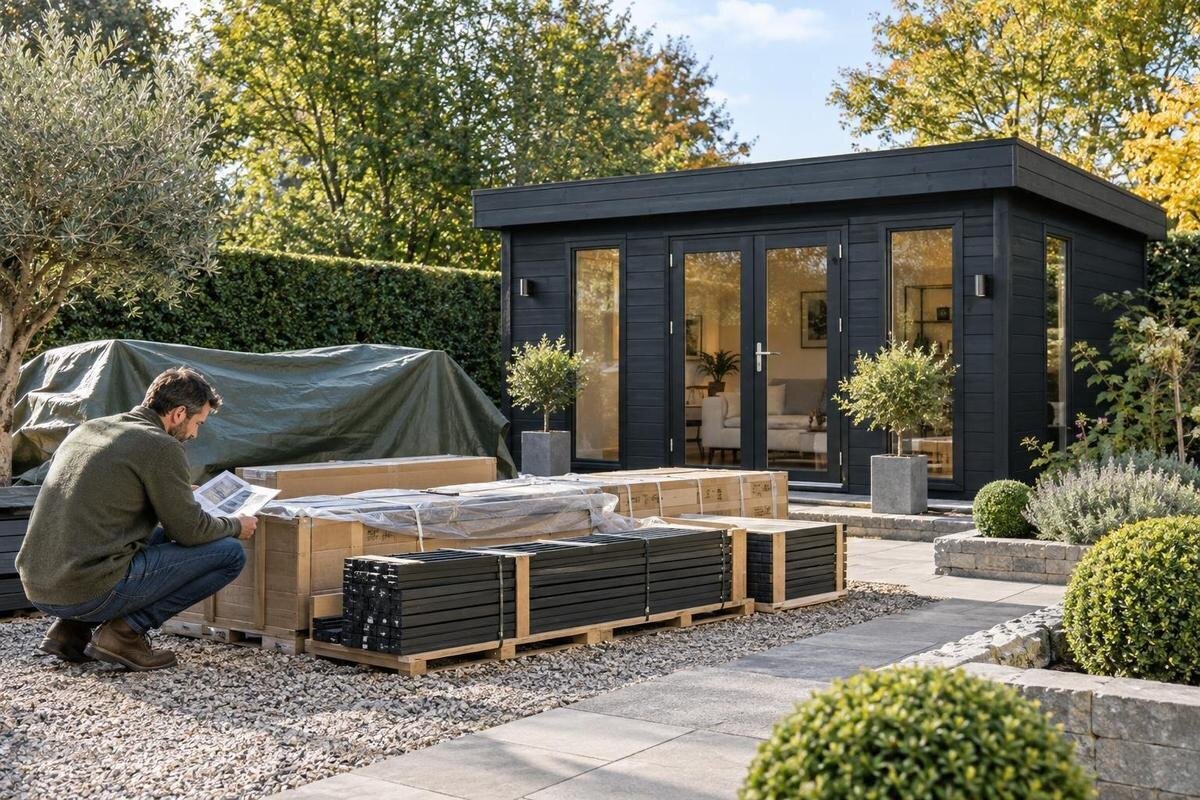
Do not assume a tarp makes outdoor storage suitable. Wind-driven rain, damp ground and moisture trapped under a tightly wrapped cover can still affect the packaging or parts. Use an outdoor location only if the instructions for your exact kit allow it, and follow their covering and support guidance.
Should I open the packages as soon as they arrive?
Check the outside condition and labels on arrival, and take photos before moving the packs. Keep them closed if the instructions recommend this and there is no reason to inspect inside. If the maker asks you to check the contents, open one package at a time and keep its parts dry and identified.
Can I stack the kit’s packages?
Only stack them if the package markings or manufacturer’s instructions allow it, and follow the stated orientation. Do not assume one carton can carry another or add unrelated items on top. If the markings are unclear, ask for guidance on the exact packages before arranging them.
What should I do if a package gets wet?
Photograph the wet area, labels and overall package, and note when you noticed it. Keep the packaging and contact the seller or manufacturer for advice before opening, drying, covering or repairing it. Do not assume the parts are unaffected or discard the wrapping before you have guidance.
Good kit storage begins before delivery: make sure the packages fit securely in a dry place and follow the maker’s storage guidance. Preserve labels and documents, then reconcile components with the packing list when the build is near. That organisation prevents avoidable delays on assembly day.
