
Inflatable or Rigid Hot Tub: Which Suits Long-Term Use in Malta?
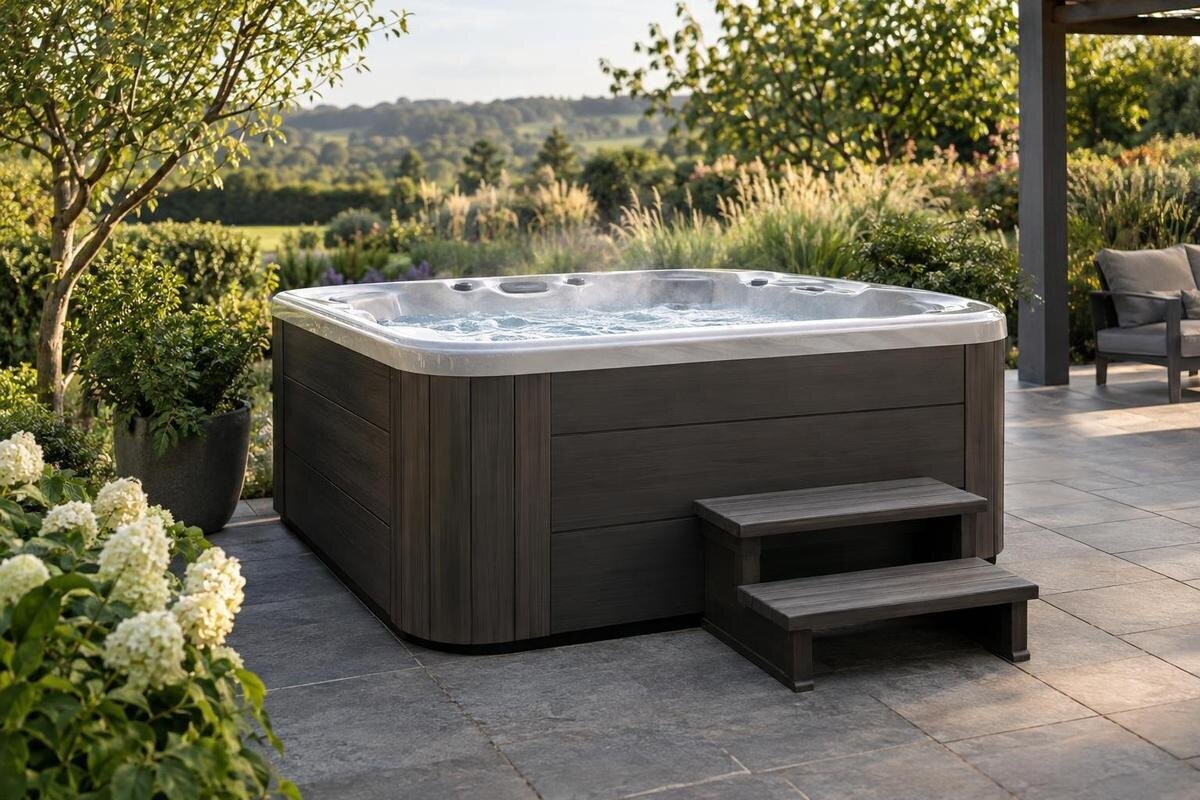
Long-term hot tub choice
Choosing between an inflatable and a rigid hot tub for use over several years is less about which sounds more durable and more about how each fits your routine. A tub used regularly and left assembled raises different ownership questions from one used in occasional periods and stored in between. The construction label is only a starting point: it does not prove a service life, yearly cost or repairability. For Malta buyers, compare the exact model’s written care, storage, parts and support information with the use pattern you actually expect.
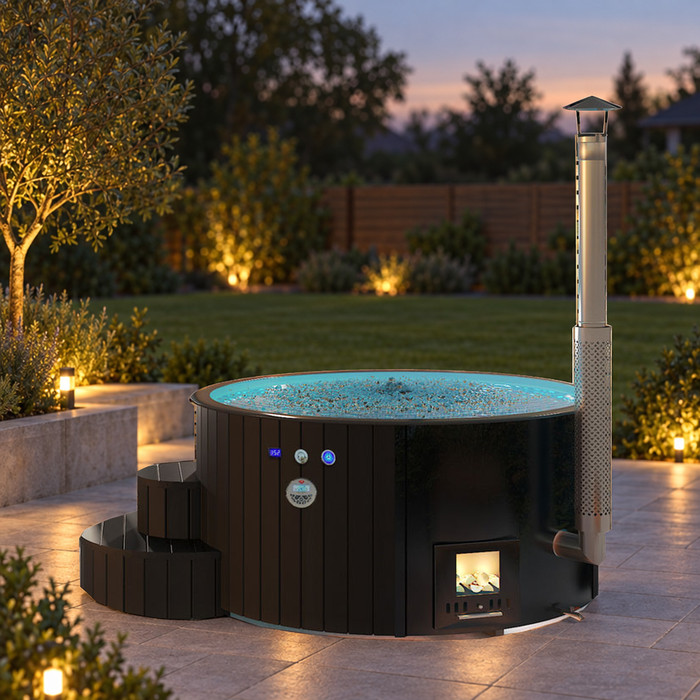
Inflatable and rigid hot tubs: what the labels mean
In ordinary product descriptions, an inflatable hot tub has a flexible, air-supported wall, while a rigid model has a fixed-form body or shell. That gives a broad idea of construction, not a quality grade or a forecast of service life. It does not establish the materials, surface finish, insulation, repair options or cost of a particular tub. Products within either category can differ in their body construction and attached equipment. Treat the label as an initial distinction, then look for the actual materials and a description of which parts are flexible, fixed or replaceable.
Before comparing a specific tub, ask the supplier whether the category describes the complete unit or only its outer body, and what materials form the body and finish. For Bloomcabin Hot Tub Cove 2, use the exact listing name in that enquiry and ask for the stated construction and any written guidance on remaining assembled or being stored. These are distinct facts: a construction label does not itself settle the tub’s storage routine. Keep the response with the product details so you can compare like with like.
How often will you use the hot tub?
Usage frequency changes the ownership routine even when the product is unchanged. With regular sessions, the model’s normal operating and water-care tasks will recur often; with occasional use, the pauses between sessions, the restart procedure and what needs attention while the tub is idle may matter more. The relevant question is not simply how many people will use it, but whether you want a predictable weekly routine, short bursts during the year or rare use. Write down a realistic pattern for the next few years, including likely periods when the tub will sit unused and how much time you want to spend keeping it ready. If care is shared, decide who will take responsibility for the routine.
Ask the supplier whether the manufacturer describes the exact model as suitable for regular, periodic or seasonal use, and what care is required during a planned pause. Request the written instructions for moving between active use and inactivity, rather than assuming both construction types handle it alike. For Bloomcabin hot tub Haven 6, ask what pattern of use the maker’s guidance covers; if an answer relies on the phrase ‘regular use’, ask what that means in practice. Compare the stated routine with your calendar, including seasonal changes, rather than an ideal schedule you may not follow.
Will the hot tub stay assembled or be stored?
Decide whether the hot tub will stay assembled between uses or be put away for a defined period. Inflatable construction can make deflation possible, while a rigid body is not collapsed in the same way; that physical difference does not confirm that a particular inflatable model is intended for repeated packing or that storage will be convenient. Check the maker’s instructions for preparation, storage conditions, removable parts and returning the tub to use. Ask whether a longer period in storage changes the requirements, whether there is a limit on storage duration and what packing materials are needed. If details are missing, do not assume the model can be packed away as you intend.
For a rigid model, ask whether the maker expects it to remain assembled and what the instructions say about periods out of use; do not assume it can be moved or stored simply because a listing calls it portable or outdoor. For either construction, account for where the tub and removable parts would go, who would handle the process, and how often it would happen. Confirm whether repeated storage affects care instructions or warranty terms. If packing requires another location or another person’s help, include that practical burden in the comparison. When considering the Fjord 8 hot tub, ask for its storage instructions and check whether they cover repeated storage.
Care requirements depend on the exact model
Care requirements need to be checked against the exact build. A flexible wall, fixed shell, surface finish and any water-treatment or operating components may have different cleaning, inspection or protection instructions; the category alone does not specify the tasks. Read the maker’s guidance for normal use, inactivity and storage, and note which work the owner performs, what supplies are required, how often each task recurs and whether a service check is recommended. Keep care of the water separate from care of the outer finish, since the instructions may differ. The purpose is to understand the commitment each model requires, rather than to assume that either construction type involves less work.
Ask whether the routine changes after the tub has been stored, or whether the model needs extra preparation before returning to use. Separate recurring chores from occasional tasks, and check that you can obtain the care products or replacement items named in the instructions. A claim such as ‘low-maintenance’ is not a substitute for a written task list: ask what the phrase means in practice and which tasks require professional servicing rather than owner care. Check how often supplies need replenishing so you can assess the ongoing commitment. Request guidance for Bloomcabin hot tub Aurora 10 rather than borrowing assumptions from another tub.
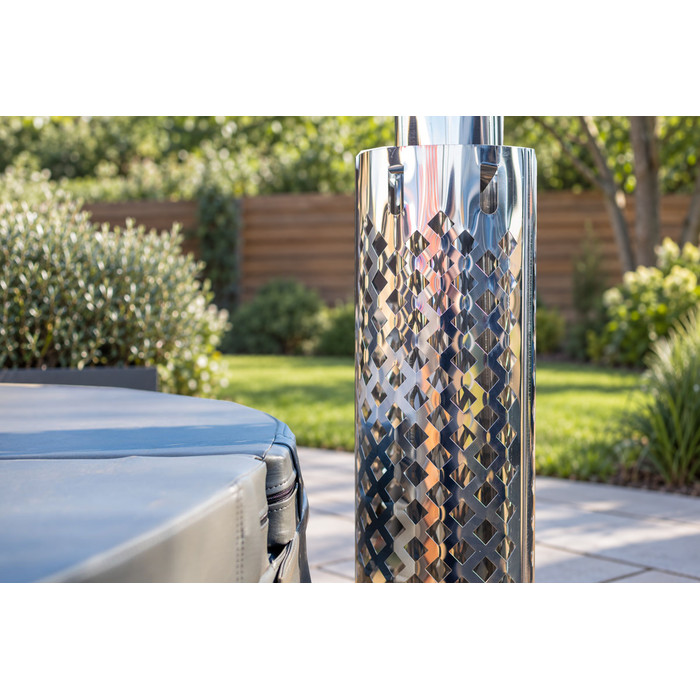
Repair options and replacement parts
Repairability is another factor to investigate, but the category label cannot answer it. For a flexible body, ask whether the manufacturer provides an approved way to assess and repair the wall, seams or valves, where present; for a rigid body, ask how damage to the shell or outer finish is handled. For either type, check the repair arrangements for attached equipment. Find out which parts can be replaced individually, which repairs require a service provider, and what happens if the body itself cannot be repaired. Ask whether repairs take place where the tub is or require moving the tub or a component. A general claim that a tub is repairable does not explain the process.
Replacement parts deserve a separate comparison. Ask how the exact part is identified, whether it can be ordered individually or only as part of a larger assembly, and whether it can be obtained in Malta or must be supplied from elsewhere. For the Cove 2 hot tub, use the full model name when asking about parts availability and the seller’s plans for future supply. Distinguish parts currently available from those that would need to be sourced when a fault occurs. Ask which parts the owner may replace and which need professional attention, so a parts price is not mistaken for the full repair cost.
Compare total ownership costs
Purchase price is only one part of the cost over the time you plan to own a tub. Set out any model-specific energy use, fuel if the selected heating method requires it, water and treatment supplies, and costs for replacement components or service. Add storage, packing or professional assistance only if they apply to your intended pattern. Separate fixed expenses from costs that rise with use, and ask how any operating estimate was calculated. Frequency, operating instructions, equipment and supplier terms all affect the figures; there is no reliable basis here for assigning one annual bill to every inflatable model and another to every rigid one. Estimates without stated assumptions are difficult to compare.
Use the same ownership period and assumptions for each quote. A worksheet can show the initial purchase, recurring expenses multiplied by your planned years, and any separately quoted repair, storage or service costs; put unknown items in their own column instead of entering zero. If your expected use could vary, compare a regular-use pattern with an occasional-use pattern rather than choosing whichever makes one model appear cheaper. When comparing the Haven 6 hot tub, ask the supplier for its current price and model-specific cost information. Note what each figure includes, and keep estimates separate from confirmed prices rather than filling gaps with generic averages.
A warranty is not a lifespan estimate
A warranty and an expected lifespan answer different questions. Warranty wording describes the cover stated by the seller or maker; it is not, by itself, a forecast of how many years a tub will remain in service. Ask for the terms for the exact model and note whether the body, finish, operating equipment and included accessories have separate cover or different durations. Confirm who handles a claim and what records or care steps are required. Look for exclusions relating to wear, consumables or storage, and any owner duties that are conditions of cover. This helps you understand potential costs without treating a warranty as proof that one construction will outlast another.
For any lifespan or durability claim, ask what evidence supports it and under what use, care and storage conditions it applies. A slogan such as ‘built to last’ cannot be converted into a number of years; a comparison needs a documented figure or clearly stated limits for both models. If the supplier cannot provide that evidence, mark expected lifespan as unknown and compare the available care guidance, repair options, parts availability and costs. Where warranty terms differ, compare what is covered as carefully as how long it lasts. For the Aurora 10 hot tub, request the exact warranty and any model-specific longevity information rather than inferring either from the name.
What to verify in each product listing
The catalogue names Cove 2, Haven 6, Fjord 8 and Aurora 10 identify products, but they do not establish construction type, materials, capacity, equipment, setup or storage guidance, repair options, parts availability or warranty terms. In particular, the number in a model name is not verified capacity information. For a meaningful comparison, check the current product information for the exact version and ask the supplier to put missing details in writing. Record whether each answer comes from the maker’s specification or a seller’s estimate, so claims with different levels of support are not treated as equivalent. A sales phrase is not a specification.
Use the Bloomcabin Fjord 8 product page as the reference for that model when you record supplier answers. Make one row per model and mark construction, materials, permitted storage pattern, care instructions, repair options, parts and warranty as confirmed, not stated or awaiting an answer. Save the replies alongside the listing or version they refer to, and date your notes in case the product information changes. This prevents product photographs, a number in the title or a familiar label from filling information gaps, and makes it easier to check whether a follow-up response addresses the same model.
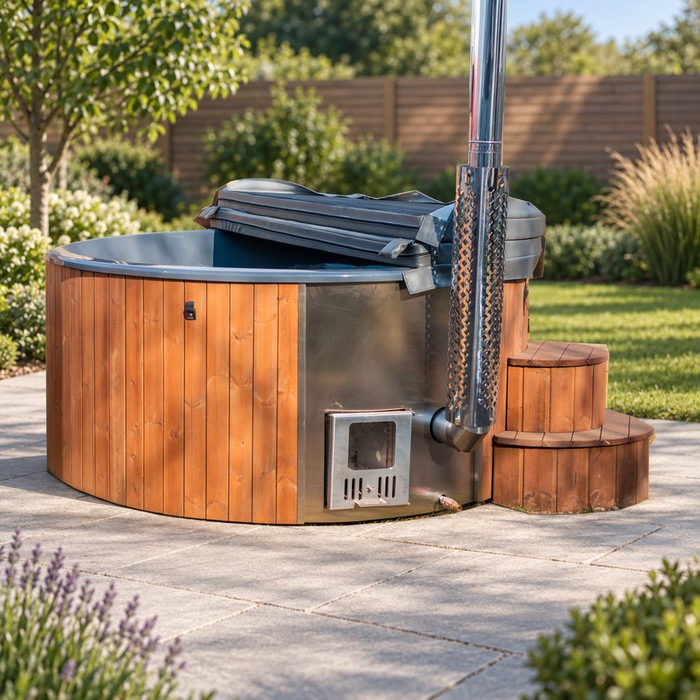
Match the construction to your pattern of use
An inflatable option makes sense only if the exact model’s guidance supports the use and storage pattern you want, and its care, repair and support arrangements are acceptable. If putting the tub away between periods is important, ask whether repeated deflation is covered and what the storage instructions require; do not count the ability to pack it away as a benefit until that is confirmed. A rigid option can suit a plan to keep a tub assembled if its documented care, component support and costs fit that routine. Neither label proves the tub will last longer, need less work or cost less. If durability is your main concern, compare model-specific evidence rather than relying on the word ‘rigid’.
If you expect regular use, compare both types under the same regular-use assumptions: tasks, consumables, support and stated operating costs. If use will be occasional with storage between periods, give approved storage instructions and the pause-and-restart routine more weight. If the frequency is uncertain, use two plausible patterns and choose only once the most important unknowns are answered. You may rule out one particular model without ruling out its entire construction type. If the documented instructions do not cover the way you intend to use a model, ask for clarification instead of assuming that unaddressed use is permitted.
After-sales support in Malta
Malta buyers should include the route to after-sales support in a long-term comparison, rather than assume that an online listing means help is available locally. Ask whether the seller handles service in Malta, refers faults to the manufacturer or uses a named provider, and get the answer in writing. Confirm how to report a fault, who can identify and order parts for the exact model, and whether assessment, labour and parts are quoted separately. If support is provided from outside Malta, ask where repair takes place and how the owner contacts the responsible party. Also clarify whether support covers the tub body as well as any separate operating equipment.
Ask for an estimate of response or repair times, and note whether it is an estimate or a commitment. If no local repair service is offered, decide whether direct contact with the maker or arranging help yourself is acceptable before buying. Consider how an interruption would affect your plans: someone expecting regular sessions may place more weight on accessible service than someone prepared to leave the tub unused while a repair is arranged. Keep uncertainty visible in your comparison rather than inventing a charge or assuming there will be no cost. Save the support contact’s details and their response alongside your model notes.
Frequently asked questions
Does a rigid hot tub always last longer?
No. Rigid and inflatable describe broad construction, not a guaranteed service life. Materials, use, care, storage, repair options and parts support all matter. Ask for lifespan evidence for the exact model and the conditions it assumes. If no evidence is available, treat its expected lifespan as unknown rather than choosing on the label.
Is an inflatable hot tub automatically easier to store?
No. Inflatable construction can allow deflation, but that does not confirm that a particular model is designed for repeated packing or that the process is convenient. Check the maker’s instructions for storage conditions, preparation and returning the tub to use.
How should I compare long-term costs without a quoted total?
Use the same ownership period and use pattern for each model. Include the purchase price, energy or fuel where applicable, water and care supplies, storage, parts and service. Ask for model-specific figures with their assumptions, and mark missing figures as unknown instead of treating them as zero.
Can a model name tell me whether a hot tub is inflatable or rigid?
No. Cove 2, Haven 6, Fjord 8 and Aurora 10 are model names; they do not confirm construction, capacity or materials. Check the current specification or ask the supplier to confirm the construction of the exact model in writing.
What should I ask about service support in Malta?
Ask who receives fault reports, who can assess and repair the exact model, and how replacement parts can be identified and ordered. Clarify whether support is handled by the seller, the manufacturer or another provider, and request any service charges or timing estimates in writing.
Over several years, the better choice is the one whose actual construction and instructions suit the way you intend to use and store it. An inflatable label does not promise effortless storage; a rigid label does not promise a longer service life or lower cost. Compare the exact model’s care, repairs, parts, warranty wording and costs based on your expected use, and mark unsupported claims as unknown. If a supplier cannot confirm the details that determine whether the tub fits your routine, wait for a clear answer rather than guessing.
