
New or used greenhouse: which suits you best?
Garden buying guide
New or used greenhouse: a sound choice starts with an honest condition check.
A used greenhouse can make sense when its structure, glazing and accessories can be checked thoroughly. Buying new, on the other hand, provides clearly defined contents and a predictable starting point. This guide helps you weigh both routes objectively for your garden.
Anyone looking to buy a greenhouse may find appealing used offers: an existing structure, perhaps including a base or accessories. Yet photographs and a brief description cannot replace an inspection in person. With older structures, corrosion-free connections, well-fitting profiles, intact panes and available spare parts determine whether a find becomes a practical garden space.
A new greenhouse is not automatically the better option in every situation. However, it reduces uncertainty because dimensions, components and assembly sequence fit together from the outset. That makes site planning easier and creates a reliable basis for ventilation, watering and planting. This clarity is often especially valuable for a long-term garden project.
The comparison is therefore not a matter of new versus old in principle. Your practical skills, time for inspection and transport, and expectations for design and use are what matter. Consider purchase, replacement parts, assembly and later care as one package. That reveals when a used greenhouse is genuinely suitable and when a new model is the calmer choice.
01 · Starting point
Clarify your real needs before viewing offers
Start with your garden rather than classified adverts. Which plants do you want to raise, overwinter or tend under protection? How much circulation space do you genuinely need, and should the greenhouse be productive, decorative or both? A used model only convinces when its dimensions and door layout suit the intended site and everyday routines.
A new build gives you more freedom over proportions, glazing and equipment. That does not mean bigger is always better: a balanced relationship with the terrace, beds and house will remain more pleasing over time. Mark out the area on the ground first and check routes, light and access. This avoids turning an inexpensive used structure into a compromise in the wrong place.
Alongside the footprint, consider how you will use it throughout the year. A sensible site leaves room to open doors and windows, carry soil or pots, and clean regularly. Also check whether neighbouring trees, fences or buildings alter the light at times important to you.
- Note plants, working routes and desired shelf space before comparing dimensions from different offers.
- Check access to the garden: large frame elements or panes must reach the site safely.
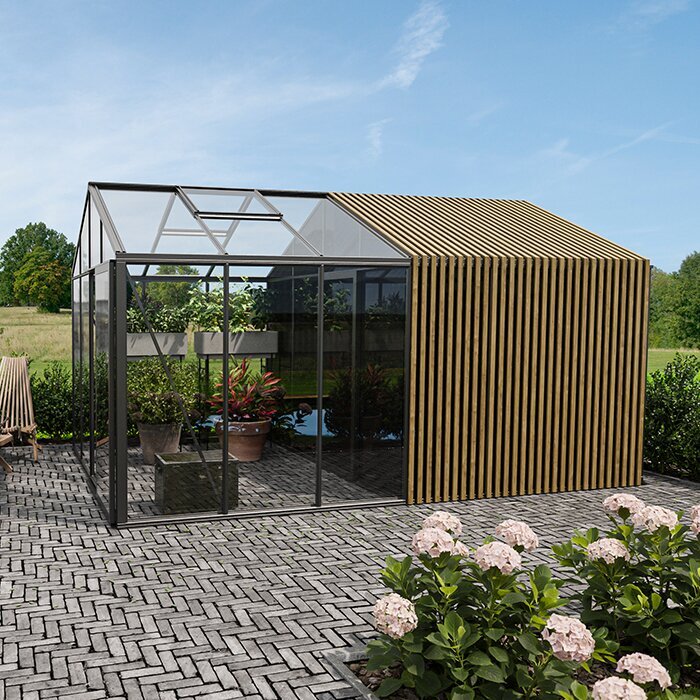
For a clearly planned start, a standard Classic greenhouse offers a practical reference for dimensions and equipment.
02 · Structure
Check every component when buying used
Inspect a used greenhouse in daylight and, where possible, while assembled. Look along the profiles: distortion, deep scratches, crushed edges or uneven joints can suggest stress during assembly or earlier storm exposure. Open doors and windows several times. They should move without excessive play and close cleanly, as moving parts often reveal wear early.
Give particular attention to joints, screws, seals and glazing supports. Surface dirt is usually manageable, whereas missing clips or brittle seals can create follow-on cost and searching. Ask for every loose item to be laid out and compare it with any assembly instructions. Without them, even safe dismantling becomes unnecessarily demanding.
Take a short checklist, gloves and a tape measure to the viewing. Photograph notable areas from several angles and ask for repairs to be explained. It is particularly revealing whether components fit cleanly or whether screws, profiles and seals have visibly been improvised. You can then compare condition with the contents without time pressure.
Also check that profiles meet without tension at their joints. Uneven gaps or subsequently widened drill holes may indicate that individual elements no longer belong to the original structure.
- Check frame ends and corner joints for cracks, deformation, corrosion and temporary repairs.
- Count panes, clips, screws and opening elements on site instead of relying on the seller's information.
Where a house wall shapes the site, a full-size regular Lean-To greenhouse can be planned around that connection from the beginning.
03 · Glazing
Assess panes and infill panels realistically
Glazing shapes appearance, light and maintenance, but is also sensitive cargo with a used purchase. Inspect every pane for cracks, chips and edge damage. Watch for makeshift sealing or differently replaced panels; these may function, yet alter the overall look. On transparent surfaces, scratches, deposits and uneven ageing are more noticeable in daily use than during a quick viewing.
Ask not only whether panes are present, but how they will be protected during dismantling. Safely packing individual glass panels takes time and suitable transport. A new greenhouse removes uncertainty over used glazing and its history. In return, you can place your preferred look deliberately within the garden design rather than accepting existing traces.
Consider the glazing type consistently across the whole structure. Different tints, surfaces or materials may indicate replacement parts and change the appearance. Check that panes sit securely on their supports and that clips appear complete. Loose or unsuitable fixings require particular attention during transport and later use.
- View panes at an angle to the light; fine cracks, scratches and dull areas become easier to see.
- Treat packing materials and safe transport as a fixed part of buying used, not an afterthought.
Create a calm, classic garden character with a standard Classic greenhouse as a deliberately chosen focal point.
04 · Completeness
Missing small parts are rarely minor
A frame alone is not a complete greenhouse. Doors, windows, fittings, gutters, fixings, covers and every glazing element are what make it usable. Prepare a written handover list before committing. Ask to see which components are fitted and which are stored separately. Inconspicuous clips and special screws are often missing after earlier moves.
An existing base should not automatically be treated as an advantage. Check its dimensions, level and condition, as well as whether it can actually be used at your site. A base cannot always be moved easily. With a new purchase, you can instead prepare it to the specific model requirements and coordinate assembly better with other garden work.
For an offer already dismantled, ask for an orderly display of all component groups. Doors, windows, gutters and fittings should be clearly separate from frame profiles. A list alone is insufficient if parts cannot be identified. The clearer the sorting, the better you can judge whether reassembly will bring lengthy searches or additional purchases.
- Request photographs of every dismantled box, fitting and window part before arranging transport and helpers.
- Measure a used base yourself and compare it with the structure's actual external dimensions.
For wall-side planning with clearly defined contents, a full-size regular Lean-To greenhouse is a straightforward alternative.
05 · Spare parts
Origin matters for future repairs
For used greenhouses, the brand is more than a question of style. It helps identify profiles, glazing dimensions and fittings. Ask for purchase documents, the model designation and year of manufacture where known. Without this information, even one small missing item can require extensive research. Universal solutions do not necessarily fit and can impair a door, window or glazing function.
Also check whether changes made in the past are documented. Added shelves, homemade seals or drilled holes may be practical, but can complicate removal or replacement. A new system begins without these unknown interventions and lets you select accessories around your own routines. Keep documents and a list of installed components safely afterwards.
A helpful first step is to identify the manufacturer and model range clearly. Compare photographs of profile sections, door fittings and window mechanisms with available documents. Keep this information after purchase too, adding your own photographs of fitted parts. It simplifies later enquiries and prevents small additions being chosen without a reliable basis.
During inspection, note unusual dimensions and conspicuous fixings as well. The more accurately these details are recorded, the easier it will be later to judge whether an addition would be technically and visually suitable.
- Ask for model names, documents and close photographs of fittings before estimating the availability of possible spare parts.
- Assess homemade additions critically: they may be useful, but can also conceal damage or missing original components.
Those wishing to begin with a traceable system basis will find a standard Classic greenhouse a clear starting point for later additions.
06 · Assembly
Include dismantling and transport honestly
A used greenhouse often becomes a logistical task only when it is dismantled. Plan enough helpers, protection for panes, labelled containers for small parts and dry interim storage. Photograph every side before loosening anything and label profiles clearly. This saves time during reassembly, but does not replace instructions. Disordered dismantling greatly increases the risk of mix-ups, losses and damage.
A new purchase also needs assembly preparation, but the sequence is usually easier to organise. A firm, level base and enough room around the work area remain essential. Whichever route you choose, check whether the intended work and layout suit local requirements for your property. For a Malta project, ask the Planning Authority and a perit to assess the specific proposal.
Do not plan dismantling as simple reverse assembly. Some joints may seize after years in place, while panes and profiles need support when released. Set aside a protected staging area and pack sensitive parts immediately. A clear sequence, labelled containers and photographs of connections help preserve oversight until reassembly at your own site.
Before dismantling, check that every route from the site to the vehicle is clear and wide enough. Narrow points, steps or delicate surfaces change the workload and sensible sequence.
- Prepare a labelling plan for dismantling by side, height and position of each profile.
- Before transport, confirm vehicle size, load security and interim storage, especially for delicate glazing parts.
Where garden space is limited, a full-size regular Lean-To greenhouse can concentrate planning along an existing wall.
07 · Value
Look beyond the purchase price
The attractive price of a used greenhouse is only one part of the calculation. Add dismantling, travel, consumables, spare parts, cleaning, base alterations and your own time. If you need support for individual jobs, include that too. What appears to be a bargain may then prove a fitting solution, or a project whose real effort points more clearly towards buying new.
A new greenhouse provides a defined starting point, but you should still read the offer and supplied contents carefully. Do not compare new and used in general terms; compare two specific scenarios with the same intended use. A smaller new model can make more sense than a larger used one if it fits the garden better and needs fewer adjustments. Current terms follow from the individual enquiry.
Also compare how well each option fits into your existing garden work. A used structure may require additional time for inspection, dismantling and refurbishment. With a new solution, the focus is more likely to be on careful site preparation. What matters is which tasks you want to undertake yourself and where realistic help is available.
- Use the same cost categories for both options so missing parts and your own labour do not disappear from view.
- Assess the time involved too: a long restoration project does not suit every planting schedule or daily routine.
As a long-term garden feature, a standard Classic greenhouse can set the benchmark for your project comparison.
08 · Decision
Decide confidently with a clear checklist
Choose used when you can assess its condition yourself, the contents appear complete and transport can be arranged realistically. Take time for a second viewing when details remain unclear. Sound decisions are not made under pressure. Record notable issues and put open questions in writing before making binding arrangements or setting a dismantling date.
Choose new when you want a coordinated solution, attach particular importance to design, or do not want to allow for missing parts and adjustments. For longer-term commitments, ask for the currently valid written conditions and exact scope. A sound decision comes from weighting your most important criteria in advance. Some people value the existing character of a used greenhouse; others prefer freedom over size and specification. Note which deviations you would accept, so the comparison remains objective even if an offer looks especially appealing at first sight.
A sound decision comes from weighting your most important criteria in advance. Some people value the existing character of a used greenhouse; others prefer freedom over size and specification. Note which deviations you would accept, so the comparison remains objective even if an offer looks especially appealing at first sight.
- Make your choice only after preparing a site sketch, condition check and full cost overview for the options being compared.
- For a used purchase, record the handover contents, visible damage and agreed accessories clearly in writing.
If you prefer an architecturally calm wall-side solution, consider a full-size regular Lean-To greenhouse when planning your own site.
Comparison
New or used: the key differences
The following comparison does not replace an inspection, but shows where the two buying routes differ in practice. Assess the criteria against your site, available time and the specific offer.
| Criterion | New greenhouse | Used greenhouse |
|---|---|---|
| Starting condition | Defined components and predictable choice. | Condition must be checked on site. |
| Contents | Specification can be understood in advance. | Missing parts or mixed components are possible. |
| Assembly | Preparation follows the intended system. | Dismantling order and completeness affect reassembly. |
| Appearance | Design begins without signs of use. | Patina may feel charming or distracting. |
| Spare parts | Model identity makes later matching easier. | Manufacturer and model range should be identifiable. |
How to compare two specific options
A simple comparison plan prevents instinctive decisions. Apply the same criteria to a new and a used greenhouse, and record only information you can verify.
01
Sketch the site
Measure the area, access and routes. Consider light, sightlines, neighbouring areas and enough room for assembly and later care.
02
Define the use
Decide which plants, work surfaces and opening options you need. This leads to a sensible size and internal arrangement.
03
Inspect the used structure
Inspect frame, glazing, fittings and loose parts. Photograph notable issues and compare the inventory with available documents.
04
Capture the total effort
Note transport, helpers, cleaning, the base and likely additions. Compare these points with a specific new model.
05
Secure the decision
Check local requirements and, where relevant, insurance questions separately. Decide only once open points have been clarified.
Checklist before buying a used greenhouse
Take this list to the viewing. A checked item is more valuable than a general seller assurance and makes a fair comparison with buying new easier.
01. Site dimensions, access and the planned base were noted before viewing.
02. Frame profiles, corners and joints were checked for distortion, damage and corrosion.
03. Doors and windows were opened, closed and checked repeatedly for play.
04. Every pane was inspected individually for cracks, edges and noticeable scratches.
05. Clips, screws, seals and fittings were counted or documented in photographs.
06. Model designation, manufacturer information and available assembly documents were requested.
07. Dismantling, packing, transport and interim storage are planned with enough time and helpers.
08. Handover contents and visible defects will be recorded in writing before collection.
Frequently asked questions about new and used greenhouses
When is a used greenhouse a good choice?
A used greenhouse can work well if you can inspect it in person, check all essential parts and organise dismantling safely. Its size and condition must suit your garden project. Always include missing parts, transport and possible modifications when making the decision.
Which defects are especially critical when buying used?
Distorted or cracked frame profiles, damaged corner joints, missing fixings and panes with cracks or edge faults are critical. Stiff doors and windows also need attention. Surface dirt is usually less important than structural damage or components that cannot be identified.
Should I buy a used greenhouse only when assembled?
An inspection while assembled is much more useful because you can directly see alignment, stability, door operation and windows. An already dismantled offer is not automatically unsuitable, but requires especially detailed photographs, a complete parts list and confidence in how components were sorted.
How important are spare parts to the decision?
They matter because small fittings or matching panes can be difficult to identify later. Ask for the manufacturer, model and existing documents. Where origin is unclear, assess before buying whether missing components can be sourced or whether the effort would burden your project disproportionately.
Do I need to consider local requirements for a greenhouse?
This may depend on the site, size, specification and local rules. Do not rely on experience from other properties. In Malta, have a perit check the Planning Authority classification and site restrictions early, especially before constructing a base or committing to assembly.
Is a new greenhouse always less demanding?
Buying new typically reduces uncertainty about condition and supplied contents, but does not remove site preparation. The base, access, assembly time and later care still need planning. New is less demanding mainly when buying used would otherwise mean sourcing parts, repairing damage or adapting dimensions.
Discover greenhouses
The right choice is the one you can plan completely
A used greenhouse can bring character and a meaningful second life to the garden. It does, however, require a clear-eyed view of the frame, glazing, completeness and logistics. When every point is traceable, it can become a highly personal garden project.
A new greenhouse, by contrast, creates a defined basis for design and use. What matters is not which route sounds better in general, but which will remain right for your site. Plan carefully, compare specific options and choose the solution whose effort you can genuinely understand.
Discover greenhouse solutions from Bloomcabin that you can plan around your garden project.
