
Planning Gutters and Rainwater Collection for a Garden Shed
Garden shed planning
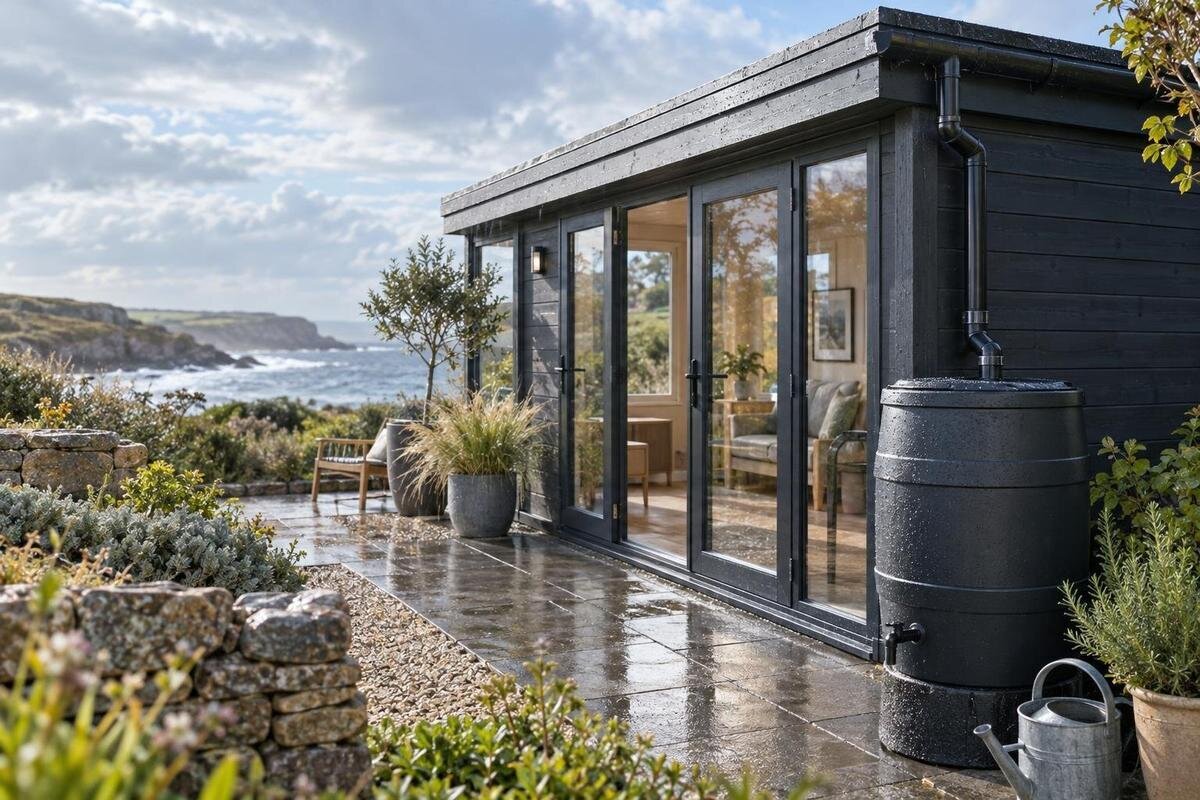
Planning gutters and rainwater collection for a garden shed starts with the route water will take from roof to garden, not with tank capacity alone. Decide which roof edges can collect runoff, where each downpipe can descend, and how overflow will leave the site. Then choose storage around the garden tasks you actually expect to use it for. Before ordering the shed or accessories, confirm the roof details and what the supplier includes; a product image or model name cannot establish gutter compatibility.
Before you order 1
Plan the collection route with the shed's position
Begin with the shed's intended position, because a gutter layout that works on paper may conflict with a doorway, a path or the way you use the garden. On a simple site sketch, mark the proposed footprint, roof outline, entrances, boundary lines, paving, planting beds and any surface where water already gathers. Add possible tank locations and the route from each downpipe. This exposes practical problems early: a pipe crossing the approach to the door, a tank blocking access to stored tools, or roof water falling onto a frequently used path. Note the direction in which the ground slopes and where puddles form, so you can assess a possible runoff route rather than relying on a guess.
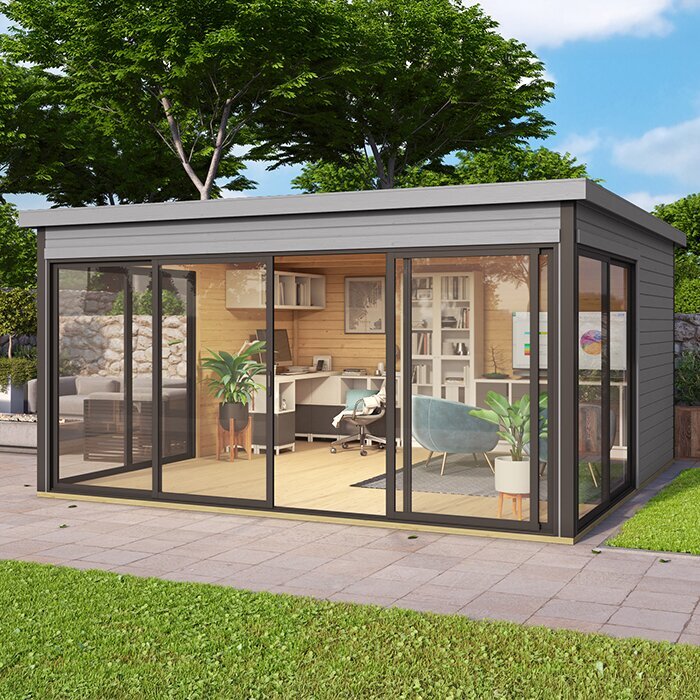
Plan for access after installation as well as for the initial layout. You will need to inspect the gutter, clear an inlet screen, reach the tank lid and tap, and check the overflow route; a container pushed into a narrow gap can be difficult to maintain. Allow for fittings to project beyond the wall line, and keep discharge away from the building base, the doorway and neighbouring property. When considering the Verdana 1 garden shed, use its exact product drawing and supplier guidance to confirm roof edges and clearances. Neither its name nor a catalogue image tells you whether a particular gutter can be fitted. Leave enough room to use the tank without first moving tools or garden furniture.
Read the roof layout before choosing gutters
Identify which roof edges actually shed water before choosing a gutter run. A sloping roof directs runoff towards particular sides; a different arrangement may create more than one collection edge. Study the roof plan, not just the floor footprint: the roof may project beyond the walls, which changes where a gutter and downpipe can sit. Check the fall direction and any eaves or fascia detail shown in the documentation, rather than assuming all garden sheds use the same layout. If no clear drawing is available, request one before comparing gutter lengths, fixing points or possible tank positions. The plan should also show corners or changes in direction that may need separate fittings.
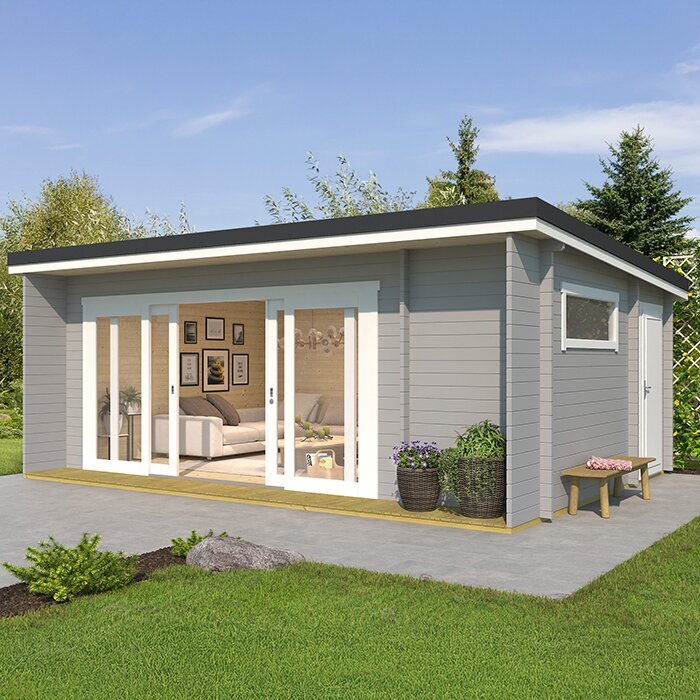
Decide whether you want to collect from one edge or several, and whether each run can reach the chosen tank or outlet without crossing an entrance. Gutter parts must follow the roof's actual geometry, including ends and corners; a straight line on a sketch is not enough if components cannot join as planned. For the Verdana 2 garden shed, confirm the exact roof information and ask which attachment points and compatible fittings are recommended for that version. If the answer is unclear, have the shed supplier or a gutter installer review the drawing before ordering. This avoids buying a run that does not fit the finished position.
Before you order 2
Match storage to expected water use
Choose storage according to the uses you can reasonably support. List them first: watering pots, rinsing garden tools and filling a watering can may need a different reserve from trying to supply a large planted area. The volume available depends on the roof's catchment area, rainfall over time and collection losses such as splash or debris. A larger tank cannot make up for limited rainfall or a small catchment. Use documented roof measurements and local rainfall information to discuss likely yield with a rainwater supplier or installer; do not use the shed's floor area alone as a precise guide. Collection will vary from one rainfall event to another, so avoid planning around a single downpour.
Balance capacity against the space and maintenance you can manage. A small vessel may fill and overflow sooner, while a large one takes more room and can remain partly empty when rainfall is limited. Check its footprint and height, access to the lid and tap, and whether you can draw water without trailing a hose across a path. For the Durano garden shed, compare the confirmed roof catchment with a tank drawn to scale on your site plan; neither the model name nor an image predicts how much water you will collect. If you need a yield estimate, ask the supplier to state the assumptions behind it.
Choose a gutter system that fits the roof and site
Treat gutters as a coordinated system, not as separate pieces selected for appearance. Check the channel profile, outlets, end caps, corners, connectors and brackets, and make sure the parts are designed to work together and match the roof detail. Material choice affects maintenance and suitability for the plot's exposure; strong sun, wind or coastal air may change what is appropriate. Ask about the particular system's outdoor suitability and replacement parts rather than relying on a broad material label. The chosen gutter size and outlet arrangement should be confirmed for the roof and expected local conditions, not guessed from a picture.
Confirm whether gutters and fixings are included with the shed, offered as an accessory or sourced separately; never infer this from a photograph. The shed supplier's guidance and the gutter maker's compatibility information should agree on the attachment method. If they do not, resolve the mismatch before ordering or modifying the structure. For the Veltor 1 garden shed, request the roof and fitting guidance for the exact version under consideration, then ask an installer if the fixing point or roof edge is uncertain. This is especially relevant when the plan collects from more than one edge, because corners and separate runs add components.
Before you order 3
Place downpipes on a workable route
A downpipe is easiest to manage when it follows a clear route from the gutter outlet to the tank or discharge area. Mark it beside doors, steps, paths, windows, stored items and planting that needs regular access. Keep the pipe out of the normal walking line where possible, and consider how a hose or temporary connection will affect movement when drawing water. It should remain visible enough to inspect; hiding it behind stacked tools can leave a blockage unnoticed. Check that the chosen route will not conflict with doors or other fittings, and leave room for the pipe's connectors and any inlet screen at the tank. A marked plan can make these details clear to an installer.
Do not put an outlet at the nearest corner if that sends water towards a threshold, boundary or awkward tank position. Roof layout may call for more than one outlet, but the appropriate number and capacity depend on the roof and site conditions, so have a supplier or installer specify them rather than guessing. If the tank must stand away from the shed, decide how water will travel between the two and whether the connection stays accessible. When reviewing the Orello 1 garden shed, ask the installer to mark proposed downpipe positions on the actual site plan before components are ordered. That check can reveal a route that looked convenient only on a product image.
Choose a tank for the garden tasks
Choose a tank shape and position around how you will use and maintain it, not just its nominal capacity. Compare the available footprint, height, access to the lid, location of the tap and space to fit a hose or watering can. Keep lids and screens reachable so the system can be inspected without shifting the shed's stored contents. A full tank is heavy: follow the tank maker's requirements for support, and do not assume that a shed floor or a paving surface is suitable. If the ground, base or intended placement raises questions, ask the tank supplier or installer to confirm what support is needed before the shed and tank are ordered.
Consider whether the tank needs protection from sunlight and debris, and ask whether its material is intended for outdoor exposure at your site. An inlet screen and a secure cover help keep leaves and animals out, but they do not turn roof runoff into drinking water. Treat collected water as non-potable unless the whole system has been designed and assessed for potable use. If you intend to use rainwater for a purpose with specific quality requirements, confirm the roof and storage materials are suitable first. For the Modano 1 garden shed, make the tank location part of the site plan rather than assuming the building itself determines it.
Before you order 4
Plan where the tank overflow will go
Plan for overflow even when the tank is the right size: during some rainfall it can fill before you need the stored water. Decide where excess water will go once the tank is full, and keep that route separate from the shed base, doorway, paths and places where people stand. Discharge that repeatedly wets the same patch can create pooling, erosion or muddy access, so identify a destination that can accept water without disrupting normal garden use. Do not simply cap a downpipe or leave an overflow pointing at the nearest surface. Include the entire route on the sketch, through to its final discharge point.
Where the ground is paved, slopes towards a boundary, or cannot safely absorb the flow, the right solution may need more than a short surface outlet. Do not assume an existing drain, channel or soakaway can take shed runoff. Ask a local drainage professional to assess any proposed connection and explain what is suitable for the site; requirements can vary, particularly for shared or public systems. For the wooden garden shed M, consider the overflow plan alongside the shed position and tank choice, not as an afterthought. Keep the route accessible for inspection so leaves or sediment do not leave water backing up.
Plan for filters and regular maintenance
Rainwater collection needs routine attention because a roof can contribute dust, leaves, seeds and other debris. Ask whether a leaf guard, inlet screen, filter or first-flush device suits your roof and intended use; select accessories for the system rather than adding them by habit. Screens can reduce larger debris but still need cleaning, while fine filters may need regular inspection or replacement. Consider how you will reach these parts and whether they can be removed and refitted without dismantling a downpipe. If trees overhang the roof, allow for more frequent debris checks. A useful system is one you can maintain at the frequency recommended by its supplier.
Ask the supplier to explain what cleaning the roof, gutter, screen and tank involves, and which parts may need replacement. Check that a filter can be opened without spilling stored water where you do not want it, and leave an accessible route to the tank base and tap. After rainfall, a brief ground-level visual check can reveal a displaced connection or overflowing tank; arrange suitable help if roof-level cleaning is awkward rather than improvising access. Filtering does not make the supply potable, and stored water should be used only for purposes appropriate to its quality. When comparing the wooden garden storage shed S, verify roof and gutter details separately from the product's storage description.
Before you order 5
Confirm specifications and inclusions before ordering
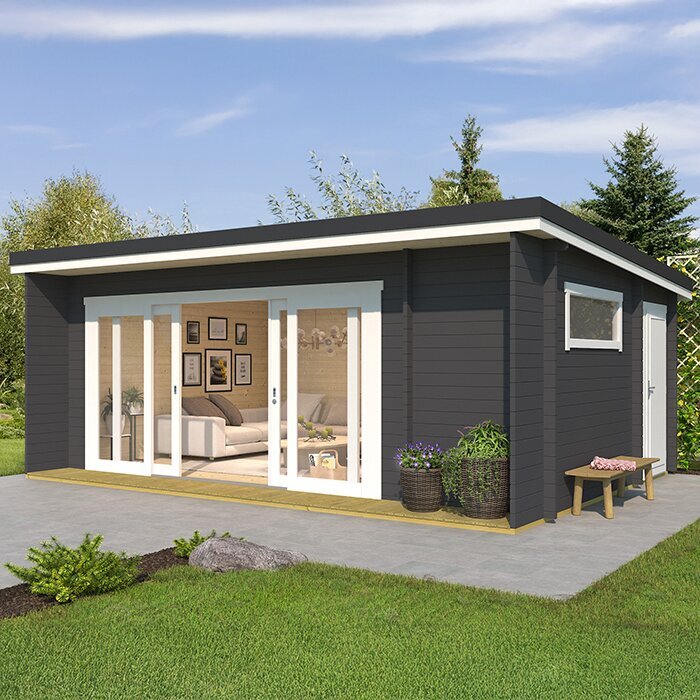
Before placing an order, identify the exact shed model and version and request the roof plan, external roof dimensions, overhang details and any instructions on fitting accessories. Ask whether the gutter system is supplied, sold separately or left to the buyer, and request a complete list of channels, outlets, brackets, connectors and downpipes required for the drawing. Check whether a tank or filter is included rather than assuming it is part of a package. If the documentation does not identify a supported fixing point or compatible accessory, get a clear answer from the relevant supplier before buying components or arranging work. Keep the response with your order records.
Use the site sketch to confirm measurements and paths around the exact position, then compare it with any supplied installation drawing. Allow for the tank, its access, the pipe route and the overflow destination, not just the shed footprint. Ask the seller about delivery access, assembly or installation arrangements, and which party provides gutters, tank, fixings and drainage work; these may be separate parts of the job. Confirm the order description and exclusions in writing, including the selected model version and any accessories agreed. This helps avoid discovering that a missing fitting or unclear responsibility interrupts the planned collection setup.
Compare complete plans before you commit
Compare supplier responses against the same brief. One answer should cover roof-edge compatibility, the gutter layout, downpipe positions, tank choice, overflow destination, cleaning access and the components included; otherwise quoted packages may not be comparable. Ask for separate item descriptions so you can see what the shed order covers and what requires another supplier or installer. Also ask how damaged or worn system parts can be identified and replaced, and who is responsible for confirming compatibility if components come from different makers. Clear written answers are more useful than a low headline price when the scope remains uncertain.
Your priorities depend on how you garden. If you mainly want occasional water for a few pots, a compact tank and simple accessible route may be sufficient; wider collection or more frequent use may justify discussing a larger reserve. Either way, the plan still needs an overflow route. Do not order storage before confirming the roof catchment and intended location, or gutters before confirming their fit and outlet plan. Once the shed, collection components, tank support and final discharge are shown together on one site plan, the order is easier to check and the finished system is easier to maintain.
Frequently asked questions
Does every garden shed include gutters?
Package contents vary, so check the details for the exact shed and version rather than assuming gutters are included. Ask whether the price covers the gutters, brackets, outlets and downpipes, or whether these need to be ordered separately.
Can gutters be fitted to any garden shed?
There is no universal answer. The roof edge, recommended fixing points and gutter system all need to be compatible. Ask the shed supplier for fitting guidance and have an installer review the layout if the attachment method is unclear.
How do I choose a rainwater tank size?
Consider the roof area that can feed the tank, local rainfall information, the garden tasks you want to support and the space available. A supplier or installer can help estimate collection; also plan for overflow when the tank is full.
Can I drink water collected from a shed roof?
Do not assume roof runoff is drinking water: it can carry dust and other debris. Treat it as non-potable unless the complete collection and treatment system has been designed and assessed for potable use by a qualified provider.
Where should tank overflow go?
Plan a route that directs excess water away from the shed base, doorway, paths and neighbouring property. If you are considering a drain, channel or soakaway, ask a local drainage professional whether it is suitable for your site.
A good collection plan follows the shed's verified roof layout all the way to a maintainable tank and a suitable overflow destination. Choose storage for realistic garden uses, confirm which components are included, and leave access for cleaning and inspection. Where an attachment point, tank support or drainage route is uncertain, get site-specific advice before ordering. With those decisions settled together, the shed and rainwater equipment can be selected as one practical arrangement rather than as separate guesses.
