
Single or double front door: space and everyday use
Front-door planning
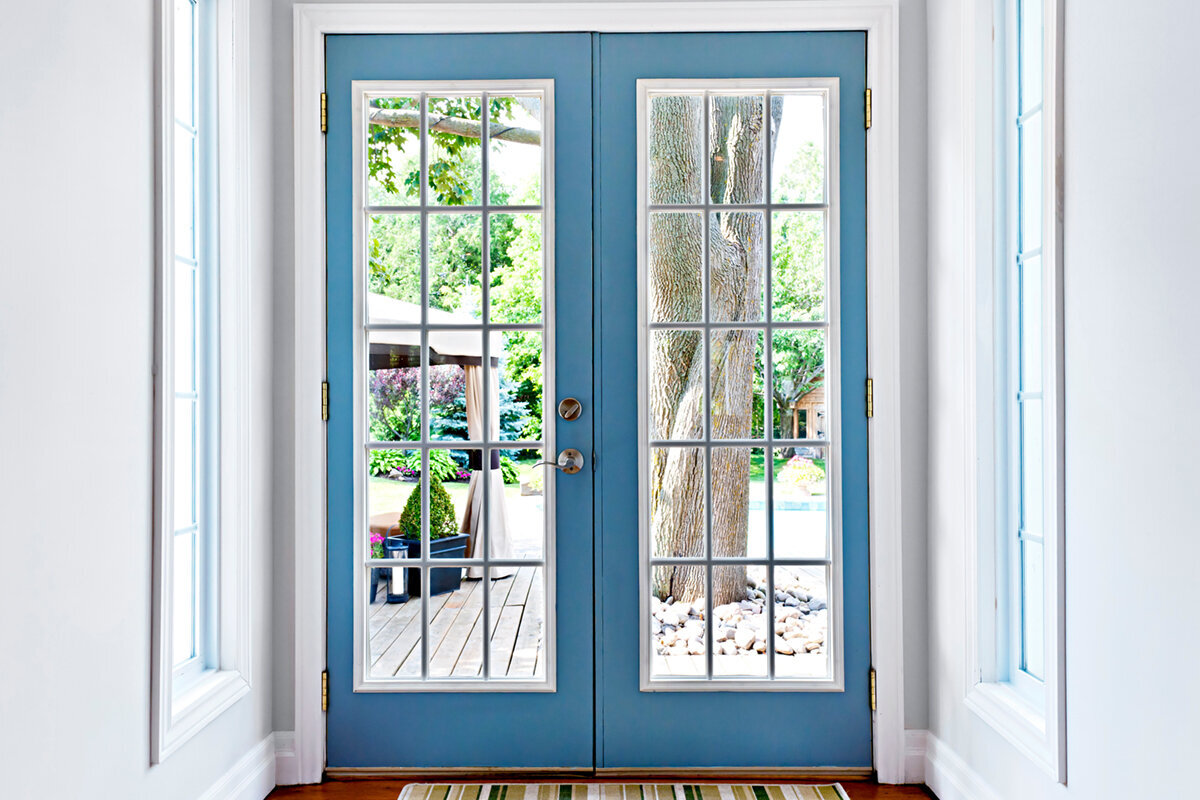
Choosing between a single and double front door should start with the route through the entrance, not its appearance. On an ordinary day, one person may pass through with a bag, pushchair or shopping. On a few important occasions, a sofa, wheelchair, delivery trolley or several guests may need to get through. These different situations should determine the width, leaf arrangement and opening direction. A double-door solution does not automatically provide better access: if the inactive leaf remains closed every day, the active leaf width is what matters first. Conversely, a single door in a sensibly planned opening can be remarkably straightforward. This comparison helps you plan the entrance as one project including the door opening, approach area, hall, furnishings and operating routine.
Compare the usable opening first
For everyday use, the clear passage width matters more than the structural opening and often more than the door’s overall width. Once open, a single front door generally makes the entire doorway available as one continuous passage. With a double door, however, normally only the active leaf is opened. The second leaf stays shut until its fastening is deliberately released. When assessing both concepts, ask the same question each time: how wide and unobstructed is the route when the door is opened as it really will be on an ordinary morning? Include handles, frame sections and objects immediately behind the door.
A simple exercise prevents misleading impressions: mark the proposed doorway on the plan, draw each leaf’s swing and picture typical items moving through it. A suitcase requires different clearance from a wide box, pushchair or walking aid. Direction matters too. Someone carrying a box from outside must operate the door, then steer the load around the open leaf. A wide overall assembly may therefore be less convenient than a well-proportioned single door. Conversely, a double opening is genuinely useful when larger deliveries can be planned without removing fixed glazing or other building elements. Identify that exceptional need specifically instead of merely assuming it might occur.
The active leaf governs daily use
With a double front door, treat the active and inactive leaves as having different jobs. The active leaf moves every day, so users experience its handle, lock, opening angle and route. The inactive leaf enlarges the opening only after it is unlatched. The quotation should therefore identify the regularly used leaf, the hinge side and the method for operating the second leaf. This is especially important where several people frequently use the entrance. A sequence that feels obvious to whoever planned it may still be needlessly awkward for visitors, children or a person providing assistance.
The hinge side should not be selected from the façade view alone. Indoors, a coat area, stairs, light switch, shoe bench or open living zone can affect the swing area. Outdoors, a step, landing, letterbox, cycle space or path close to the façade may do the same. A panelled outward-opening front door describes the stated opening direction, but does not replace checking the actual swing space at the property. For either door type, a drawing showing the leaf fully open is more useful than an elevation alone. Also note whether the door needs to open wide when arriving with bags, or whether a small opening angle usually suffices.
Swing space in front of and behind the front door
A front door needs more than an opening in the wall; it also needs clear space for its leaf. With a single door, that movement is concentrated in one larger area. Two leaves create two smaller swing areas, but together they require space when fully opened. There is no universal winner. A narrow entrance hall can be overwhelmed by a large inward-opening leaf, while a tight external area can be difficult to use with outward-opening leaves. The actual movement space and routes matter, not the number of leaves. An outward-opening external door should therefore always be coordinated with the outside landing, approach line and objects in front of it.
Indoors, door swing space is closely tied to the arrival routine. Someone opening the door may set down a bag, remove shoes or briefly leave room for a second person. A coat rack directly behind it can noticeably reduce available space even when the plan looks generous. Outside, check where someone will wait as the door opens and whether the open leaf obstructs the route to the house. Wind and rain are practical reasons to rehearse the sequence, without turning those observations into general technical claims. Marking the leaf outline on the floor with masking tape, or using a cardboard template, reveals conflicts before the opening direction is final.
Plan large deliveries realistically
The main strength of a double front door is its expandable opening. It is compelling where that condition has a clear purpose: a new piece of furniture, a large pushchair, a care aid or recurring deliveries. It is not enough that both leaves can theoretically open. The route must work continuously from the vehicle to the destination room. Narrow points at a gate, steps, a bend in the hall, an internal door or stairs can cancel out the benefit of a large entrance door. Before ordering, map the entire delivery route rather than considering the front-door opening in isolation.
A single door is not automatically a limitation for every house move. Many items can enter by another route, or the actual width of a single opening is sufficient for usual needs. A one-piece glazed sidelight can make the entrance seem brighter without creating another movable area. It is therefore a design alternative, but not a substitute for an inadequately planned delivery route. If there is a suitable route from the garden to the destination room, an outward-opening double patio door can also be considered as a separate delivery entrance. It remains an alternative door type for a different building opening. The key question is: must the full width be walkable at the house entrance, or should it mainly look brighter and more open?
Visitors, parcels and family life
Everyday life usually rewards a door that works clearly in one movement. With a single front door, the routine is particularly direct: unlock, open, enter, close. A double door can be just as convenient if its active leaf is adequately sized and logically positioned for normal use. The inactive leaf should not become a recurring necessity simply so two people can enter side by side. That takes time and can mean the door is not operated as intended during a busy moment. For families, it helps to list typical scenes: returning with shopping, children with school bags, visitors with luggage, deliveries and bringing a bicycle inside.
It is not only about width. A door can be wide open yet still create an awkward walking route because of the leaf position. In a narrow hall, an open leaf may be exactly where coats come off or bags are put down. In a double-door arrangement, the split of the overall width can influence how natural daily access feels. Anyone expecting frequent small deliveries may benefit more from trouble-free one-handed operation than from a rarely used maximum opening. Put the intended use in the enquiry as a priority list: daily passage, entering together, a temporarily wide opening, privacy, daylight and interior space. The number of leaves then becomes an understandable functional choice rather than a purely stylistic question.
Proportions on the façade and in the entrance hall
A double front door can visually structure an entrance and make a wide opening appear calmer. However, two leaves bring a visible central division. This may suit the symmetry of a façade or deliberately draw attention to its centre. A single door, by contrast, reads as one continuous surface and can look clearer in a narrow entrance. Neither effect is inherently better. What matters is the relationship between the door, wall area, canopy, windows and entrance depth. A front elevation alone does not show whether the solution leaves enough room inside or whether the open leaf blocks access.
Glass beside or within the door mainly alters daylight and appearance, not usable width. Set the required opening and hinge side before finalising the façade design. A striking but slender entrance can combine a single door with a separately planned side section. Where a broad, formal opening will genuinely be used, the division of a double door can become a deliberate design feature. Existing window glazing bars should also be assessed as part of the overall composition: bars that divide the glass create a different effect from applied decorative elements, although either can structure the elevation. Before choosing, compare elevations drawn at the same scale as the floor plan.
Do not confuse alternatives with the front door
Some interest in a double front door actually comes from wanting a generous link between the house and garden. Assess that use separately. A double patio door serves as a patio door and is not automatically a substitute for the main entrance. In the overall plan, however, it can indicate where large objects or groups of people should enter and leave. If the garden path provides the practical delivery route, the front door need not handle every rare task. Conversely, a large patio opening must not leave the everyday entrance too restricted. Judge each access point first by the job it performs regularly.
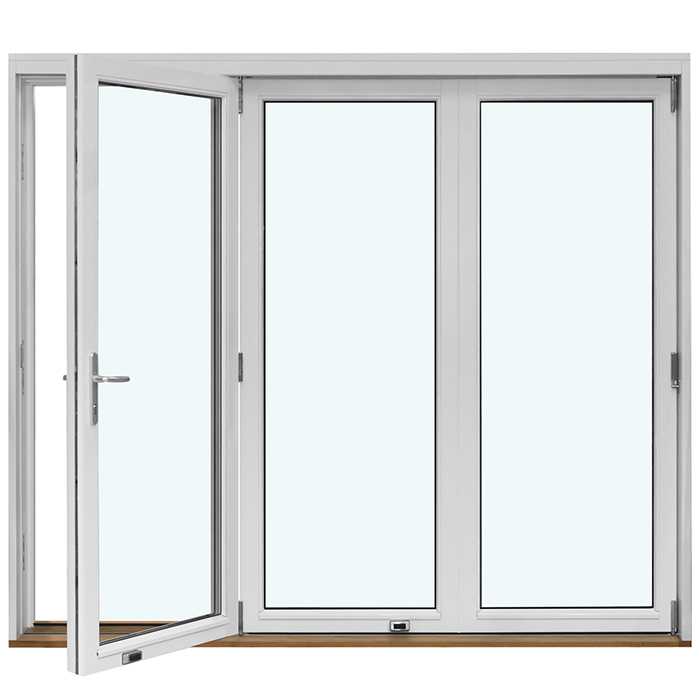
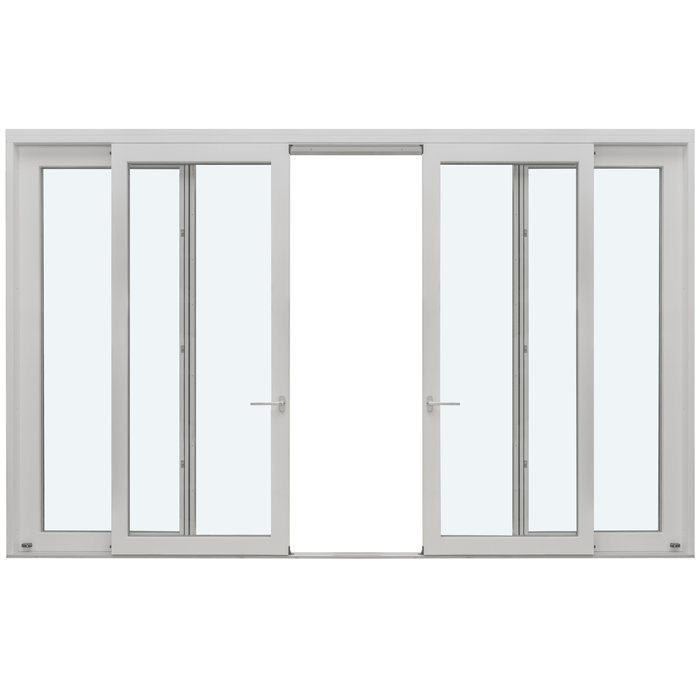
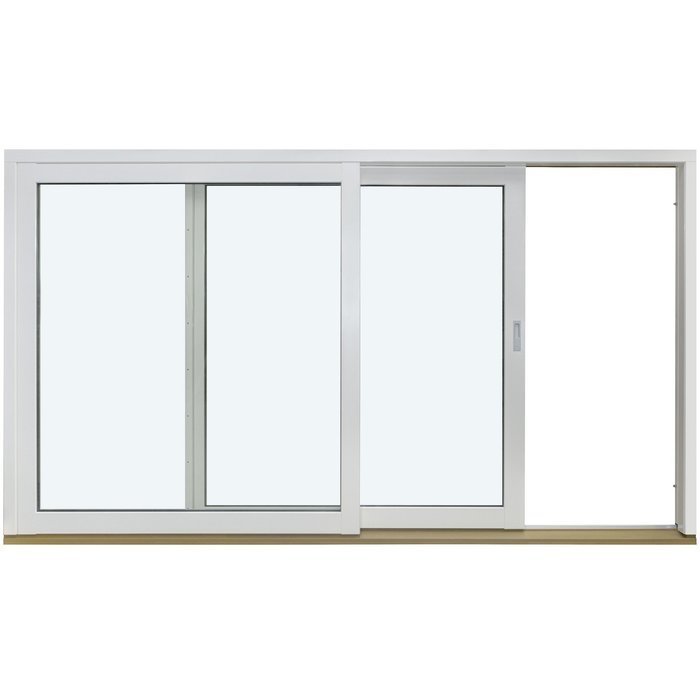
Sliding and folding doors are also different concepts with their own movement patterns. A sliding door does not need a leaf swinging into the room, but does not automatically meet the needs of a conventional house entrance. Outward-opening folding doors divide an opening into several moving elements and are typically considered for different room situations. When comparing such alternatives, describe the use first: daily access to the house, patio access, a wide delivery route or a large opening for an occasion. Only then can you decide which element makes sense in which location. Product names describe only the stated configuration; they do not establish additional properties. Planning the functional zones separately prevents an overloaded front-door decision and makes quotations easier to compare.
Operation, locking and clear routines
Two leaves mean more than an extra joint in the view. They introduce a second leaf whose everyday state must be clear: closed, locked or opened for a particular occasion. During advice, ask for the precise operating sequence rather than comparing hardware alone. How is the inactive leaf released? Can the active leaf be used independently? What happens when closing after a wide delivery? What actions are needed while someone waits outside? These are not details for later; they decide whether the large opening is a practical reserve or a rarely used complication. The position of handles and locks should also be considered on the plan.
A single-door solution focuses on a simple daily routine, while a double door needs an understandable distinction between normal operation and the full opening. A sample routine creates clarity: arrive, unlock, hold the door, enter and close. When selecting additional access points, an outward-opening single patio door can be treated as a separate exit instead of burdening the front door with every imaginable function. Patio Life lift-and-slide doors can also be included as an alternative garden connection in route planning; their product name does not establish any properties for the house entrance. Coordinating all access points reduces conflicting hinge directions, unnecessary bottlenecks and mistaken assumptions about which opening is intended for deliveries.
Coordinate dimensions, quotation and installation
For a reliable enquiry, “single or double” and an approximate dimension are not enough. Record the wall opening, desired clear passage width during normal use, possible full opening, hinge side, opening direction and existing steps. Add photographs from inside and outside, plus a simple plan showing the coat area, stairs and access route. With a double front door, the intended division into active and inactive leaves must be included explicitly. Also ask which dimensions refer to the frame, clear opening and actual usable passage. Only consistently described dimensions lead to comparable quotations. Clarify unclear terms in writing before ordering.
Installation affects performance because the door must be planned with its wall junction, floor build-up and transition outdoors. In Malta, ask a perit to confirm the Planning Authority classification for proposed changes to the opening, façade or structure, and involve the appropriate qualified trades. This guide does not replace design or assessment for your property. A joint site visit is useful before ordering or fixing a date to remove the old door: the swing area, level transition, weather exposure and working space can then be assessed at the building. Bloomcabin states a five-year manufacturer guarantee for windows and doors. Delivery is expected four to six weeks after order confirmation; verify the timing shown in the confirmation before arranging work.
Use a decision matrix to choose the right entrance
If both versions still seem possible, a small decision matrix can help more than further images. Score daily comfort, the necessary maximum opening, indoor space, outdoor space, façade effect and operation by everyone in the household separately. A single door often wins for a straightforward normal routine. A double door wins where the full width is specifically needed and can be reached without obstacles. Neither result is a flaw in the other solution. It simply shows which task takes priority in that home. The matrix can also reveal when the best answer lies not in the number of leaves, but in another location or size for the opening.
Finally, test the choice against three real situations: one person arrives with shopping, two visitors enter together, and a bulky item is carried inside. In each case, the door position, route and necessary hand movements should be practical. If the second leaf is likely to remain only a theoretical option, a single front door may be clearer. If the wide opening is needed regularly or for a sound reason, a double door can justify its additional operating steps. Record the chosen priority in the order. Advice, measurement and installation can then follow the same intended use, rather than an attractive elevation producing an impractical entrance later.
Frequently asked questions
Is a double front door always wider than a single door?
The complete arrangement may be wider, but in everyday use it is usually only the open active leaf that counts. The larger overall opening is available only once the inactive leaf has been unlatched and opened. Compare clear passage width during normal operation and with the door fully open separately.
When is the inactive leaf genuinely worthwhile?
It is worthwhile where a wide opening is needed repeatedly or for understandable special situations, and the whole delivery route is wide enough. This can include large items or particular mobility needs. If the exceptional case is only assumed, check whether another entrance already handles that task better.
Which opening direction is better for a front door?
That depends on the clear space on both sides of the door. Draw the swing area in the entrance and on the outside landing. Consider routes, steps, coat storage, stored objects and waiting people. Qualified professional planning can assess the specific connection and installation for the project.
Can a sidelight replace a double door?
A fixed glazed sidelight can make the entrance appear brighter and broaden the view. It does not enlarge the walk-through opening, however. If the reason for two leaves is a larger delivery opening, that width must be provided by an opening door arrangement planned for the purpose.
What should be documented before ordering?
Useful information includes dimensions of the existing opening, indoor and outdoor photographs, a plan with the swing area, the desired hinge side and required passage width. For two leaves, also include the active leaf, inactive leaf and the sequence for opening both leaves in the written enquiry.
Next step
The best front door is not the one with the greatest overall width, but the one with access that best suits daily life. A single door stands out through a simple, continuous routine. A double door provides a deliberately available large opening where it is genuinely needed in the home. Make the decision from the route itself: through the door, around the open leaf, across transitions and onwards to the destination room. Setting the clear passage width, swing space, active leaf and delivery route before measurement lets design and function come together without contradiction.
