
Window condensation: inside, outside or between the panes
Window guide
On the same morning, three windows may look entirely different: drops run down the room-side pane in the bathroom, a fine film appears outside the bedroom window, and the centre of one glazed unit looks cloudy. These situations do not share the same cause, so they do not call for the same response. When replacing windows, treat condensation not simply as a nuisance, but as a clue to the interaction of indoor air, surface temperature, glazing, frame, installation junction and everyday use. These relationships often change after refurbishment. This guide separates the three condensation locations, outlines sensible initial checks and explains which details genuinely help when planning a coordinated window project.
First, identify exactly where the condensation is
Before discussing ventilation, new glazing or replacement, inspect the window carefully from different angles. Briefly wipe the visible surface with a dry cloth only if you need to establish which side holds the moisture. Interior condensation is reachable from inside the room. Exterior condensation is on the weather-facing side and is often most visible in the morning. If the haze appears behind both reachable glass surfaces, it is condensation within the glazed unit. Timing matters too: does moisture appear immediately after showering, cooking or sleeping? Does it remain throughout the day? Does it affect every window or just one? This distinction prevents harmless external dew from being treated as damage, or a local issue from being prematurely applied to the whole building.
Also note exactly where water collects. A uniform light film in the middle of the pane needs a different assessment from drops at the lower edge, damp corners, wet seals or discolouration around the reveal. Furniture, heavy curtains and internal blinds can alter air movement directly in front of a window. A radiator beneath the window, a deep sill or curtains kept closed are therefore relevant where only certain areas are affected. Room temperature and ventilation habits matter as much as room use when comparing observations. Recording these points before a consultation lets you explain whether this is a daily occurrence, an occasional cool-season event or a persistent moisture issue. That leads to a sound cause assessment faster than simply saying that the window is sweating.
Interior condensation: humid air meets a cold surface
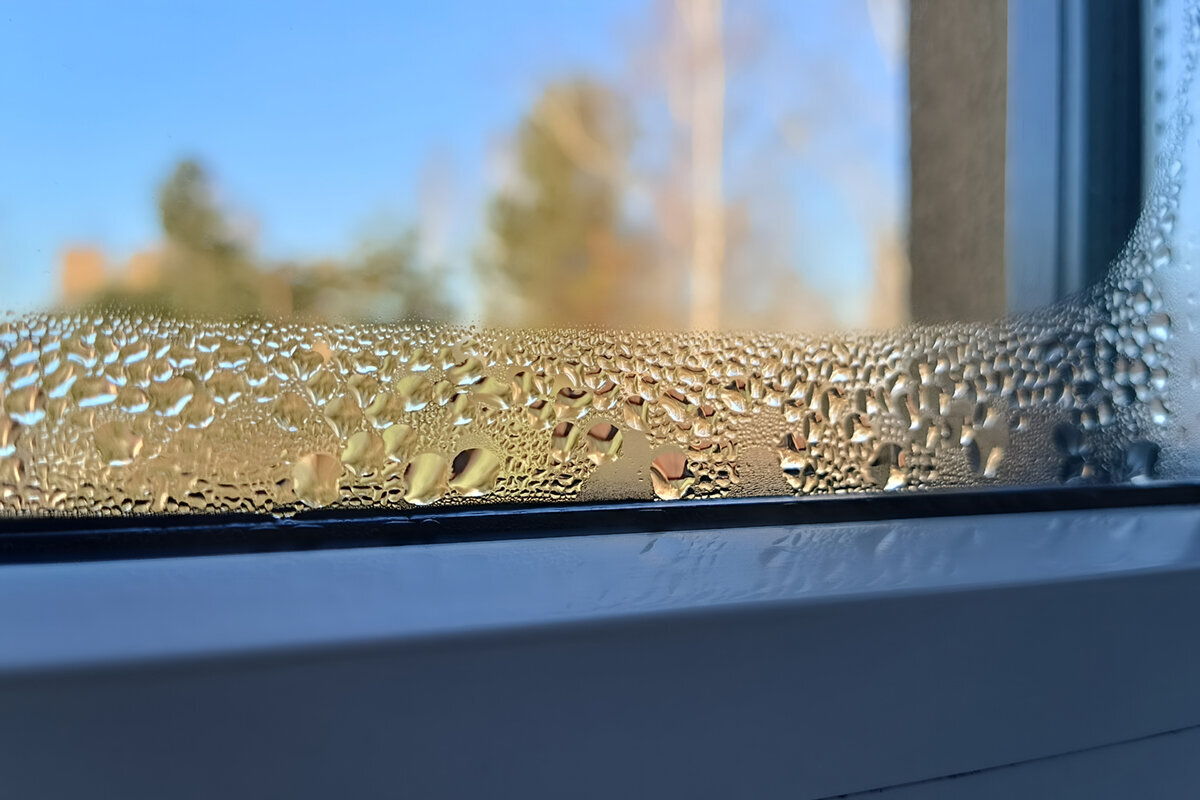
Indoor air can hold water vapour. When it cools against the inner face of a window, it may reach its dew point and deposit water as condensation. The higher the indoor humidity and the colder the inner surface, the more likely this becomes. Typical moisture sources include showering, cooking, drying laundry, plants or many people in a poorly ventilated room. In bedrooms, humidity rises overnight while outside temperatures may fall. Morning condensation on the room side is therefore a useful indication of the overnight moisture balance, but not a complete diagnosis. It can occur with older windows as well as at one unfavourably positioned building element.
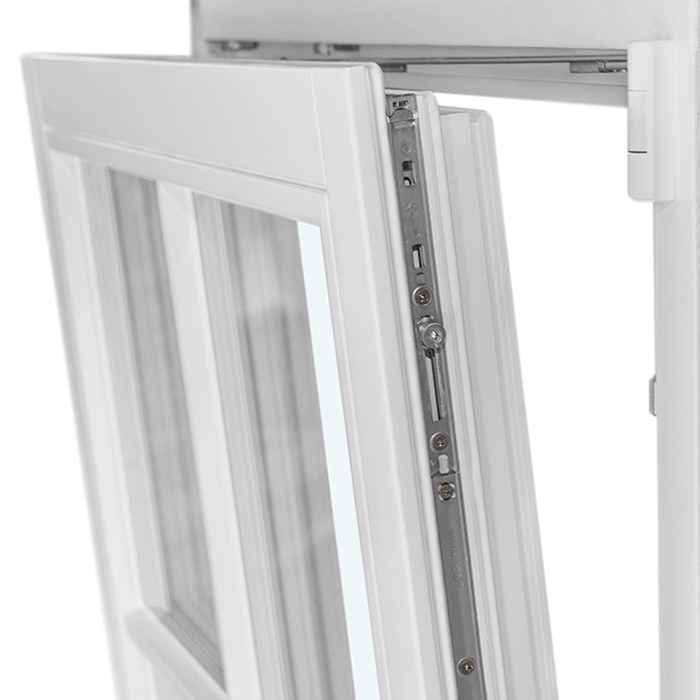
For a purchase decision, do not look only at the value at the centre of the glass. Inner surface temperature is also influenced by the edge seal, frame proportion, window size, installation situation and wall junction. When replacement is planned, ask: which solution suits the wall build-up, room use and intended ventilation strategy for the whole room? A single-sash inward-opening window first describes the opening method; it does not automatically suit every building-physics situation. Discuss the selected glazing, frame specification and installation junction as one coordinated item. Where only individual windows are replaced, check whether surface temperatures in the room will behave markedly differently afterwards.
What to do immediately about interior condensation
Water on the room side should not be left standing for long. Dry drops from the glass, frame and sill, then observe whether they reduce noticeably after purposeful ventilation. Brief, wide-open ventilation can exchange humid indoor air, whereas leaving a window slightly open continuously does not solve the issue equally in every weather condition. After showering and cooking, avoid allowing moisture to drift freely into other rooms. For bedrooms, morning ventilation is part of the observation. At the same time, do not allow the room to cool so much that surfaces remain unnecessarily cold. The aim is not a rigid routine, but moisture removal suited to daily life, weather and the room.
If condensation remains pronounced despite understandable use, concentrates at frames, edges or reveals, or is joined by mould marks and a musty smell, professional investigation is sensible. The assessment should not consider the windows alone. Suitable professionals can examine thermal bridges, the wall junction, possible moisture ingress and indoor-air distribution together. Particularly during refurbishment, it is unhelpful to order a window as an isolated product and leave installation until later. Ask who will take existing dimensions, how the junction will be planned, how existing damage will be recorded and which trades need coordinating before fitting. This turns a condensation observation into an orderly investigation rather than an assumption.
Putting exterior condensation in context
Condensation on the outer surface arises under different conditions from interior condensation. On clear, humid nights, the outer pane may cool enough for water from the outdoor air to settle on it. Morning dew that disappears after sunshine or a rise in outdoor temperature often fits this pattern. It may temporarily affect visibility, but does not in itself indicate excessive moisture inside the home. Building position, unobstructed exposure to the sky, still air and shelter from overhangs or planting can also influence whether external condensation is visible on a window.
Exterior condensation is therefore not a useful standalone test of window quality. What matters is whether it is clearly on the outer surface, whether it dries away and whether there are further signs such as water in the frame rebate, damaged seals or moisture indoors. Anyone planning large non-opening glazed areas, for example a fixed-pane window, should decide on operation, cleaning access, shading and air exchange independently of exterior condensation. Fixed glazing can form part of a carefully planned window arrangement, but it does not replace deciding which openings are needed for room ventilation and cleaning. Visible morning dew outside is no reason to skip these fundamental decisions.
Moisture between panes is a different finding
In an insulating glass unit, the space between the panes is sealed. If moisture, streaking or a cloudy haze remains visibly inside that space, the affected area cannot be wiped from either indoors or outdoors. This clearly distinguishes it from ordinary condensation on a reachable surface. Visibility may vary with light and weather, so photographs taken under different conditions can be useful. Also check whether it is truly the same area, or whether external dirt, reflections or residual water create the impression. Only once the location between the panes is plausible should the next measure be decided.
Such a finding needs an assessment specific to the affected element. Keep purchase documents, order confirmation, photographs, dimensions, installation date and details of previous repairs ready. Bloomcabin provides a five-year manufacturer guarantee for windows and doors; whether a particular case is covered must be determined from the relevant documents and inspection. Do not plan a complete replacement prematurely when only one element is affected. Conversely, it may make sense to include the individual problem in a wider project if windows, junctions and the room concept are already being upgraded. During the survey, ask whether only the glass unit, sash, frame or also the installation junction needs examination. A clear condition record prevents unsuitable replacement orders.
Why edges, frames and reveals often matter
Condensation does not always appear where expected. At the glass edge and frame, components with different properties meet, while at the reveal the wall junction affects the internal surface temperature. If moisture mainly gathers in a lower corner, room airflow can matter just as much as a cool junction zone. A wide curtain, furniture directly in front of the window or a covered heat source changes how the internal surface is warmed. These are not merely decorative details. They help explain why two similarly used windows in the same room can react differently.
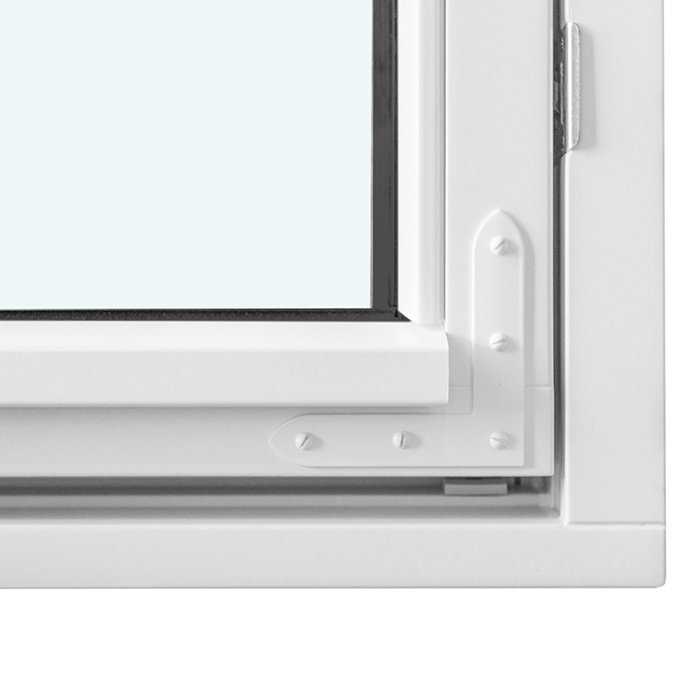
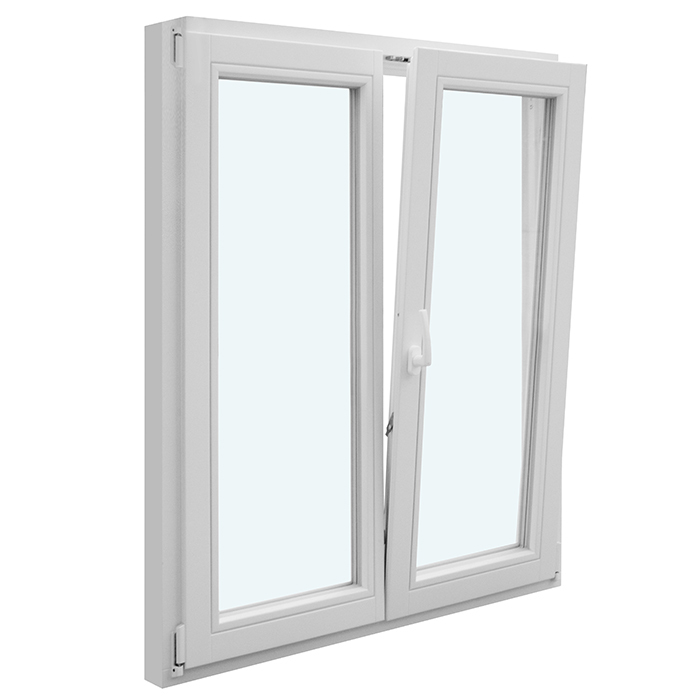
During renewal, surveying and junction detailing deserve the same attention as the visible window design. Discuss reveal depth, sill, existing shutters or shading elements, internal linings and the position of the insulation layer. A two-sash inward-opening window is selected by its number of sashes and opening direction; neither says whether the junction is suitable. For every opening, request a clear specification of size, handing, glazing and installation concept. If only the frame area is conspicuous, establish the cause before ordering. Otherwise, a new window may conceal an existing junction problem without solving it.
Consider roof windows and large openings separately
Roof windows sit on a different plane from vertical façade windows. Warm, humid indoor air rises, and temperatures and airflow can differ in the upper part of a room. After showering in a bathroom beneath the roof or cooking in an open-plan kitchen, this can show on roof glazing particularly quickly. Furnishing and use also matter: blackout systems, internal privacy blinds and restricted air circulation immediately beside the pane can influence the observation. A pivot roof window should therefore be compared not only for daylight and operation, but also for room humidity, accessible cleaning and the intended ventilation approach.
With wide patio openings, the glazed area is large, the design is often central, and air movement in front of the glass is particularly dependent on curtains, furniture and heat sources. A Patio Life lift-and-slide door is a different planning type from a window with hinged sashes. Establish early how often it will be opened, whether it is intended as a regular ventilation route, how the room will be furnished and how the threshold fits into the floor build-up. Large glazed surfaces should not be chosen or rejected because of a single dew observation. The important point is a coordinated decision on opening type, shading, room temperature control, glazing and installation junction. During alterations, it is worth surveying all adjoining elements together rather than ordering windows and doors separately.
Do not compare Uw values alone
A single performance value can provide one comparison point, but it does not answer every question about condensation risk. In practice, relevant factors include the surface temperatures of glass and frame, the glazing edge zone, dimensions, the ratio of frame to glass and installation quality. Façade orientation and shading also change the temperature pattern. When comparing quotations, ask for a clear statement of what each value refers to: the complete window, the glazing, or a particular example size. Only then can configurations be compared meaningfully.
A Super Low Uw passive-house window, outward opening states its intended orientation in the product title; no further unsupported performance features should be inferred from this. Instead, request data for the chosen size and specification in the actual quotation, together with the intended connection to the existing structure. Better insulation can influence the internal glass surface, but it replaces neither moisture management nor careful installation. Equally, a moisture issue cannot reliably be solved by choosing an apparently better value if, for example, the reveal or room use is ignored. The right specification comes from the interaction of factors, not an isolated numerical comparison.
Planning replacement: from existing conditions to an orderable solution
Start with a window schedule, not individual product images. For each opening, record the room, width and height, opening method, handing, fixed or movable field, visible glazing bars, interior and exterior sides, and notable moisture locations. Distance and close-up photographs help separate the existing condition from details. In older buildings, it is also important to consider whether proportions, divisions or the façade appearance should be retained. A historic-style “Kombi” casement window, outward opening is a design and functional configuration that must be assessed alongside the actual dimensions and installation situation. Historic appearance alone does not answer questions about indoor air or junction details.
A complete quotation should state clearly what is included and what needs separate coordination: product configuration, measurement basis, glazing choice, opening direction, accessories, removal of existing units, installation, junction works and possible finishing to reveals or sills. Also establish the sequence of trades. Scheduling internal plaster, flooring, window sills and new windows independently can create unnecessary adjustments. For these Bloomcabin windows, the stated delivery time is four to six weeks, subject to order confirmation. Order only after dimensions, specification and interfaces are settled. With condensation issues, considered approval is more valuable than a quick order based on an incomplete diagnosis.
A short checklist for the consultation
Turn the observation into specific questions: which side holds the water? In which room and at what time of day does it appear? Is only the glass affected, or also the frame, seal and reveal? How are rooms heated, ventilated and used? What has recently changed in the windows, insulation, furnishings or room layout? Add photographs taken in comparable weather and note whether the event is seasonal or persistent. This helps a professional distinguish whether use and airflow should be considered first, or whether a building element needs closer examination. Measurement or inspection can be useful where the visible finding alone does not allow a reliable classification.
Further questions are essential for the order itself: which on-site measurement will be used? Which way does the sash open, and does it clash with furniture, curtains or other doors? Which sections must open and which can remain fixed? How are shading, cleaning and the sill resolved? Who is responsible for junction details? In small ancillary rooms, an outward-opening top-hung window may be considered as an opening option, but accessibility and planned air exchange must still suit the room. Record the answers in writing in the quotation. This turns a general condensation question into an orderable, verifiable configuration whose limits and interfaces are clear to everyone involved.
Frequently asked questions
Is interior condensation always a sign of a defective window?
No. Interior condensation can result from temporarily high indoor humidity and a cold surface. Repeated droplets, moisture on frames or reveals, and discolouration should nevertheless be investigated more closely. Consider indoor air, heating, air circulation, the window and the wall junction together, rather than the glass alone.
Why does a new window mist up on the outside?
Exterior condensation can occur when the outer glass surface cools sharply in humid outdoor air. Dew may form especially in the morning and disappear later. This alone does not establish a defect. The important points are confirming that it is on the outside and distinguishing it from moisture between the panes.
Can I remove moisture between the panes myself?
No. It cannot be wiped away like interior or exterior condensation if it is genuinely within the glazed unit. Document the finding with photographs and documents for the element. A professional assessment should establish what is affected and whether action is sensible for the individual component or as part of a larger project.
Should I turn up the heating for interior condensation?
A suitable room temperature can keep surfaces warmer, but it cannot by itself resolve persistently high humidity or an unsuitable junction. What matters is the combination of moisture sources, ventilation, heat distribution and the building situation. Where frame or reveal areas are conspicuous, do not conceal the cause simply by heating more strongly.
Must I replace all windows immediately because of condensation?
Not necessarily. First establish where the moisture sits and what causes it. One element with condensation between panes needs different treatment from room-side moisture at several windows. If refurbishment is already planned, coordinated planning of windows, junctions and the room concept is worthwhile.
Next step
Condensation becomes meaningful only when its position is clear. Interior misting directs attention to room humidity and internal surfaces, exterior misting to weather and external cooling, and moisture between panes to the individual glazed unit. For buyers, the key point is this: do not decide from one photograph. Observe, document, then discuss windows, installation junctions, use and ventilation as one task. Clear dimensions, photographs and focused questions make a replacement project much safer to specify. For a specific product and installation solution, have the existing building situation assessed by suitable professionals.
