
15 Questions to Ask a Greenhouse Supplier Before Ordering
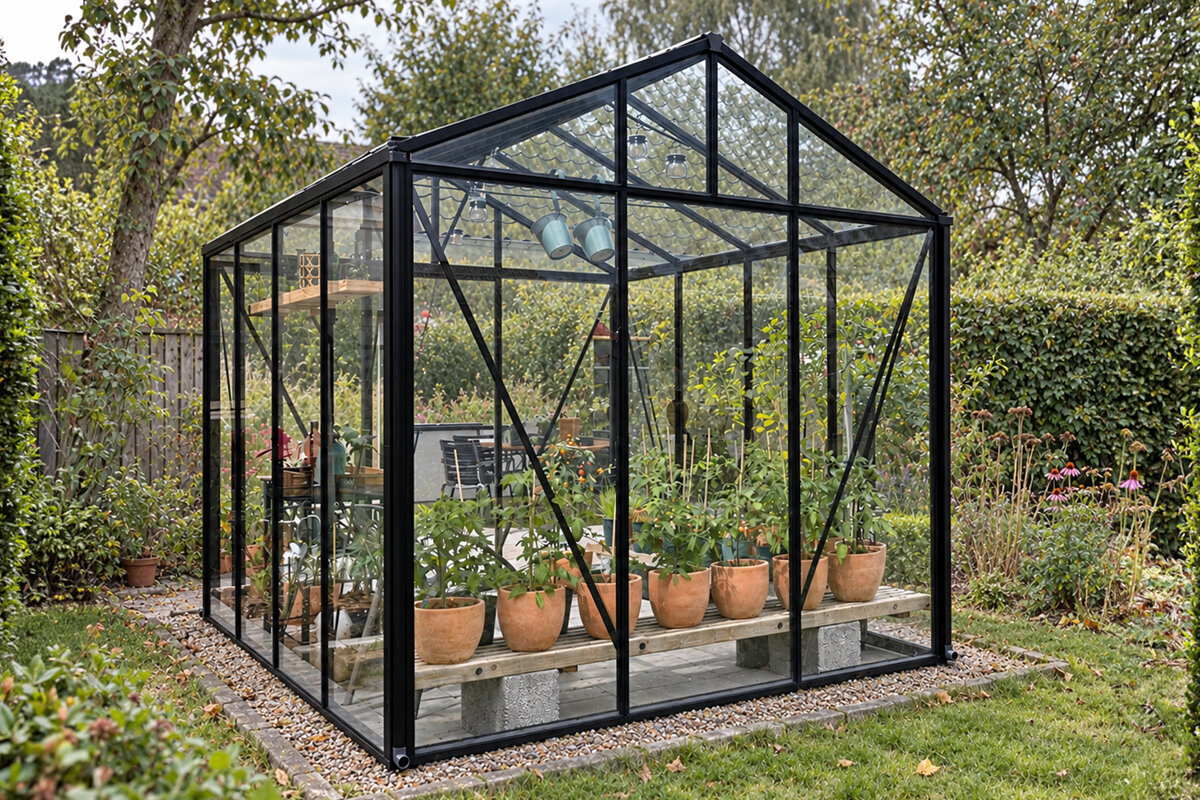
A buying check for your garden project
The right questions for a greenhouse supplier bring clarity before you order.
A greenhouse should not be chosen on appearance and floor plan alone. Focused questions help you decide whether the offer, contents and support suit your site, growing plans and willingness to assemble it.
Quick answer: what should be confirmed before ordering?
First ask the greenhouse supplier about the exact model, complete package and requirements for the site and foundation. Then cover delivery, assembly instructions, tools, spare parts and how enquiries are handled. Every answer should relate clearly to your chosen configuration.
A thorough check separates technical product features from services around the order. Ask for variants, optional components and responsibilities to be explained clearly. For setbacks, building requirements or insurance, also consult your local council or insurer rather than relying on general statements.
01
Identify the product precisely
Ask for the exact model name, dimensions and equipment version. This is the only way to check that drawings, instructions and quotation refer to the same greenhouse.
02
Request an itemised package list
Confirm which components, glazing, fixings and instructions are included. Ask separately about optional accessories, foundation materials and assembly services.
03
Understand the support process
Ask which documents are available after purchase and how to proceed sensibly if parts are missing, transport damage occurs or technical questions arise.
A structured question list helps you assess the product, site, assembly and later support.
Before ordering, approach the discussion with a greenhouse supplier as a small project review. Not every question concerns the material itself: clear documents, defined responsibilities and a package without unexpected gaps matter just as much. This lets you compare offers on a sound basis, rather than on images or a brief description alone.
For a greenhouse in your own garden, site, foundation, ventilation and intended use are closely connected. What looks convincing on a level display area must work on your property, with access routes, slopes and existing plants. Describe the space as specifically as possible and ask for details you can later verify.
This guide brings together fifteen key questions for New Zealand and follows the usual order of a purchase. It is not a blanket buying recommendation, but a practical basis for discussion. Record answers in writing, compare them with product documents and resolve open points before placing a binding order.
Check 01 · first review point
Match model and intended use
Start by asking which specific greenhouse the supplier recommends for your purpose, and why. Are you raising seedlings, growing vegetables or creating a sheltered workspace? Your use affects the suitable size, door arrangement and interior layout. Ask for the selected version to be named clearly in the quotation so assumptions are not lost between advice and ordering.
Also ask whether measurements refer to outside edges, usable floor area or the highest point. Planning needs more than internal room: allow space around doors, paths and access for plant care. A sketch of your garden helps put the answer in context. Check that intended shelves, benches or growing areas will fit the chosen layout realistically.
Keep the supplier’s recommendation alongside your own requirements. This shows whether the proposed size genuinely suits your growing goals, circulation space and available paths. For variants, ask for differences to be explained using the relevant product documentation, not only verbally.
Put the key measurements and site features into a short note for the consultation. It will make it easier to compare the supplier’s details with your actual installation situation later.
- Which model name and equipment version, including every selected option, will appear in the order summary?
- Which internal dimensions matter for my crops and working routes, and how are they documented?
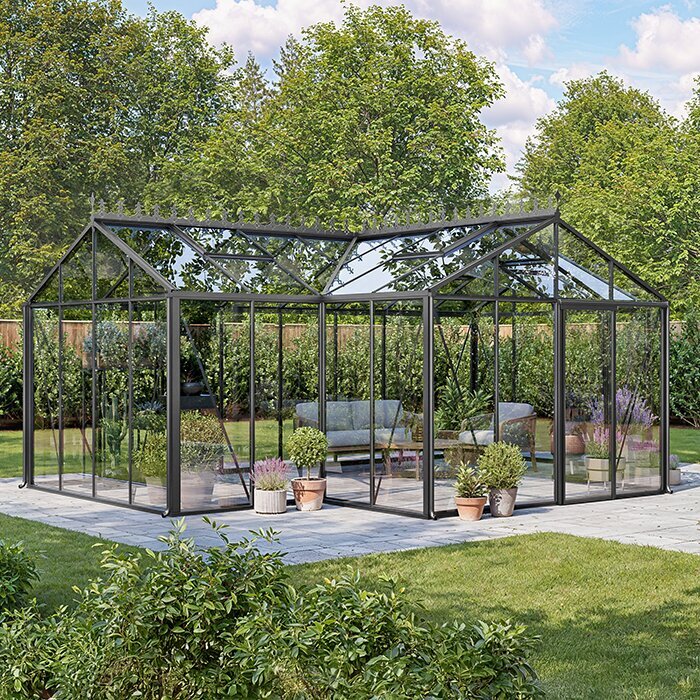
For planning a freestanding garden structure, consider a standard Classic greenhouse with a model configuration that can be checked clearly.
Check 02 · second review point
Discuss site, wall and foundation
The second question is: what must my site provide? Describe orientation, soil, slope, nearby trees and garden access. The supplier can explain the preparatory work specified in its documents. You must still measure the area carefully and arrange suitable professional ground preparation where your situation requires it.
For a lean-to greenhouse, ask specifically about the existing wall. Relevant considerations include a sound base, connection details, eaves, downpipes and accessible assembly areas. Do not accept a general statement of suitability: clarify which measurements and building conditions need checking on site. Independent professional advice can be useful if you are unsure.
Document the intended position with photos from several directions and a simple sketch. This makes it easier to discuss obstructions, connection points and work areas. Also check that doors, windows and maintenance areas at the building will remain accessible.
Make sure the product documents relate to the version actually selected. This link avoids misunderstandings, especially where images show optional elements or different opening arrangements.
- What information about soil, slope and foundation does the supplier need before assessing the appropriate version?
- Which existing features of the house wall could affect planning, access or the greenhouse connection?
For an extension against a façade, look closely at a regular lean-to greenhouse and its site-specific requirements.
Check 03 · third review point
Check materials and components
Ask which components make up the frame, glazing, doors, roof vents and fixings in the offered version. Material names alone are not enough: they must relate to your chosen configuration. Ask which components are standard and which can be selected. This helps prevent confusing product images with a different equipment level.
Ask about care instructions for visible surfaces and transparent elements too. Find out which cleaning methods or products are suitable according to the manual and which are not recommended. If spare parts are needed, ask how individual components are identified. A clear parts list makes future enquiries more precise.
Always compare material information within the same configuration. Images may show accessories or variants that are not automatically part of your selection. Written confirmation of frame, glazing, opening elements and fixings helps you assess the offered version accurately.
Check the packing list against the order summary. A simple mark beside each reviewed item helps you document differences and formulate precise follow-up questions.
- Which components and finishes belong exactly to the offered version, and where are they listed in writing?
- Which care guidance applies to the frame, glazing, fittings and moving elements in everyday use?
Anyone comparing a freestanding solution can assess a freestanding Classic greenhouse through its documented components.
Check 04 · fourth review point
Separate package and delivery
Ask the greenhouse supplier how the package is divided and which parts should be checked on arrival. A detailed packing list is useful, especially when components arrive in separate packs. Also confirm what information is needed before delivery so vehicle access, unloading space and helpers can be prepared realistically.
It is important to distinguish delivery of goods from additional services. Ask expressly whether carrying items to the build location, assembly or packaging disposal forms part of your selection, or must be arranged separately. Do not assume access is possible on your property. Assess and report narrow passages, steps, gates and long carrying distances in advance.
Set aside a protected, accessible place where packages can remain organised until assembly. Photograph damaged packaging or missing items promptly and compare your observations with the order documentation.
Do not schedule assembly under time pressure. A prepared work area, sorted packages and a previously read sequence make it easier to complete each step carefully and in the intended order.
- Which packages, documents and checks should I review against the order records when delivery arrives?
- What requirements apply to access, unloading space and moving components to the intended assembly site?
When planning a façade extension, it helps to review a wall-attached regular lean-to greenhouse with its coordinated package contents.
Check 05 · fifth review point
Prepare realistically for assembly
A key question concerns assembly: which stages does the installation manual describe, which tools are required and how many people should you realistically plan for? Request access to the relevant documents before ordering. Read the sections on foundations, component sequence and safety precautions carefully. This helps you decide early whether to assemble it yourself.
Ask which checks are required after individual assembly stages. Alignment, secure connections and correctly installed components deserve particular attention. If you are considering third-party installation, give the installer the model documents in good time. The supplier should be able to explain which preparatory work is your responsibility and which instructions apply to the configuration.
Read assembly documents not only for individual steps but also for their sequence. Prepare tools, work space and any required aids beforehand. This gives you a better idea of which tasks you can undertake yourself and where assistance may be useful.
Create an accessory priority list covering essential function, desired comfort and later additions. It will show which decisions matter for assembly and which can remain open initially.
- Which tools, helpers and preparatory tasks does the manual expressly specify for the selected version?
- Which assembly stages should I agree with an appointed installer before work begins?
For an independent garden project, examine the assembly documents for the Classic greenhouse for the garden especially carefully.
Check 06 · sixth review point
Plan climate, ventilation and accessories
Ask not only which accessories are available, but what purpose each serves in your use. Ventilation, shading, shelving and watering are chosen more effectively when you describe crops, care time and sunlight. Request a clear distinction between basic equipment and additional options. This keeps the quotation readable and your budget understandable.
Discuss whether later additions are possible. Some are best assessed after assembly, while others should be planned early because they affect the structure or internal layout. Ask what information you need for that decision. Avoid blanket expectations about temperature or harvests: results always depend on site, weather, care and selected equipment.
When planning accessories, consider future care routes and access to plants. A well-organised interior accounts not only for growing space, but also ventilation, room to move and the placement of items used or cleaned regularly.
Keep photographs, correspondence and product documents with the order summary. This record makes it easier to identify your configuration if a question arises during assembly or later.
- Which accessories specifically support my planned crops, and which are already included in the selected package?
- Which additions should be decided before assembly, and which may be considered later after discussion?
On a sunny side of the house, a regular lean-to greenhouse beside the house can be planned with the accessories required.
Check 07 · seventh review point
Documents, contacts and spare parts
Before buying, ask which product documents you will receive and in what format. They may include assembly guidance, care information, parts lists and usage notes. Ask how to reach the right contact if a specific question arises during preparation or assembly. A clear communication route is often more useful than a broad service promise.
Also ask about the procedure for missing, damaged or later-required parts. What matters is the information needed for identification, such as order details, photographs or a parts-list designation. Keep the order confirmation and documents organised. This makes identification easier and prevents an enquiry relying on an unclear model description.
Set up one storage place for the quotation, order confirmation, manual and photographs. Record the model name and chosen options there. For later enquiries, you can then give the supplier complete information without unnecessary delay.
- Which manuals, care information and parts lists will I receive in a clear form for my configuration?
- What details should I keep for a later parts enquiry so the affected component can be identified clearly?
For documenting a freestanding model, choose a Classic greenhouse as a standard model with clearly assignable documents.
Check 08 · eighth review point
Read commercial guarantees and written terms
Finally, ask which written terms and any commercial guarantee apply to your order and where you can read them before purchase. Ask how to report a problem and what information is required. Advice during a consultation can help, but does not replace the applicable documents or any applicable rights under New Zealand consumer law. Review the stated scope, conditions, exclusions and procedures carefully.
If you have questions about insurance, boundary setbacks or possible site requirements, contact the relevant council, your insurer or qualified professionals. A greenhouse supplier can provide product information but cannot replace a binding assessment of your individual circumstances. Keep answers and documents together so you can later understand your decision.
Read written terms in connection with your specific order and keep the associated documents. If terms or procedures remain unclear, ask for an explanation. Separate product information from questions requiring individual professional assessment.
- Review the written terms and any commercial guarantee for your order, including the reporting process, before completing the purchase.
- Where can I find the written terms for my order, what reporting steps does the supplier specify, and which local questions about site, insurance or building requirements must I clarify independently?
When comparing an extension, fully review the documents for a large lean-to greenhouse for the house wall before committing.
Comparison
Compare offers by their answers
Use this table to collect answers from different suppliers and judge how informative they are. A strong offer names the configuration clearly, separates the product from extra services and refers to appropriate documents. Add your own site-specific notes alongside it.
| Check question | Helpful answer | Warning sign when comparing |
|---|---|---|
| Which model is offered? | Clear name with selected options. | Only a general product group, without configuration. |
| What is included? | Packing list separates components and accessories. | Package remains unclear when questioned. |
| What does the site need? | Specific documents identify preparatory checks. | A blanket promise without site context. |
| How is assembly completed? | Manual describes sequence and requirements. | Assembly effort is not explained. |
| How is support handled? | Contact route and required details are specified. | Support remains a general promise. |
Prepare for the supplier conversation
A little preparation turns a general enquiry into a productive consultation. Gather facts about your garden, define your intended use and decide which answers you need in writing.
01
Record the site
Measure available space, paths and obstacles. Note slope, sunlight, trees and any features of a possible house wall.
02
Define the intended use
Describe crops, work routines and desired storage. This creates useful questions about size, access and interior equipment.
03
Record variants
Note the model, desired options and open alternatives. Ask for every version to be explained separately and clearly.
04
Think through delivery
Check vehicle access, unloading space and the route to the assembly site. Share limitations before delivery, not when it arrives.
05
Document answers
Keep the quotation, drawings and terms together. Mark points that should still be confirmed in writing before ordering.
Checklist before ordering
Work through these points once the model and site are broadly decided. Every answered question reduces the risk that important assumptions only emerge during delivery or assembly.
01. The exact model name and all selected options appear clearly in your order summary.
02. External dimensions, internal space and door area suit your planned routes, crops and garden furniture.
03. The intended site has been assessed for ground conditions, slope, access and nearby obstacles.
04. For a house wall, the connection area, eaves and possible downpipes have been considered in advance.
05. Package contents and optional accessories are listed separately, not assessed from pictures alone.
06. You know the assembly documents, required tools and preparatory work on your property.
07. Documents on care, parts and contacts can be found for your selected configuration.
08. You clarify individual questions about requirements or insurance with the relevant council or insurer.
Frequently asked questions before buying a greenhouse
Should I already have a foundation before ordering?
You should understand the ground and foundation requirements before ordering and have measured your site. Whether work can already be completed depends on your project sequence. Follow the documents for the selected version and seek professional advice for building uncertainties specific to your situation.
What information does a supplier need for useful advice?
Useful details include photographs, site measurements, slope and access information, plus your intended use. For a wall-adjacent location, information about the wall and adjoining elements matters. The more specifically you describe your starting point, the more effectively the supplier can provide product documents and relevant questions.
How do I know whether accessories are really needed?
Choose accessories from your intended use, not from a complete wish list. Ask what role each item serves and whether it is included in the basic package. Consider care time, crops and site. Some decisions may make more sense later, while others should be resolved in time because of assembly.
What must I clarify about delivery?
Confirm the package, number of packs, needed unloading area and conditions along your access route. Also establish who moves components to the assembly site and what you should do if something appears wrong. Keep the order documents ready so received items can be checked accurately.
Is a verbal statement about a commercial guarantee enough?
No. Ask for the written terms of any commercial guarantee applicable to your order and read them before purchase. Pay attention to its scope, conditions, exclusions and claim process, while remembering that these terms do not replace any applicable rights under New Zealand consumer law. For questions, request an explanation specific to your selected configuration rather than relying on general wording.
Do I need to discuss consent or insurance with the supplier?
The supplier can provide product information and its documentation. Whether requirements apply at your specific site, or how a structure is insured, should be checked with the relevant council or your insurer. This gives you guidance based on your circumstances rather than a general case.
Compare greenhouse solutions
Make a safer decision with clear answers
The best questions for a greenhouse supplier are specific, recorded in writing and related to your property. Treat the model, package, assembly and contacts as one connected project. You can then identify early which decisions remain open and which documents are needed for an informed order.
Bloomcabin helps you compare freestanding and wall-adjacent greenhouse solutions. Prepare your site details, compare configurations carefully and clarify individual building or insurance questions with the appropriate authorities as well.
Explore suitable models and use your prepared questions to make a clear, structured choice.
