
Older Pergola: A Repair-or-Replace Checklist
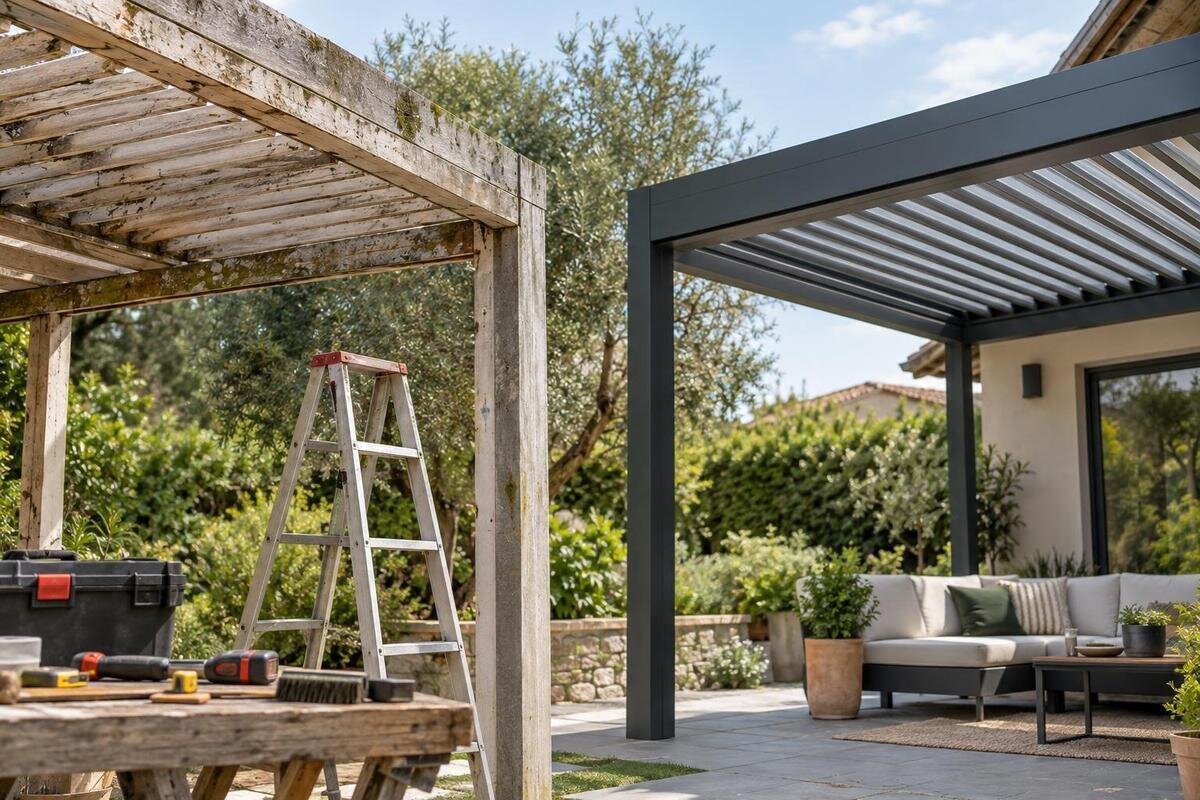
Pergola repairs and replacement
An older pergola does not need replacing simply because it has been in place for years, and a fault that looks small is not automatically a simple repair. A sound decision depends on the condition of the main structure, whether problems are isolated or recurring, whether the right parts and service can be confirmed, and what the complete repair or replacement job involves. This checklist helps you gather useful evidence, request a specific assessment and compare like-for-like scopes. It cannot diagnose structural or electrical faults from appearance; those need an appropriately qualified professional.
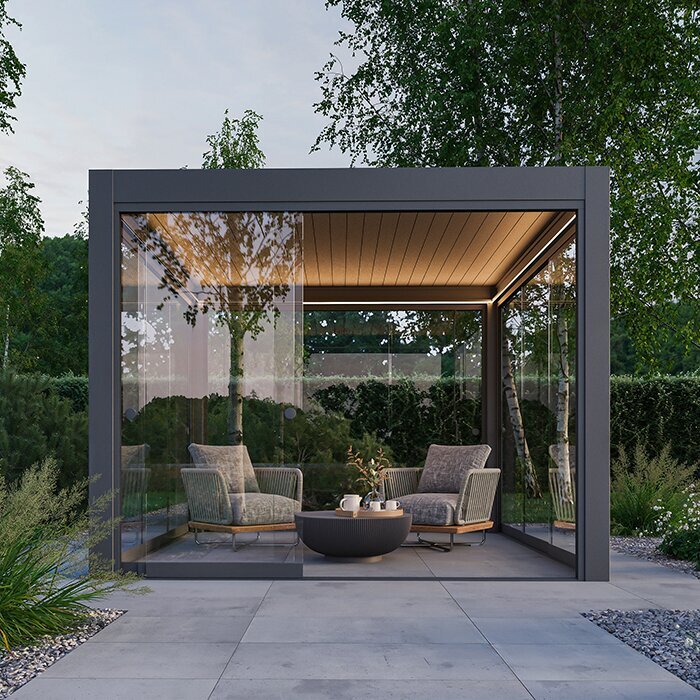
How age affects the repair decision
Age gives context, but it cannot say whether a pergola is structurally sound, whether its components work properly or whether fixing it is worthwhile. A well-maintained frame with one diagnosed fault may be a stronger repair candidate than a newer one with damage at several connections. Equally, an intact-looking surface does not confirm the condition of fixings, joints, roof mechanisms or wiring concealed inside a housing. Note the installation date, what has already been replaced and whether the current fault affects the frame or a component. Do not use a particular number of years as an automatic replacement threshold.
Write down four separate questions: Has an appropriate assessment established whether the main structure is safe and stable? Is there one defined fault or a cluster of them? Can compatible parts and service be confirmed? What will a complete repair or replacement cost and deliver for your present needs? Keep the answers separate so that an attractive price does not obscure an unresolved safety question. If replacement merits comparison, the Bloomcabin Bioclimatic Pergola listing identifies a model listed from 9 to 24 m². Use it to begin a shortlist, rather than as evidence that its footprint or components match your older pergola. Alongside each option, record what is known, what needs confirmation and whether that uncertainty could change your decision.
Check the frame and record the footprint
From ground level, look across each post, beam, joint and visible fixing for changes such as cracking, bending, corrosion, separation or an unexpected lean. Note where the sign appears and whether it affects one point or several; do not push, pull, climb onto or load the structure to test it. A visual check can help direct a professional, but it cannot establish the condition of a concealed connection or determine what it can safely support. If something looks unstable, keep clear and arrange a qualified assessment before using the area.
Record the pergola’s overall footprint, where posts or wall connections sit, and the clear space needed around doors, paths and furniture. These observations help explain what a repair must preserve and whether a replacement would need a different arrangement. The Bloomcabin Pergola listing gives a product area range of 9 to 24 m², but the range alone does not confirm a suitable layout. Write your measurements down with units and mark them on a simple sketch, distinguishing the overall footprint from the space you actually use beneath it. Label measurements you cannot safely obtain rather than guessing. The sketch is a starting point for discussing fit and access, not an engineering assessment or confirmation that existing connections can be reused.
Look for patterns behind repeat faults
Classify what is happening before deciding how serious it is. A single sticking panel, a leak at one point, a finish mark, a noisy mechanism or a control that no longer responds call for different investigations; include only features your pergola actually has. Note whether the issue is constant or intermittent, when you first noticed it, what was operating and whether it followed earlier work or a change in conditions. Avoid repeatedly running a faulty mechanism just to reproduce the symptom. A written description and safe, unaltered photos are more useful than repeated testing.
A fault that returns after a repair deserves a closer diagnosis, not simply another order for the same part. Tell the service provider what was changed, when the symptom came back and whether it has moved or spread. Ask whether the earlier repair addressed the cause or only the visible symptom, and whether other components should be inspected as part of the assessment. Recurrence can increase the likely scope, but it does not prove the whole pergola must be replaced. The findings and confirmed compatibility still matter.
Identify the exact model before asking for parts
Find the model or product label, any serial or production code that is present, the original order record, the assembly manual and previous service paperwork. Photograph the label without removing covers or dismantling anything, and note where each affected component sits. Similar-looking pergolas may use different parts, while a description such as “the right-hand bracket” may not identify a component clearly enough. If paperwork is missing, send the supplier an overall photo and close-ups of the affected area, then ask what further identification they need.
Before agreeing to a part, ask the supplier or qualified service provider to confirm the exact model, component reference and compatibility, as well as whether related parts or additional work need checking. Do not choose by appearance or assume a component from another model will fit. Keep your request focused on the older unit: identify the affected component, describe its position and distinguish any markings on the part from the pergola’s model label. If you are also considering replacement, the Bloomcabin Wall-Mounted Pergola page provides a separate catalogue reference for that enquiry. Make clear which questions concern repairing the existing pergola and which concern buying a new one. Keep the compatibility response with your service records so that the proposed repair rests on a confirmed match.

Put safety before the cost decision
Resolve safety concerns before comparing costs. If a post is loose, a beam has shifted, a joint is visibly separating, a member is bent or the structure moves unexpectedly, stop using the affected area and keep people clear while a qualified installer or other appropriate professional assesses it. Do not try to prove the structure is stable by tightening a fixing, adding a support or putting extra weight on it. A professional can determine whether the issue is local, related to the installation or affects a wider part of the frame.
If the pergola includes motorised louvres, a retractable element, lighting or other electrical equipment, treat exposed wiring, a burning smell or repeated electrical trips as a service issue, not a DIY troubleshooting job. Do not open electrical housings, bypass a control or keep cycling a malfunctioning mechanism. Record what you observed from a safe position, then seek qualified service in line with the exact product documentation. The same principle applies to damaged glazing or other moving parts where present: leave the affected component alone until it has been assessed.
Ask for a defined repair scope
Ask for a written repair scope rather than a one-line parts figure. It should state what the diagnosis found, which parts and labour are included, what access or disassembly is expected, whether another component must be inspected, and which uncertainties or exclusions could change the work. Ask who will confirm that the replacement part is compatible and whether the proposal includes any follow-up testing required by the service scope. If the cause is still uncertain, have that uncertainty named instead of treating the first visible symptom as a complete diagnosis.
Request a replacement comparison on the same basis: what is being supplied, what must be removed, what site work or installation is included, and which items remain for you to arrange. Use the Bloomcabin Pergola product page to identify the model you want priced, then ask for a scope specific to your site. Separate confirmed work from possible additional work, and distinguish an optional improvement from something required to complete the project. If you want to retain an existing feature, name it in the request rather than assuming it is included. Check that both proposals explain the intended result: which fault the repair addresses, or which existing problems and layout requirements the replacement covers. This makes differences in scope easier to recognise before comparing the totals.
Compare the full cost of each route
Compare the total repair route with the total replacement route, not a spare-part figure with the headline cost of a new structure. On the repair side, include diagnosis, compatible parts, labour, access, related work identified by the technician and any follow-up required by the scope. On the replacement side, ask about removal and disposal of the old unit, assessment of the existing base or connections, installation, access and any electrical work if relevant. These items vary by site, so get them confirmed rather than filling gaps with assumptions.
Set the quotes side by side with the same inclusions and exclusions. When comparing a proposal with the bioclimatic model page, distinguish the product price from the cost of the complete installed project. Mark each cost as included, separately priced or still unknown; an empty line should not be treated as a zero. Ask whether the repair estimate could change if hidden damage is found and what would trigger a revised quote. For replacement, clarify how removal, site preparation, installation and any required professional service are accounted for. If one proposal leaves work for you to arrange, include that work in the comparison before deciding which option offers better value. Keep optional additions separate so they do not distort the comparison between an essential repair and a replacement meeting the same needs. Do not count unconfirmed future savings as guaranteed value.
Check whether a replacement suits the site
An older pergola may have been built around a different layout or purpose from the one you want now. Note the usable space, clearances for doors and paths, nearby walls, access for service, and where water or services travel; do not assume an existing post position or attachment can be reused. If the original layout remains important, measure it and take photographs from several angles. If your needs have changed, write down what a replacement must do differently rather than asking for a like-for-like copy by default.
If a wall-mounted model is being considered, the existing wall and connection need their own suitability assessment. The wall-mounted model listing identifies Bloomcabin Wall-Mounted Pergola; ask a qualified installer to assess whether that configuration suits your particular site and what work it would require. Explain which aspects of the current layout you want to retain and which you want to change. For example, distinguish a necessary clear route past a door from a furniture position you could alter. This helps the installer understand your priorities without treating every feature of the old arrangement as fixed. Record any proposed change to post positions or attachments alongside the site sketch. A product photograph or stated area cannot settle questions about fit, clearance, drainage or structural compatibility.

Check parts support and compatibility separately
Parts support raises two separate questions: can the correct component be identified, and can it still be supplied or serviced? Ask the seller or manufacturer for an exact answer against your model and component reference, not a broad response based on the product family. If the part is no longer listed online, that alone does not prove it is unavailable; ask whether there is an approved replacement or repair option. Conversely, a part with a similar shape is not proof of compatibility. Clarify whether the answer covers the component alone or the associated service as well. A confirmed part reference is useful, but your repair plan also needs to establish who can undertake the work. Keep those two answers together before paying for a repair that depends on them.
If no compatible part or approved repair option can be confirmed, compare the remaining repair options with the likely replacement scope. Consider a second technical opinion if the diagnosis is incomplete, making the original findings available so that the unanswered question is clear. The catalogue page for the wall-mounted pergola can identify a replacement model for discussion, but it does not establish that its components are shared with an older pergola. Record whether the support response confirms availability, rules out the requested part or leaves the enquiry unresolved. These are different outcomes: a missing answer should not be recorded as a definite refusal. Include any conditions attached to the response and note which decision depends on resolving them. This keeps uncertainty visible without assuming either the best or the worst.
Choose repair, replacement or a pause
Choose repair when a qualified assessment has narrowed the fault, the frame and connections are suitable for the proposed work, compatible parts are confirmed, and the complete scope suits your needs and budget. Replacement is worth serious consideration when damage spans several important components, faults keep returning after assessed work, parts or service cannot be confirmed, or the current layout no longer serves its purpose. Neither route should be selected by age alone. If the evidence is incomplete or a safety question remains open, pause the purchase decision until it is resolved.
Keep a simple decision record: diagnosis and photos, part-compatibility confirmation, repair and replacement scopes, known exclusions, and the reason you chose one option. If replacement is the likely choice, use the catalogue entry for Bloomcabin’s bioclimatic model to name the product under consideration, while recording site suitability and the complete project scope separately. State what tipped the balance: a limited repair with confirmed support, several unresolved faults, or a layout that no longer works for you. Also note any condition that must be met before the work proceeds, such as confirmation of a compatible component. After a repair, keep the service record and updated documentation with the pergola. A clear record explains what was addressed and gives future service enquiries a more useful starting point than the installation date alone.
Frequently asked questions
Does a pergola’s age decide when it should be replaced?
No. Age gives useful background, but it does not confirm the condition of the frame, the cause of a fault or whether compatible parts are available. Base the choice on an assessment of the structure, the pattern of faults, the repair scope and the full cost of each option. A particular number of years is not an automatic replacement threshold.
What should a repair quote include?
Ask for the findings, the parts and labour included, any access or disassembly work, related components to be inspected, and exclusions or uncertainties that could change the job. Check who will confirm part compatibility and whether the quoted work includes any required follow-up testing. A one-line parts figure is not enough to compare with a replacement project.
Can I use a part that looks similar to the old one?
Not without confirmation. Similar appearance does not prove that a component fits or is compatible with your pergola. Give the supplier or service provider the exact model details and component location, then ask them to confirm the part reference and compatibility. Get that answer before paying for work that depends on the part.
What should I send with a spare-parts request?
Provide the model and any serial or production code you can find, along with an order record or manual if available. Include a photo of the label, an overall view of the pergola, and clear close-ups of the affected area. Describe the symptom, when it started and any previous repair. Do not dismantle components just to obtain a photo.
Can I keep using the pergola while a fault is assessed?
If the structure moves, a connection appears loose, or electrical damage is suspected, stop using the affected area and arrange a qualified assessment before operating it again. Keep clear of unstable parts and do not try to test them by force. For other faults, follow the product documentation and service advice rather than repeatedly operating a malfunctioning component.
The repair-or-replace decision should explain both what is wrong with the older pergola and what the proposed work will achieve. A defined fault with confirmed support may favour repair; extensive or recurring problems, unavailable compatible parts or an unsuitable layout may favour replacement. Where a key assessment or compatibility answer is missing, leave the decision open rather than treating uncertainty as a reason to buy. Compare complete written scopes, not the pergola’s age or the price of a single part.
