
Buy a Pergola on Black Friday for Installation Next Spring
Pergola buying guide
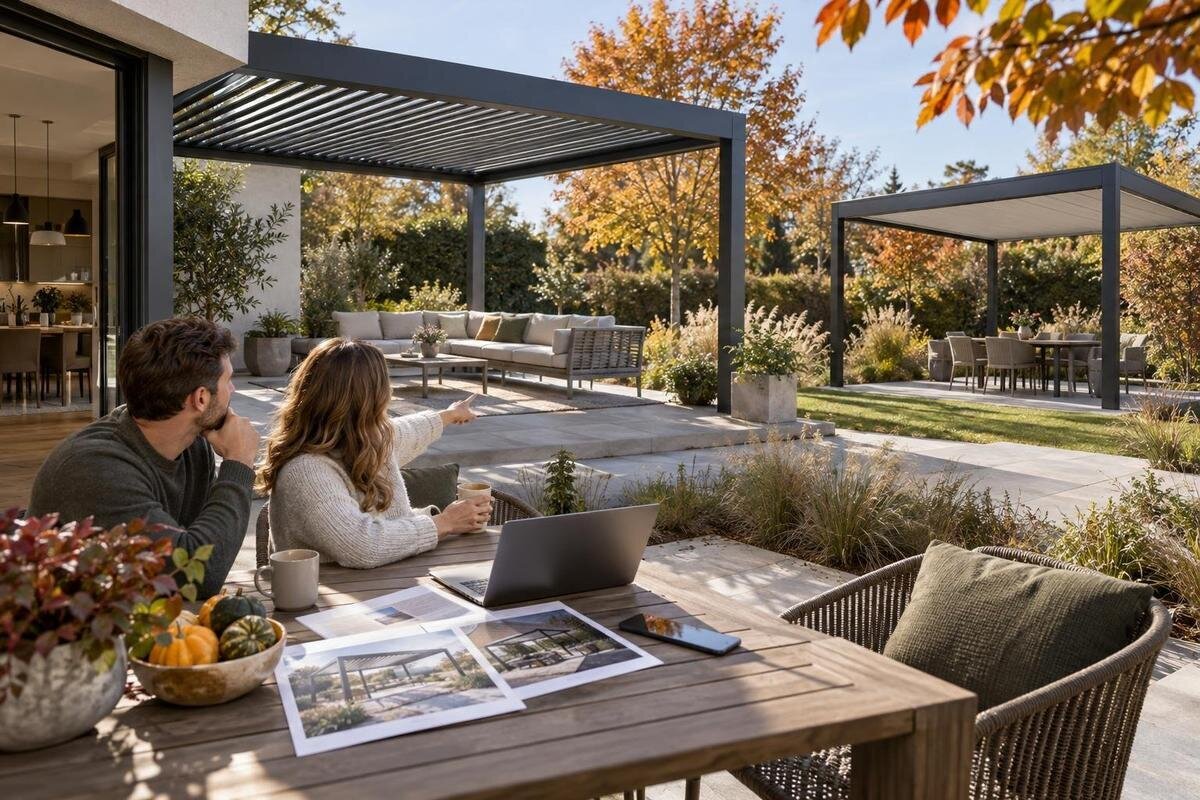
Planning to buy a pergola on Black Friday and have it installed next spring? The months between purchase and use can be helpful if you settle the design, site and timing questions in the right order. Compare options on the same basis, confirm any offer rather than assuming one, and check that supply and a qualified installer can fit your preferred spring window before you commit.
Why plan a Black Friday purchase ahead of spring?
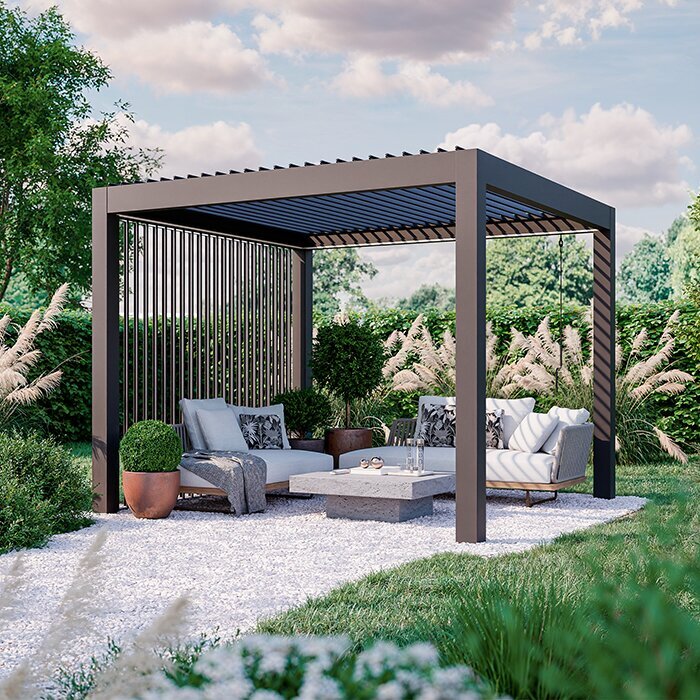
Purchasing months before installation can separate the decision about which pergola suits your space from the rush of a spring project. Use Black Friday as a point to compare products and terms, not as a deadline that decides the design for you. Work out your intended installation period first, then define the uses and features you need. With those priorities set, a low advertised price is easier to assess: you can spot when it applies to a different configuration or when a description leaves an important question unanswered. It also gives you time to compare appearance with how you live outdoors, rather than choosing from one attractive image. This helps distinguish a genuine requirement from a feature that seems tempting only because it is prominent in a promotion.
Prepare a shortlist before shopping: note the model name, listed dimensions, appearance, included items and any questions for each option. Bloomcabin's pergola product page can be one reference in that comparison, but its name alone does not establish its size, features or suitability. Read the live product description and purchase terms at the time you order; Black Friday timing alone does not establish that an offer exists or represents a saving. If a detail that affects your choice is missing, get it clarified before paying, rather than letting a countdown stand in for evidence. Keep your notes dated, as product details and promotions can change between browsing and checkout.
Match the pergola to the way you use the space
Write down how you expect to use the covered area: for a dining table, casual seating, reading, or a transition between indoor and outdoor living. This is not just a style preference. A dining layout needs room for people to sit and move chairs, while lounge furniture is arranged differently; the usable area must suit the activity as well as the furniture's outline. Decide which use matters most, and whether the pergola needs to serve several purposes, before comparing product pages. A list of primary and occasional uses makes trade-offs easier to see. If several activities happen at the same time, note that too: a layout suited to separate occasions may not work for both together.
Look at the position from indoors as well as from the garden. Note which doors and windows open onto it, the views you want to keep, and where sun and shade fall at the times you normally use the space. Consider existing paths and garden features so the proposed footprint does not make circulation awkward. A simple plan with the furniture drawn to scale can expose a mismatch earlier than a catalogue image can. Treat photographs as a way to judge appearance, not as a substitute for checking stated measurements or detailed product information. Record sun and shade as observations about the site, not as proof of how much cover a particular pergola will provide.
Choose between a freestanding and wall-mounted position
Decide whether the pergola should stand separately in the garden or connect to the house. In general, a freestanding arrangement gives you more choice about where the structure sits, while a wall-mounted format is tied to an appropriate adjoining wall; each leads to different questions about placement and installation. Think about how the structure would relate to windows, eaves, doors and the shape of the outdoor area, rather than choosing the category by name alone. Also consider whether the connection would affect a window or the flow between indoors and outdoors. If you are renting or share responsibility for the building, check with the owner or relevant property manager before ordering.
The wall-mounted pergola listing identifies that type of product, but the label does not confirm whether a particular wall, attachment arrangement or site is suitable. Before choosing one, ask the seller for the model's installation information and have a qualified installer assess the relevant building and site conditions. A freestanding product also has installation conditions that need confirmation. If an answer depends on wall construction or another site detail, leave that judgement to the installer, not a catalogue image. A rough sketch from above, with the nearby wall and roofline shown, can help explain the intended position. Confirm who is responsible for assessing the site and what information the installer needs, so a promising purchase does not turn out to be a poor match for the location.
Measure the footprint and usable area
Size the pergola around the footprint you can use, not just the largest rectangle that will fit on a plan. Note the stated outside dimensions and ask what they measure: post positions, roof edge or another reference point. Then set out that footprint on the ground with tape or string, allowing for the furniture beneath it. Draw chairs pulled out, people walking past, and any table or lounge pieces in the arrangement you expect to use. Use a tape measure for the footprint and furniture, and write down the units so you do not compare unlike measurements. If height or clear space beneath the roof matters, check whether those figures are stated and how they are measured. This helps show whether the space will work comfortably day to day.
Leave space around the planned footprint for nearby features and ordinary movement. Include the route from the house and the space needed to use doors, garden gates or storage areas, without assuming the pergola will solve those access needs. Compare the measured outline with the house and garden so the scale looks balanced; a broad canopy may dominate a compact patio, while a small one may not accommodate the intended furniture. Make a note of pinch points, including where two people pass or where a chair sits near the edge. the Bloomcabin pergola listing is one page you can compare against your measured plan, provided you use the dimensions and details stated for the exact version rather than guessing from its image.
Compare pergola styles and roof descriptions
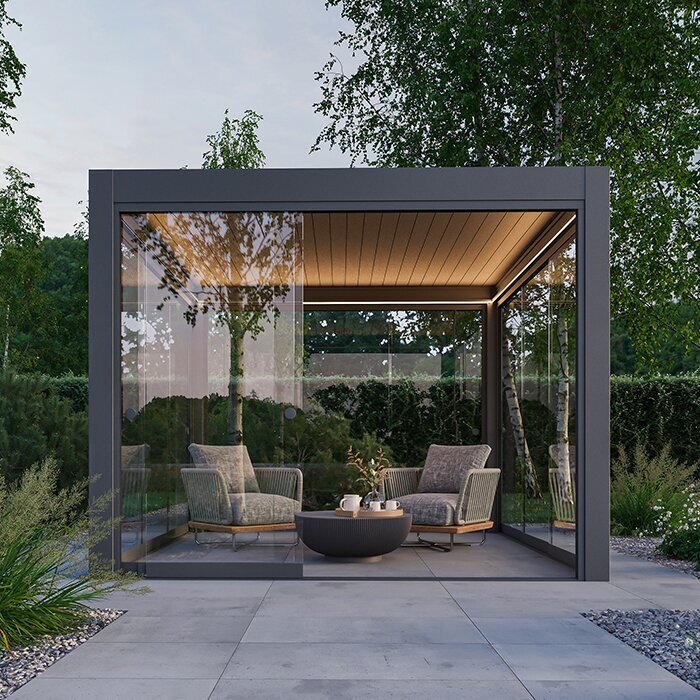
After the layout is clear, compare the visual style: the shape of the frame, its proportions against the house, and any stated colour or finish options. Choose something that sits comfortably with nearby materials and furniture, rather than buying a product solely because a photograph looks appealing. Images can help you judge whether a design feels visually at home in the setting, but they do not confirm the exact finish, dimensions or included parts. Check these details in the written listing for the chosen model and variation. If appearance depends on a particular finish, confirm that it is specified for the exact version, not just suggested by an image.
Be equally careful with roof-style names. A term such as bioclimatic identifies a product category in a listing; by itself, it does not tell you how that roof works, whether it moves, what controls it may use, or what other components are included. Read the product description for those particulars and ask the seller about any detail that affects your choice. the bioclimatic pergola page is a model reference, not proof of any feature beyond the listed identity. Note whether each feature is explicitly specified, optional or not described; do not treat silence as confirmation. Compare documented attributes with alternatives instead of assigning advantages from a name alone.
Work backwards from your spring installation date
Work backwards from the week you hope to use the pergola. Allow time to settle the design, confirm the exact variant, place the order, receive the product and arrange any outstanding site or installer checks. Ask the retailer for the supply estimate that applies to the particular item and ask the installer whether your preferred period is realistic. Do not turn an estimate into a guaranteed date: the seller or installer must confirm what applies to your order. If the installation window is fixed, leave a buffer rather than setting each step on the latest possible day. Count backwards from when the installer expects the product on site, and ask whether their date assumes you already have it.
Make a calendar with the target installation period and the earlier decisions that must be completed first. Set a date to choose a model, a date to confirm the installation plan, and a reminder to recheck order status using the seller's stated process. the general pergola product listing can help you identify what you are considering, but it cannot establish future availability or delivery timing; check those points directly when ordering. Record who confirmed each date and when to reconfirm it, especially if your planned window is months away. If dates change, decide which one is the priority and who needs to be told. If the timing does not fit, compare another option or move the installation date rather than relying on an assumption that a Black Friday order will arrive when needed.
Compare Black Friday offers on a like-for-like basis
Treat a Black Friday price as an offer to evaluate, not a reason by itself to buy. First make sure you are comparing the same model and configuration, including dimensions, finishes and stated contents. A price for one version cannot fairly be compared with a different version just because product names or images look similar. Check the price shown at the point of purchase and read the offer conditions, including any stated dates, exclusions or requirements. If a previous price is used as a comparison, note the dates and conditions stated. Where an offer depends on a code, membership or a required add-on, check those conditions before treating the displayed figure as your budget. Do not assume a discount, voucher, deadline or saving unless it appears in the terms for the order you are placing.
Then compare the amount you would really pay with the value of the option for your project. Account for costs the seller or installer lists separately, but do not add hypothetical extras just to inflate the comparison. Keep installer quotes and other required project costs separate from the product price so you can see where each amount comes from. Ask whether a quoted amount includes the exact selected version and items you need, then keep the answer with your notes. the Bloomcabin bioclimatic pergola listing belongs in a like-for-like comparison only after you have checked its current written details and price. If essential terms are unclear, pause and clarify them; a short promotional period is not a reason to accept an uncertain total.
Coordinate the product choice with your installer
Installation planning needs a conversation with the person who will do the work, not only a date on the calendar. Before ordering, share the exact product information with a qualified installer and ask what site details, drawings or preparation they need to confirm their work. Ask what product particulars they need before they can confirm a quote; a verbal impression based on a catalogue image may not be enough. Confirm whether they are available in your intended period and agree what their quote covers, including who will handle checks outside their scope. Ask how long their timing estimate remains valid if your plans are months away. If the installer advises that a different layout or product detail is needed, update the shortlist before paying rather than resolving a mismatch after the item has been ordered.
This is especially important if you are considering a wall-mounted type: do not assume that a convenient-looking wall is suitable or that the product can be attached in a particular way. The Bloomcabin wall-mounted pergola page gives you a product identity to discuss, but exact instructions and suitability must come from the product documentation and a qualified installer assessing your site. Ask for technical questions to be answered in writing and confirm that the model reference on your order matches the one considered for installation. Keep written responses tied to the model and version, especially when comparing similar product listings. That keeps the product choice, professional advice and planned spring date aligned without asking you to make a structural judgement yourself.

Plan for the months between purchase and installation
If you buy several months before installation, decide where the unopened pergola will be kept and ask the seller or manufacturer for any storage and handling instructions before paying. Check how to inspect the order on arrival and which time limits or conditions apply to reporting a problem; do not assume those details from a promotion. Make sure your storage plan is practical for the package and the time period, and ask if you are unsure. Keep the order confirmation, model reference, product information and written replies together so they are easy to find later. the specific bioclimatic pergola listing can be referred to in questions, but use the exact model and version shown on your order rather than relying on a broad category label. If you cannot store it as required, reconsider the purchase date rather than buying early by default.
Check the written warranty, return, cancellation and date-change conditions before you commit, including when any stated coverage starts and what you must do if installation is postponed. These terms vary by seller and product, so rely on the documents that apply to your order rather than assuming coverage starts at installation or that a date can be changed without cost. If the product needs to remain stored, verify that the instructions suit your circumstances. Save any written clarification with the order confirmation so you will not need to reconstruct what was agreed months later.
Use a shortlist to make the final choice
Make the final comparison using a short, consistent record for each candidate: where it will sit, usable dimensions, appearance, features confirmed in writing, total order cost, supply timing and installer fit. Separate must-haves from preferences so that a colour choice does not distract from a missing measurement or an unresolved installation requirement. For each point, mark whether it is confirmed, still needs an answer, or is not relevant. Use the same units and basis for every option, and leave a blank rather than guessing; unknowns become clear questions for the seller or installer. If two choices differ, note the practical consequence for your space rather than giving each an arbitrary score. When both meet your essentials, favour the option with clearer product details and timing over one that only looks more appealing in a promotion.
Before paying, return to the exact live product and checkout details. Confirm the selected model and version, final price, stated availability, included items and the terms that matter while you wait for spring. If one of these facts has changed, revisit the comparison rather than assuming your earlier notes still apply. A final check should reflect the checkout at that moment, not an old browser tab or screenshot. It is reasonable to leave a purchase undecided if a critical question remains unanswered; the right Black Friday choice is the one that still suits the site and installation plan once the promotion is no longer the focus.
Frequently asked questions
Does Black Friday guarantee a lower pergola price?
No. The date alone does not confirm a discount or a saving. Compare the current price and written offer conditions for the exact model and version, and keep any separate project costs in your budget. If a term is unclear, ask the seller rather than planning around an unconfirmed figure.
When should I order for installation next spring?
There is no universal lead time. Ask the seller about supply timing for the exact product and check availability with your installer. Work backwards from your preferred installation date, leave some flexibility, and reconfirm the dates that matter before placing the order.
What should I measure before choosing a pergola?
Measure the area you can use and note the furniture, paths and nearby doors or windows. Set out the proposed footprint on the ground, then compare it with the dimensions in the product information. Check what those dimensions refer to and whether height details matter for your intended use.
Does a bioclimatic label tell me how the roof works?
Not in enough detail to choose a product. Check the specific listing for information about operation, controls, materials and included components, and ask about anything that affects your decision. Do not infer those details from a product name or image.
What should I check if the pergola will be stored for months?
Ask the seller or manufacturer about storage and handling, and check how and when to inspect the order. Read the applicable warranty, return, cancellation and date-change terms, including any stated time limits. Keep the order details and written answers together for reference.
Buying on Black Friday works best when it supports a prepared decision rather than creates one under time pressure. A clear use, measured footprint, documented model details, and confirmed supply and installer timing make comparison meaningful. Check current offer and order terms, and plan for delivery and installation. If critical details do not line up, waiting or adjusting the spring date is more sensible than ordering a pergola that only looks suitable in a listing.
