
Buying a Pergola for an Outdoor Kitchen: What to Consider
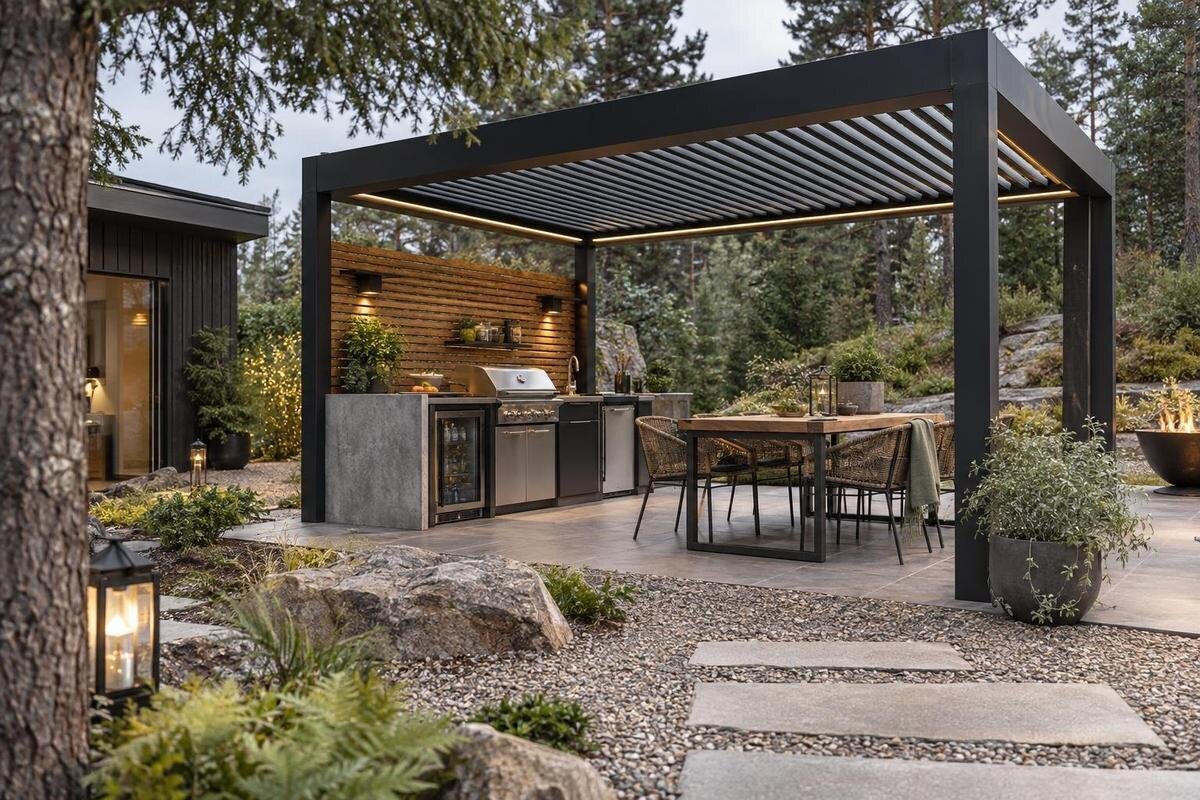
Pergola buying guide
An outdoor kitchen pergola has to work around more than a barbecue. It needs to fit preparation, cooking, serving and eating, while leaving enough room to move and providing the kind of overhead cover you actually want. When you buy a pergola for an outdoor kitchen, begin with the appliance instructions and a measured plan of the whole area; then compare roof design, placement, materials and order details. A product name or image alone will not tell you whether the structure suits a particular appliance, wall or site, so treat the product specification and installation advice as part of the buying decision.
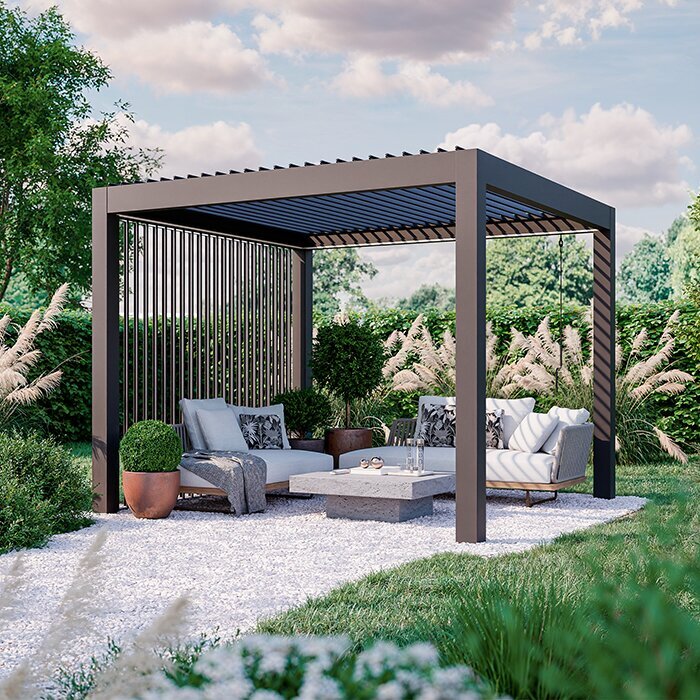
Before you order 1
Map the cooking and dining zones
Sketch the kitchen as a set of connected tasks: bringing food out, preparing it, cooking, plating and sitting down. Mark the barbecue or other cooker, benches, sink if planned, storage, serving point and dining furniture, even if some are future additions. The pergola should cover the area that needs shelter without making a pinch point between appliances and the table. Think about where ingredients land before cooking and where plates will be passed afterwards; those surfaces can influence roof coverage as much as the cooker itself. Keep an open route from the house to the kitchen and from the kitchen to dining seats. A layout that looks spacious on paper can feel awkward once chairs are occupied and someone is carrying a hot dish.
Draw doors, windows, taps, steps, garden beds and existing structures as well as the kitchen. Note which doors swing into the proposed space and where you need to reach handles or open cupboards. If the barbecue is already fixed, use its actual position rather than centring the pergola on the patio. For a new build, decide whether preparation and eating will sit under the same roof or whether the table can remain outside the covered zone. Consider where people will stand while food is being cooked or served, so they do not have to cross the main cooking area to reach a seat. This plan helps you compare options fairly and shows whether moving the pergola could improve movement without relocating the appliances.
Measure the usable footprint
Measure the full area available, including the paths around the proposed structure and the space needed to use each item. Record the length and width of the site, the lowest overhead obstruction and the position of nearby boundaries. Mark the supports from the product plan rather than judging by roof dimensions alone: a post can affect a bench end, chair or route from a back door. Check the footprint against fences, eaves and other structures, and note any slope or change in paving that may affect where supports can go. If you compare the Bloomcabin pergola listing, check whether it gives the dimensions and support layout you need; the page name alone does not establish a size.
Allow for use, not just fit. Pull chairs out to their usual position, leave room to pass behind them, and consider whether appliance lids, drawers or cupboard doors need to open. A tape measure, temporary marks on the ground or a scaled sketch can make the footprint easier to picture before you order. Check the proposed height against doors, windows, roof edges and anything already mounted overhead. If the product information gives a roof measurement but not the usable space between supports, ask for clarification. A pergola that covers the cooker but blocks access to preparation space or dining is the wrong fit, even if it sits within the patio boundaries.
Before you order 2
Check appliance clearances and ventilation
The cooking appliance is the key constraint beneath the roof. A gas barbecue, charcoal grill, pizza oven and electric cooker can each have different operating and clearance instructions; do not assume a general pergola description covers them. Read the appliance maker’s guidance on overhead structures, ventilation, spacing and smoke management before fixing the pergola position. If the instructions are unclear, ask the appliance manufacturer or a qualified installer to assess the proposed combination. Treat this as a buying check, rather than relying on a photograph of another outdoor kitchen or assuming that one type of pergola suits every appliance.
Think about where smoke travels in the usual breeze and whether it could drift towards an open door, dining seats or a window. A roof, nearby wall or future enclosure can affect how air moves, so consider the whole setting rather than only the cooker directly below. Do not assume that an open-sided pergola guarantees suitable ventilation, or select a roof or exhaust system by guessing at clearances. Note the exact appliance model in your planning, then get advice on the required clearances and installation before choosing a final position. This can help you avoid buying a structure that cannot be used as planned with the cooking equipment you already own.
Compare roof designs for the shelter you need
Roof descriptions can mean different levels of shelter. An open-beam or slatted arrangement leaves more sky visible, while a more continuous roof can provide greater overhead cover; neither label alone tells you which conditions it can handle. Decide whether your priority is filtering sun, keeping drizzle off a dining area or covering a cooking worktop, and how much open sky you want above the barbecue. For products described as bioclimatic, check what the roof actually does, how it is controlled and what limitations the manufacturer states. For example, the Bloomcabin bioclimatic pergola listing should be assessed from its product information, not its name alone.
Ask whether roof panels are fixed or adjustable, what positions are available and whether the manufacturer sets limits on using the roof open or closed. Check whether rain can enter through joints, how runoff is managed and whether the stated design is suitable above your particular appliance. A movable roof may offer choices, but that does not automatically make it waterproof, windproof or suitable for every cooking arrangement. Compare the product details with your priorities and the appliance instructions. If shelter over cooking matters less than keeping the dining table comfortable, you may choose a different roof arrangement than if both zones need similar cover.
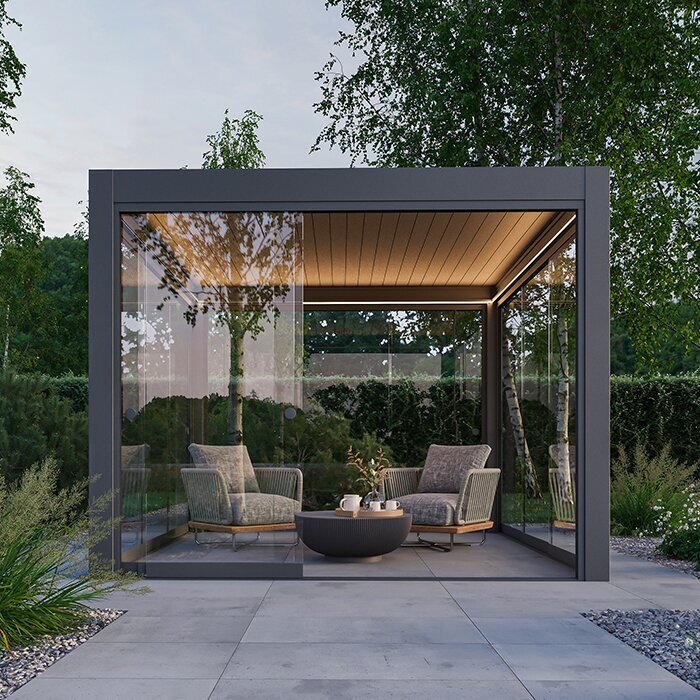
Before you order 3
Assess sun, rain and drainage at the site
Consider the exposure where the pergola will stand: the direction of the sun through the day, usual wind paths, rain entering from the sides and water collecting on nearby surfaces. A roof’s stated coverage may not keep a worktop dry when rain arrives at an angle, while an open-sided structure leaves the area exposed from the sides. Look at eaves and nearby walls, which can change where water falls or how gusts travel. If you are comparing the bioclimatic pergola product page, look for information about drainage and weather limitations, or ask the supplier. Do not assume a roof name guarantees a particular level of protection.
Trace where roof runoff would go before settling on a footprint. Consider whether it could fall across a walkway, near a doorway, onto an appliance or towards a place where water might collect. Ask how the product manages water, whether any gutters or outlets are part of the supplied system, and what might need to be arranged separately. Wind exposure can also affect the position or orientation you prefer; a qualified installer can advise on the site and installation. These checks help you match a product to its setting, rather than assuming the same roof will perform alike in every garden. Keep the appliance maker’s requirements in view when comparing the available shelter.
Choose between freestanding and wall-mounted placement
A freestanding pergola can be considered where there is a suitable clear area, while a wall-mounted option may suit a position beside the house. The right choice depends on the site layout, available walls and surfaces, and how the kitchen connects to the home. Do not assume a wall-mounted structure can attach to any wall: cladding, the supporting structure, existing services and fixing details all need checking. If you are considering the wall-mounted pergola listing, confirm its stated mounting arrangement and have the supporting wall assessed by a qualified installer before ordering.
With either arrangement, think about support positions before placing cabinetry or a table. Mark any posts on the site plan and check whether they would interrupt a doorway, walkway or access to utilities. For a kitchen beside the house, note windows, doors, gutters, outdoor taps and vents that could conflict with the proposed height or fixing area. If the support method or footing requirements are not clear from the product information, ask the supplier and installer for the complete installation details. Do not choose from a front-on image alone; a measured plan or site visit can resolve questions that catalogue pictures cannot.
Before you order 4
Check materials and maintenance near cooking
An outdoor kitchen can expose nearby surfaces to heat, smoke, grease, steam, cleaning products and changing weather. Before choosing a pergola, find out what the frame and roof are made from, how their surfaces are finished, and how the manufacturer says to clean and maintain them. Check whether the product instructions address your specific appliance and its proposed position, and ask whether smoke or grease could affect the overhead surface. Do not infer materials or heat tolerance from a product photograph. The Bloomcabin pergola product page can be one place to begin reviewing the available information; request written specifications if it leaves essential questions unanswered.
Match the construction information to your site as well as the cooking area. For example, an exposed or coastal location can make maintenance and corrosion information especially relevant, but the answer depends on the actual materials, finish and conditions. Ask whether cleaning guidance, installation instructions and details of any permitted alterations are documented. Do not assume the structure is designed to carry a rangehood, storage or other equipment just because there is room for it. If the supplier or installer cannot confirm compatibility, leave that item out of the plan until its support and clearance requirements have been resolved professionally.
Plan access, utilities and installation
Plan people and services as carefully as the structure. The kitchen needs a workable route for carrying food, bringing in supplies and moving around open cupboards; pergola supports should not turn that path into a narrow corridor. Note the positions of water, drainage and power if they are part of the project, without assuming they are included with the pergola. Connections, appliance placement and related work should be checked by appropriately qualified trades. For the wall-mounted Bloomcabin pergola page, review the mounting and installation information alongside planned service routes, especially where work near the house could affect existing fittings.
Check access for delivery and installation before placing an order. Note gates, narrow paths, steps, overhead obstacles and the space available to handle bulky parts; ask the seller what access information they need and what assembly, if any, is included. Confirm whether the ground or paving needs preparation and who is responsible for it. If the site is uneven or has drainage problems, ask a qualified installer how those conditions affect the proposed installation rather than improvising an answer. These practical details can rule out an otherwise appealing option early, before you have committed to a footprint or coordinated the kitchen.

Before you order 5
Compare product specifications and order scope
Compare product pages using the same questions, not the photographs alone. Put overall dimensions, support positions, roof coverage, mounting method, materials, installation requirements and stated weather limits side by side. Record what is included, such as roof components, posts, fixings, drainage parts or instructions, and what must be sourced separately; rely only on details stated for each option. If a page is unclear, request its specifications rather than filling gaps with assumptions from another model. You can include the Bloomcabin bioclimatic model page in your comparison, but its title is not a substitute for checking the exact configuration.
Check that the option you are considering matches the plan: size, finish or colour if choices are shown, roof type and any accessories explicitly identified in the listing. Confirm the current total price and any separate costs for delivery, assembly, groundwork or professional installation in the quote; do not assume these from a product name or image. Read the seller’s ordering, returns and warranty terms before paying, and ask how changes to an order are handled. Keep the answers with your drawing so you can compare the full project scope rather than choosing on a headline price or an attractive visual.
Make the final choice against a written plan
Before ordering, make a plan that shows the pergola footprint, supports, cooker, benches, dining furniture, doors and main paths. Add the roof coverage and the expected direction of rain or smoke, then check the drawing against the appliance instructions and product specification. Ask a qualified installer to resolve uncertainty about mounting, clearances, foundations or site conditions. If the information for the Bloomcabin pergola entry does not show an essential detail, get the answer in writing before paying. A few focused questions now are easier to manage than discovering a mismatch after delivery.
Choose the option that meets your non-negotiables first: compatibility with the cooking appliance, suitability for the intended site, enough room to move and dine, and the level of shelter you want. Then weigh appearance, upkeep and any extras against the complete project cost and installation effort. You may find that covering a smaller kitchen zone makes more sense than roofing the whole patio, or that the position needs changing to keep smoke and runoff away from doors and guests. The aim is a pergola and kitchen layout that work together in everyday use, without relying on unverified assumptions.
Frequently asked questions
How do I choose the right pergola size for an outdoor kitchen?
Measure the cooking and dining zones together, then allow room for open appliance lids, pulled-out chairs and clear paths. Check support positions against the usable area, not just the roof dimensions. A scaled sketch with the actual appliance and furniture is more useful than choosing a size based on patio area alone.
Can I put a barbecue under a pergola?
Compatibility depends on the barbecue’s clearance and ventilation instructions, the pergola roof and airflow at the site. Check the appliance guidance and ask its manufacturer or a qualified installer before buying. An open-sided structure does not automatically make every cooking appliance suitable beneath it.
Is a bioclimatic pergola fully waterproof?
The label alone does not establish how the roof moves, how joints are designed, how water drains or what weather limits apply. Check the exact product information and ask what conditions the structure is intended to handle. Treat the product title as a description, not a promise of complete weather protection.
Should I choose a wall-mounted or freestanding pergola?
Compare the available footprint, house openings and support positions, as well as the structure of any wall used for mounting. A wall-mounted option needs a suitable fixing arrangement and an assessment of the supporting wall. Confirm the installation requirements for either style with a qualified installer.
What should I confirm before placing an order?
Check the stated dimensions, roof details, materials, mounting method and installation requirements. Confirm exactly what is included, along with any separate costs for delivery, assembly or site preparation. Read the current order, returns and warranty terms, and get any unanswered compatibility questions resolved before paying.
A pergola for an outdoor kitchen should fit the way you cook, serve and dine, as well as the conditions of the site. Measure the usable space, verify the roof and mounting details, and resolve appliance and installation questions before ordering. With those checks in hand, you can compare options on their actual fit for your plans rather than on appearance or a product name alone.
