
Buying a Pergola for a Hotel or Holiday Property
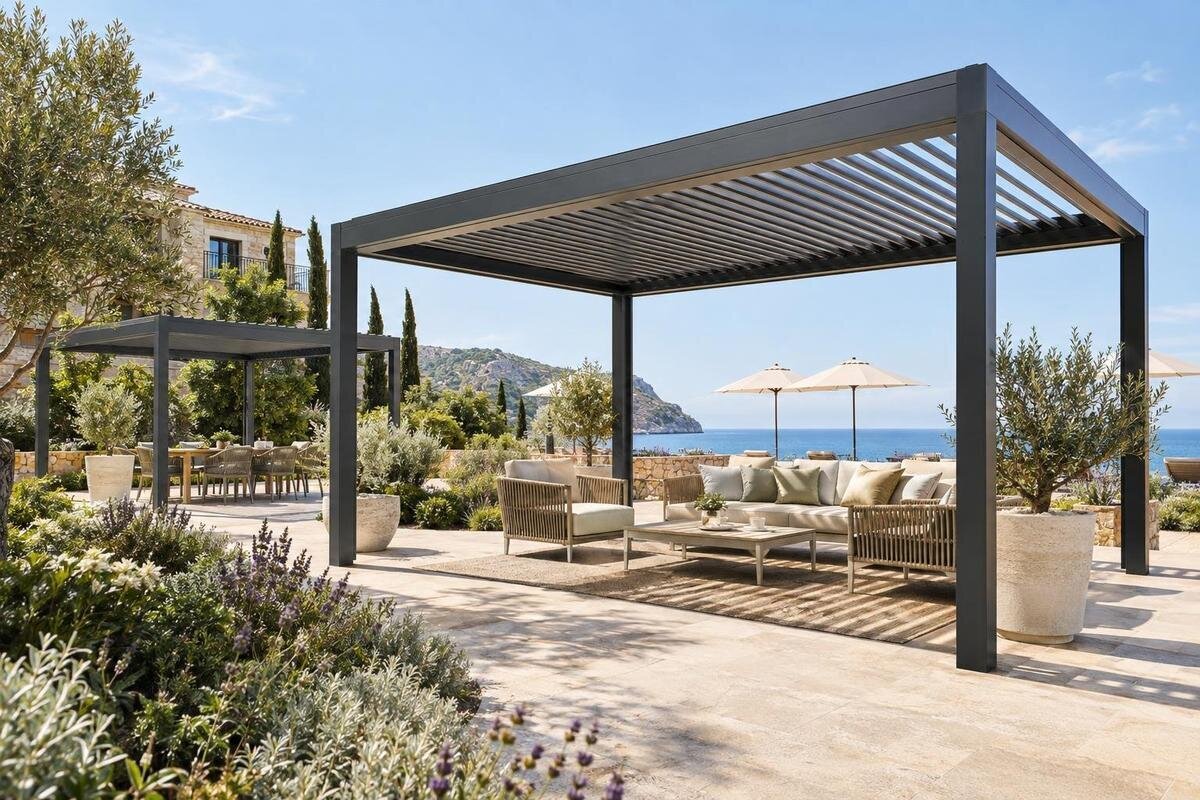
Hotel and holiday property buying guide
A pergola at a hotel or holiday property is part of the guest experience and the site’s day-to-day operation. The right purchase depends on what people will do in the area, how it connects to the rest of the property, and what the site and installation can support. Weigh those points before comparing options.
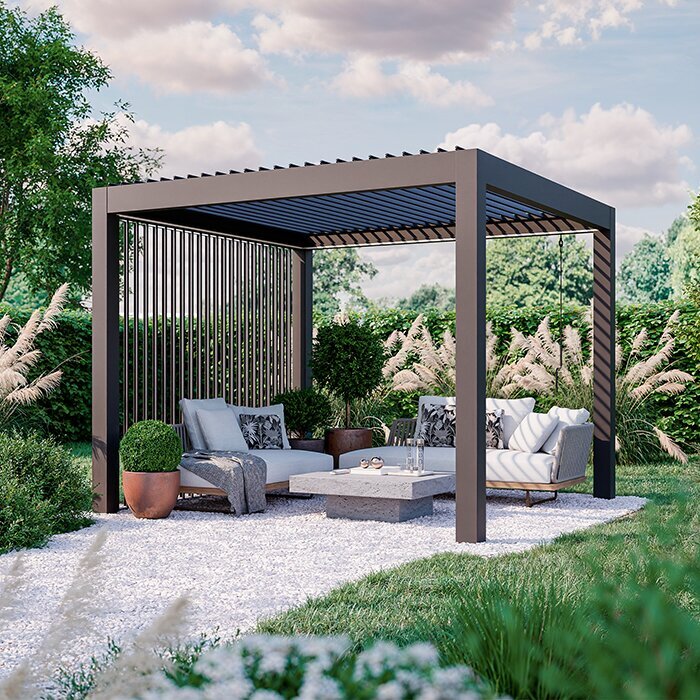
Define the guest use before comparing products
List the activities the pergola area should support: quiet sitting, a shared waiting point, outdoor meals, a place to pause between buildings, or another purpose. Choose one main use, then note secondary uses that genuinely matter. A place intended for short pauses calls for a different layout from one where guests stay longer; trying to accommodate every possible activity can leave the brief too vague for a useful comparison. Estimate likely demand at busy times, whether guests reserve the area or arrive casually, and what furniture or service equipment the activity requires. Those are the criteria to guide the shortlist, rather than an assumed image of what a hotel pergola ought to look like.
For a hotel, compare the planned use with the guest offer, staffing and opening patterns. At a holiday property, consider whether different groups will use the area privately or share it with others. Ask who will set up and reset furniture, supervise the space and respond to problems. Write a short brief covering the intended users, typical length of stay, peak group size and the main outcome you want, such as a defined outdoor sitting area. Then assess each candidate against that brief. The Bloomcabin pergola product page is one option to examine, but its name alone does not confirm capacity or suitability.
Place the pergola in the property layout
Plot the proposed position in relation to the guest spaces it should serve, not just the most attractive patch of ground. Trace a typical route from accommodation, reception, amenities and parking, then note steps, slopes, doors, service paths and places where guests might wait. A convenient spot can feel disconnected if it is hard to find; a prominent one can interrupt movement or bring conversation close to guest rooms. Consider the view from inside as well as from the pergola: neighbouring buildings, shared facilities and private outdoor areas can all affect the sense of privacy. Mark the position on a site plan and walk the route at the times guests are most likely to use it.
Think about how the proposed area will sit alongside other activities. Keep routes for housekeeping, deliveries and emergency access clear in line with the property’s plans, and avoid seating where service movements routinely cut through it. If you need the pergola near a building, record how guests will move between the spaces; if it will be separate, note the paths and any visual separation required. Check each candidate’s dimensions and installation information against your site plan. Read the Bloomcabin bioclimatic pergola listing as an item to assess, not as a recommendation for a particular position; its name does not prove it will fit your layout.
Measure the footprint and circulation space
Measure the proposed footprint and the space around it before narrowing the choice. Record boundaries, nearby walls, trees, drains, gates, steps and uneven areas; a simple plan with measurements is more useful than judging from a photograph. Allow for chairs when they are in use, people pulling them back and a group moving past without squeezing through. Include the route guests will take to reach the space, with room for mobility aids that your visitors may use. Treat access needs as part of the design brief, and check the completed plan against the relevant requirements for your project. A product picture can make an option look compact, but it cannot confirm how much room it needs.
Measure more than the structure’s stated footprint. Include the space needed for entry and exit, door or gate movement, furniture, service access and any fixed utilities nearby. Sketch a realistic arrangement for the busiest expected use, then check whether guests can move through without staff having to shift chairs or equipment constantly. If a product listing does not provide the dimensions or a drawing you need, ask the supplier before ordering rather than estimating from an image. Compare the wall-mounted pergola listing with your measured plan, and verify the exact dimensions and installation clearances in its product information.
Assess site exposure and expectations for shelter
Observe the proposed position at the times of day and year when guests are likely to use it. Note where the sun falls, how wind and rain reach the area, and whether nearby buildings or trees change those conditions. An exposed location or a site with poor drainage may raise different questions from a sheltered courtyard. Record what you have observed and what guests are likely to expect there, such as a place to sit in open air or an area with a particular degree of shade. This makes it easier to identify which product details matter, without assuming that every pergola offers the same conditions.
A pergola can help define a place to gather, but the category name does not promise an enclosed room or a particular level of weather protection. Check the exact product documentation for any claims about shade, rain, wind or operation, including stated limitations. Have a qualified building professional assess the site, proposed structure and fixing approach before relying on advertised performance. For a comparison, examine the Bloomcabin pergola page against those questions; treat its photographs as illustrations, not evidence of how it will perform at your property.
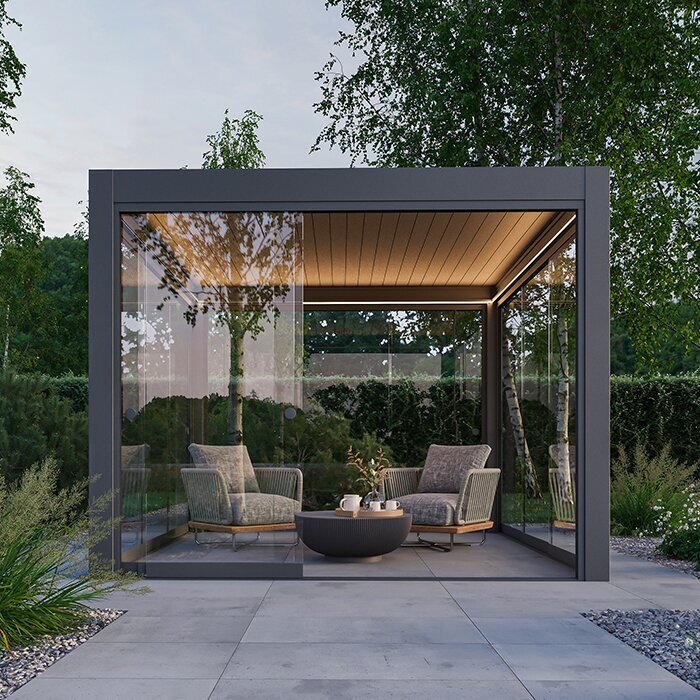
Choose a style that fits the property
A guest-facing pergola will be seen from nearby rooms, paths and shared outdoor spaces, so consider how its form and proportions relate to the setting. Compare it with the buildings, planting and other outdoor furniture nearby. Decide whether the new feature should blend into an established look or stand out as a distinct amenity, and check that the result feels consistent with the property rather than with one isolated photograph. If there are several outdoor areas, consider how the proposed pergola will relate to them without making every space look identical. Visual fit is one purchase criterion, but it should not replace checks on layout, installation or written specifications.
Look beyond the overall appearance when comparing finishes and colours. Ask the supplier to confirm which details apply to the exact product and whether any options shown in an image are included. Photographs can help you judge general appearance, but they do not establish dimensions, materials or performance. You can review the bioclimatic pergola product page as an item on your shortlist while checking its written details separately; the word bioclimatic should not be taken as proof of a particular feature. Choose a design that works with the setting and the property’s maintenance plan, not one that only looks appealing in a catalogue image.
Plan attachment and installation early
Decide whether the layout calls for a structure that stands separately or one that connects to a building. A product described as wall-mounted is not automatically suitable for every wall or building. The existing structure, exterior finish, water management and the proposed fixing method all need to be considered by a qualified professional. If you are considering the wall-mounted pergola product page as a candidate, check its written installation conditions and have the building assessed before treating that option as feasible. Do not assume that a product title or photograph confirms compatibility with your property.
Clarify who will assess the site, prepare the area, install the pergola and make good any affected surfaces. Confirm what access the installer needs and whether the work could interrupt guest routes or use of nearby facilities. Ask the supplier what is included in the product and what must be arranged separately; do not assume that installation, site preparation or professional advice comes with the item. If consent or another approval may be relevant, check with your local council or a qualified building professional before ordering. Agreeing these responsibilities early helps prevent a suitable-looking product from becoming a difficult project to deliver.
Account for daily guest and staff use
Think through an ordinary day at the property, not only the finished appearance. Consider who will arrange furniture, clean the area, remove rubbish and keep guest routes clear. Plan where spare furniture or equipment will be stored and how staff can reach the space without disrupting guests. If the pergola area is shared, decide how staff will manage competing uses and whether it needs to be available at particular times. A clear operating plan can prevent the new amenity from creating extra work or confusion, especially when different teams handle housekeeping, guest services and maintenance.
Ask what routine care the selected product requires and who will carry it out. Confirm cleaning guidance and any inspection or maintenance requirements in the supplier’s documentation rather than assuming the finish or components will need little attention. If an option has moving parts or controls, establish how they are operated, who may use them and what staff should do if something stops working. The Bloomcabin pergola listing can be considered alongside the property’s staffing plan, but the page’s written details—not its name—should inform questions about care and operation.
Verify product details and supplier documents
Before choosing, identify the exact product and check its written specifications. Details to confirm may include dimensions, materials, finish, what is included, any available accessories and the conditions for intended use. If shade, rain handling, wind exposure or another performance point matters to your site, look for explicit information for that model rather than relying on a general product description. The listing titled Bloomcabin bioclimatic pergola is one page you can review, but the product name does not establish what it includes or how it performs. Keep a copy of the relevant product information so your team is comparing the same option throughout the purchase process.
Ask the supplier for any documents needed to assess the proposed installation, such as product dimensions, drawings, assembly information and stated site limitations. Confirm what is included in the order, what must be sourced separately, and whether the supplier provides information about care, replacement parts or warranty terms. Request answers in writing when a detail affects your site plan, budget or operating needs. If a claim about performance or certification matters to your decision, ask for documentation that applies to the exact model; do not infer it from a label or image. A clear paper trail makes it easier to brief the installer and resolve differences between what was expected and what is supplied.

Budget for the whole project, not just the pergola
Set a project budget that includes more than the product itself. Depending on the site, costs to consider may include professional assessment, design work, ground or surface preparation, freight, unloading, installation and making good the area afterwards. Allow for any approvals or related work that a qualified professional identifies as relevant. You may also need to account for temporary disruption, such as restricting access to a guest area during installation. No single allowance suits every property, so gather figures for the actual proposal rather than relying on a generic estimate or comparing product prices alone.
Compare supplier and installer quotes on the same scope. Check whether each includes delivery, assembly, site preparation, disposal of packaging, follow-up work and any ongoing service; if an item is excluded, record who will arrange it and what it may cost. Consider recurring expenses too, including routine care, inspections and replacement parts if required. A lower initial quote may not represent the better purchase if it leaves important work unpriced or shifts responsibility to the property team. Keeping one list of initial and ongoing costs helps you weigh options against the value the outdoor space is intended to provide.
Use a clear checklist before placing the order
Turn the brief into a short comparison table for your preferred options. Record the intended guest use, measured footprint, circulation space, site conditions, visual fit, installation approach, documented performance and likely care needs. Mark which points are essential and which are preferences, so a strong appearance does not distract from a missing site requirement. If more than one person is involved in the decision, ask operations and maintenance staff to review the same information. Their practical questions may reveal a route, storage or cleaning issue that is easy to miss when considering the product in isolation.
Before ordering, confirm the exact product, quantity, dimensions, finish and items included, then match them to the approved site plan and installation arrangements. Agree delivery access, unloading responsibilities, the installer’s scope and the timing with the people who manage guest areas. Resolve unanswered questions about product documentation, site suitability or approvals before committing. If useful, mark the proposed footprint on the ground and walk it with the staff who will support the area; that simple check can expose circulation problems while the plan is still easy to change. If a candidate does not meet an essential requirement, revisit the brief rather than relying on an assumption.
Frequently asked questions
Will a pergola described as commercial automatically suit a hotel?
No. A commercial label does not confirm that a particular model suits your site, guest numbers or conditions. Check the product’s written specifications and intended use, then have a qualified professional assess the proposed location and installation.
How should I choose where to put a pergola?
Consider the routes guests and staff use, the activities nearby, privacy, views and site exposure. Walk the proposed route and check the position against a measured plan, including access for furniture and service tasks.
Can a pergola be relied on to keep guests dry?
Not without checking the design and its documented performance. Pergolas vary, and a product name or photograph does not establish protection from rain or wind. Confirm what the specific option provides and whether it suits your site.
Do I need approval to install a pergola?
That depends on the project and site. Before ordering, ask your local council or a qualified building professional whether any consent or other approval is relevant to your plans.
Is a wall-mounted pergola right for my property?
It depends on the layout and whether the existing building is suitable for the proposed connection. Check the product’s written installation conditions and ask a qualified professional to assess the building and site before committing.
A good pergola purchase begins with a clear guest use and a site plan that accounts for movement, exposure and installation. Match the shortlist to written product details, the property’s operating needs and the complete project budget. That keeps the decision grounded in how the outdoor area will work for guests and staff, rather than in appearance alone.
