
Buying a Pergola for a Small Patio: What to Consider
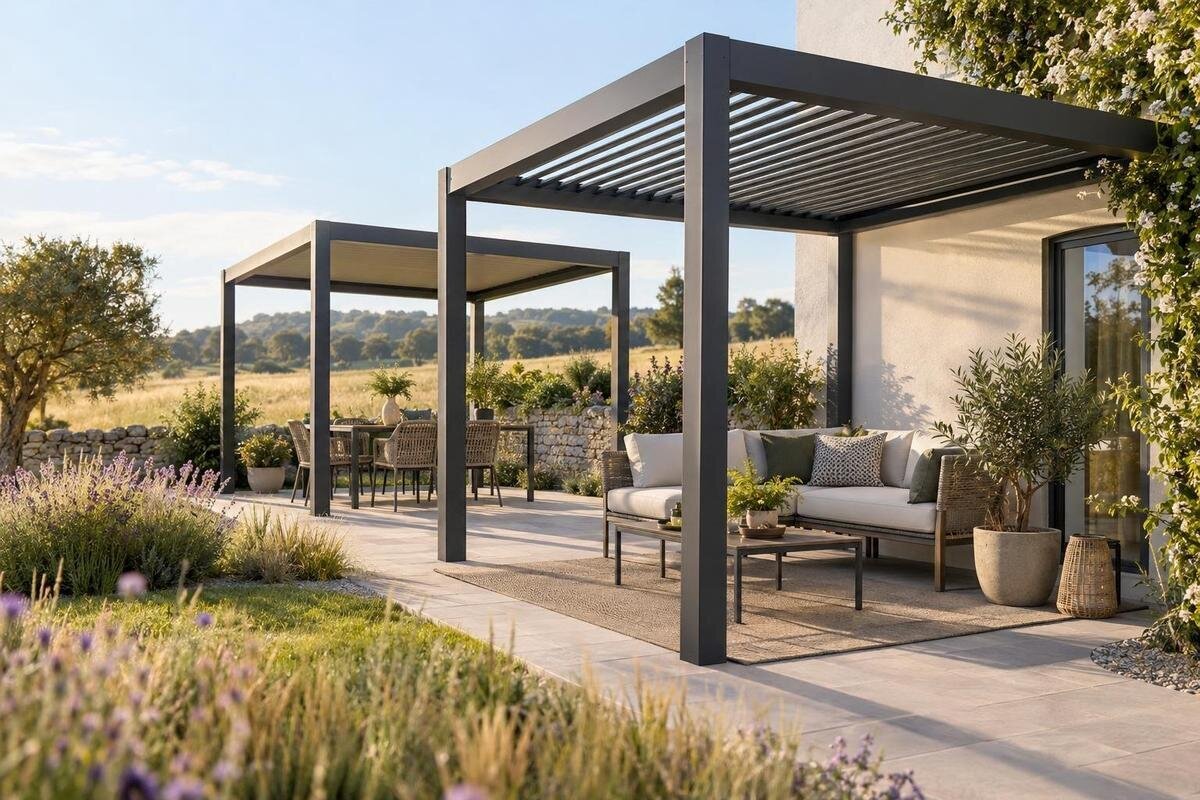
Pergola buying guide
On a small patio, a pergola needs to fit without making everyday use awkward. Doors still need to open, people need a clear route, and furniture has to remain practical beneath or beside the structure. Before you buy a pergola for a small patio, measure the area you can actually use and compare it with the product’s stated footprint and support layout. A wall-mounted design may be worth considering, but its position and the suitability of the building still need to be established.
01
The patio’s usable footprint
Begin with the area you can actually use, not the full dimensions of the paving or deck. Measure the clear width and depth at several points, especially where the patio narrows, and sketch any corners or changes in alignment. Mark fixed items such as steps, posts, drains, outdoor taps, built-in planters and storage that cannot be moved. If a fence or retaining edge sits beyond the usable surface, do not count that strip as part of the pergola footprint. A small difference between the widest and narrowest points can affect whether a frame fits without getting in the way of everyday use.
Note the height and position of nearby eaves, gutters, windows, lights and doors as well as the ground outline. A window that opens outwards or a door that swings across the patio can conflict with a frame even when the paving looks generous. Draw a simple plan, or mark a candidate outline on the surface with tape or string and walk around it. Include the outer edge of pots or movable storage if they normally stay in place, since these can turn a nominally clear corner into a daily obstruction. Compare the usable shape with the dimensions stated on the Bloomcabin pergola listing; a product name or photograph does not establish its exact width or depth.
Doors and walking routes
Plan access as a route, not as leftover space around the frame. Start at the house door and the gate you use most, then trace how people move between them and the patio’s seating area. Check the full arc of each door and gate, including handles, and make sure an open door will not meet a support, furniture or stored item. On a compact patio, a route that looks clear on paper may feel awkward when chairs are occupied or someone is carrying a tray. Think about where people pass, not just whether a line can be drawn through the space.
Mark the route with tape and walk it in both directions; test it with the furniture arrangement you expect to use, rather than on an empty patio. Include access to outdoor taps, storage or rubbish and recycling bins, and decide whether those items can be moved without creating a new obstruction. Consider the route after rain as well, when avoiding puddles, wet surfaces or dripping eaves may affect how the patio is used. If a route crosses the proposed footprint, reconsider the position instead of treating the path as optional. Once it is marked, use a second pergola option as a comparison only if its stated footprint and support layout leave that route practical.
02
Wall-mounted and freestanding layouts
A freestanding pergola can be positioned without relying on a wall, but its supports take up space within or around the frame. A wall-mounted pergola uses the building edge as part of its layout; that may keep the wall-side edge more open, but it does not guarantee a clear floor area or an easier fit. Some designs may still have supports in the open part of the patio, and the roof projection occupies space overhead. Compare the full outline and support positions rather than deciding on the basis of the product label alone.
Use your patio sketch to see how each arrangement works with the house, doors and main route. A wall-mounted layout may be worth comparing if the wall-side edge is otherwise underused, while a different arrangement may make more sense if doors or windows occupy that side. Also note whether the building line is straight and uninterrupted, as corners, downpipes and projecting fittings can limit the available position. The exact dimensions and drawings matter. Consider the wall-mounted pergola listing as an example of that category, but judge it by its stated layout and dimensions rather than assuming that every wall-mounted design has the same support arrangement.
Suitability of the wall
A wall that looks convenient is not automatically suitable for a pergola attachment. Wall construction, cladding, framing, nearby openings and any services can affect whether the proposed installation is appropriate. Check the product’s installation requirements and drawings; do not infer attachment details from the word wall-mounted, a lifestyle image or the overall dimensions. A qualified installer or relevant building professional can assess the existing building and the proposed fixing arrangement. The information on the wall-mounted model page may help you identify what to ask, but it cannot assess the condition or suitability of your particular wall.
Before buying, find out what fixings, if any, are included and whether the product information specifies a wall type or installation conditions. Ask for details that are not clear in the drawings, including how the frame meets the wall and whether nearby windows, lights or eaves affect the planned position. Consider drainage features, vents and service boxes too: they may need to remain accessible and should not be assumed to be movable. If the home is rented or shared, clarify approval with the owner or property manager before committing to a design that needs attachment. If a qualified person cannot confirm that the arrangement suits the building, compare other layouts rather than treating wall mounting as a shortcut.

03
Furniture within the pergola footprint
Measure the table, chairs and other pieces you expect to keep on the patio, rather than using approximate sizes from memory. Mark their outlines on the same plan as the pergola, then allow for the positions they occupy in use: chairs need to be pulled out, and people need room to sit down and move past them. Include side tables, planters or storage if they are part of the usual setup. This test often changes how much of the patio needs cover. A pergola may fit the paving but still leave too little usable room for the furniture you want underneath it.
Try more than one arrangement before settling on a size. A table can sit closer to one side while preserving a route elsewhere, but that only works if chairs remain usable and the way in is not blocked. Test the arrangement with the number of chairs normally used, rather than a reduced display layout that makes the footprint seem smaller. Compare those options against the alternative pergola page using its stated dimensions, if provided, rather than judging by the product image. For a flexible layout, decide which items need to stay out all the time and which can be moved or stored. That helps distinguish the space you need every day from the largest possible arrangement you might use occasionally.
Sizing for everyday use
Write down what you will do under the pergola most often. A patio used for breakfast or outdoor dining needs room for the table and chairs in use; a space mainly used for reading may call for a different covered area. The usual activity should guide the footprint more than an occasional gathering. On a small patio, covering every paved section can use up valuable open space without improving the way you use it. Decide whether you need cover over one particular zone or whether you regularly use the whole patio at once.
Consider how the space changes between everyday and occasional use. You may want to keep a route open, retain room for planters or move chairs when the patio serves another purpose. Sketch the normal arrangement and the busiest realistic one, then note what would need to move between them. Include the practical place those moved items would go, because a compact patio may not have a convenient temporary storage area. This gives you a practical limit for the pergola’s size without trying to make a compact patio accommodate every activity simultaneously. If the layout only works when furniture is squeezed against a door or passage, it is a sign to reconsider the footprint, position or intended use.
04
Product dimensions and drawings
Read each product’s dimensions carefully and check what they describe. Look for the overall width, depth and height, and see whether a drawing distinguishes the outer frame from the clear space inside it. Support positions and any projection beyond the main frame can matter on a small patio, particularly beside a route or doorway. Do not assume that a headline measurement refers to the part of the structure you need to fit, or that two listings use the same measurement conventions. When reviewing the product detail page, look for a dimensioned plan and compare it with the outline you have already measured.
A photo is useful for appearance, but perspective can make a structure seem smaller or larger than it is. If a relevant dimension or drawing is missing, ask the retailer for clarification before treating the product as a fit. Check height as well as width and depth, especially where eaves, windows or lights are nearby. Record each measurement with its label, so overall dimensions are not later confused with the internal space or a roof projection. Keep separate the space the assembled pergola occupies and the access needed to install it; packaging is a different question. Use the same patio plan to compare every candidate so that differences in product descriptions do not lead to a misleading comparison.
Delivery and assembly access
A clear patio does not guarantee that a product can reach it. Trace the route from the delivery point through gates, passages and any turns or steps, and note narrow sections or low overhead obstructions. The package dimensions may not match the final structure’s footprint, so ask for package measurements if they are not stated. Consider where items could be placed during assembly without blocking a doorway or the only route through the outdoor area. These checks are especially useful where the patio is behind the house or access passes through a narrow side passage.
Find out what assembly the product information describes and whether the work area needs to stay clear while it is done. If professional assembly or additional site work may be needed, include that when comparing the overall purchase rather than assuming it is part of the product. Think about whether normal household access can continue while boxes and tools occupy the patio, particularly where this is the only entrance to the garden. Review the retailer’s delivery and assembly terms, and check any details that depend on your address or access route. The information on that product page is a starting point; if package size, delivery handling or assembly arrangements are unclear, resolve those questions before placing the order.

05
Cover, daylight and open space
A pergola changes how much sky and daylight reach the patio, and may affect light entering nearby rooms. Think about when you use the space and where direct sun falls at those times. A cover that feels welcome during one part of the day may make another part of the patio less bright, so consider the view from inside as well as the area beneath the structure. On a small patio, keeping some open space can help the whole area feel less crowded. A quick sketch of the roof outline in relation to windows and the rest of the patio can make this trade-off easier to see.
Check the written description for the type and extent of cover rather than assuming a pergola provides a sealed or rainproof roof. If adjustable operation, shade or rain behaviour matters to your decision, look for those details in the product information and ask about anything it does not specify. Consider where water from the surrounding roofline already falls, as this may influence where you prefer to sit or leave furniture. For this listed pergola, use the stated description and drawings to establish what is included; do not infer roof performance or operation from the product name or a single image. This keeps expectations tied to the product information instead of to assumptions about what a pergola generally does.
Purchase costs and terms
Compare the whole purchase, not just the pergola’s footprint or the first price you see. Check what the listed product includes and whether any relevant components or accessories are separate. Depending on the design and site, delivery, assembly or preparation may also affect the total. If you are comparing several options, note these items alongside their dimensions and support layouts so that a lower initial figure does not hide a different set of inclusions. Do not assume that fixings, covers or other parts are supplied unless the product information says so.
Read the ordering terms for delivery, assembly, cancellation and returns before you commit, and check that the version you intend to buy matches the dimensions and layout you assessed. If any important point is unclear, such as an included component or a cost that depends on access, get it clarified before paying. Keep the product details and your patio plan together so you can refer to the same measurements if questions arise later. Save the exact listing version and any written clarification you relied on, especially if several configurations are being compared. A careful comparison should leave you clear about the fit, what is included and the costs you have actually agreed to.
Frequently asked questions
How do I measure a small patio for a pergola?
Measure the clear area you can actually use, including its narrowest points and fixed obstructions. Note door swings, walking routes and anything overhead, then compare these with the pergola’s stated outside dimensions and support positions. The patio’s overall width and depth alone may not reveal a pinch point.
Will a wall-mounted pergola always save space?
No. Wall mounting changes where the structure is supported, but some designs may still have supports in the open patio area. Check the actual footprint and support layout, and have a qualified professional assess whether the building and proposed attachment are suitable.
How much clearance should I leave around a pergola?
There is no single clearance that suits every product and patio. Allow for the stated footprint and installation requirements, door openings, walking routes and the space needed to use your furniture. Confirm any product-specific requirements with the supplier and, where relevant, a qualified installer.
Can I judge whether a pergola will fit from product photos?
Photos can help you understand a product’s appearance, but perspective makes them unreliable for judging size or clearances. Use stated dimensions and drawings, and ask for any missing measurements rather than estimating from an image.
What should I confirm before ordering?
Check the exact dimensions, support layout, roof details, included components and any separate costs for delivery or assembly. For a wall-mounted design, confirm the attachment requirements with a qualified professional. Read the purchase terms and clarify anything that could change the final cost or fit.
The right pergola for a small patio is the one that leaves the space working once it is in place. A measured footprint, a tested route past doors and furniture, and a clear understanding of the support and cover details give you a realistic basis for comparison. If a wall-mounted design is on your shortlist, confirm the building and attachment requirements before committing. Then check the inclusions and ordering terms so the choice reflects how you use the patio, not just how large a structure looks in a photograph.
