
Buying a pergola for a snowy climate: what to consider
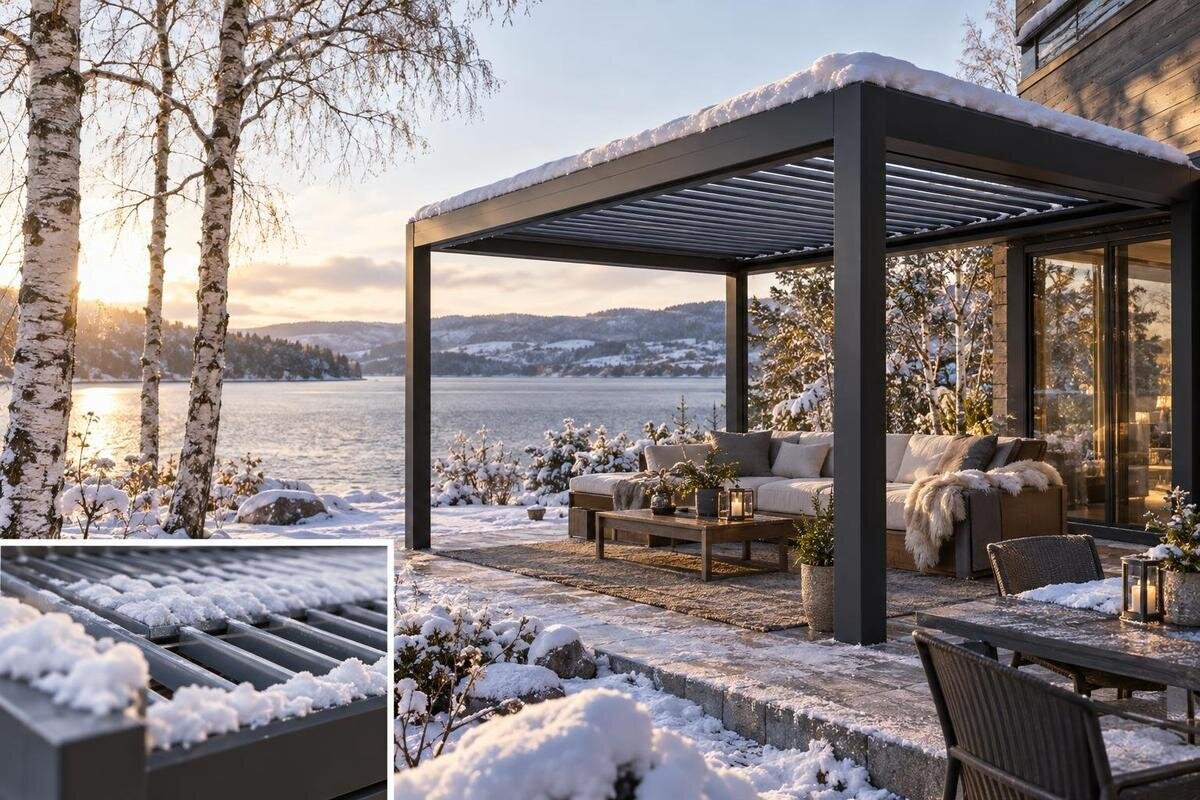
Pergola buying guide
Snowfall changes a pergola purchase from a style decision into a question about documented capacity, site conditions and installation. A frame that looks substantial in a photo is not evidence that it can carry snow, and a broad description such as “winter-ready” does not tell you whether a particular size and roof arrangement suits your property. Describe the site first, then compare options only on information that applies to the exact model and configuration. This guide covers the questions to raise with a supplier and, where needed, a qualified structural professional. The aim is a like-for-like comparison based on evidence rather than appearance.
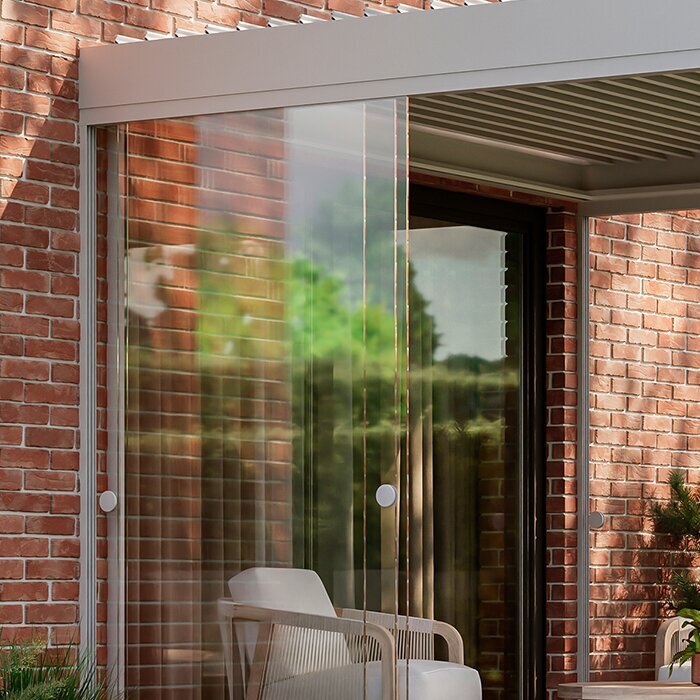
Estimate snow exposure at the exact site
Use the exact site, not a broad climate label, as your starting point. A sheltered corner beside the house can face different conditions from an open edge, while walls, fences, trees and neighbouring roofs can change where snow gathers. Note how often snow reaches the property, whether it tends to settle evenly or drift, and whether wet, compacted snow is a realistic concern. A seasonal average or memory of a few light falls does not describe the heavier conditions a structure may need to withstand. The purpose is to give the supplier a clear description, not to calculate a design load yourself. Separate a typical winter from the exceptional exposure you want assessed.
Before requesting quotes, record the proposed footprint, the height and position of nearby structures, and whether the pergola would be attached or freestanding. Photos from the site and reliable observations from previous winters can help explain the setting; point out areas where snow naturally piles up or is moved from paths. Mention any nearby slope or change in ground level too. These details make it easier to compare the same exposure across options and help identify when a site visit is needed. They do not replace an assessment, but they make questions and quotes more specific. A map can show the layout, but it cannot establish a safe snow load.
Request documented snow-load information
Look for explicit, model-specific information about snow loading, rather than relying on frame material, post thickness, photographs or a broad claim that the product is robust. Ask what snow conditions the stated capacity covers, which units and assumptions are used, and whether the figure applies to the complete pergola or only one component. A number without its conditions can mislead: overall dimensions, roof arrangement, support spacing and connection details may affect whether it applies to the version you are considering. Ask for a manufacturer's technical document or a written explanation that identifies the product and configuration; a general sales description is not enough.
Check that the answer covers the exact model, dimensions, roof position and supports in your quote. Ask whether a limit changes if the roof is partly open, a span or post arrangement differs, or an accessory is added. Do not convert a snowfall forecast or a depth observed in the yard into a safe load; snow weight and distribution vary. If the site is exposed, or the information uses terms you cannot interpret, have a qualified structural engineer review it for the site. the Bloomcabin pergola listing can identify which product you mean when you ask, but its name alone does not establish snow capacity. Keep the written response with your quote so its assumptions can be reviewed.
Check how the roof is designed to handle snow
A pergola roof's appearance does not tell you how it behaves under snow. Some designs have open areas; others use fixed, retractable or adjustable components, and each arrangement can have different limits. Ask whether the stated capacity applies with the roof in a particular position and whether the whole structure, including moving parts and connections, is covered. An open top is not an automatic guarantee against build-up: wind may carry snow onto beams or other components, and nearby structures can alter the pattern. Nor does a roof that looks solid or steep prove it is designed for a given winter exposure. Request an answer for the actual model, not a general statement about a style.
When comparing a product described as bioclimatic, such as the Bloomcabin bioclimatic pergola listing, check what that term means for the specific model and request its technical drawing and instructions. Verify whether snow limits vary by roof position and whether any operating restriction applies before, during or after snowfall. Ask where snow or meltwater might go, especially if a doorway, path or neighbouring property sits nearby. A mechanism intended for routine adjustment should not be assumed to move safely with snow or ice present; rely only on instructions confirmed for the product. Ask how the manufacturer treats drift or uneven accumulation rather than assuming a uniform layer.
Compare materials, connections and maintenance
Material matters, but it cannot replace a load rating. A frame's performance depends on its design, sections and connections as well as the material; visually substantial parts do not confirm how the complete assembly performs. Ask what the frame, roof pieces and fasteners are made from, how exposed surfaces are protected, and what maintenance the maker requires. For timber, ask about the specified treatment and upkeep; for metal, ask about finish care and compatible fasteners. If parts use different materials, ask whether the maker specifies precautions at their connections. Compare the documents, not assumptions that a familiar material is automatically suitable.
Snow climates can bring repeated wetting, freezing and thawing, and meltwater may sit around joints or leave residue from nearby paths. Ask whether these conditions change inspection or cleaning needs, which maintenance products are suitable, and whether an alteration could affect stated performance or warranty terms. A coating, treatment or attractive finish does not tell you the structure's snow capacity. The same material label can cover different designs and connection details, so compare like with like. If Bloomcabin's pergola product page is among the options, ask for details for that exact model rather than inferring its material or winter suitability from the name or photographs. Check that any care advice matches the specified finish.

Assess wall-mounted and freestanding arrangements
For a wall-mounted pergola, the supporting building becomes part of the structural question. The connection transfers loads into a wall or another structural element, so the building's construction, condition and fixing details need to match the pergola's requirements. Exterior cladding alone is not proof that the building can support the attachment. Ask what information the manufacturer needs about the house, whether a site assessment is required, and who confirms the connection. If you are considering the Bloomcabin wall-mounted pergola listing, use the listing to identify the product and request its installation and support documents; the label does not establish that your wall is suitable. Existing alterations may also affect what an installer can inspect.
A freestanding layout avoids a wall connection but still needs a complete support route from roof to posts and into suitable foundations. A deck or paving already under a patio may not have been designed for the pergola and accumulated snow, while a wall-mounted version is not automatically simpler if the building is hard to assess. Ask an installer or structural engineer to review the actual site and proposed supports. Compare the arrangements on the information available for each one, including preparation excluded from the purchase, rather than only on how closely the frame matches the house. Ask whether changes to post or attachment positions would affect the assessment.
Check the ground, anchors and support details
Check what sits below the posts before you order. Existing paving, a raised deck, a retaining edge or a sloping garden can conceal limits that are not visible from the surface. Soil conditions, the supporting structure, drainage and the condition of the surface matter to the person assessing foundations and anchors. Ask for the required support details and whether they vary with the selected dimensions or snow conditions. Do not assume that a level-looking patio is structurally adequate, or treat a generic fixing suggestion as approval for your site. Where support is uncertain, include a site assessment in your budget and allow its findings to inform the quote. Frost or seasonal ground movement may matter at some sites, so describe local conditions rather than guessing.
Ask who provides the foundation or anchoring design, who installs it and which groundworks the quote includes. Share any drawings for a deck, slab or earlier building work with the installer or engineer; if records are unavailable, mention that early. Check that proposed support points can be placed clear of known services and that thawing snow or runoff will not create a problem around the base. the Bloomcabin pergola entry can identify the product in your enquiry, but the support plan still needs to match your ground and the manufacturer's requirements. Ask for a clear split between supplied parts and work completed by others. Do not assume a standard installation package covers site-specific groundwork.
Choose a position that accounts for falling snow
Think about where snow could arrive from, not only what lands directly on the pergola. Snow may slide or fall from an adjoining roof, collect after drifting around a wall, or build up beside fences and trees. Placing a pergola under an eave or below a higher roof can expose it to conditions that its own roof documentation may not cover. If the location cannot be changed, include the neighbouring roof and likely fall zones in the professional assessment. Keep entrances, paths and access to the house in mind too: falling snow can affect how those areas are used. Assess these external sources separately from snow landing on the pergola roof.
Walk the proposed footprint and note doors, windows, paths and places where snow is routinely cleared or piled. Avoid a position where likely shedding creates an unnecessary hazard or blocks an important route. If you are considering the wall-mounted pergola product page, include the house roof, gutters and eaves in the same site discussion; mounting to a wall does not control snow coming from above. Ask the installer to explain any remaining exposure and which conditions the pergola's documents cover. A broad description such as “sheltered” should not replace a look at the actual roof line, wind-created drifts and usable access around the structure. Keep neighbouring boundaries and shared access in view as well as your patio.
Understand winter operation and snow-clearing rules
Moving roof elements need clear winter instructions. Snow and ice can obstruct a mechanism, add weight in a position the maker does not permit, or make an ordinary adjustment unsuitable. Ask whether the roof must be left in a specified position, whether it may be operated during snowfall, and what the manual says if snow or ice has already accumulated. Do not infer these rules from a design name, a remote control or an automatic feature. In particular, do not try to move a loaded roof to make it shed snow unless the manufacturer explicitly allows that action for the model and conditions. The answer may differ between versions of a product range. Some makers may require the mechanism to remain unused until conditions have been checked.
Before choosing the bioclimatic pergola product page as a candidate, request the operating manual and winter maintenance requirements. Check whether the maker expects snow to be removed, who may do it and what safe access method is specified. Do not assume it is safe to climb onto the structure, reach an icy roof from a ladder or push snow off while standing below; if instructions are incomplete, ask the manufacturer or a qualified installer for a safe, product-specific method. Include inspections after severe weather, restrictions on using the area and care of moving parts in your comparison. Do not develop a clearing plan from a generic video or instructions for a different model.

Get written answers before comparing models
Ask for documents that match the exact model and configuration, not just a brochure describing the range. Useful information may include a technical drawing, stated snow-loading conditions, allowable dimensions and roof positions, support and connection requirements, installation instructions, and limits on changes to the design. Request a written explanation of how the stated conditions apply to your site; informal reassurance does not replace a professional review where one is needed. Keep the answers with the quote so you can compare options on the same basis. If information is unavailable, treat that as an unanswered question rather than filling the gap with assumptions. Keep the model identifier, chosen size and quoted options with each document.
Make a short list for the seller: which exact version is covered; whether the capacity includes the roof, frame, connections and supports; what snow-clearing or operating rules apply; and who confirms site-specific foundations or wall fixing. For the Bloomcabin bioclimatic model entry, as for any listing, ask for evidence linked to the configuration you intend to order rather than extrapolating from its category name. Have a qualified structural engineer interpret information if figures or installation conditions are beyond your expertise. Compare how complete and clear the answers are as well as the purchase price: a low quote cannot resolve unknown structural limits. If an answer is verbal, ask for it in writing before committing.
Compare the full purchase and upkeep cost
Build the complete purchase cost before comparing quotes. Ask whether the quoted amount covers pergola components only or also delivery, assembly, site preparation, foundations, connections and professional assessment. Confirm which work is excluded and who coordinates it; that can affect the time and disruption involved at your property. Ask the seller about current delivery and installer availability for your address rather than assuming a service is included. If a site assessment recommends another support layout or configuration, request a revised quote and written confirmation that the arrangement remains within the product's documented limits. Check whether separate contractors need coordination and who arranges any site visit.
Compare ongoing responsibilities as well: inspections, finish care, replacement parts, winter storage or roof-position rules where relevant, and any warranty conditions you need to understand. Read the actual terms instead of assuming weather-related damage, site work or maintenance is covered. Consider who can carry out specified upkeep and whether access is practical through winter. A pergola with a clear evidence trail and manageable care requirements may suit your property better than an apparently cheaper option with unresolved support or operating questions. The aim is not to buy the most elaborate frame; it is to order a configuration whose limits and responsibilities are understood. Factor practical upkeep into the decision, not just the first-year appearance.
Frequently asked questions
Can any pergola be used in a snowy climate?
No. A category label or sturdy-looking frame does not establish suitability. It depends on the exact model, dimensions, roof configuration, supports and snow exposure. Ask the manufacturer for written information that covers the configuration you intend to buy, then have a qualified structural engineer review it against the site if the conditions or figures are unclear.
Does an open roof remove the concern about snow?
No. An open design can still collect snow on beams or other components, and wind or nearby structures may affect where snow gathers. A fixed or adjustable roof is not automatically suitable either. Ask how the stated limits apply to the product's actual roof design and positions.
Is a wall-mounted pergola suitable for snow?
It may be, but the pergola's documented limits and the building's ability to support its connection both need to be assessed. Ask what the manufacturer requires of the wall and fixing, and have the proposed arrangement reviewed by a suitably qualified professional. The wall-mounted label alone is not proof.
Should I clear snow from a pergola myself?
Follow the instructions for the exact model and site. Do not assume that climbing onto the structure, reaching an icy roof or moving a loaded roof is safe or permitted. If the manual does not explain what to do, ask the manufacturer or a qualified installer for a safe, product-specific approach before relying on one.
What should I request before ordering?
Ask for technical information covering the exact model and configuration, including snow-loading conditions, roof positions, dimensions, supports, connections and installation requirements. Request the winter operating and maintenance instructions too. Keep written answers with your quote, and ask a qualified structural engineer to interpret the details if they need to be checked against your site.
Buying a pergola for a snowy climate is ultimately a decision about a particular structure at a particular site. The useful comparison is not which frame looks strongest, but which option has clear limits for its roof configuration, supports and winter operation, and can be assessed against the snow exposure around your property. If any part of that chain remains unclear, pause the order until the supplier provides the missing information or a qualified structural professional has reviewed it. That gives you a sound basis for choosing a design and understanding what ownership will involve.
