
Buying a Pergola for a Windy Location: What to Consider
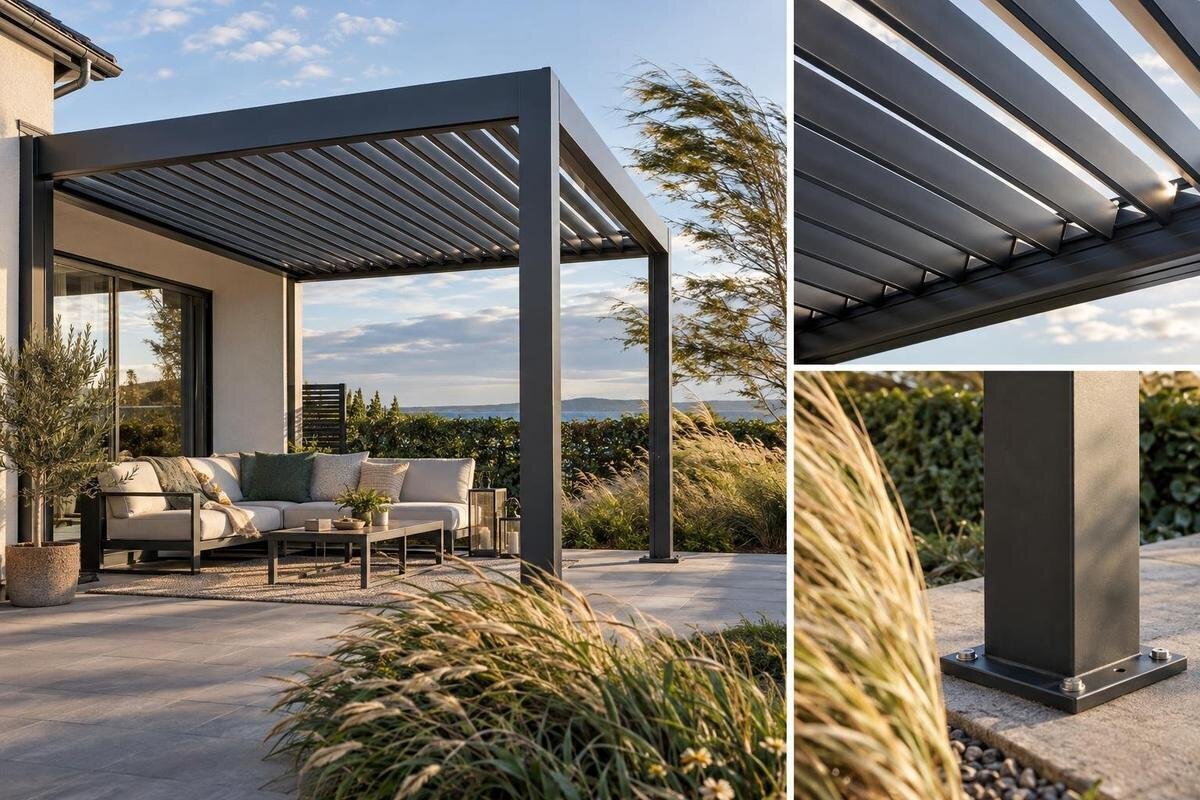
Pergola buying guide
Buying a pergola for a windy location is less about choosing the most enclosed-looking design and more about establishing whether the complete setup suits the site. Wind exposure, roof configuration, fixing method and the building or ground beneath it all matter. Start with what the location experiences, then compare product information and installation advice for the exact design. A pergola that looks sheltered in a photo is not, on that evidence alone, suitable for an exposed setting.
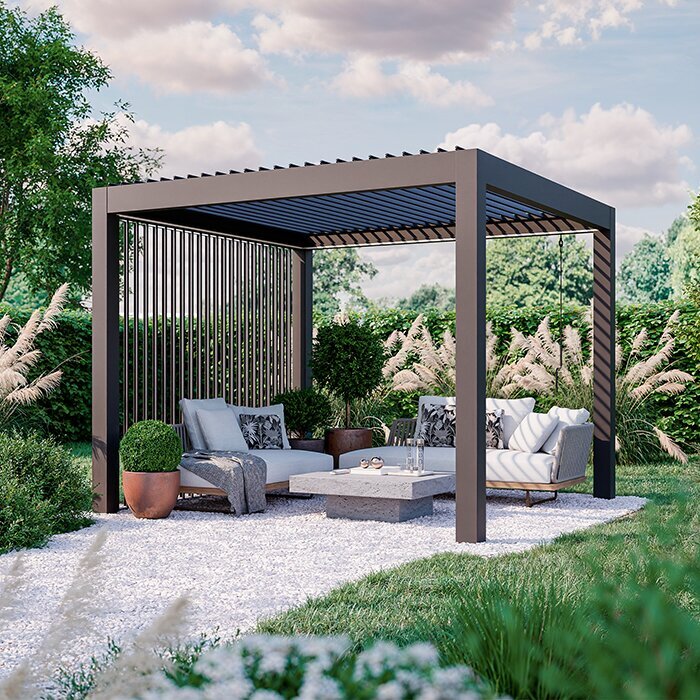
Read the wind exposure at the proposed site
Stand at the intended footprint and note what lies around it: open lawn or farmland, a ridge or slope, neighbouring buildings, fences, trees and gaps between structures. A site that feels calm beside the house may be more exposed a few metres away; the reverse can also be true. Mark the proposed pergola position, approximate footprint and its open sides on a sketch. Note any nearby corner, higher wall or open boundary that may help explain changing conditions. A footprint that starts beside a sheltered wall may extend into a more exposed patch, so consider the whole proposed area rather than one corner. These observations help explain the setting, but they are not a wind assessment.
Take photos from several angles and, if practical, note conditions during different weather rather than relying on one calm afternoon. Record where people normally sit and whether the planned footprint could move to a less exposed part of the outdoor area. For an initial product comparison, use the Bloomcabin pergola product page to identify an option, then request information that applies to its precise configuration and your proposed location. A product image or model name cannot show local exposure or establish wind suitability. Include your notes in the first supplier conversation so the response is about your site, not an assumed garden. If you are weighing up two possible positions, map them separately; advice for one should not automatically be carried over to the other.
Consider more than the usual wind direction
Wind at a property does not arrive from one direction or remain steady. Note which directions are common, which sides feel most exposed, and whether gusts seem to funnel through a gap or around a building. A sheltered afternoon is not a reliable picture of the conditions a structure must be designed for, and a local forecast cannot settle that question. Use your observations only as context for a site review. Give the supplier or designer your address, a simple plan and the directions you have noticed; ask whether they need a site visit or other information before commenting on suitability. Make clear which details are impressions rather than measured data.
Orientation can influence which sides and roof area face the wind, but turning the pergola to suit one prevailing direction is not a substitute for considering other directions. Discuss the intended position and layout with the person assessing the design, especially if you plan to use the area throughout the year. Ask whether product guidance covers gusts, changing directions and normal use. A neighbour’s experience or a weather figure from another site does not prove a model will suit yours; exposure can differ within one property. If you have wind records or notes, share their source and period rather than presenting them as a design value. The aim is to provide a clear site brief, not make a technical calculation yourself.
Separate shade from wind shelter
Before comparing models, define what you mean by shelter. Do you mainly want shade overhead, a defined outdoor room, or a place that feels less exposed to crosswinds? A pergola roof alone does not guarantee protection from wind at sitting height, while adding side screens or panels can change how wind acts on the full structure. Treat those as separate design choices rather than assuming that enclosing the sides will improve comfort without affecting suitability. If an open-sided layout would meet your needs, say so; if wind shelter is essential, explain that before choosing a size or roof. Decide what conditions you expect the area to be usable in, as comfort and structural suitability need separate answers.
A product label does not settle these trade-offs. When considering a bioclimatic pergola listing, ask what the term refers to on that exact model and whether the side attachments you want are included or permitted. Request guidance for your planned arrangement rather than guessing from product photos. If screens or panels are important, confirm that the product supports them and that any assessment covers them in the intended position. If the proposed setup cannot meet those conditions, consider whether a more open layout or different placement would work. Do not plan to add an unapproved enclosure after purchase.
Compare freestanding and wall-mounted layouts carefully
Freestanding and wall-mounted arrangements raise different site questions. A freestanding pergola still depends on its supports and base; a wall-mounted design also transfers forces into the building. The latter is not simply a convenient way to gain shelter, because the wall construction, fixing location and surrounding building geometry need to be assessed. Likewise, a freestanding design is not independent of the ground beneath it. Neither layout is automatically stronger or more sheltered in wind, so compare the exact structure and fixing advice rather than choosing by label. Consider whether the proposed position can accommodate the full footprint without relying on an assumed windbreak.
Before requesting a quote, decide whether attaching the pergola to the house is acceptable and have the relevant structure assessed by a qualified professional. Use the wall-mounted pergola product page as an example of an attached layout to compare, not as proof that your wall or exposure is suitable. Check how the proposed position relates to openings, eaves and corners, and ask whether assessing the attachment is included in the installer’s scope. If it cannot be supported or documented for the site, revisit the layout; changing from attached to freestanding does not, by itself, resolve the wind question.
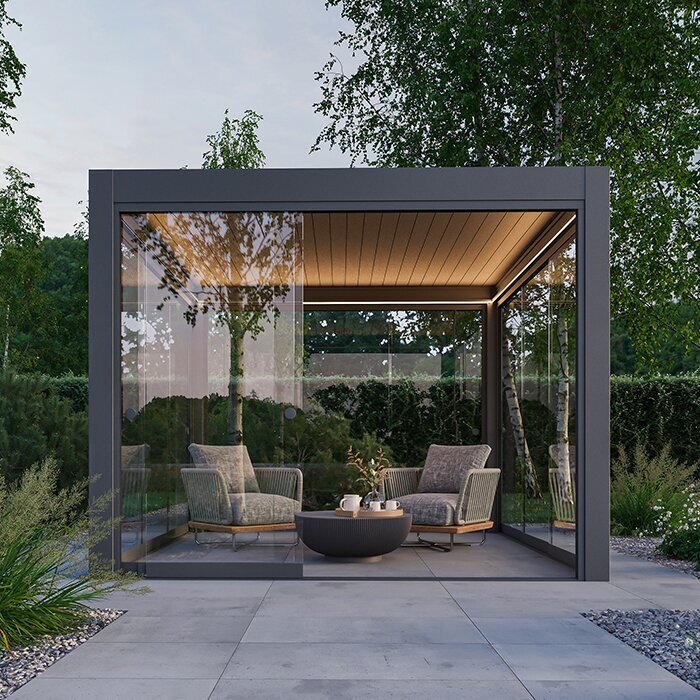
Check the roof design and operating limits
The roof is central to wind questions, but a product name or photo will not tell you how it behaves in each position. Depending on the design, a roof may be fixed, adjustable or retractable; compare only features confirmed in the product information. Ask which positions are permitted in windy conditions, whether moving the roof has its own operating limit, and what position is advised when the pergola is unattended. A fixed surface and a movable roof are not automatically more or less suitable. The complete design, size, fixings and site determine what the manufacturer supports, so make sure your comparison uses the same roof configuration as the quote.
For Bloomcabin’s bioclimatic pergola page, ask what roof mechanism is actually included and request instructions for the exact model. The term bioclimatic alone does not establish a wind rating or tell you whether the roof should be open, closed or positioned another way in particular conditions. Check whether guidance changes with side screens or other options, and whether any stated limits relate to operation, the parked position or both. Keep the answer with your quote so that installation and everyday use follow the same documented assumptions. If the proposed configuration changes, confirm whether the advice still applies.
Confirm the fixing system and supporting surface
Wind suitability includes the connection to the supporting surface, not just the visible frame. Ask which fixing system and supporting conditions are approved for the exact model and configuration, what is included in the supplied parts, and what must be provided separately. A paved area, deck or concrete pad can look substantial without proving that it is an approved base for a particular product. Have a suitably qualified builder, installer or structural professional assess the existing surface and proposed connection. Do not choose anchors or make a foundation decision from a photo or general product description; site conditions and the selected design need to be considered together.
For Bloomcabin’s wall-mounted pergola listing, confirm the specified attachment requirements before assuming an existing house wall is suitable. Ask the supplier which documents cover the fixings and what the site professional needs to verify; the product name alone establishes neither. Keep the exact model, size, roof and intended screens in that discussion, since a change may affect the advice. For any layout, make the base and connection part of the initial quote and design review, not a detail left until delivery. If site preparation or separate work is needed, establish who is responsible and whether the proposed design still applies after that work.
Account for nearby buildings, fences and planting
Buildings, fences, hedges, trees and outbuildings can influence how wind reaches the pergola, but they are not evidence of structural suitability. A barrier may shelter one direction while leaving another exposed; airflow can also be less predictable around gaps and corners. Consider what stands upwind as well as the wall beside the seating area. A low fence, for example, should not be assumed to protect the roof or the whole frame. Draw these features on the site sketch and, where you know them, note their approximate height and distance from the proposed footprint. The person assessing the site can decide what those details mean.
Think about how the setting may change: planting can be trimmed, a fence can be replaced, and new structures can alter the shelter you rely on today. If a windbreak belongs to someone else or may be changed, do not base the purchase decision on it staying in place. Share the surrounding features with the person assessing the pergola and ask whether their advice assumes those features will remain. If you plan to add a screen, hedge or other barrier later, include that at design stage; adding one after installation should not be treated as a purely cosmetic change.
Ask for documentation for the exact configuration
Look for information that identifies the exact model and configuration, not just a broad phrase such as wind-resistant. Ask for any published wind limits or design information, the conditions they apply to, and whether they cover the roof, supports, fixings and accessories you intend to use. Check whether the information assumes a particular base, attachment, size or roof position. If the supplier refers to a classification or test result, ask what it describes and whether a qualified professional can apply it to your site. Do not compare headline claims unless they refer to like-for-like configurations and conditions.
Use Bloomcabin’s pergola listing as a starting point for identifying one model, then ask the supplier for documents that match the selected configuration. Make a written comparison of what is confirmed, what is conditional and what remains unanswered for each option. Useful items include manufacturer limits, installation drawings, approved accessories and any site-specific review requested by the installer or designer. A general statement or marketing image cannot replace that information. If an answer relies on a particular orientation or surface, record the condition and check it against your actual plan before ordering.

Include accessories and upkeep in the comparison
Accessories deserve their own line in the comparison. Screens, blinds, panels and other attachments can change how wind interacts with a structure, so a model’s guidance may not cover every combination. List what you expect to add now and later, and ask which items are approved for that exact pergola and which need separate assessment. Do not assume a third-party screen is compatible because it fits the opening. If comfort depends on an accessory, include it before the design and quote are final rather than treating it as a small extra to arrange after purchase.
Ask how the product should be operated, left when unattended and maintained according to its instructions. For the bioclimatic pergola option, do not infer operating steps or wind limits from its category name; get model-specific guidance for the roof and any attachments. Read the care information and warranty terms for provisions concerning wind-related damage and required maintenance, without assuming those terms are the same across products. Knowing who to contact for servicing and whether replacement parts can be obtained also helps you judge the longer-term practicality of a choice.
Compare the full scope before ordering
With site notes and product information in hand, compare quotes on the same basis. State the intended footprint and orientation, chosen roof configuration, accessories and proposed base or wall connection. Ask the supplier to identify the exact model and options in the quote, and say whether the proposal depends on a site assessment. The Bloomcabin pergola option is one listing you can place alongside alternatives, but compare documents and scope rather than names or appearance. If you change the size, layout or attachments, check whether earlier advice still applies before confirming an order.
Read what is included and excluded: product components, approved fixings, delivery, installation, any site assessment and work that must be arranged separately. Ask who is responsible for confirming the supporting structure and any approvals that apply to your project, and what happens if an assessment calls for a different layout or preparation. Confirm any change or cancellation terms before committing. If the supplier cannot explain what evidence supports the proposed design for the exposed site, pause the order and get qualified advice or compare another option.
Frequently asked questions
Is a heavier pergola automatically safer in a windy area?
No. Weight alone does not show whether the roof, frame, connections, fixings and supporting surface are suitable as a complete system for your site. Ask what the product information covers and have the proposed base and configuration assessed.
Does attaching a pergola to the house make it more sheltered?
Not necessarily. A wall may affect exposure, but a wall-mounted design also depends on the building and the proposed attachment. Have both the site and the fixing arrangement assessed; the layout name does not establish suitability.
Should I open or close an adjustable roof when it is windy?
There is no universal position to assume is safe. Permitted positions and operating limits vary by model. Ask for the manufacturer’s instructions for the exact pergola and follow them rather than guessing from its appearance or category name.
Can a fence or hedge protect a pergola from wind?
Nearby barriers may influence wind, but their effect can vary by direction, position and season. They do not establish that a pergola is suitable for your site. Include them in the site review, but rely on product-specific guidance for the structure.
What should I give a supplier before asking for advice?
Provide the proposed position, approximate footprint, a sketch or photos, nearby buildings and barriers, and any wind patterns you have observed. Include the intended roof and accessories, and ask which written information or site assessment is needed to establish suitability.
Wind suitability belongs to the complete setup at the chosen spot, not just the frame or a product label. Choose from documented options only after the proposed position, roof, attachments and fixing arrangement have been considered together. If those pieces do not line up, pause or revise the design before committing.
