
Buying a Pergola for an Exposed South-Facing Terrace
Pergola buying guide
An exposed terrace can be difficult to cover well because wind, sun and rain do not arrive from one direction or behave the same way all year. A south-facing aspect adds another factor: it affects direct sunlight, but it cannot tell you whether a pergola will feel sheltered or how it can be anchored. This guide helps turn the terrace's conditions into a practical buying brief, then explains what to verify on a product page and with the people responsible for installation.
Before you buy 1
What does exposed mean on your terrace?
First decide what problem you want the pergola to solve. The terrace may be too bright at certain hours, uncomfortable in light rain, exposed to gusts, or difficult to use because there is no defined sheltered area. These needs are not interchangeable: a cover that reduces overhead sun may leave the sides open to wind, while a structure that looks substantial is not automatically rainproof or secure in gusts. Rank the two outcomes that matter most, and note how often you use the space. That prevents a stylish image or product name from standing in for evidence about practical performance.
Describe the exposure at the exact part of the terrace where the pergola would sit. A corner near a wall, fence or building can behave differently from the centre or outer edge; openings between buildings can channel air, and an overhang may affect rainfall. Note whether you want shade, some shelter, a defined dining space or protection for outdoor furniture. These are useful priorities, not guarantees. If your main concern is strong wind or driving rain, say so clearly before browsing. Those conditions need explicit product and site-specific confirmation rather than assumptions based on the word pergola. Keep a brief record of conditions over several visits, including where rain lands and whether gusts make seating unpleasant. This gives a supplier or installer a clearer picture than a general description such as exposed, and helps distinguish a regular problem from an occasional one.
How the south-facing aspect affects sunlight
In New Zealand, a south-facing aspect generally receives less direct sun than a comparable north-facing area, particularly in cooler parts of the year. That is a useful starting point, not a forecast for your terrace. The sun's path changes with season and time; rooflines, nearby buildings, trees, balconies and the depth of the terrace also affect how much light reaches the seating area. On an exposed site, wind and cloud can matter as much as sunshine. Avoid choosing a roof or cover solely from compass direction, and do not assume a south-facing terrace never needs shade.
Before comparing listings, note when you use the terrace and where sunlight falls at those times. A few observations from the seating area are more useful than a broad label: identify bright patches, deep shade and glare on doors or windows. If possible, look at the area in more than one season or ask someone familiar with the home's annual light pattern. The Bloomcabin pergola listing can be part of a product comparison, but its name alone does not establish how much sun it blocks. Look for documented cover details or ask the supplier before treating it as a match.
Before you buy 2
Separate shade from rain protection
Treat shade and rain cover as separate buying requirements. Depending on the design, pergolas may have an open top, a fixed cover, adjustable elements or another arrangement, but the category name alone does not tell you which. Ask what the roof is intended to do, how it handles rain, and whether any stated protection applies only in certain configurations. Consider whether rain could be driven sideways onto the seating area. A cover that changes overhead exposure may not stop wind-blown rain from open sides, and there is no basis for assuming every pergola is a weatherproof outdoor room.
Decide how much daylight and openness you want to retain. A more closed cover can change the feel of the space below, while a more open arrangement may offer less dependable shelter; the actual effect depends on product design. For the bioclimatic pergola product page, read the product information rather than assuming the label proves a particular roof movement, water handling or wind rating. If details are missing, ask for available documentation, diagrams and the limits that apply to the configuration you would order. A clear answer about intended use is more useful than a broad claim of all-weather comfort.
Understand the site's wind exposure
Wind exposure is local. An open coastal edge, an elevated deck, a gap between buildings or a terrace beside a corner can experience different conditions from a sheltered courtyard, even when both are south-facing. Nearby walls can block a prevailing flow, but they can also redirect it; screens and fences are not automatically an adequate windbreak. Consider where gusts enter, what surfaces may funnel them and whether the terrace is regularly exposed to strong wind. A single visit on a calm day is not enough to describe the site.
When asking about a pergola, describe the exposure in plain terms and give its exact position relative to the house and open edges. Ask which operating or weather limits apply, and whether the structure is intended for that type of location; request a written answer if it affects your choice. The wall-mounted pergola listing identifies a layout, not a guarantee that it will suit an exposed terrace or a particular wall. Have a qualified installer or other appropriate building professional assess site-specific wind and fixing questions rather than adapting a product yourself.

Before you buy 3
Position the pergola around the terrace and house
Draw the terrace as it is actually used, rather than measuring only the patch you hope to cover. Include the table and chairs, routes to doors and space to move around them. Mark doors and windows, eaves, downpipes, external taps and existing posts or barriers that could affect the proposed footprint. Think about where chairs sit when pulled back and whether the area remains accessible when furniture is in use. A small sketch with a few key measurements can reveal clashes early, before a chosen model anchors the plan. Include drainage points and any changes in level, as these can affect where supports may be considered and how people move through the space. The sketch does not replace professional assessment, but it makes early conversations more precise.
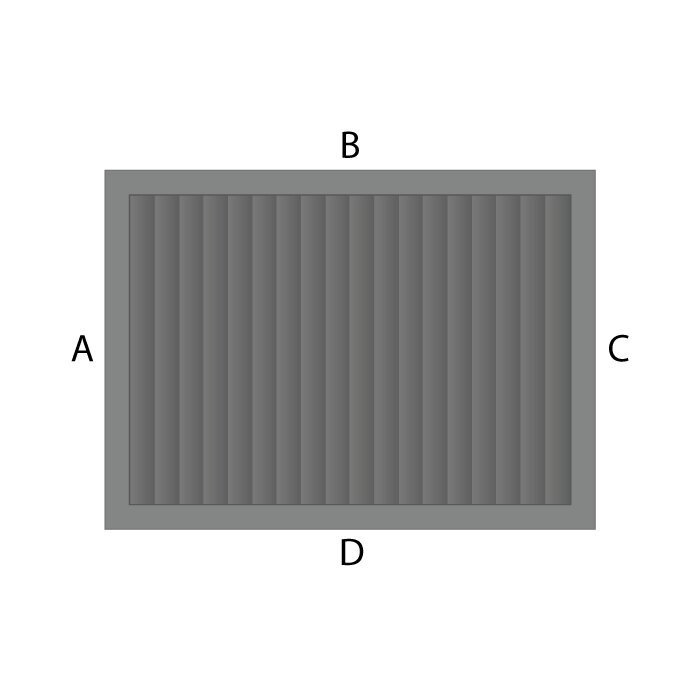
Decide which direction the pergola should run in relation to the house and terrace. This can affect how the covered area meets the doorway, where the supports fall and how the structure sits in relation to a view or boundary. It may also affect how much of the seating is shaded at a particular time, so revisit your sun observations before finalising the position. Do not treat an illustration as a scaled plan: product images show appearance, not exact dimensions or the clearances available at your home. Ask for drawings with relevant measurements and have the installer confirm fit on site.
Choose between an attached and freestanding layout
An attached pergola and a freestanding one raise different questions at the planning stage. An attached layout depends on the house wall and how the product is designed to connect; a freestanding layout uses its own support arrangement and needs space for that footprint. Neither is automatically better for an exposed terrace. The right fit depends on access, the available structure, the intended position and the manufacturer's installation requirements. If a wall is nearby, do not assume that proximity means it can carry a connection.
Use drawings to compare the area below the cover with the locations of posts and any connection points. Check what the product information specifies about its layout, then ask what type of wall or structure is accepted, what clearances are needed and who can assess it. The Bloomcabin pergola page may be useful as one listing to compare, but its general name does not establish whether it is attached, freestanding or compatible with your terrace. Resolve those questions against the actual documentation rather than inferring details from the product title.
Before you buy 4
Treat anchoring as part of the purchase
Anchoring is a core part of the purchase, especially where the terrace is exposed, not a final accessory to sort out later. Paving, tiles, a concrete slab, a timber deck and a raised platform do not tell you on their own what lies beneath or whether a particular support can be fixed there. The visible surface and the supporting structure are not the same thing. Before ordering, establish what information the seller needs about the site and what a qualified installer must inspect to confirm the proposed fixing method.
Ask whether the product documentation states acceptable substrates, fixing requirements and any restrictions, and whether anchors or other components are included or specified separately. Do not assume existing holes or posts line up with a new product, or that they are suitable based on appearance alone. A wall-mounted option's product page cannot establish that your wall is structurally suitable; the same applies to any surface-mounted layout. Have the relevant construction assessed by a qualified professional, who can advise whether the structure and installation suit the site. Do not try to settle this by guessing from a photograph. Arrange that assessment early enough to change the proposed position if needed, rather than treating anchoring as a detail to resolve after selecting a configuration. Keep site notes, measurements and any installer advice together so the product enquiry refers to the same proposed location.
Compare materials, moving parts and maintenance
Once shelter and fit are clear, compare the frame and cover details the supplier actually publishes. Check materials, finishes, roof or panel construction, joints, exposed fasteners and care instructions where those details are available. Avoid assuming two products are equivalent because their colour or silhouette is similar. On a breezy, uncovered terrace, components may face more weather and cleaning than they would in a sheltered position; ask what routine care the maker recommends and whether the finish needs particular attention.
If a design includes components that move, ask how they are operated, what positions are available and how use is managed in changing weather. Do not infer this from a product category name or promotional image. Compare the written maintenance information and any warranty terms supplied. The Bloomcabin bioclimatic pergola page should be read for the specifications actually given; the word bioclimatic is not a substitute for checking material, moving parts, upkeep or permitted conditions. If an important detail is absent, ask the seller rather than filling the gap with assumptions.

Before you buy 5
Measure and clarify the order before committing
Before requesting a quote or placing an order, prepare measurements that make the site understandable: the intended covered footprint, available height, distance to the house, and positions of obstructions or boundaries. Mark whether measurements were taken to the outside edges of paving, walls or another reference point, and include photographs from more than one angle if appropriate. Photos help explain context but cannot replace a site check where structure or fixing is concerned. Ask the supplier or installer which dimensions they need and how they define the finished footprint, including supports and any projection beyond them.
Confirm the exact product configuration, included parts, required extras and what the quote includes before comparing totals. Clarify who arranges delivery and installation and which details remain your responsibility; do not assume images or general wording answer these questions. If the product details for this pergola do not state dimensions or installation conditions you need, request written confirmation for the exact item you intend to buy. Keep the answer with your quote so the price, configuration, planned position and site requirements are compared on the same basis. Where alternatives are being considered, record the date and version of each response. This reduces the chance of comparing a drawing or description for one configuration with a quote for another, and makes later questions about inclusions easier to resolve.
Make a like-for-like buying decision
Put each candidate beside the brief you made: intended use, sun pattern, rain expectations, wind exposure, position and anchoring. Mark each item as supported by written product information, confirmed by the supplier or installer, or still unknown. A blank is not a minor detail if it concerns wind limits, water handling, dimensions or how the product can be fixed. This comparison separates confirmed fit from attractive appearance and makes it easier to explain why one product advances while another remains uncertain.
Then consider the everyday compromise. A cover that prioritises overhead shade can reduce light; a more open arrangement may preserve an airy feel but leave weather concerns unresolved. The right trade-off depends on your main use, not a universal ranking. The product listing labelled bioclimatic is one item you can assess using the same questions as any alternative: review the stated features, confirm your site's requirements and leave unsupported assumptions off the decision sheet. If essential site or product details cannot be confirmed, pause the purchase rather than relying on appearance alone.
Frequently asked questions
Is a pergola a good choice for a south-facing terrace?
It can be, but the aspect alone is not enough to decide. A south-facing terrace in New Zealand generally receives less direct sun than a comparable north-facing one, yet shade, wind and rain vary with the exact site. Choose a design only after checking what shelter it provides and whether it suits the location.
Will a pergola keep rain off an exposed terrace?
Not necessarily. Pergolas can have different roof arrangements, and the category name does not confirm how a particular product handles rain. Check the product information for its intended use and limits. Open sides may still leave the area exposed to wind-driven rain.
Does a wall-mounted pergola handle wind better?
The wall-mounted label does not establish wind suitability. The product design, the wall and the terrace all matter. Ask what conditions the product is intended for, and have a qualified professional assess the proposed connection and site.
Can I anchor a pergola to paving or a deck?
Do not assume that the visible surface is suitable for a particular fixing. Paving or decking may not show what supporting structure is underneath. Check the product's installation information and ask a qualified installer to assess the actual terrace before ordering.
What should I send when asking for a pergola quote?
Provide the intended footprint, available height, distance to the house, and the positions of doors, boundaries and other obstructions. Add clear photos and describe the site's wind and rain exposure. Ask which further measurements or a site assessment are needed to confirm fit and anchoring.
An exposed south-facing terrace is best treated as a specific site, not a label that predicts what the pergola must do. Sun, wind, rain, layout and the supporting structure each shape the choice, and one design feature rarely solves all of them. A sound buying decision has clear priorities, measurements that reflect the usable space, and product and installation information relevant to the actual location. That makes the comparison about fit and trade-offs, rather than assuming a pergola will provide shelter its published details do not promise.
