
Buying a Pergola With Lighting for Evening Use
Pergola buying guide
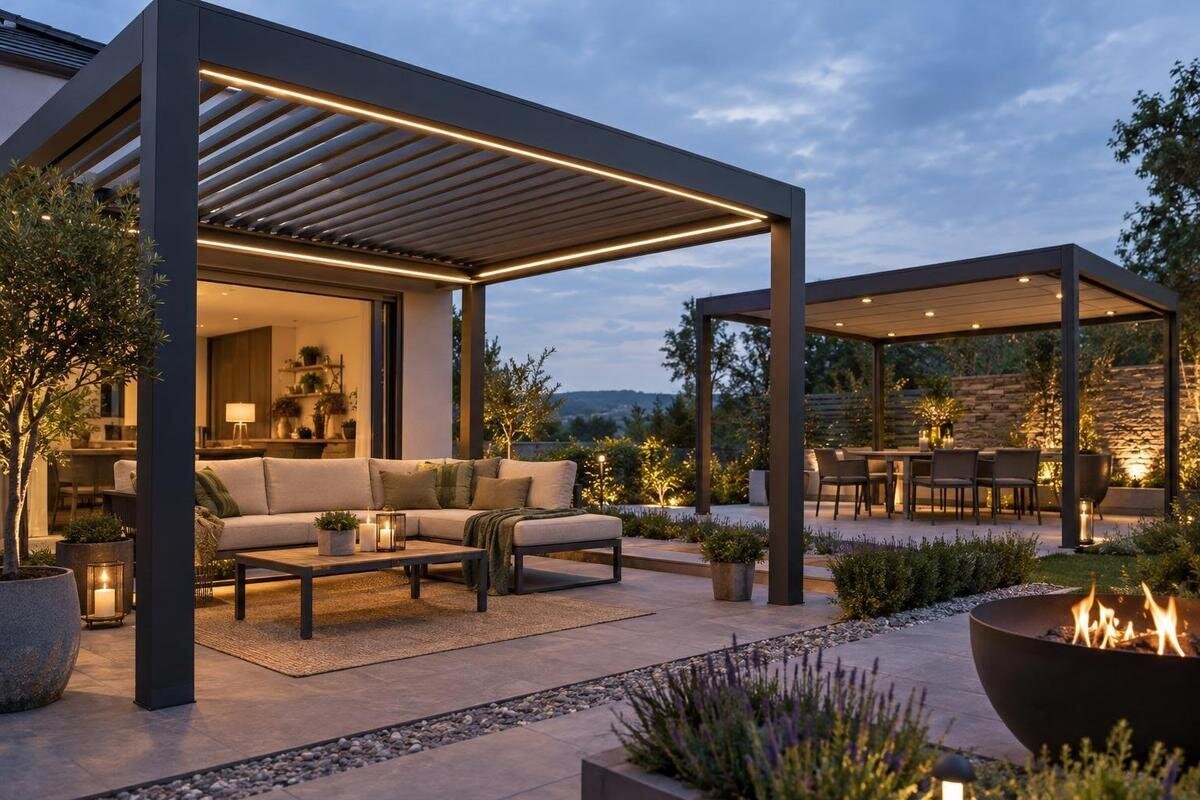
Planning to buy a pergola with lighting? The useful starting point is how the space should work after dark, followed by whether the lighting package fits the structure and your site. Consider activities, furniture layout, light spill, power access and controls before comparing listings. A product name or photograph does not establish what is included, so check the written details and plan electrical work with a qualified professional.
Plan evening use before choosing fittings
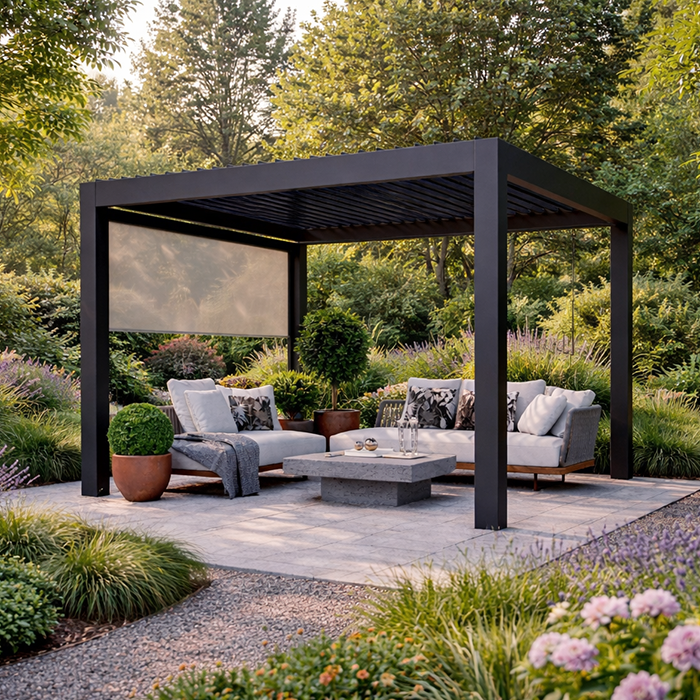
Write down what usually happens under the pergola after dark before choosing fittings. A table used for meals needs a different spread of light from a corner for reading or a space where people mainly talk. Note how many people use it, where they sit, and which routes they take between the house, seating and garden. Decide whether this will be a regular weeknight spot or mainly an occasional gathering place; that affects how important simple controls and separate lighting areas may be. Include quiet use as well as entertaining, rather than planning only for a special occasion. Note when use begins: daylight at dusk may still light the space, while later use depends more on the fittings.
Sketch the furniture and circulation area on a plan of the site. Mark where people need to see faces, food, steps, door handles or a path clearly, then note existing exterior lights that already cover some of those areas. This helps reveal gaps and avoid duplicating a light while leaving a useful route poorly lit. Include planned furniture positions and doorways, not just the empty pergola footprint; chairs and a table can change where people look and move. Consider whether furniture might shift or extra seats appear when guests visit. When comparing a candidate, use its information in that context: the Bloomcabin pergola listing alone cannot show how an evening arrangement will work at your home.
Check what the lighting package includes
“Pergola with lighting” can describe several different purchase arrangements: lights may be part of the supplied package, an option chosen separately, or something arranged independently after the structure is bought. Do not treat these as equivalent. Check the exact product description and written quote for which fittings, controls and power components are included, whether installation is included, and what is excluded. Confirm quantities as well as broad descriptions, so “lighting” does not mean one thing to you and another to the seller. Catalogue photographs can help you picture a setting, but they do not confirm that displayed lights, furniture or accessories form part of the order.
Make a short list of unanswered items and request a written response before paying: what fittings are supplied, whether there is separate control equipment or mounting hardware, which parts are optional, and who is responsible for connecting the system. Ask whether light sources can be replaced and how compatible replacements are identified; do not assume this from an image. If different suppliers are involved, ask who can confirm that the components work together. You can use the Bloomcabin pergola product page to identify the structure you are considering, but only explicit package details establish whether lighting comes with it. Keep any reply with the order confirmation so the chosen configuration is clear.
Match the light to each activity
Think about what each source of light needs to do, rather than counting fittings. General ambient light can make an area more comfortable for conversation, while a focused source may be useful over a dining table or reading chair. A single bright point can leave deep shadows or shine into someone's eyes; a broader, even arrangement may work better, depending on the structure and site. Consider how light falls on faces and the tabletop, and whether someone seated at one end will look directly towards a fitting. Walk the route from the door to the seating area in your plan and note where visibility matters. The aim is a setup that supports the activities you listed.
Ask what the proposed lighting can actually do: is its output fixed or adjustable, can separate areas be controlled, and are any colour or dimming options part of the package? Treat each feature as a question until the product details confirm it. A softer setting may suit conversation, while a brighter task light can help with a meal or reading; one arrangement does not automatically cover every use. Consider whether changing a setting is simple enough to do regularly, rather than choosing options that sound appealing but may go unused. When reviewing a Bloomcabin pergola listing, assess the written details rather than inferring a light type, output or control from the product name or a styled photograph.
Place fittings in relation to the structure
Plan where proposed fittings would sit in relation to the structure before choosing exact lights. Work out whether a source needs to be overhead, beside a seat or near a route in and out; then check whether posts, beams or other parts could block it. Not every point on a structure is necessarily an approved mounting place, and an added fitting can affect both access and appearance. Use a product plan or ask the supplier for guidance on permitted mounting and compatibility; avoid assuming a fixture can be fixed wherever it looks convenient. If the design has movable parts, consider the fittings and cabling in relation to their movement too.
Check the layout from more than one position: a light that suits the dining seat may be obscured from a walkway, while a fitting close to a beam can create a strong pool of shadow. Ask whether the proposed arrangement leaves planned access clear and how any moving roof or side components affect clearances. These are questions for the manufacturer or installer, not assumptions to make from a photograph. If comparing the wall-mounted Bloomcabin pergola, confirm the mounting and lighting arrangement for that configuration rather than transferring advice from a different frame. Ask for the relevant compatibility information before selecting separate fittings.

Plan power and installation before ordering
Consider the power supply alongside the lighting plan. Note where existing outdoor power points are and where people might want to operate the lights, but do not assume a nearby point can supply the planned system or that the route is straightforward. A qualified electrician can assess the site's supply, suitable equipment and connection requirements once the lighting and pergola configuration are known. That assessment may show whether the quote needs additional electrical work or a different arrangement. Mention existing outdoor lights or other planned equipment when discussing the site. If there is no convenient supply, factor that into the decision before choosing fittings rather than leaving it until after the structure is ordered.
Before ordering, ask who provides and installs each part, whether an electrical assessment or connection is outside the pergola quote, and what product information the electrician needs from the supplier. Clarify how electrical work relates to assembly and whether the chosen fittings have specific mounting or connection requirements. If separate suppliers are involved, identify who will answer compatibility questions. Have a qualified professional review the plan and carry out electrical work; this guide cannot establish the site's requirements. Avoid modifying a structure or connecting outdoor equipment on the basis of an image, rough sketch or instructions for another configuration.
Limit glare and light spill
Look at sightlines after dark, not only from beneath the pergola. A light may be comfortable at the table but shine into a nearby window, reflect off a pale wall or be visible from another sitting area. Consider neighbours' windows and the edge of the property as well as your own bedroom or living-room views. The practical aim is to light the space you use without creating needless brightness elsewhere. Walk around the proposed location at the times you expect to use it and note where an exposed lamp or reflection would be most noticeable. Glass and other reflective surfaces can change how bright a fitting seems from different positions.
Ask whether a proposed fitting can be aimed, shielded, dimmed or switched separately; those features can help manage spill, but are not present in every system. If they are unavailable, reconsider where the source sits and whether fewer, better-placed lights meet the task. Take the same sightlines into account when considering Bloomcabin pergola details: the structure's product name cannot predict how a separately chosen light will fall across your property. A simple site sketch showing windows, seating and boundaries gives an electrician or supplier something concrete to discuss. If possible, view the area from indoors as well as from the seats.
Choose controls for everyday use
Consider controls as part of everyday use, not an extra to decide later. A simple switch may suit a single lighting area; a dimmer or separate controls could be useful where dining, access and relaxing need different settings. These are options to compare, not assumed features. Decide who needs to operate them, where controls should be reachable and whether guests can understand them without a long explanation. Think about whether the entry route needs light independently of the table, or whether one control is enough for the whole area. For regular evening use, reliability and ease matter more than a list of features that nobody will use.
Ask how each control works and what it depends on. If a system uses an app, remote or network connection, find out whether an alternative control is available and what happens if a phone or connection is unavailable. Confirm whether the selected fittings and control equipment are designed to work together, and whether separate areas can be switched independently. Check these points against the relevant Bloomcabin pergola page and supplier information; a generic reference to lighting does not identify a control system. Record the final switch and zone choices in your order so the supplier and installer have the same expectations.
Consider the house, doors and windows
For a pergola beside the house, include the wall and openings in the evening-light plan. Note doors, windows, eaves, existing exterior fittings and the path between indoors and the seating area. A new source could overlap an existing light or be visible through a window, while the wall may affect where controls feel convenient. Consider how the route will look to someone coming out of the house, not just how the seating looks from the garden. A wall-mounted arrangement makes the relationship between the structure, the building and the light route particularly relevant; check the actual layout instead of assuming that attachment alone solves power or lighting placement.
View the area from indoors as well as from the seats: light aimed into a window can be distracting, and a dark route from the door may remain inconvenient even when the table is bright. If considering the wall-mounted pergola listing, check how the proposed location meets your own openings and existing services, and ask a suitable professional to assess the building interface and electrical route. The product identity does not confirm the condition of your wall or whether the location is suitable. Include nearby exterior lights in the discussion so the new arrangement can be considered alongside them.
Compare the pergola, fittings and installation scope
Compare options using a complete written scope rather than a headline description. Record the pergola configuration, whether lighting is included or separate, fitting details, controls, installation responsibilities, electrical exclusions and any supplier-stated conditions for compatibility. Make the same comparison for each candidate and mark unknowns as questions, not assumed inclusions. This can show when a description leaves important parts for you to arrange separately, without treating an unstated item as a saving or extra. Make sure the selected structure and lighting are described clearly enough that the supplier and installer are discussing the same configuration.
Before submitting an order, reread the itemised description for the selected configuration, quantities, finish or colour choices, dimensions and any separately selected accessories. Confirm what is supplied, what you must source elsewhere and what needs a site visit or professional assessment. If you rely on the Bloomcabin pergola information page to compare the structure, check that the particular page and written order refer to the same product; it does not establish a lighting package unless it says so. Save compatibility answers and installer notes alongside the order, and resolve any unclear wording before confirming the selection.
Check maintenance and future compatibility
Outdoor lighting has ongoing care requirements, and these depend on the fitting and its exposure. Before buying, ask what routine cleaning is recommended, how to check the condition of fittings, whether components are replaceable and who should carry out service work. Confirm how high the fittings are and whether they can be accessed safely for maintenance, rather than choosing a position that looks neat but is awkward to reach. Read the care information for the actual system; do not assume all outdoor lights use the same method or replacement parts. Ask what documentation should be kept if components need attention later.
Think about future changes too. You might move the table, add a lounge seat or want separate lighting for another activity. Ask whether a system can be expanded or adjusted and which additions remain compatible; do not assume a later fitting will match the original controls or mounting points. If lighting is bought separately, keep its model information and installation documentation so future work can be planned accurately. Ask whether changes should be assessed by a professional before they are made. Clear answers on care, replacement and compatibility help you choose a setup that remains practical as the space evolves.
Frequently asked questions
Are lights included when I buy a pergola?
Not automatically. The wording can refer to a package, an optional extra or lighting arranged separately. Check the exact product description and written quote for fittings, controls, power components, installation and exclusions; photographs do not confirm what is included.
How do I choose lighting for different evening activities?
List the activities first, such as dining, reading or conversation, then decide where light is needed for each one. Consider the spread of light, shadows and glare, and ask whether the proposed fittings and controls can serve those uses.
Can I add lighting to a pergola later?
Possibly, but compatibility depends on the structure, fittings and power arrangements. Before ordering, ask which mounting points are suitable, whether a later addition would work with the controls, and whether a qualified professional needs to assess the change.
Should I plan outdoor electrical work with a qualified electrician?
Yes. Ask a qualified electrician to assess the site and plan any electrical work. Confirm with the supplier who provides the fittings, what connection or installation work is outside the pergola order, and what product information the electrician will need.
What should I confirm before placing an order?
Get a clear description of the pergola configuration, included and optional lighting, controls, compatibility requirements, installation responsibilities and electrical exclusions. Also confirm any site assessment needed and keep written answers with the order details.
Use a written evening-use plan to compare the pergola, lighting package and installation scope as one decision. Confirm what is included, where light should fall, how glare will be managed, which controls are offered and who will assess electrical work. That makes it easier to choose a setup suited to your outdoor layout, rather than judging an evening space from a catalogue image alone.
