
Buying a Pergola With Side Screens: Privacy and Weather Considerations
Pergola buying guide
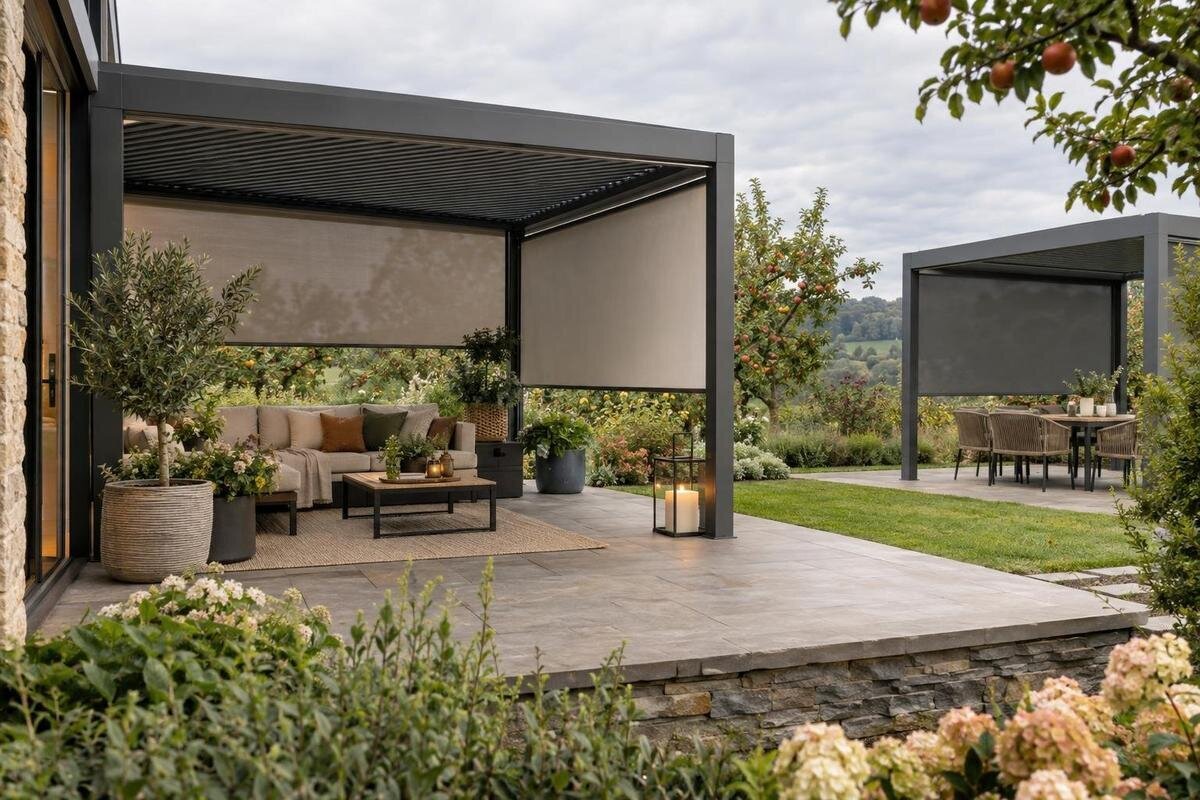
If you're planning to buy a pergola with side screens, consider how the coverage will affect privacy, airflow and exposure to wind, sun and rain. Map the views and weather around your outdoor area, choose the sides that genuinely need screening, and check that the arrangement suits the pergola and the way you plan to use it. More enclosure is not automatically better: a screen that solves one issue may create another.
What side screens can and cannot do
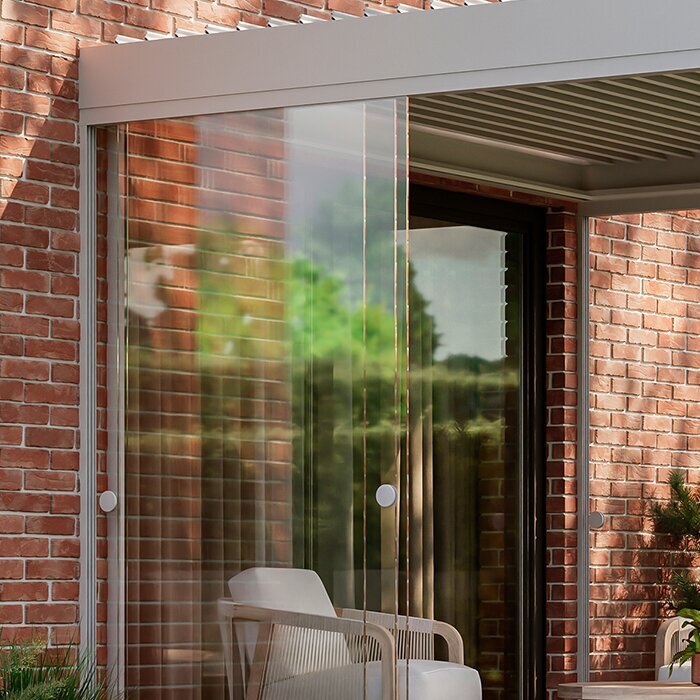
A side screen adds a vertical boundary to an otherwise open pergola. Depending on its position and how much of the side it covers, it can interrupt a direct view, soften a breeze or reduce some exposure to sun and wind-driven rain. These effects are partial and direction-specific; they do not guarantee privacy or weather protection. The outcome also depends on screen height, gaps, opacity, angle and the roof above. Treat a pergola with side screens as a design question, not a standard performance level. When browsing the Bloomcabin pergola page, look for stated screen details rather than assuming they are included.
Keep the distinction between a side screen and an enclosed room clear. Unless a design closes the relevant gaps, air and rain can still enter above, below or around the edges; covering a side does not seal every route. A screen may make one seating spot feel more sheltered without making the pergola suitable for every weather condition. Decide which issue matters most—an overlooked table, low sun or a breeze across one side—and assess the proposed coverage against it. Check what remains open at the roofline, floor and corners, rather than relying on the general label privacy screen. That matters if the area still needs open access and airflow.
Work out which sightlines need screening
Begin with the view you want to interrupt, not a guess about how many sides to cover. Sit at the usual dining or lounge position, then stand and move around the area; note which windows, paths, neighbouring outdoor spaces or upper-level rooms look directly in. A low screen may obscure a seated view but leave a standing or elevated sightline open. A panel at the far end may also miss a view coming diagonally across the space. Include the garden approach and any path people use, not just views from inside the pergola. Check these positions in person rather than relying on a plan or product image.
Repeat the check at different times if the pergola is used throughout the day, because people and activity in adjoining spaces can change what feels exposed. Mark the main sightlines on a quick sketch and separate the seating area from routes to a door or garden. One screened side can address a specific view while leaving another side open for outlook and access. Record whether privacy matters while seated, while standing, or both; that detail affects useful screen height and coverage. You can mark the intended boundary on site before settling on a layout. Use this pergola listing as a catalogue reference only: the product name does not establish whether a screen is supplied or where it can be fitted.
Choose the coverage and screen style carefully
Compare the coverage pattern before settling on a look. Depending on what is offered, choices might include a continuous panel, spaced slats, a mesh-like screen or a screen that can be moved aside. Fixed, closely covered sides give less flexibility than movable ones, while a slatted or more open construction can preserve some view and airflow at the cost of clearer sightlines. These are trade-offs, not a ranking. Decide whether you want a permanent visual barrier or a side that changes with the weather and how the space is being used. Consider how each option looks from both inside and outside. When comparing this pergola option, confirm whether any screen arrangement is actually specified.
Ask how much of the side is covered in the intended position, including gaps at the top, bottom and edges. Pictures can disguise how a screen aligns with posts or what stays open; written measurements and a layout drawing are more useful. If a sample is available, view it from the distance and angle of the main seating, not just close up. Check whether the screen is fixed, sliding, folding or retractable only when the supplier describes that mechanism, and ask where it sits when open. Also check whether its open position leaves a clear route. Do not assume an existing frame can accept an add-on screen without confirmation.
Account for wind exposure
Give wind exposure particular attention because a screen adds a surface to a structure that may otherwise let air pass through. The more continuous the coverage, the more wind can act on that surface; actual forces depend on the complete design, orientation, location and installation. A sheltered patio and an open, exposed site are not equivalent. Ask for information that applies to the pergola together with the proposed screens, rather than relying on a frame description alone. A dense panel and a porous panel can behave differently, so do not judge from a label or appearance. The listed Bloomcabin pergola is a product identity to investigate, not evidence that a particular screen setup suits your site.
Describe your site's exposure to the supplier or installer: note open approaches, nearby buildings or vegetation, and the directions from which strong winds commonly reach the area. These observations help frame the questions, but do not replace a site-specific assessment where structural suitability is uncertain. Ask how the screen should be used in windy conditions, whether it needs to be moved, secured or left open, and what instructions apply to the exact configuration. Do not infer that a roll-away or removable design is suitable for any conditions simply because it can be opened. If configuration-specific information is not available, get a clear answer before ordering. Have a qualified professional assess structural or attachment concerns.

Preserve airflow where it matters
Privacy and airflow often pull in different directions. A closed screen can provide a stronger visual barrier but may reduce the cross-breeze that makes an outdoor area feel open; a more open screen may let air and views through but offer less visual separation. The amount of airflow also depends on what is open on the other sides and the wind direction. Think about whether the space is used on still days or when a breeze is welcome, rather than judging the screen only while it is open or calm. Consider where you want air to move, not simply whether the screen feels open. An open edge can be part of the plan, not a missing feature.
Map where air should move through the pergola and keep a useful opening opposite or beside the screen where practical. Consider seated comfort as well as circulation: a narrow gap behind furniture may not function like an open side, and a full-height barrier can change the feel of the whole space. If a wall already bounds one side, the number and position of remaining openings matter, particularly if you value a breeze from a particular direction. For a wall-associated layout, a wall-mounted pergola listing is a product to check by name, not proof that a screen is available or compatible; ask the supplier about the exact arrangement.
Check sun and glare on the screened sides
Sun arrives at low angles as well as from overhead. A screen on an eastern or western side may affect glare at certain times, while doing little when the sun is high or coming from another direction. Observe the pergola area in the morning and late afternoon, and at the times of year you use it most. Nearby buildings and trees cast changing shade too, so do not attribute all the site's sunlight to a proposed screen. A screen can reduce direct light through its covered portion, but it does not establish a level of UV protection or provide universal shade. Check performance claims against the supplier's documented information.
Screen openness affects more than privacy: closely spaced or opaque coverage can restrict the view and air as well as light, while more open coverage generally leaves more of each in place. Decide what you want to retain—garden views, daylight in an adjoining room or an open outlook—and compare it with the glare control you want. If daylight inside the house matters, check the view from indoors as well as the pergola. Colour and finish can alter how a screen appears, so request clear product information or a sample rather than judging from a small online image. If the details for a pergola in the catalogue are unclear, ask what screen is included and what its stated purpose is.
Understand what side screens do in rain
Side screens may lessen some wind-driven rain on the side they cover, but gaps, screen openness and changing wind direction leave limits. Rain can enter over the screen, beneath it, at its edges or from an unscreened side; a screen should not be treated as a watertight wall. It also does not answer separate questions about the pergola roof or runoff. If keeping a particular seat or doorway drier is the aim, note the direction rain normally arrives from and ask what the selected screen is designed to do. Wind direction can change, so exposure may vary even within the same day. Full-height coverage alone does not promise a dry area.
Consider what happens after a screen gets wet. Ask the supplier about cleaning, drying, storage and care instructions for the actual screen material and mechanism; do not infer these from a photograph or another pergola's specification. A screen that can be moved may need a particular procedure before or after wet weather, so confirm it in writing. If those details are not shown for a catalogue pergola option, ask whether the panel is supplied with the pergola and what maintenance information comes with it. Care requirements can affect how practical the arrangement is through the year.
Fit the layout around access and attachment
Check how the screens affect everyday movement, not just the view from a distance. Mark doors, gates, steps, paths and the space needed to pull out chairs or carry items through. A fixed panel beside the only convenient entry may make the pergola awkward, while a movable panel may need clear space or access to its operating edge. Look for conflicts with doors or windows that open onto the area, and plan around the furniture you actually use rather than an empty display layout. Also check where a movable panel sits in relation to planting or other obstacles. If a screen opens, confirm whether it obstructs a route when stored.
A wall-mounted or freestanding layout also changes what has to be checked at installation. With a wall-mounted model, confirm that the proposed attachment point, building surface and screen arrangement are supported by the supplier's instructions; do not assume any wall can take the assembly. The wall-mounted option in the catalogue is useful to compare by name, but its label does not establish suitability for your building. Ask a qualified installer or other relevant professional to assess structural questions and explain any work needed before you order. If you are considering a configuration change, confirm that it is supported too.

Verify screen details before ordering
Before paying or confirming an order, get a clear list of what the package contains. Check whether side screens are included, optional extras or not offered; how many sides are covered; whether panels, tracks, posts, fixings and operating parts are part of the same order; and whether the quantities match your sketch. A staged photo may show pieces that are not included in the item you select. Ask for the model or configuration name and an itemised quote in writing, so you can compare like with like rather than relying on the general phrase pergola with screens. Make sure the list relates to the exact package you intend to buy.
Clarify dimensions and compatibility as well. Ask which measurements describe the frame and which describe the screen area, where panels sit in relation to posts, and whether a later screen purchase is supported for that exact pergola. Confirm how screens open or are secured, which parts need routine care, and whether assembly or installation is included in the quoted scope. Check how optional components must be ordered and whether they need to be selected at the same time as the frame. If any answer changes with the chosen size or layout, have that configuration recorded on the order. This avoids receiving a frame without the screens or accessories you expected.
Compare long-term practicality, not coverage alone
Think about the effort of using the screens over time. A panel that has to be moved whenever the wind or sun changes may be less convenient than its appearance suggests; a fixed one removes daily adjustment but gives less flexibility. Ask how the operating parts are cleaned, inspected and cared for, whether panels can be replaced individually, and where movable sections sit when not in use. The answers depend on the specified design and material, so use the supplier's maintenance guidance. Include routine care and practical access in your comparison, alongside purchase cost and the value of the privacy you gain.
Make a short priority list before choosing: the sightline that matters most, the desired level of airflow, the site's wind exposure, the hours of sun or rain you want to address, and how much adjustment you are willing to do. Rank any non-negotiables, then compare each proposed layout against them and note the compromise it requires. More coverage may improve a blocked view yet make airflow or access harder; leaving a side open may be preferable if that trade-off is acceptable. If essential safety or structural questions remain unresolved, pause the purchase until the supplier or a qualified professional has answered them.
Frequently asked questions
Do side screens make a pergola private?
They can reduce direct views when their height, opacity and position match the sightline, but gaps or higher viewpoints may still expose the area. Check from the seats, paths and neighbouring windows that matter to you. Privacy depends on the exact layout; the product label alone is not enough.
Can pergola side screens keep rain out?
They may reduce wind-driven rain from the covered side, but open edges and changes in wind direction allow rain to enter. A side screen does not make a pergola watertight or replace checking the overhead cover. Ask what the particular screen is designed to do.
Do side screens make a pergola windproof?
No. A side panel adds a surface that can change how wind acts on the complete structure. Suitability depends on the specific pergola, screen layout and site, so request relevant information before buying. A qualified professional should assess structural or attachment concerns.
Can I add screens to a pergola later?
Only if that exact pergola is designed and specified to accept them. Confirm compatibility, dimensions, fixings and any operating instructions before ordering screens later. Similar-looking frames are not proof that parts fit or that the combined setup is suitable.
Should I screen every side of a pergola?
Not necessarily. Screening only a sightline that needs privacy can preserve views, airflow and an entry on other sides. Whether one side is enough depends on where people look from and how the area is used. Test the plan against real seating and movement before choosing.
A suitable side-screen arrangement addresses the privacy or exposure issue that matters to you without removing airflow, views or access you value. Work from the actual sightlines and weather around the pergola, then compare the documented details for the complete screen-and-structure setup. Knowing what the screens will do—and where their limits remain—makes it easier to choose coverage you will find useful day to day.
