
How to Clear Algae from Pergola Posts and Nearby Paving
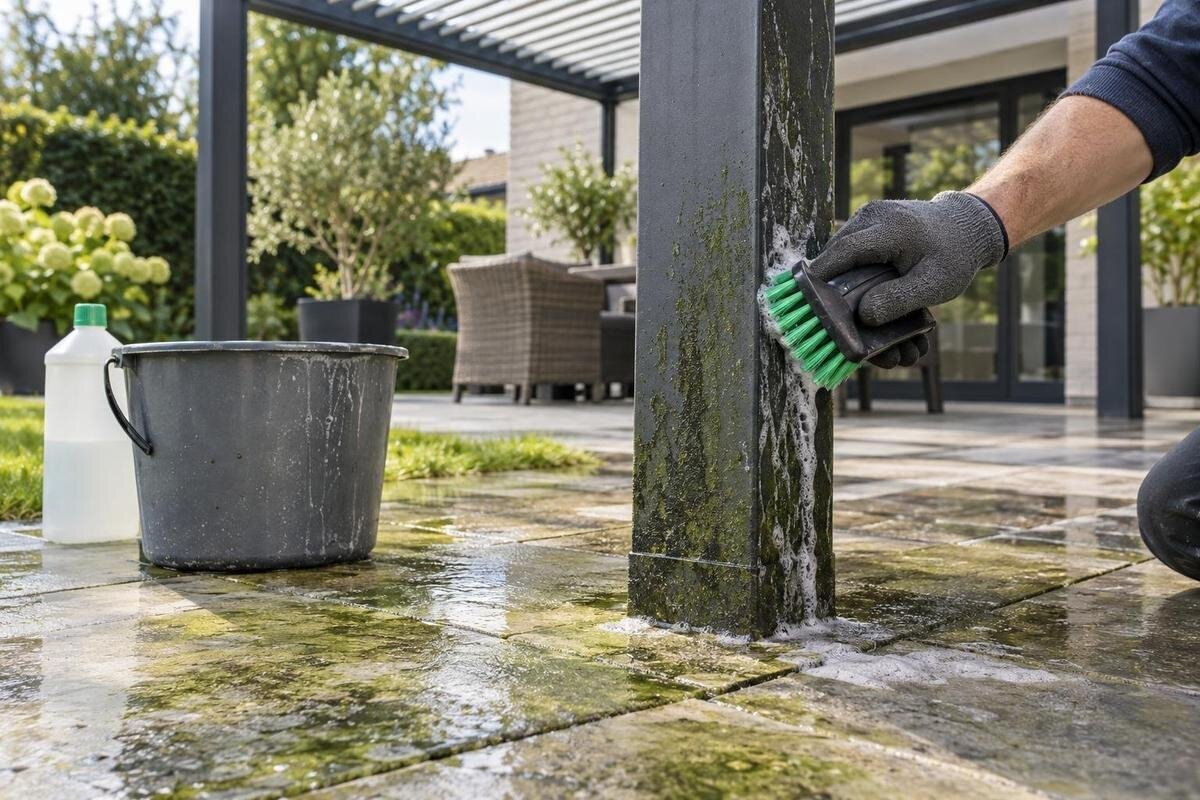
Pergola care
Algae on pergola posts and nearby paving can be cleaned, but they should not be treated as one surface. A product chosen for concrete, pavers or stone may be unsuitable for coated aluminium, and spray or runoff can carry it onto the posts. Identify each finish first, use the mildest method allowed by its care instructions, and keep tools and liquids for the two areas separate. If a post coating is already peeling or damaged, stop before trying stronger chemicals or harder scrubbing.

Before you clean 1
Identify the growth and the surface
Look closely before wetting anything. Algae is often a green, slippery film in places that stay damp, but dark streaks, lichen, mould, leaf staining, mineral deposits and coating breakdown can resemble it. Check whether the mark sits on top of the surface or seems to be within the finish, and whether similar growth is present on shaded paving or in nearby joints. A damp white cloth or soft brush on a small area can show whether loose grime lifts; it cannot identify every stain. If the coating becomes dull, chalky or patchy, stop: a stronger product may alter the finish without removing the mark.
List the materials separately. A post might be coated aluminium, painted metal, timber or have cladding added later, while the paving could be concrete, stone, tile or another surface. The finish matters as much as the base material, so check the care instructions and purchase records rather than guessing by appearance. Include any visible differences between the post, its base cover and adjacent panels; do not treat them as one finish simply because their colours match. If your paperwork identifies a wall-mounted model, the Wall-Mounted Pergola listing provides a catalogue reference. Its name identifies the product family, not the material or cleaner compatibility of every installed part. Keep a simple note of which surface each set of care instructions covers, and photograph any doubtful patch before washing.
Prepare the area before applying cleaner
Remove loose leaves, soil and grit with a soft broom or dry cloth; particles caught under a sponge can scratch a finish. Move furniture and pots away from the work area, or cover them with a clean barrier that will not rub against a post. Mark out a small section and note where water could travel along the paving, through its joints or towards garden beds, drains and post bases. Applying cleaner with a brush or cloth is easier to control than spraying, particularly when wind could carry mist sideways. Follow the product label’s precautions and keep people and pets away for the period it specifies.
Read the pergola care instructions and cleaner label before opening or mixing anything. Confirm that the cleaner is suitable for the paving material and finish; a general outdoor or algae label does not establish whether it is safe for coated metal. Follow the specified dilution, contact time and rinsing directions, and use any protection stated on the label. Plan the application and rinse together: have the separate tools and clean water ready before treating a patch, rather than searching for them while the cleaner is on the surface. Keep the cleaner in its original labelled container. For owners identifying their pergola, the Bloomcabin Pergola listing is a reference for the catalogue name to put in their maintenance notes. Record the cleaner separately, including its dilution if applicable. Never mix cleaners or transfer them into unmarked containers.
Before you clean 2
Clean coated aluminium posts gently
For a post confirmed as coated aluminium, follow its care instructions first. Start with clean water and a soft, clean microfibre cloth or non-scratch sponge. If water alone leaves a film and the manufacturer allows detergent, use a small amount of mild, pH-neutral detergent in water. Try it on a discreet patch and wipe gently; do not scrub at a mark simply because it remains visible. Complete the permitted rinse or wipe-down on that patch and let it dry before deciding whether to continue. This gives you a chance to compare the cleaned finish with the surrounding area before treating the whole post. If you own a Bloomcabin Bioclimatic Pergola, use its model name when locating the relevant care instructions or requesting guidance. Work in small areas so you can watch for any change in appearance as you clean.
Keep scouring pads, wire brushes and abrasive powders away from the coating unless its manufacturer expressly approves them. The same caution applies to solvents, bleach, concentrated degreasers, acids and strong alkaline cleaners: do not assume a product is suitable because it is sold for outdoor use or algae removal. Avoid spraying cleaner where mist could reach other parts. If the instructions allow a detergent, apply it to the cloth rather than spraying the post, and do not let drips sit. Rinse or wipe the surface as the care instructions require, using clean water and a separate cloth.
Use a separate method for timber and other post finishes
For timber posts, first establish whether the surface is bare, painted, stained, oiled or sealed. Those finishes can respond differently to water and rubbing. Remove loose debris, then use a damp cloth or soft brush along the grain only if the care instructions allow it; avoid soaking joints, cracks and exposed ends. Choose a cleaner only if its label suits that particular timber finish, and test a discreet patch. An algae treatment intended for hard paving may mark a timber finish. If fibres lift or colour transfers to the cloth, stop rather than scrubbing harder.
Painted metal, powder-coated steel, vinyl and cladding added later also need their own care instructions; do not apply advice for aluminium or timber based on appearance alone. A sleeve, replacement panel or repaint may have a different surface from the rest of the post. Look for the boundary between finishes and keep your test within the material you have identified, rather than wiping across both at once. Record what you can observe and say when you are unsure. When asking about a Bloomcabin Wall-Mounted Pergola, explain whether the visible post has been repainted, repaired or covered since installation. That distinction helps keep advice for the original finish separate from advice for an alteration. If the added finish is unknown, leave chemical treatment of that area until you have suitable care guidance.

Before you clean 3
Choose a cleaner for the paving itself
Paving may be concrete, clay pavers, natural stone, tile or a sealed surface, and those materials do not all tolerate the same treatments. Check the cleaner label for the actual paving type and consider adjacent mortar, grout, jointing material and sealant. Some acidic products can etch vulnerable stone or affect cement-based joints; strong alkalis can also discolour certain finishes. Do not use either by guesswork. If the surface type or its sealer is unknown, begin with dry brushing and water while you look for its care instructions, rather than trying a general-purpose chemical.
For a small area of growth, use a clean brush suited to the paving and begin with water. If that does not lift the film, use only a product labelled for the identified surface, testing a discreet spot first. Choose a test area that lets you assess the paving finish without splashing the post, and inspect it after the required rinse and drying period. Follow the instructions for dilution, contact time and rinsing, and do not let the product dry if the label says to rinse it away. Preserve the joints rather than digging at them, and avoid enlarging the treated area until you have assessed the test. If a spill changes a nearby post, keep the container and note what happened. The Bloomcabin Pergola product page can help you identify the model when reporting the affected part.
Keep paving cleaner away from the pergola
Cleaner can reach the post not only as a splash but also in runoff that travels across the paving or collects at the base. Remove dry debris from both areas first, then clean the post using its approved method and separate cloth. Once that is done, place a removable splash barrier between the post and paving before using any paving treatment. Do not tape adhesive directly to the finish or let a gritty cover rub against it; remove the barrier promptly after cleaning. If controls or wiring are nearby, keep liquid away and follow the pergola instructions.
Apply a paving product with a controlled brush rather than a spray bottle or hose-end applicator. Wet only the target area, stay clear of the post base and manage runoff as the label directs. Check the route the liquid will take before each application, especially where paving slopes towards a post or water gathers beside it. A splash barrier does not replace control of water travelling along the ground. Keep the paving brush, bucket and rinse water separate from the post-cleaning kit, so cleaner is not transferred on a reused tool. If you need to ask about protecting a particular pergola part, use the model shown in your records; the Bioclimatic Pergola listing provides a catalogue reference. Describe the paving treatment and where it could contact the pergola, rather than asking only whether an algae remover is suitable.
Before you clean 4
Use low-abrasion tools and controlled water
Use a clean, soft cloth or sponge on a coated post and a separate nylon brush on paving if that surface can tolerate it. Rinse grit from a tool before continuing, and replace it if the bristles have picked up sharp particles. Do not use a wire brush, metal scraper or rough scouring pad to get through stubborn growth; these can scratch a finish and make the surface harder to clean. Light, repeated passes are easier to control than heavy pressure. Keeping a dedicated set of tools for the paving also reduces the chance of transferring grit or cleaner to the pergola.
A pressure washer is not a default algae treatment. Do not direct a high-pressure jet at coated posts unless the pergola maker explicitly permits that method for the finish. The force can damage a coating or drive water into joints. On paving, check instructions for both the surface and its joints: a jet may erode grout or jointing material or roughen the face. There is no universal pressure or distance that suits every surface. Start with a brush and controlled rinse, and seek product-specific guidance if powered cleaning seems necessary. Do not use a jet to wash cleaner towards a post.
Rinse, dry and inspect the result
Remove cleaner residue exactly as its label requires. A clean damp cloth or low, controlled flow is easier to keep off the coating than a broad spray. Wipe visible drips from the post and base, and avoid leaving pools of solution in paving joints or beside the footing. If the label specifies a period during which the surface must stay wet, follow it rather than improvising. Use fresh rinse water, not the dirty bucket used for cleaning. Let the post and paving dry before judging the colour, because a wet surface can look darker or uneven.
When dry, check whether the growth has lifted and whether the coating looks unchanged. Compare the test patch with the surrounding finish, noting whether the difference is a remaining mark or a new change after cleaning. A persistent stain, new dull patch, chalking or flaking is a reason to pause, not to apply a stronger cleaner immediately. Take an overview photo to show the location and a close-up to show the surface. Note the product used, its dilution, how it was applied and where it ran; distinguish marks noticed beforehand from changes noticed afterwards. The Wall-Mounted Pergola product details can help you cross-check the model name for a support query. Keep the account descriptive rather than guessing at the cause, so the cleaning attempt and its result are clear.

Before you clean 5
Reduce the damp conditions that bring algae back
Algae is more likely to return where moisture and organic debris linger. Sweep leaves, seed pods, soil and other plant matter from posts and paving before they build up into a damp layer. Keep paving joints and drainage routes free of loose debris, and look for a repeated source of moisture such as a misdirected sprinkler, dripping hose or regular splash. If the same strip stays wet, deal with the cause where practical rather than applying a stronger chemical each time. Shade can contribute to slow drying, but changing the garden is not the first answer when a water source or debris is the issue.
A quick check after wet spells or heavy leaf fall can catch a thin film before it becomes slippery or harder to remove. Use routine sweeping and spot cleaning instead of treating the whole area with a product that may reach the coating. Avoid applying a sealant, biocide or protective treatment to either surface unless its manufacturer permits it for that exact material and finish. If the green film returns in the same place, note when it appears and what stays wet; that observation can help distinguish a recurring moisture problem from a one-off clean.
Know when cleaning is no longer the answer
Stop cleaning if the post coating is peeling, blistering, chalking, pitted or exposing the material underneath, or if the appearance changes after a gentle test. More abrasion or a stronger chemical may make the damage worse without resolving its cause. Cleaning will not repair a failing finish. If a post appears loose, distorted or to have moved, keep clear of the affected area and arrange an assessment by a suitably qualified professional rather than tightening or dismantling structural parts yourself. Do not troubleshoot or dismantle electrical components; seek qualified service if water has reached them.
For a support request, bring together the model, visible post material and finish if known, paving type, and the cleaner’s name and application method. Use the photos and notes from your dry inspection rather than repeating the cleaning attempt to demonstrate the problem. Owners of the Bloomcabin Pergola model can use the catalogue name alongside any identifying details in their purchase records. Explain whether you need advice on a remaining stain, a changed coating or a damaged component: these are different problems, even when they occur in the same place. Ask whether further cleaning is appropriate, whether the finish needs attention, or whether a replacement part should be considered. Before arranging a repair or ordering a component, obtain instructions specific to the installed product and make clear any alterations to the affected part.
Frequently asked questions
Can I use the same algae remover on the pergola and the paving?
Only if the care instructions for the post finish and the cleaner label both say it is suitable for those exact surfaces. A product intended for paving may damage coated aluminium, and splashes or runoff can carry it onto a post. Keep the products and application tools separate.
Is bleach safe to use on coated aluminium?
Do not assume it is. Check the care instructions for the specific finish and the cleaner label; avoid bleach unless the finish manufacturer explicitly permits that product. Keep it off nearby coated parts, and never mix it with another cleaner.
Can I use a pressure washer to remove algae?
Do not direct a high-pressure jet at coated posts unless the pergola maker explicitly allows that method. On paving, check the instructions for the surface and its joints first. A soft brush and controlled rinse are safer starting points than an unverified pressure setting.
Should I clean the posts or paving first?
Remove loose debris from both areas first, then clean the posts using their approved method. Rinse or wipe them as instructed and shield them before applying any paving cleaner. This helps prevent a paving product from splashing onto the pergola coating.
What if the green mark remains after gentle cleaning?
Stop rather than increasing the strength of the cleaner or scrubbing harder. The mark may not be algae, or the surface finish may have changed. Photograph it when dry, note the products and methods used, and seek guidance for the identified material and model.
A careful clean keeps the two jobs separate: identify the post finish, use only a method it allows, and choose any paving treatment for the paving material itself. Controlled application and runoff matter just as much as the cleaner. If the finish is failing or the stain does not lift gently, stop and seek advice rather than escalating the treatment.
