
Compare greenhouse quotes: 15 commonly missed items
Greenhouse planning
Quick answer: how to compare quotes properly
Compare greenhouse quotes line by line against one consistent scope of work. Check more than the model and dimensions: include foundations, glazing, openings, assembly, delivery and connection work. A lower quote can make sense, but only when any deliberately excluded work is clear.
Create a checklist for every quote and mark each item as included, optional, customer-supplied or unresolved. Ask for written clarification where needed. Only then can you judge which option suits your site, the work you will do yourself and your preferred level of equipment.
01
Same baseline
Compare only quotes with the same size, design, glazing and equipment assumptions. Show any differences clearly in a separate column.
02
Clarify responsibility
Record who arranges the foundation, access, unloading, assembly, sealing and connections. Terms such as “by customer” need specific definition.
03
Get it in writing
Ask for missing items, options and requirements in writing. Verbal assumptions will not help later with planning or handover.
Compare greenhouse quotes fairly – with the right scope
Two quotes may look alike at first yet include very different work. One may list only the kit, while another allows for assembly, glazing or accessories. Comparing totals alone can hide costs and tasks that arise later. Use a shared comparison framework rather than making a quick judgement on price.
Start with a brief description of your project: intended location, approximate space required, use, ground conditions and preferred equipment. Send the same description to each supplier, or assess incoming quotes against it. This reveals whether they have actually allowed for the same greenhouse size, glazing type and delivery scope.
This guide focuses on checking quotes, not choosing a kit or asking suppliers general questions. It highlights items that are often unclear, optional or absent from greenhouse quotes. Check every statement in writing and resolve outstanding points with the supplier before placing an order.
01 · Comparison basis
Define the model and scope clearly
The first check is the exact product description. A model name alone is not enough if dimensions, door position, roof shape, frame specification or glazing remain open. Also record whether accessories are delivered already fitted or supplied separately. Only a quote with clearly named components can be compared technically and checked later.
Watch for wording such as “similar”, “as selected” or “by arrangement”. It can be useful, but it does not replace a dependable schedule. Request an itemised list with quantities, variants and alternatives. This shows whether a comparison is based on an equivalent greenhouse or whether major differences are hidden behind a short description. Create a reference line for your preferred version, covering structure, installation type, door side, openings and equipment options. Any departure should remain visible as its own change. A column for open assumptions helps: an item is only decided after written confirmation.
Check external dimensions, floor area, eaves and overall height, plus the position of doors and ventilation elements.
Separate fixed included components from optional choices, so later additions do not quietly alter the comparison.
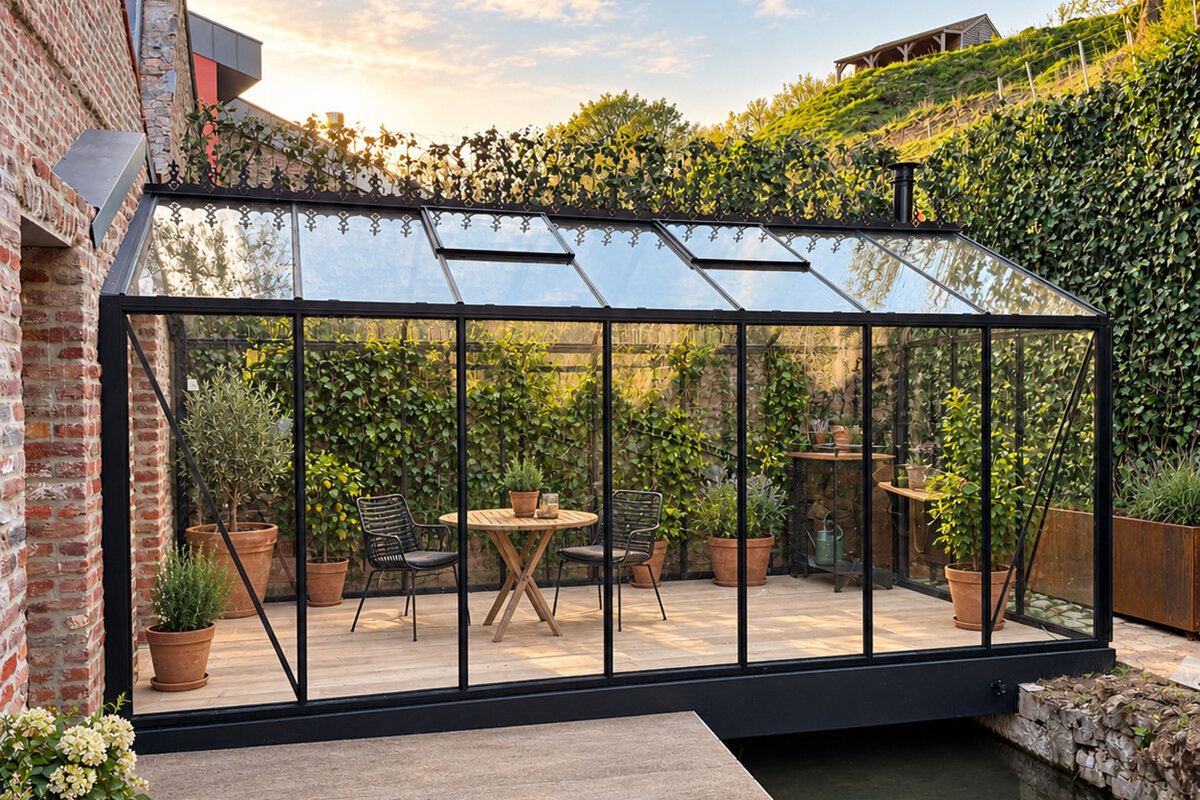
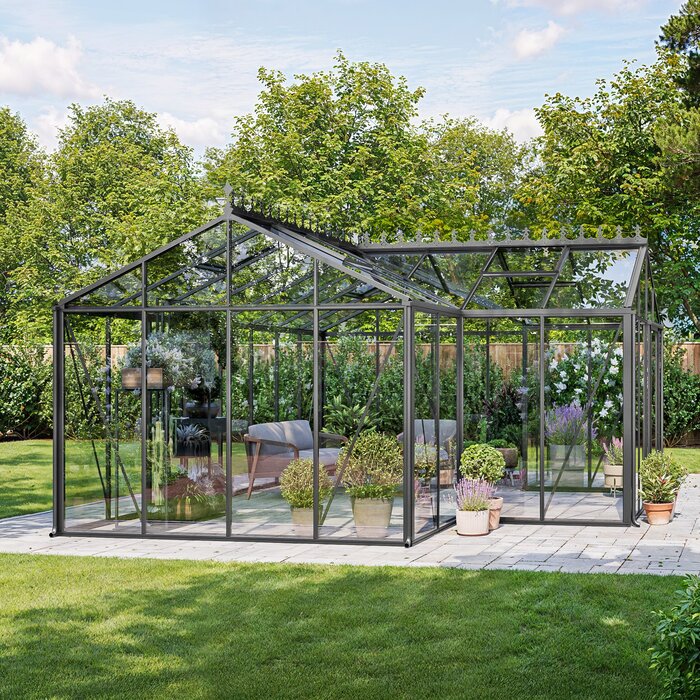
A transparent starting point is a Classic range greenhouse with a clearly defined configuration and documented delivery scope.
02 · Site
Do not leave out foundation and groundworks
A greenhouse needs a prepared, stable and level installation area. The quote should therefore state clearly whether a foundation is included, what type is intended and which work remains on your property. Excavation, disposal, a gravel base, concrete, reinforcement and levelling may all be separate items. Their absence is not necessarily wrong, but it is an important gap in the overall comparison.
Local ground conditions and access can substantially affect the work and approach. Do not assume a standard foundation suits every site. Confirm who checks dimensions, sets levels and accepts the area. The more precisely this interface is described, the better delays and rework can be avoided. For a lean-to greenhouse, the connection to the existing building also needs special attention. Record the wall area, access and preparatory work required. The quote should clearly separate the greenhouse, ground preparation and work to the building. Coordinate the sequence early, so foundation, wall connection and assembly do not rely on conflicting assumptions. Photos and a sketch make discussion easier.
Ask whether foundation dimensions, fixings and the required level tolerance are expressly described in the quote.
Allow separately for earthworks, material transport and reinstatement of adjoining areas.
When assessing a location against a house wall, consider a full-size standard lean-to greenhouse together with its foundation and connection area.
03 · Building envelope
List glazing, profiles and openings
Glazing is not simply one collective term. For a fair comparison, you need the specific construction for walls, roof and doors, together with details of profiles, seals and fixings. Different materials or equipment options can affect use, maintenance and appearance. Request a clear allocation showing how each area is built and what is priced as an accessory or spare part.
Doors, windows and other ventilation openings matter just as much. Their number and position affect comfort, assembly and later use. Check whether handles, openers, insect screens or additional fittings are included. If a quote merely says “ventilation available”, it remains unclear whether a workable system is included. Ask for materials to be allocated to individual components, such as fixed areas, moving elements and transitions. Spare parts, seals and fixings should not appear as unspecified assembly accessories. Transfer different terminology into your comparison language. That way you compare functions and delivery scope rather than product descriptions. Broad unclear terms remain open until explained in writing.
Compare glazing and fixings separately for the roof, side walls, gables and moving elements.
Have the number, location and operating method of doors, windows and automatic openers stated clearly.
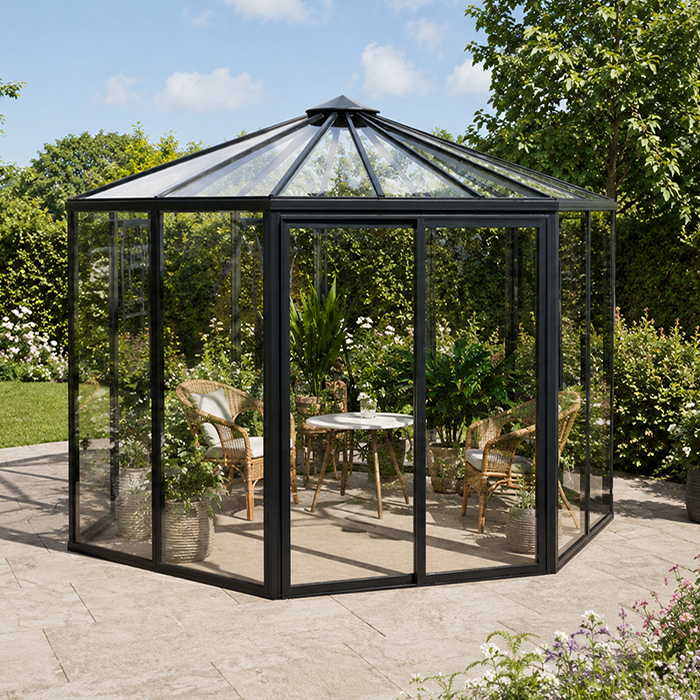
For a transparent materials comparison, a Classic glass greenhouse can serve as a clearly structured example.
04 · Equipment
Treat accessories as quote line items
Shelves, potting benches, gutters, shading, irrigation and internal organisation turn the building shell into a usable garden space. This equipment is often shown only in images, offered as a package or left entirely for customer installation. Check which elements are included, whether they fit the selected model and whether assembly and fastening have been allowed for.
Also consider water and electricity where relevant to your intended use. A supplier may provide a connection to the greenhouse, within it, or no connection at all; these options are not equivalent. Professional work and local requirements should be clarified separately. Add accessories, connection routes and defined customer work to your comparison sheet. Some elements can be added later, while others need fixing points, cable routes or a particular assembly sequence. Do not ask only whether accessories are available: ask whether they are included, prepared for or excluded. A separate list prevents a fully illustrated greenhouse from being compared with a basic supply package.
List bench surfaces, shelves, hooks, shading and irrigation individually rather than grouping them under “accessories”.
Clarify whether cable routes, connection points, protective measures and commissioning are included or customer-supplied work.
When planning equipment, a full-size standard lean-to greenhouse against a façade provides a well-structured basis.
05 · Logistics
Specify delivery, access and unloading
Delivery does not automatically end where you need the components. Check whether the quote means delivery only to the property boundary or includes an agreed unloading point. Narrow driveways, steps, slopes, passageways and soft ground can affect the process. Communicate these conditions early using photos, measurements and a realistic access route.
Packaging and temporary storage also need clarification. Large or delicate components need a suitable protected place until assembly. Ask who removes packaging and whether damage or missing items should be documented on handover. Walk through the journey from the vehicle to the prepared installation area. Bends, gateways, level changes and sensitive garden areas can matter as much as vehicle access. Share unusual conditions early and document them clearly. If components will not be assembled immediately, clarify storage space and responsibility for protection and checking at handover. This turns the general topic of delivery into a manageable service with clear interfaces.
Describe vehicle access, passage widths, slopes and the route from unloading point to foundation in advance.
Clarify responsibility for unloading, temporary storage, packaging disposal and checking visible transport damage.
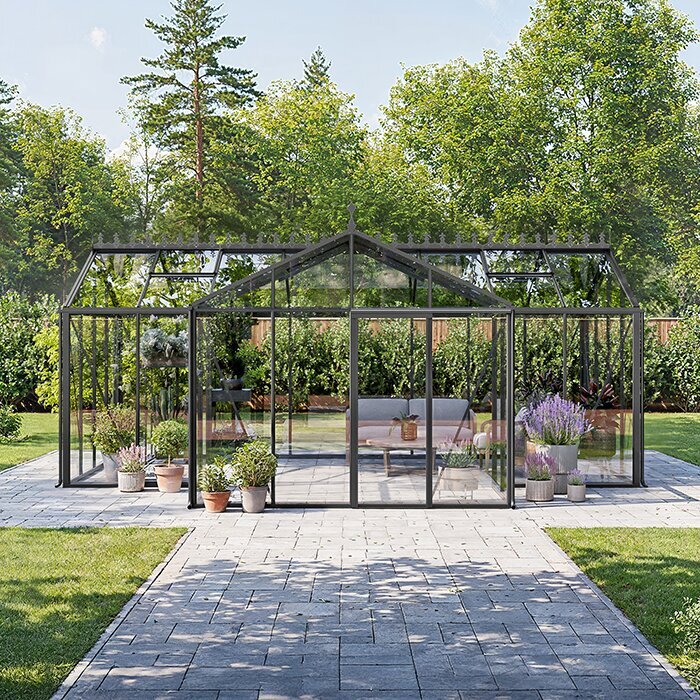
For planning transport routes, a freestanding Classic range greenhouse with a predetermined location and access route is helpful.
06 · Assembly
Separate assembly work and handover clearly
Assembly quotes vary widely in how far their service extends. Check whether only the frame is erected or whether glazing, doors, windows, seals and accessories are included too. Preparation is equally relevant: must the foundation already be checked, must parts be ready, or are lifting aids required? A detailed assembly description protects both sides from differing expectations.
Also agree how completion will be established. Handover need not be complicated, but it should record visible completeness, operation of moving parts and any remaining work. Set out who reports defects and how outstanding points are documented. For self-assembly, the quote should provide understandable documents and a clear boundary for any support. Read the assembly description as a sequence of specific work steps. It should show which requirements must be met before work begins, which components are assembled and where your own work starts. A joint check against the agreed items is useful at handover. Outstanding items should be described and documented clearly.
Check the frame, glazing, doors, windows, seals, accessory installation and any lifting equipment separately.
Ask for a handover record, an outstanding-items list and the process for missing or damaged parts.
At the building envelope, a large standard lean-to greenhouse needs a precisely described interface with the wall.
07 · Additional costs
Bring exclusions into the cost picture
Many total costs arise not within the greenhouse quote itself, but at its interfaces. They can include planning, surveying, foundations, path works, electrical or water connections, disposal and garden landscaping. Do not treat these as a generic contingency; identify them specifically for your site. Then you can see which quote genuinely suits your project sequence.
Council or neighbour-related matters cannot be settled by a general statement either. Requirements may depend on the location, size, design and local rules. Before ordering, ask your council whether building consent, resource consent or other property-specific checks may be relevant to your greenhouse project. A quote should not silently replace that assessment. Do not combine outside work under a single reserve allowance. Split it by trade and responsibility, so it is clear which tasks must be completed before assembly. These can include surveying, site preparation, service routes or reinstatement of the surrounding area. Clear separation prevents an uneven comparison of different project parts.
Prepare a separate additional-cost list for work not undertaken by the greenhouse supplier.
Check local requirements with the relevant council early and document important conditions for everyone involved.
A clearly configured Classic garden greenhouse makes it easier to separate the product from surrounding site work.
08 · Decision
Check quote version, terms and changes
A quote is only as dependable as its version and conditions. Check the date, validity, included variants, payment stages and notes about changes. The point is not to expect a particular condition, but to understand it before deciding. Have every option selected afterwards confirmed in an updated version, so an outdated basis is not signed.
Also read written terms on warranty, guarantee, assembly and care carefully. Scope and requirements can differ by product and agreement. Keep the quote, order confirmation, drawings and relevant correspondence organised. File sketches, equipment lists and written clarifications with the same project version. If a selection changes, check again whether the foundation, assembly, accessories and logistics still fit. This avoids a later option changing conditions already considered settled. Before confirmation, make one final comparison with your project sheet: every important item should be included, deliberately excluded or clearly assigned to a responsible party.
Compare only dated, fully completed quote versions and make every later change traceable.
Check written terms and care and assembly guidance before confirming the order or defining your own work.
For an unambiguous final configuration, choose a full-size standard lean-to greenhouse with its scope of work confirmed in writing.
The most common gaps in quote comparisons
Use this overview as a checking framework. It does not replace technical assessment, but it shows which fifteen items are often missing from quotes, mentioned only broadly or presented as customer-supplied work. Add a clear status for each supplier.
Product definition
Exact model variant; external dimensions and form; glazing, profiles and seals
Chosen specification; plan, heights and door side; material allocation by component
Access and groundworks
Doors, windows and openers; foundation and fixings; earthworks and disposal
Number, location and operation; dimensions, level and responsibility; work boundary, access and material
Delivery process
Delivery point and access route; unloading and temporary storage; packaging and its disposal
Handover point and transport route; responsible party and storage area; collection or customer task
Assembly and services
Assembly scope; handover and outstanding items; water and electrical connections
Installed components and customer work; record and documentation; service route, connection point and responsibility
Planning and equipment
Accessories and internal organisation; surveying and planning; quote version, terms and changes
Individual parts and assembly preparation; documents and checks; confirmed version, exclusions and options
Five steps to comparable quotes
A fixed process reduces follow-up questions and stops options appearing only after the decision. Work from your site towards the detailed scope of work, not the other way around.
01
Create a project sheet
Record the site, intended use, dimensions, access and desired equipment. Add photos and simple sketches so every quote reflects the same starting point.
02
Define the minimum scope
Decide which components must be included and which accessories may remain optional. This prevents equipment level and product comparison from becoming mixed.
03
Match the line items
Transfer every quote into the same table. Mark each line as included, optional, customer-supplied or unclear, then ask targeted questions about missing details.
04
Check interfaces
Assign the foundation, access, unloading, connections and assembly to a responsible party in each case. Consider the actual conditions of your property.
05
Confirm the final version
Decide only from an updated written version. Check variants, exclusions and terms once more against your project sheet.
Checklist before choosing a quote
Work through these points for every quote. A tick means more than “mentioned”: it must be clearly described in writing and assigned to the right responsible party.
01. Model, external dimensions, height and floor plan match your site planning.
02. Glazing, profiles, seals and fixings are clearly specified by component.
03. Doors, windows and ventilation elements state number, position and operating equipment.
04. Foundation type, level, fixings and preparatory work are assigned clearly.
05. Accessories are individually named, not identifiable only from images or broad collective terms.
06. Delivery point, access route, unloading and temporary storage are described as practically workable.
07. Assembly scope, customer work, handover and treatment of outstanding items are recorded.
08. Exclusions, quote version and written terms have been checked fully before confirmation.
Frequently asked questions about comparing quotes
Why is the final total not enough for comparison?
The final total does not show whether the same services are included. One quote may exclude the foundation, assembly or accessories, while another includes those points. Compare every line item and each party’s responsibilities. Totals only become meaningful when the scope of work is shared.
Which items are most often missing?
Foundation preparation, earthworks, unloading, assembly scope, openings, accessories, connections and disposal are often unclear. That does not automatically mean a quote is inadequate. What matters is that each service is expressly marked as included, optional or customer-supplied, and that you allow realistically for its effort on your project.
Should I include accessories in the quote straight away?
Include accessories in the comparison when they matter to how you will use the greenhouse. List them individually where possible, so the basic quote and extensions remain visible. Some elements can sensibly wait, while others directly affect assembly or planning. Decide by priority, rather than by an unclear package label.
Who is responsible for the foundation?
That depends on the agreement and should never be assumed. Clarify who designs, prepares, measures and releases the area for assembly. Even where a foundation is customer-supplied, its requirements need to be clear. If uncertain, a competent on-site assessment may be worthwhile.
Do I need to check anything with the council first?
Local requirements can be relevant depending on the site and project, so a universal answer is not reliable. Before committing to an order, ask your council about requirements applying to your property, including whether building consent, resource consent or other approvals may be needed. Incorporate the outcome into your quote basis.
How should I handle unclear wording?
Ask for a specific written explanation instead of interpreting it yourself. Ask about quantity, material, assembly, responsibility and any requirements. Add the answer to your comparison sheet and request an updated quote version for important changes. This is far more dependable than a verbal assurance.
Explore greenhouse solutions
Transparency creates a better basis for decisions
A good greenhouse quote does not need to include every conceivable service. It should, however, clearly show what is supplied, assembled or assumed. When you consistently compare the model, site, equipment and interfaces, a difficult-to-read total becomes a dependable comparison for your own garden project.
Take time to resolve open points before placing an order. A precise quote helps you plan your own work sensibly, coordinate external trades and align expectations clearly. Bloomcabin supports this process with clearly configurable greenhouse solutions as a starting point for planning.
Compare configurations against your project sheet and clarify the right scope for your site.
