
Growing Coriander / Cilantro in a Greenhouse
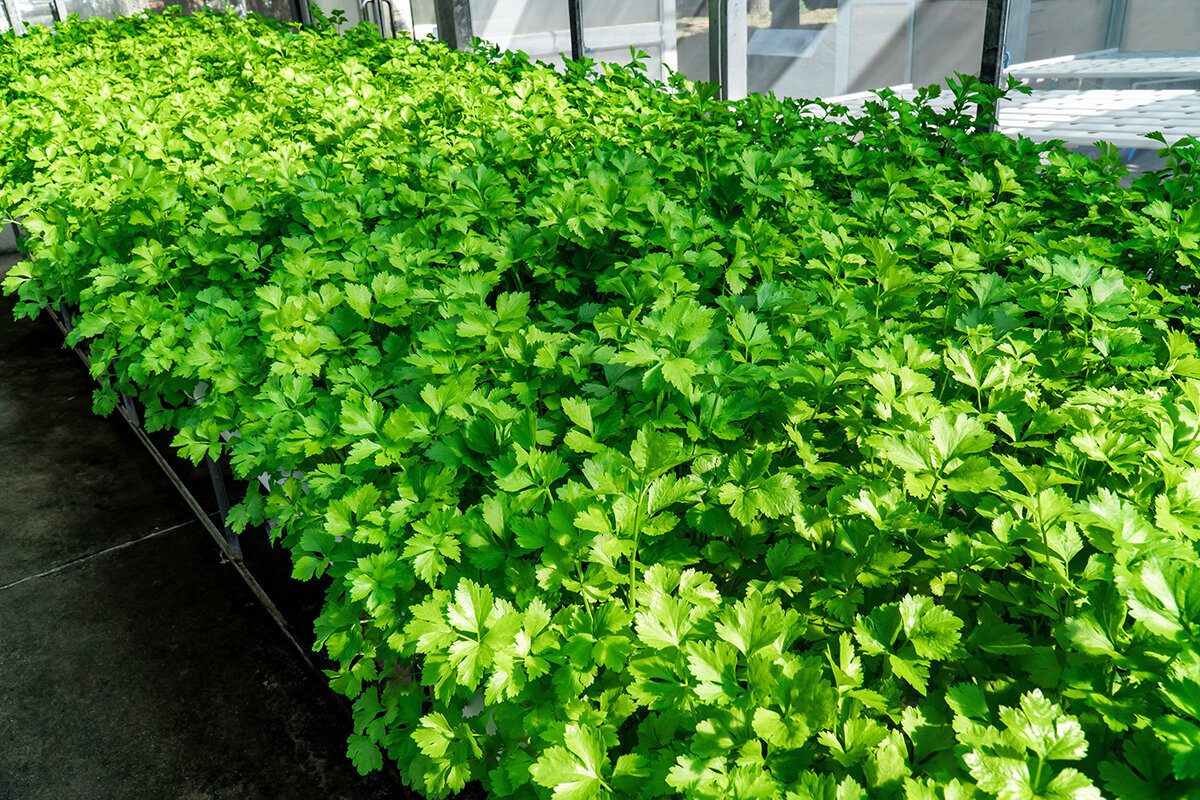
Bloomcabin growing notes · New Zealand
Growing coriander / cilantro in a greenhouse
One quick annual herb, two very different harvests: kept cool and cut young, it provides fresh cilantro leaves. Allowed to bolt, flower and dry, it produces aromatic coriander seeds for the spice cupboard.
The green harvest
Cilantro is the quick, fresh side.
Leaf coriander is Coriandrum sativum and is picked for its soft divided leaves and tender stems. Greenhouse growing is wonderfully direct: sow a small patch where it will grow, wait for strong rosettes, and cut only what will reach the kitchen soon. The foliage tastes best before cooking or lengthy storage.
- Goal: repeated harvests of fresh leaves.
- Best method: sow densely and overlap short batches.
- Climate priority: avoid hot root zones and stagnant air.
- Growing rhythm: a few weeks rather than a whole gardening season.
The spice harvest
Coriander is the slower, spicier side.
It is the same plant, now allowed to grow tall, form pale flower umbels and ripen rounded fruits. The foliage becomes finer and its kitchen role changes. Rather than fighting flower stems, give selected plants room, protect ripening umbels from shedding, and let the crop finish drying.
- Goal: aromatic, fully ripe spice seed.
- Best method: wide spacing with unrestricted airflow.
- Climate priority: ordinary warmth is welcome once seed formation begins.
- Growing rhythm: one complete life cycle to maturity.
Path to leaves
Cut young.→
Path to seed
Let it grow.This separation is the key decision in greenhouse growing. A crop for cilantro can stand fairly close and be harvested repeatedly, while a batch for spice seed needs light, branching room and peace. Expecting both from every plant often means too little tender foliage early and few seeds later. Divide the bed, bench or trough deliberately. Two labelled strips are enough: keep the leaf area moving with small succession sowings, while strong plants in the seed area are no longer cut after they begin growing upwards.
Before the first green harvest
Sow for the harvest you want.
Direct sowing is usually safest because coriander makes a taproot and dislikes unnecessary disturbance. Use viable seed and loose, stable herb or vegetable mix with good drainage. A short row in a prepared greenhouse bed works equally well. If you still raise plants in modules, transplant seedlings while very young with the root ball fully intact.
01
Choose seed for the harvest goal
For leaf harvests, varieties labelled slow-bolt or suitable for leaf coriander are useful. They extend the useful leaf window but cannot remove the natural response to heat, long days and drought stress. For seed, variety matters less than reliable seed and enough room for sturdy, branched plants. In both cases, choose fresh, tested seed with a traceable variety name.
02
Make a shallow, firm seed drill
Sow the rounded fruits about 1 to 2 cm deep. Cover evenly, firm the surface lightly and water with a fine rose so seed is not washed together. In a greenhouse bed, short rows across the narrow side are particularly practical: each row can be watered, cut, labelled and cleared separately. Coriander does not need fresh manure or heavily enriched mix; a moderately fertile, free-draining base is enough.
03
Thin leaf and seed crops differently
For cilantro, sowing may be fairly dense; later thin to about 5 cm if seedlings crowd one another. For seed harvest, around 20 to 25 cm between plants is more useful. Light then reaches the base and branched flowering stems can develop without shading each other. Where access permits, roughly 35 to 40 cm between rows makes care, checking and harvesting easier.
04
Wait patiently; do not waterlog
Germination can take two to three weeks and may be slower in cool mix. Keep the top layer evenly moist until emergence, never saturated. A clear cover can briefly help in very dry greenhouse air, but remove it once seedlings emerge so they do not grow in still, humid air. Label every sowing with its date and purpose — leaves or seed. It makes later succession sowings much clearer.
The greenhouse paradox
Provide plenty of light without letting heat take charge.
A greenhouse buffers cold nights, wind and heavy rain. Yet the same structure can push coriander into flower very quickly on sunny days. Cilantro prefers bright but comparatively mild conditions. A balanced daytime climate, dependable ventilation and a root zone that does not repeatedly overheat are therefore crucial. A thermometer at plant height gives a more realistic picture than a glance through the door. Open roof vents and the door as the house warms in the morning, rather than waiting for visible wilting.
Light
Give coriander a bright position. During hot months, light shading on the sunny side is better than removing all light. Gentle morning sun remains especially valuable; dark corners instead produce long, pale, weak stems.
Temperature
Mild days and cooler nights favour leaf harvests. As heat increases, the leaf window shortens markedly. Above all, avoid an overheated root zone and sharp temperature swings; early ventilation works better than a late emergency response.
Air movement
Open roof vents and the door early on warm days to create a gentle draught. A small circulating fan can help in still corners. Moving air is not decoration: it keeps plant tissue drier and evens out temperature differences.
Water
Water the growing medium directly, preferably in the morning. Foliage should dry before evening. Persistently wet surfaces combined with warm, stagnant air encourage soft growth and raise the risk of leaf and seedling problems.
From leaf to flower
The harvest window in five signs
01Rosette
Cut now
Cut now
02Centre rises
Harvest generously
Harvest generously
03Fine foliage
Choose a goal
Choose a goal
04Flower umbels
Commit
Commit
05Seed set
Dry
Dry
Read the growth stages and respond. A low, rounded rosette is the best stage for leaf harvest. Once the centre lifts, cut generously but leave the growing point intact. Narrower, finely feathered upper leaves show that the plant is increasingly directing energy into height and flowering. When branched stems and umbels appear, decide: remove the first buds to perhaps gain a little more leaf time, or let marked plants continue consistently for seed. Later, initially green fruits turn yellowish, straw-coloured and light brown; leaf harvest is then over. Bolting rarely has one cause. Long days, heat, dry roots, erratic watering, close spacing, root disturbance and the plant's normal maturity all interact. Ventilate earlier, lightly shade intense afternoon sun, water before plants wilt and harvest in time. Above all, sow the next batch before the current one is exhausted.
A fresh row is the best insurance
Plan a rhythm, not a single date.
One large sowing creates a brief glut. Small portions at intervals of two to three weeks create a more useful rhythm: young leaves, harvest-ready rosettes, a replacement row already germinating and an intentionally uncut section for flowers and spice seed.
Example seasonal patternSepOctNovDecJanFeb
Batch A · leavesSowing and young leaves
Batch B · leavesStrong leaf harvest
Batch C · leavesSowing and young leaves
Batch D · leavesStrong leaf harvest
Reserved batch · seedflower, ripen, dry
Young-leaf and replacement window Leaf-harvest window deliberately retained seed crop
This calendar shows a principle, not a fixed promise. In cooler southern areas, early growth may begin more slowly after low-light weeks, while warmer northern districts can see rapid bolting from spring onwards. In a greenhouse, first sowings are often useful from late winter or early spring once light is strong enough. During intense summer heat, the leaf window becomes short; then excellent ventilation and light shading help, or pause and start again in late summer. Without supplementary light, coriander often grows too weakly for dependable leaf harvests through winter.
Leaf harvest
Cut so a new shoot can remain.
Turquoise markings show productive cuts. The red line indicates the growing point that must remain for another flush.
Three good harvesting methods
- Selective cut: Take the outer stems first and let the centre continue opening. This method is especially suited to small handfuls that will go straight into the kitchen.
- Light row cut: Cut a dense young row above the growing point and leave a short, leafy base. It is quick and tidy, but works only with vigorous plants that are adequately supplied.
- Never into the heart: A hard cut at ground level ends the batch. That is right when clearing an old row completely, but not if you expect another flush.
Preserve flavour: Harvest in the morning or another cool part of the day once the leaves are dry. Wash stems only just before use where possible. For short storage, keep them loosely in a glass with a little water in a cool place. Freeze excess chopped in portions. When dried, the leaves lose much of their bright, citrusy flavour.
A thoughtful layout makes this routine easier. Put cilantro at the front edge of a growing bench or near the door so cutting, watering and resowing remain convenient. Find guidance on usable space, airflow and an organised herb zone with the Classic Aluminium Greenhouse.
The warm, dry finish
Let one batch flower. Then be patient.
Once you have chosen seed harvest, stop regular leaf cutting in that section. Plants make airy, flat umbels of pale flowers followed by green, rounded fruits. Flowering coriander can stay in the greenhouse provided it does not shade younger leaf crops and air circulates freely. With doors or windows open, hoverflies and other helpful insects can reach the flowers. Keep ventilation generous so foliage and seed heads dry quickly after watering. Gently support tall plants if needed, without repeatedly moving delicate umbels.
01Green
02Colour change
03Partly dry
04Dry in a bag
05Clean and store
- Green: The soft fruits are still filling and do not yet have the dry, warm spice aroma. Leave them to ripen further on the plant.
- Colour change: Watch umbels change from green to yellow-beige, straw and light brown. As they flower one after another, ripening is uneven too. Check the crop regularly.
- Partly dry: When a large share of the umbels is straw-coloured to light brown, cut the whole stems on a dry morning before the first fruits begin shedding in quantity.
- Dry in a bag: Hang stems upside down in a clean paper bag or another breathable covering. The location should be dry, warm and well ventilated; the bag reliably catches released seeds.
- Clean and store: Rub fully dry umbels gently, remove plant debris and keep the whole seeds in a tightly closed jar away from heat and direct light.
Do not wait until every umbel on the plant has turned dark brown. In a warm greenhouse, the earliest fruits can already shed while later ones remain green. Cut when the majority are clearly changing colour, then let drying finish under cover. Grind seeds only shortly before cooking to retain their warm, citrusy, woody aroma for as long as possible.
Correct calmly and precisely
Read common problems as cause and response.
Plants bolt at only 12–15 cm
Likely cause: a hot root zone, sudden temperature peaks, drought stress, strong watering fluctuations or harvest left too late.
Response: Open windows and doors earlier, lightly shade the most intense afternoon sun and water before plants wilt. Sow a new small batch immediately. Removing an early flower stem may buy a little time, but a succession sowing is more reliable than trying to reset a bolting crop permanently.
Pale, weak and stretched leaves
Likely cause: too little light, an overcrowded crop or permanently wet mix restricting root function.
Response: Move containers to a brighter spot, thin dense rows and allow the top of the mix to dry slightly before watering again. Fertilise cautiously only after correcting light, air and watering. Too much nutrition encourages fast but often soft, less aromatic growth.
Yellow lower leaves and a tired centre
Likely cause: waterlogged soil, lack of oxygen around roots or an old crop naturally preparing to flower.
Response: Check drainage holes, saucers and bed-soil structure. Reduce watering when wet and clear over-aged plants rather than forcing another cutting cycle. A fresh sowing is the better base for the next harvest window.
Aphids gather on young tips
Likely cause: soft, lush growth and a protected greenhouse climate where unnoticed pests can establish quickly.
Response: Check leaf undersides and young shoots twice weekly. Isolate or remove heavily affected plants, rinse small colonies gently with water and improve air movement. Yellow sticky traps can indicate winged insects but do not replace direct plant checks. If considering a pesticide, confirm that its New Zealand approval and label cover the exact pest and use on edible herbs, then follow all label directions.
Seedlings topple at soil level
Likely cause: damping-off disease encouraged by overwatering, old growing mix, poor hygiene, overly dense sowing, or warm, still, persistently humid air.
Response: Discard affected seedlings, clean used containers and restart with fresh mix. Sow less densely and water the soil rather than continually wetting foliage. Do not close the greenhouse for the evening with wet surfaces and humid warm air.
Timing for New Zealand
A greenhouse moderates climate — it does not replace it.
Coriander timing shifts noticeably around New Zealand. A protected structure gives more control, but does not override the plant's preference for bright, mild weather. Light levels, cool nights, wind and summer warmth should set the pace.
Cooler south and inland areas
Protected direct sowing often starts later after dark, cold weeks than in milder regions. In return, coriander commonly stays leafy longer in late spring. Use sunny mornings, keep the house closed initially after frosty nights and ventilate as it warms. Young seedlings need shelter from cold wind, while roots should not remain cold and waterlogged. Without added warmth and grow lighting, a strong winter harvest is not dependable.
Central districts and higher ground
Early batches grow well under cover when light, water and ventilation work together. After frosty nights, there is no need for a tropical burst of warmth; let plants enter the day gradually. From December to February, even an unheated greenhouse can become hotter than outdoors in the afternoon. Place leaf crops near well-ventilated areas, shade lightly if needed and sow only small quantities. A second dependable leaf phase begins after the hottest weeks.
Warm northern and coastal areas
Start early and expect flowering to speed up from spring. Ventilate generously, lightly shade intensely sunny sides and focus leaf harvests on late winter, spring and autumn. In high summer, a pause is often wiser than continually battling bolting. A selected seed crop, however, can use protected, airy warmth to ripen fruits dry. Continue watering evenly, but keep ripening umbels as dry as possible.
For a focused herb zone in a small space, consider the Aluminium Mini Lean-to Greenhouse. The same rule applies there: deep containers suit the taproot better than shallow trays, and ventilation takes priority over trapped heat. For larger staggered rows, the Classic Aluminium Greenhouse offers a bright, easily organised growing space.
Questions from the herb bench
Greenhouse coriander FAQ
Can coriander grow year-round in a greenhouse?
In principle, yes, with frost-free conditions and supplementary plant lighting. Without extra light, winter growth may be too weak for strong, continuous leaf production, especially in colder or low-light locations. Growth slows greatly in a cold, unheated greenhouse, while plants bolt quickly in an overheated summer house. Use the protected space mainly for an early start, dependable spring and autumn batches, and protected seed ripening. Treat coriander as a succession crop, not as one permanent plant.
How long does coriander take to germinate?
Allow around two to three weeks in suitable conditions. Cool growing medium can delay emergence. Keep the soil evenly moist but never waterlogged, and do not repeatedly dig for the seed. Uneven sowing depth or moisture often causes uneven germination.
Should coriander seeds be split before sowing?
The round fruit usually contains two smaller fruits and can be split carefully, but this is not necessary for reliable home growing. Fresh seed, even sowing depth, gentle watering and loose mix matter much more. Do not crush the fruits, as damaged parts germinate poorly or not at all.
How deep should a coriander container be?
Use a container with an open drainage hole and at least about 20 cm of usable depth so the taproot can develop. A broad trough is usually more practical than many small pots: it allows short rows, labels for the harvest purpose and staggered resowing. Avoid standing water in saucers and use stable, free-draining growing medium.
Can coriander grow beside tomatoes?
Yes, provided you account for its own climate needs. The tomato area is often the brightest and hottest part of a greenhouse in summer, so coriander bolts sooner. Place herbs nearer the cooler edge with good airflow, but not in a drying draught. Keep batches young, water consistently and do not let tall tomatoes shade coriander completely.
When are coriander seeds ready to harvest?
Harvest when most umbels have changed from green to straw, beige or light brown and the fruits feel firm rather than soft. Cut stems before the earliest seeds drop when touched. Then let the crop dry completely in a paper bag or another breathable covering.
Sources and further reading
Practical foundations for this guide
More from Bloomcabin: automatic greenhouse window openers · Bloomcabin aluminium greenhouse FAQ · Bloomcabin greenhouses and conservatories
- DLR Rhineland-Palatinate – leaf coriander growing guidance: German growing and variety guidance with particular attention to leaf production and bolting risk.
- Oregon State University Extension – growing coriander: guidance on using the crop for leaves and seed, sowing, and its response to warmth.
- Utah State University Extension – cilantro/coriander in the garden: practical fundamentals on sowing depth, plant spacing, watering, flowering and drying seed.
- NC State Extension – Coriandrum sativum plant profile: a botanical growing profile covering position, habit and uses of coriander.
- University of Wisconsin–Madison Extension – cilantro and coriander: an overview of the life cycle, leaf harvest, bolting, flowering and use of ripe fruits.
- Royal Horticultural Society – growing coriander successfully: practical guidance on sowing, care, repeated harvests and seasonal growing.
Adapt every recommendation to your greenhouse type, variety, available light and local conditions. For a compact protected space for deep herb pots, explore the Aluminium Mini Lean-to Greenhouse.
Path to leaves
Choose freshness.
Reserve a short row, sow the next batch before harvest peaks, and make the first cut part of dinner — not a job left until the plants bolt.
Path to seed
Choose spice.
Give a few strong plants room to grow, let umbels ripen quietly with good airflow, and store fully dried fruits in a jar. Your own coriander spice can then accompany winter cooking.
